Eco-friendly helmet materials are plant-based, recycled, or renewable alternatives to the usual petroleum-based foams and plastics, and in general terms they aim to cut a helmet’s environmental footprint without giving up protection. They include bio-based foams, recycled shell plastics, natural fibre reinforcements, and water-based finishes. No helmet material is fully “green” — every option involves trade-offs in durability, weight, cost, and how it can be disposed of at the end of its life.
This guide explains the main eco-friendly materials you may see listed on a helmet box, how they compare with conventional materials, and what to check before you buy. The goal is not to tell you that one material is always best, but to help you read the claims honestly and choose a helmet that fits your values and your riding.
What Counts as an Eco-Friendly Helmet Material?
In general terms, a helmet material earns the “eco-friendly” label for one of three reasons: it comes from a renewable source, it contains recycled content, or it is easier to recycle or break down at the end of its life. Plant-based foams made from castor beans or sugar cane fall into the first group. Shells made from recycled polycarbonate or recycled ABS fall into the second. Some liners and straps use recycled polyester, which is made from used plastic bottles.
What matters is the proportion. A helmet described as using “bio-based foam” may contain only a small share of plant-derived material alongside conventional foam. Similarly, a shell made from “recycled plastic” might use recycled content only in part of the shell. If a maker publishes the percentage, that number tells you far more than the word “eco” on the box. When the percentage is not published, treat the claim as a general direction rather than a precise fact.
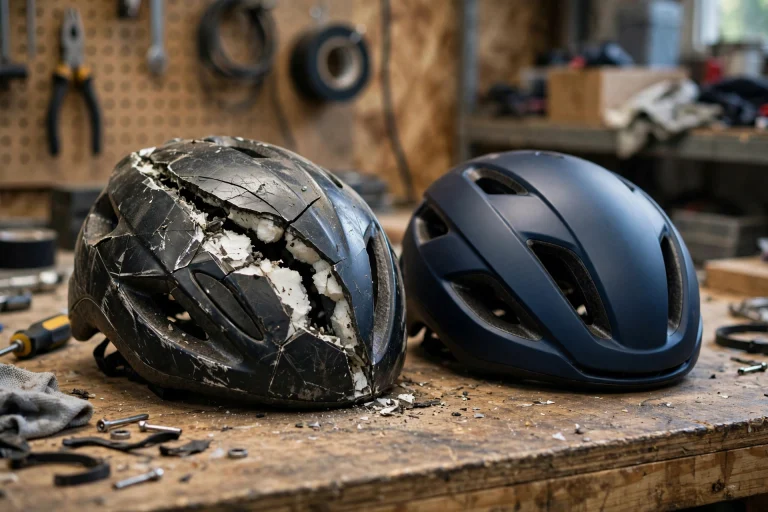
It is also worth remembering that a helmet’s biggest environmental cost is often its short life. A helmet that is replaced after a crash or after a few years of use has a footprint driven by how often it is made, shipped, and thrown away. A durable helmet that lasts its full service life may, in general terms, have a smaller footprint than a supposedly greener helmet that needs replacing sooner.
What Are Plant-Based Helmet Foams?
Plant-based foams replace some of the petroleum-derived chemicals in a helmet’s impact liner with chemicals drawn from plants, most commonly castor oil. The foam still works the same way: it crushes on impact and absorbs energy. Makers that use these foams generally say they perform to the same safety standards as conventional EPS foam, and the certification label inside the helmet is the check that matters.
The environmental case for plant-based foam is that growing the raw material captures carbon and reduces reliance on oil. The counter-argument is that farming the plants uses land, water, and fertiliser, so the net benefit depends on how the crop is grown. In general terms, a bio-based foam is a step toward a lower-carbon helmet, not a guarantee of one.
For the rider, the practical difference is small. Plant-based foam feels and weighs much like conventional foam, and it needs the same care: keep it out of prolonged heat, replace the helmet after a hard impact, and check the maker’s guidance on service life. If you are comparing two helmets, the foam’s origin is one factor among many — fit, ventilation, and certification matter more for everyday use.
Are Recycled Shell Materials as Strong as New Plastic?
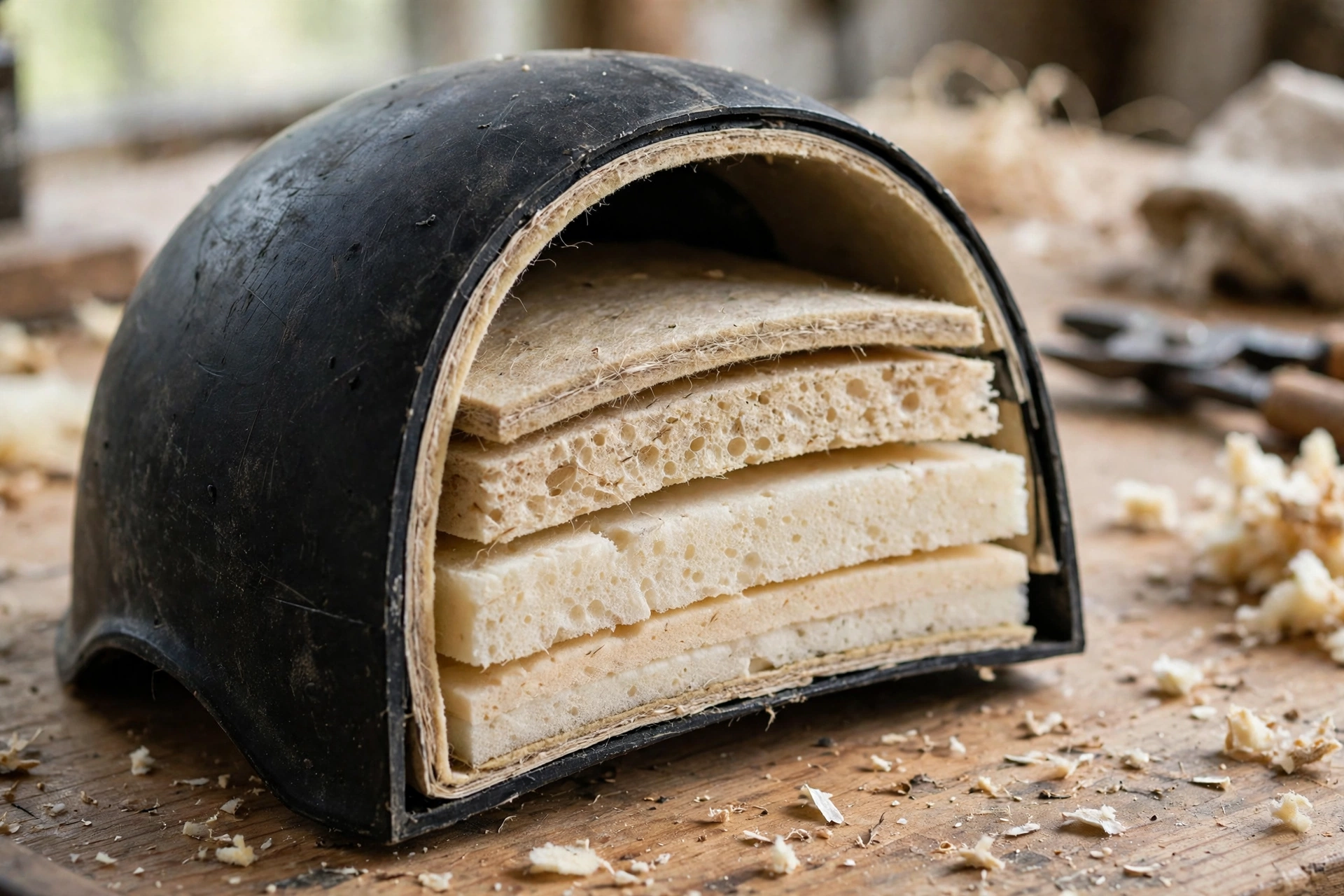
Recycled polycarbonate and recycled ABS are increasingly used for helmet shells, and in general terms they can perform well when the recycled material is carefully sorted and processed. The shell’s job is to spread an impact over a wider area and to resist cracking, and a well-made recycled shell can do that job. The certification test is the same regardless of where the plastic came from.
The challenge with recycled plastic is consistency. Different batches of recycled material can vary more than virgin plastic, so makers usually blend recycled and new material, or use recycled content only where it does not affect the most stressed parts of the shell.
When you see a recycled-content claim, look for the percentage and for which part of the helmet it covers. A shell that is 50 percent recycled plastic is a meaningful change; a helmet that contains recycled material only in its packaging is a different claim entirely. Both may be true, but they are not the same thing, and the label should let you tell them apart.
What About Natural Fibres and Cork in Helmets?
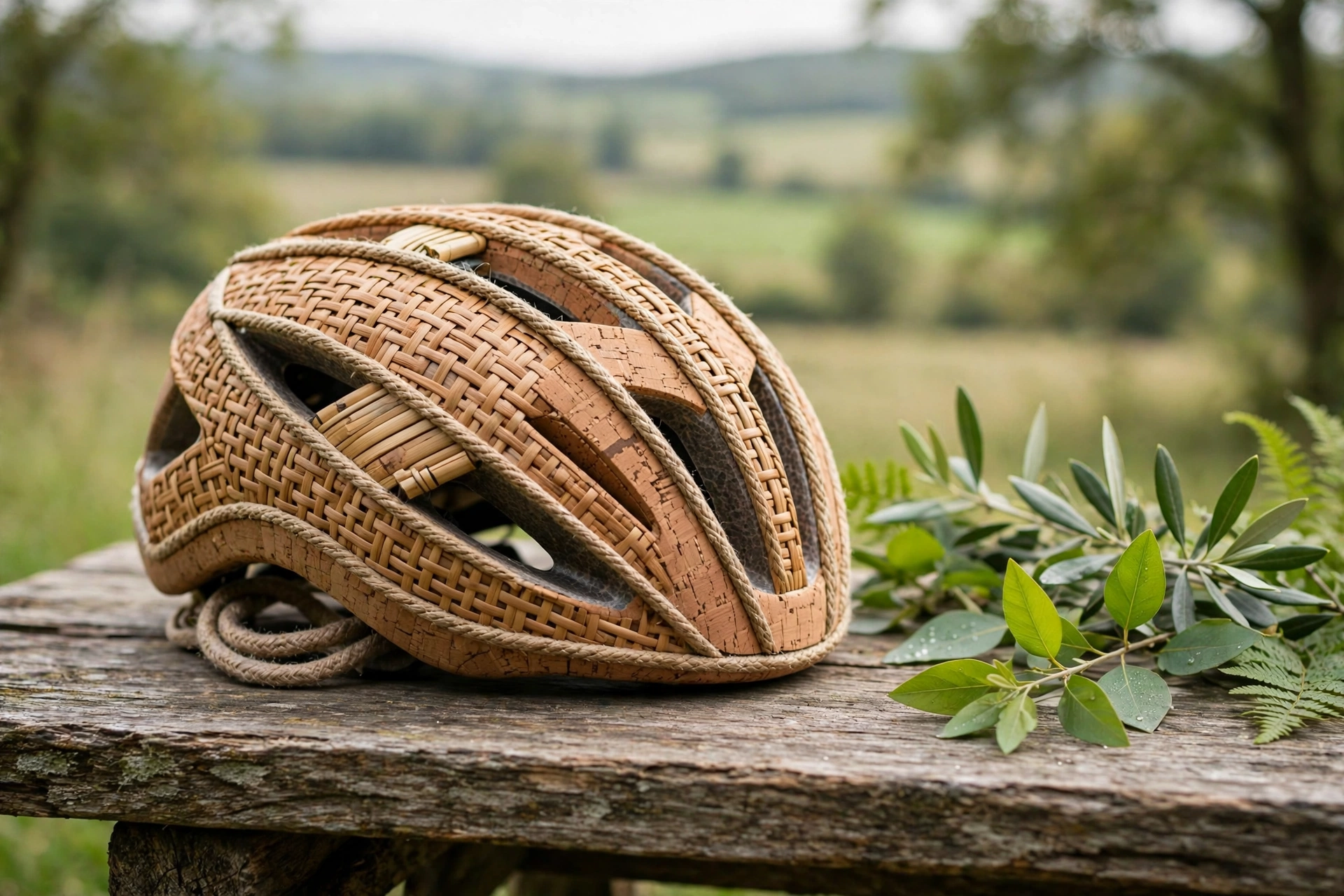
Natural fibres such as flax, hemp, and bamboo are used in some helmet shells as a reinforcement, replacing or reducing the glass or carbon fibre that is more common. Cork is sometimes used in liners or padding because it is light, renewable, and naturally shock-absorbing. These materials appeal to riders who want a helmet with a smaller footprint and a more natural feel.
In general terms, natural fibre shells can be strong and light, but they behave differently from synthetic fibres when they get wet or are exposed to sunlight over time. Makers that use them usually seal the fibres inside a resin or coating to protect them.
Cork liners are a similar story: cork is renewable and can absorb repeated small impacts well, which is why it appears in some multi-impact helmets. But cork is heavier than foam for the same thickness, so it tends to appear in helmets where comfort and repeated low-level impacts matter more than minimum weight. As with any material, the certification label and the maker’s guidance are more useful than the material’s origin alone.
How Can You Judge an Eco-Friendly Helmet Claim?
Start with the certification label. Whatever the materials, a helmet should meet a recognised safety standard for its intended use, and that label is inside the helmet. An eco-friendly helmet that is not certified for your sport is not a safe choice, however good its materials sound.
Next, read the maker’s own description carefully. Look for specifics: the percentage of recycled or bio-based content, which parts of the helmet it applies to, and whether the maker runs a take-back or recycling scheme. Vague words like “eco”, “green”, or “sustainable” without numbers are marketing language, not information. If you are learning about how helmets protect your head, reading about what MIPS is for helmets can help you weigh safety features alongside material claims.
Finally, think about the whole life of the helmet. A helmet you will wear for years, keep clean, and dispose of properly has a smaller footprint than one you replace quickly. Choosing the right size and fit, so the helmet is comfortable enough to wear every ride, is itself an environmental choice — a helmet that sits unused in a cupboard helps nobody.
Frequently Asked Questions
Q: Are eco-friendly helmets as safe as regular helmets?
A: In general terms, yes, if they carry the same certification for your sport. The materials may differ, but the safety test is the same, so check the label inside the helmet rather than relying on the word “eco” alone.
Q: Do plant-based helmet foams wear out faster?
A: Not necessarily. Plant-based foams are designed to last a similar service life to conventional foam, but all helmet foams age with heat, sunlight, and sweat. Follow the maker’s guidance on when to replace the helmet.
Q: Can an old eco-friendly helmet be composted?
A: In general terms, no. Even helmets with plant-based or natural parts usually contain glues, straps, buckles, and coatings that cannot be composted. Check the maker’s take-back scheme or local recycling guidance instead.

Olivia
Writer at Helmet Today, covering helmet reviews, fit and riding safety.