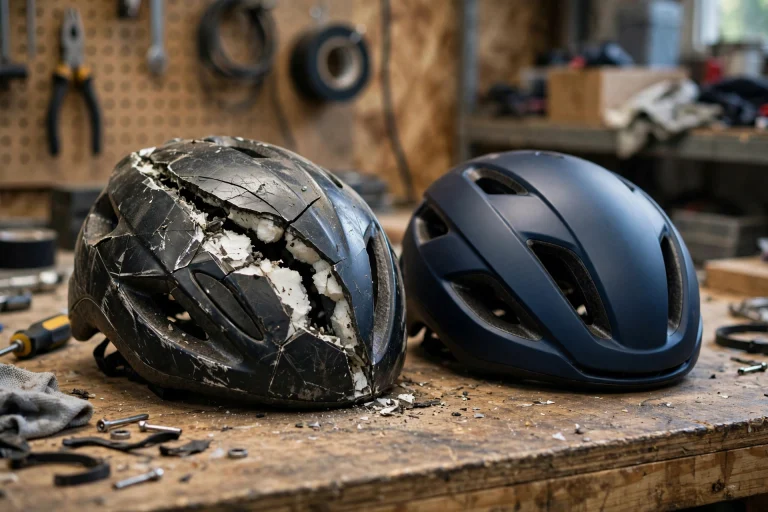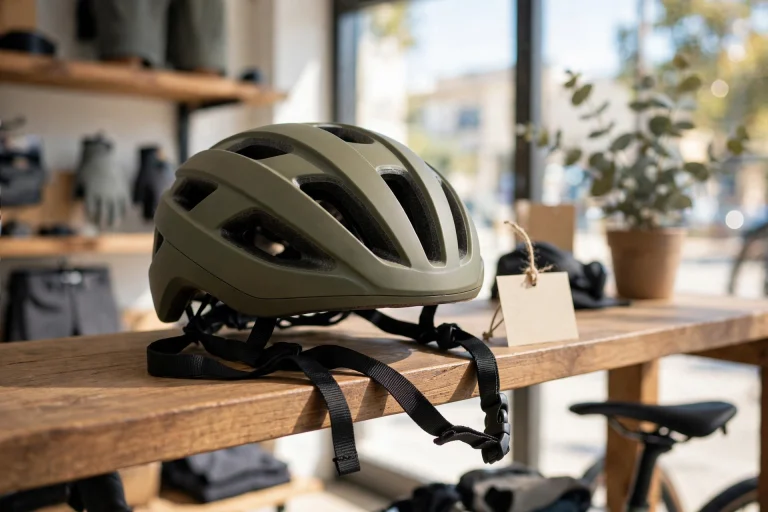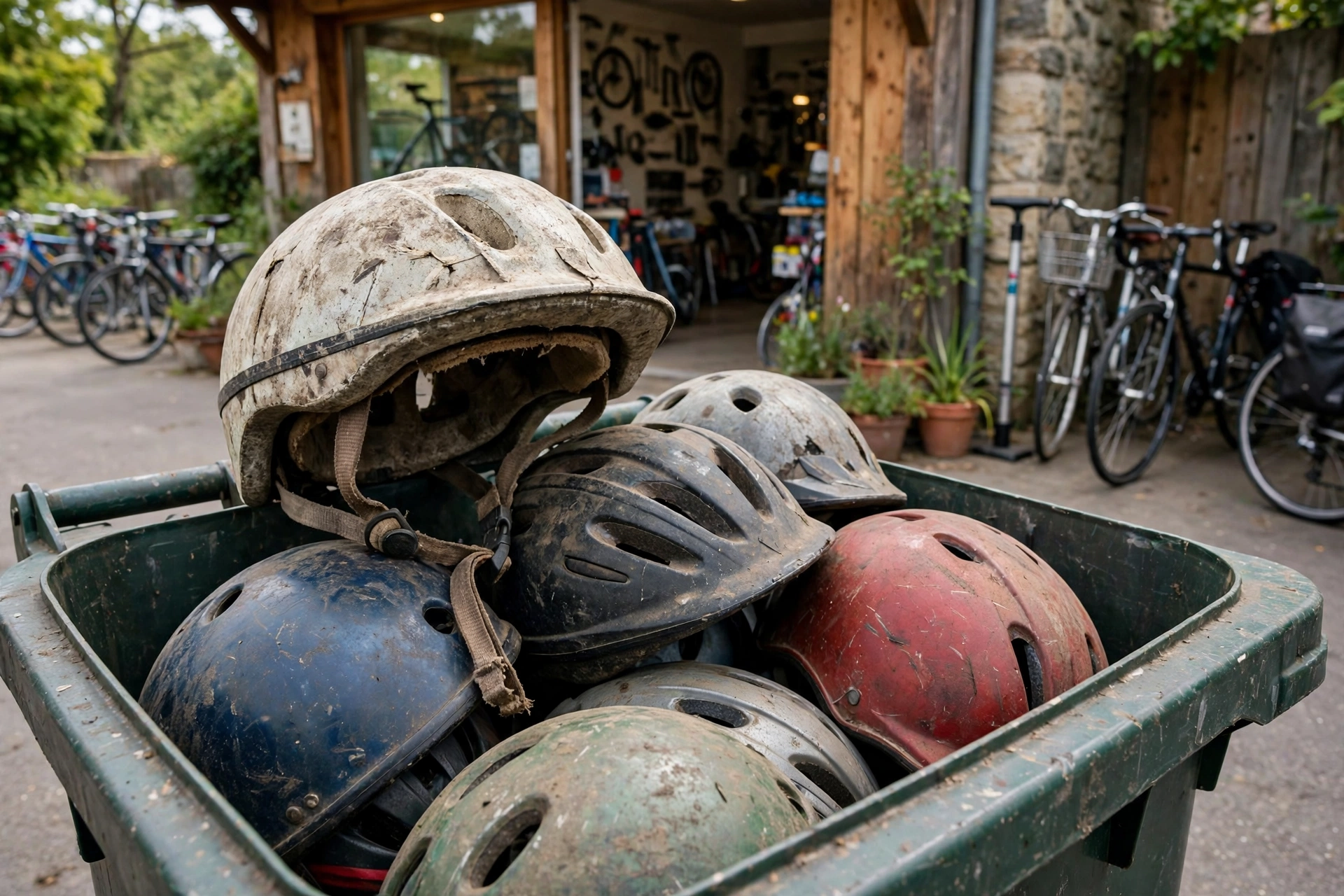
If a helmet cannot be recycled locally, the best options in general terms are a maker’s take-back scheme, a specialist sports-equipment collection, or — as a last resort — general waste after making the helmet unusable. Helmets mix several materials — foam, plastic, straps, metal — which is why most household recycling will not take them. But throwing a helmet in the bin should be the last choice, not the first.
This guide explains why helmets are hard to recycle, what alternatives exist, and how to dispose of a helmet responsibly when no local recycling is available. A little effort can keep a helmet’s materials out of landfill and stop a damaged helmet being picked up and worn by mistake.
Why Can’t Helmets Go in Household Recycling?
A helmet is made from several materials bonded together: a plastic shell, a foam liner, fabric straps, a metal or plastic buckle, and often glue holding it all in place. Household recycling is designed for single materials — a plastic bottle, a cardboard box — and it cannot separate a helmet’s mixed materials. A helmet put in a recycling bin will usually be pulled out and sent to landfill anyway, and it can contaminate a load of otherwise recyclable material.
The foam liner is the hardest part. EPS foam is technically recyclable, but it is light, bulky, and often glued to the shell, so collecting and processing it is expensive. Some specialist recyclers accept clean EPS, but they usually want it in large quantities from businesses, not single helmets from households.
The shell is also a problem. It may be polycarbonate, ABS, or a composite, and the recycling stream for each is different. Without knowing which plastic a shell is made from, a recycler cannot process it safely. That is why most councils and waste services list helmets as general waste rather than recycling.
What Take-Back and Specialist Schemes Exist?
Some helmet makers run take-back schemes where you can send an old helmet back for recycling or safe disposal. These schemes are not universal, but they are growing, and they are the best option when one exists for your helmet’s brand. Check the maker’s website or ask the shop where you bought the helmet.
Some bike shops and sports retailers collect old helmets, either for recycling or for a trade-in discount on a new one. Even if a shop does not advertise a scheme, it is worth asking — many will take an old helmet off your hands when you buy a replacement, and some pass collected helmets to specialist recyclers.
Community schemes also exist in some areas. Cycling clubs, outdoor centres, and waste charities sometimes run collection days for sports equipment. A local search for helmet recycling or sports equipment recycling may turn up an option you did not know existed. If nothing comes up locally, a national scheme that accepts helmets by post may be worth the postage.
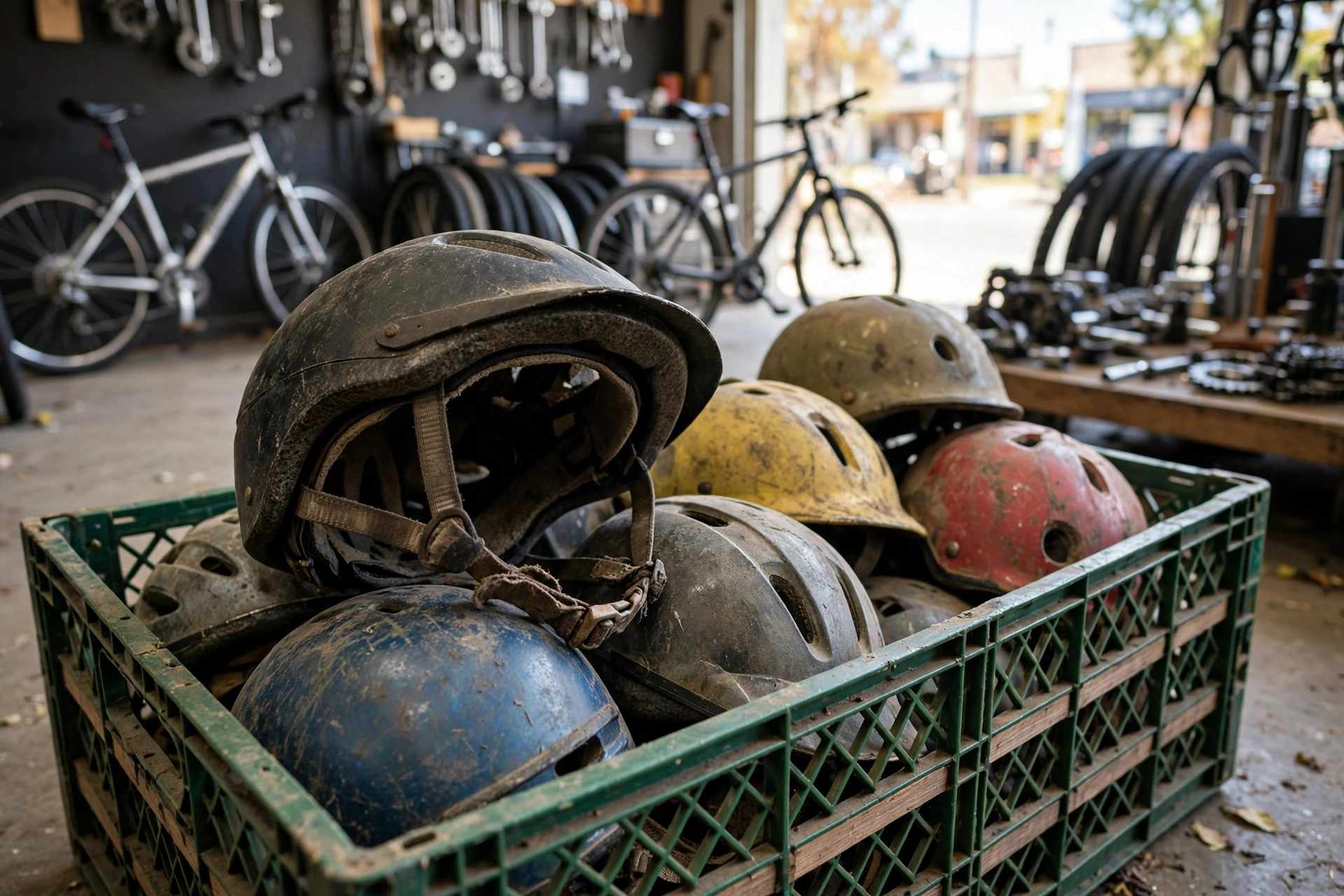
How Should You Prepare a Helmet for Disposal?
Before disposing of a helmet, make it unusable. Cut the straps off completely and damage the foam liner — press a screwdriver through it in several places, or cut the liner out of the shell. This stops anyone picking the helmet up and wearing it, which is a real risk with helmets left whole at a recycling point or in a bin.
If you are sending the helmet to a take-back scheme, follow the scheme’s instructions. Some want the whole helmet; others want the shell and liner separated. Do not assume — check first, because a helmet sent in the wrong condition may be rejected.
Remove any parts that can be reused before you dispose of the rest. Pads, visors, and buckles in good condition can be kept as spares for another helmet of the same model. That is a better use of them than sending them to landfill with the shell, and it may keep a second helmet in use for longer.
Is General Waste Really the Only Option?
In some areas, yes — for now. If no take-back scheme, retailer collection, or specialist recycler is available to you, general waste is the honest answer. Putting a helmet in a recycling bin where it does not belong does not help: it will be sorted out and sent to landfill anyway, and it may spoil a load of genuine recycling.
That said, the situation is changing. More makers are designing helmets with recycling in mind — using fewer mixed materials, avoiding glue where possible, and publishing guidance on disposal. Some are also funding collection schemes. If your next helmet purchase matters to you on this point, ask the maker how the helmet can be disposed of at the end of its life before you buy it.
You can also reduce the problem at source. A helmet that lasts its full service life, bought in the right size and type for your riding, creates less waste than one replaced early. And if you are comparing helmets and want to understand the safety features that should come first, reading about what MIPS is for helmets can help you choose well the first time, so the helmet you buy is one you keep.
What Can Riders Do to Push for Better Recycling?
Ask the question. When you buy a helmet, ask the shop or the maker how it can be recycled. Makers pay attention to what customers ask about, and a question asked often enough becomes a feature. If a maker has a take-back scheme, use it — schemes only survive if riders use them.
Support retailers that collect old helmets. A shop that takes back old helmets is doing extra work, and rewarding that with your business encourages others to follow. If your local shop does not collect helmets, suggest it — the idea may never have occurred to them.
Finally, share what you learn. If you find a local collection point or a maker with a good scheme, tell your riding group or club. Helmet recycling works best as a shared habit, and one rider’s discovery can save dozens of helmets from landfill over time.
Frequently Asked Questions
Q: Can I put a helmet in my household recycling bin?
A: In general terms, no. Helmets mix foam, plastic, straps, and metal, and most household recycling cannot separate them. Check your local guidance — a few areas have specialist collection points, but the kerbside bin is not one of them.
Q: Is it safe to leave a damaged helmet at a recycling point?
A: Only if you have made it unusable first by cutting the straps and damaging the foam liner. A whole helmet left at a collection point may be picked up and worn, which is a safety risk.
Q: Do helmet makers really recycle returned helmets?
A: It depends on the scheme. Some separate the materials for recycling; others dismantle helmets for safe disposal. Ask the maker what happens to returned helmets before you send yours back.

Olivia
Writer at Helmet Today, covering helmet reviews, fit and riding safety.