When buying a used helmet, ask how old it is, whether it has ever been in a crash or a hard drop, how it was stored, and whether the certification label is still readable. A used helmet can be a good buy, but only if its history is honest and its condition is sound. A helmet with a hidden crash in its past can look perfect and still fail to protect you.
Buying used is different from buying new: there is no warranty, no return, and no way to test the foam inside. The questions you ask are your only protection. This guide explains what to ask, what to check with your own hands, and when to walk away.
Has the Helmet Ever Been in a Crash?
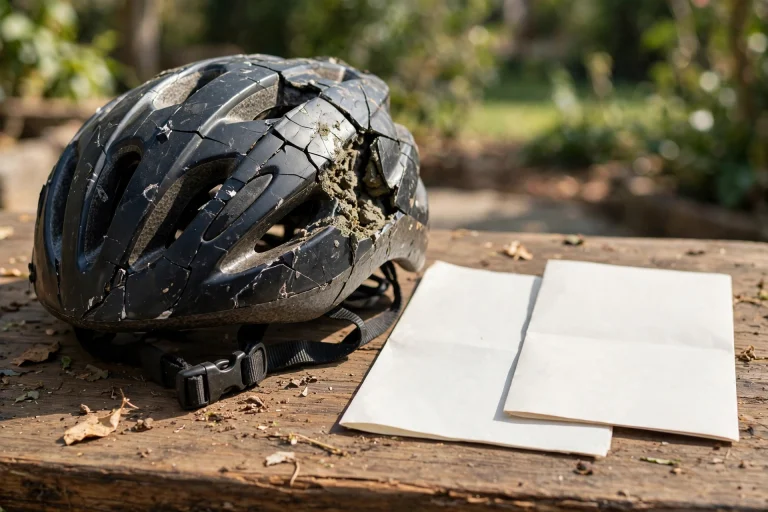
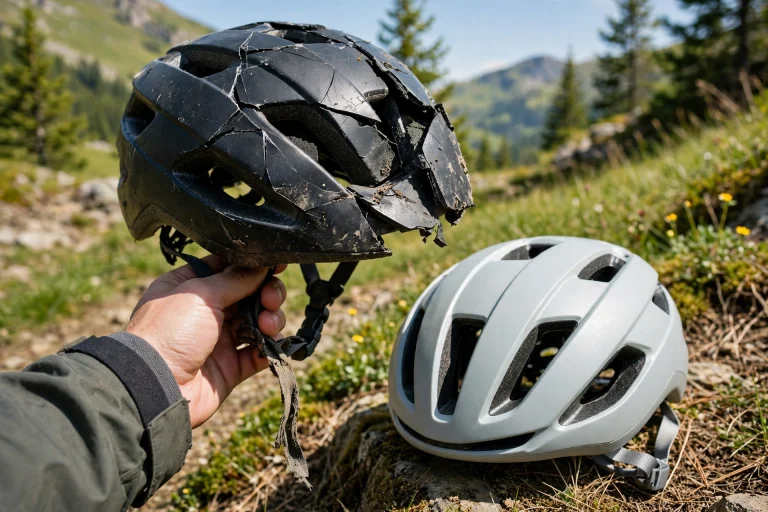
This is the most important question, and the answer should be clear and specific. A helmet that has been in a crash should not be sold or worn again, because the foam inside may have crushed without leaving a visible mark. If the seller hesitates, cannot remember, or says “only a small one”, treat that as a reason not to buy.
Ask about drops as well as crashes. A helmet dropped hard onto concrete from waist height can suffer the same hidden damage as a low-speed crash. A seller who says the helmet was “never dropped” may be telling the truth — or may simply not remember every knock. Listen to how confident the answer sounds, and weigh it against the helmet’s condition.
If you are buying from a stranger online, remember that you cannot verify the answer. A seller who is honest about a helmet’s history is worth trusting more than one who claims a five-year-old helmet is “like new”. When the history is uncertain, the safe choice is to buy new instead.
How Old Is the Helmet, and How Was It Stored?
Ask for the helmet’s age, and check it against the date stamp or label inside the helmet if one is present. Most makers suggest replacing a helmet after several years of regular use, because foam ages with heat, sunlight, and sweat. A helmet that is past that guidance is not a bargain, whatever the price.
Ask how the helmet was stored. A helmet kept in a cool cupboard is in far better shape than one left in a hot car or a damp shed. Heat and sunlight are the foam’s main enemies, and a helmet that spent summers in a car boot may have aged much faster than its calendar age suggests.
Also ask how often the helmet was used. A helmet worn daily for three years has had far more wear than one worn a dozen times and then stored. Heavy use wears out pads and straps, and it means the foam has been exposed to more sweat and heat. The seller’s answer should match what you can see: a “barely used” helmet should look barely used.
What Should You Check with Your Own Hands?
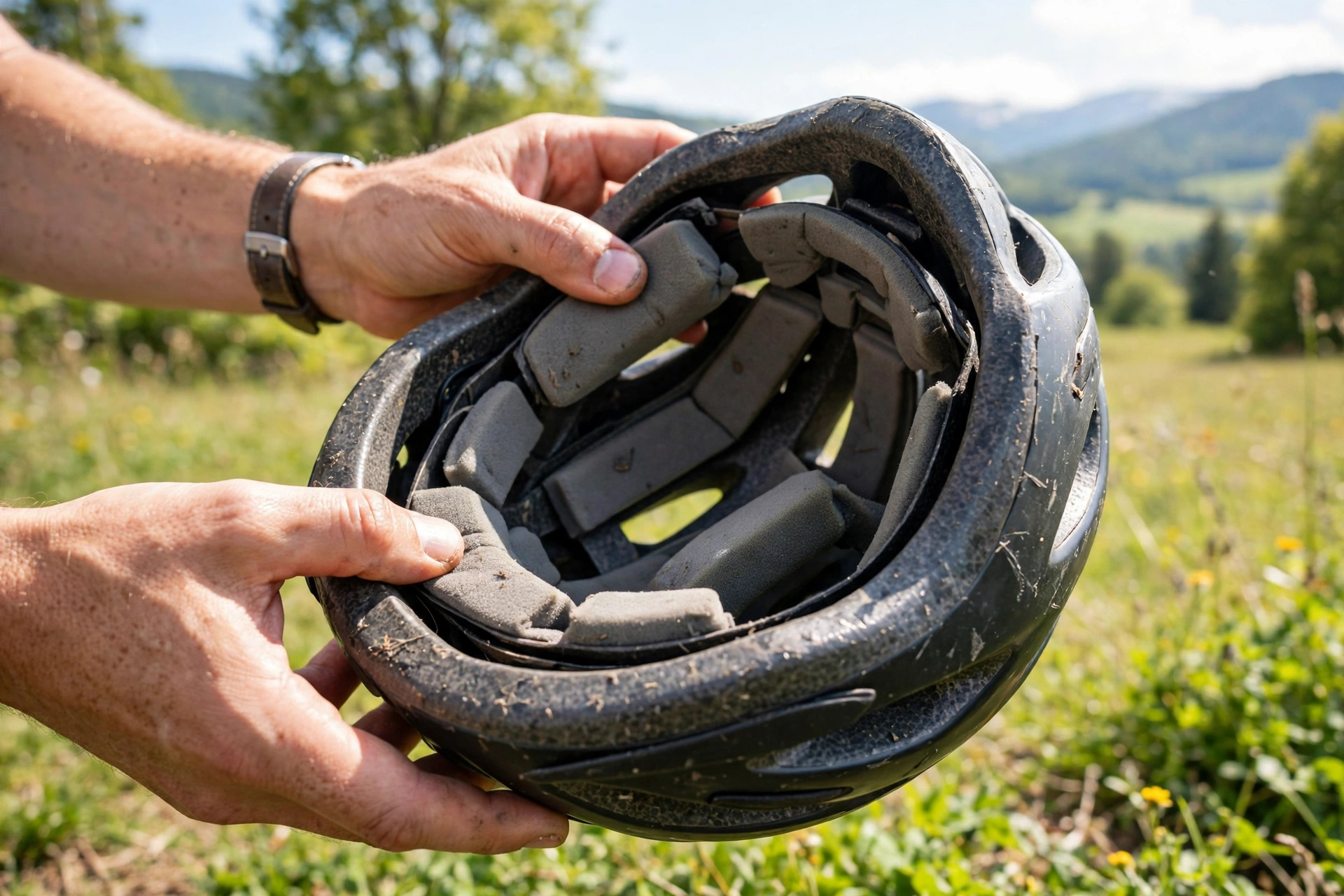
Start with the shell. Look for cracks, deep scratches, dents, or areas where the outer layer is lifting away from the foam. Run your fingers over the whole shell and feel for anything uneven. A shell that looks fine in a photo can hide a crack that is easy to feel.
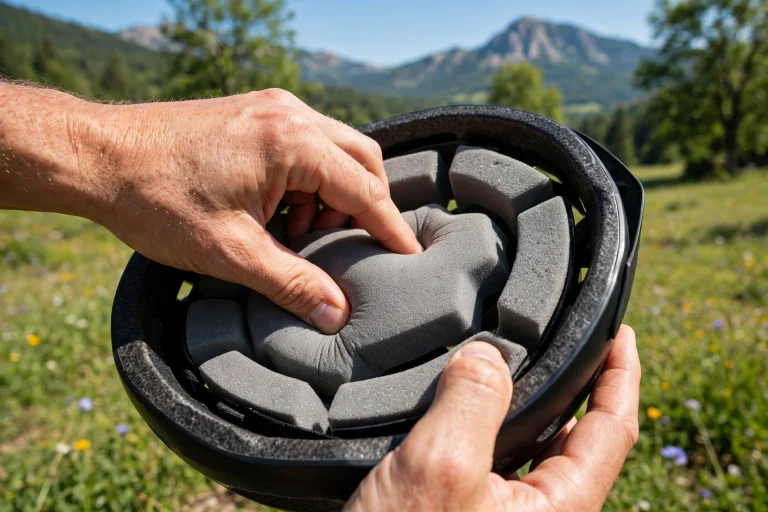
Press the foam liner gently all over. It should feel firm and even. Soft spots, crumbling edges, or areas that feel different from the rest are warning signs. Check the liner for compression marks — a dent in the foam that does not spring back suggests the helmet has taken an impact.
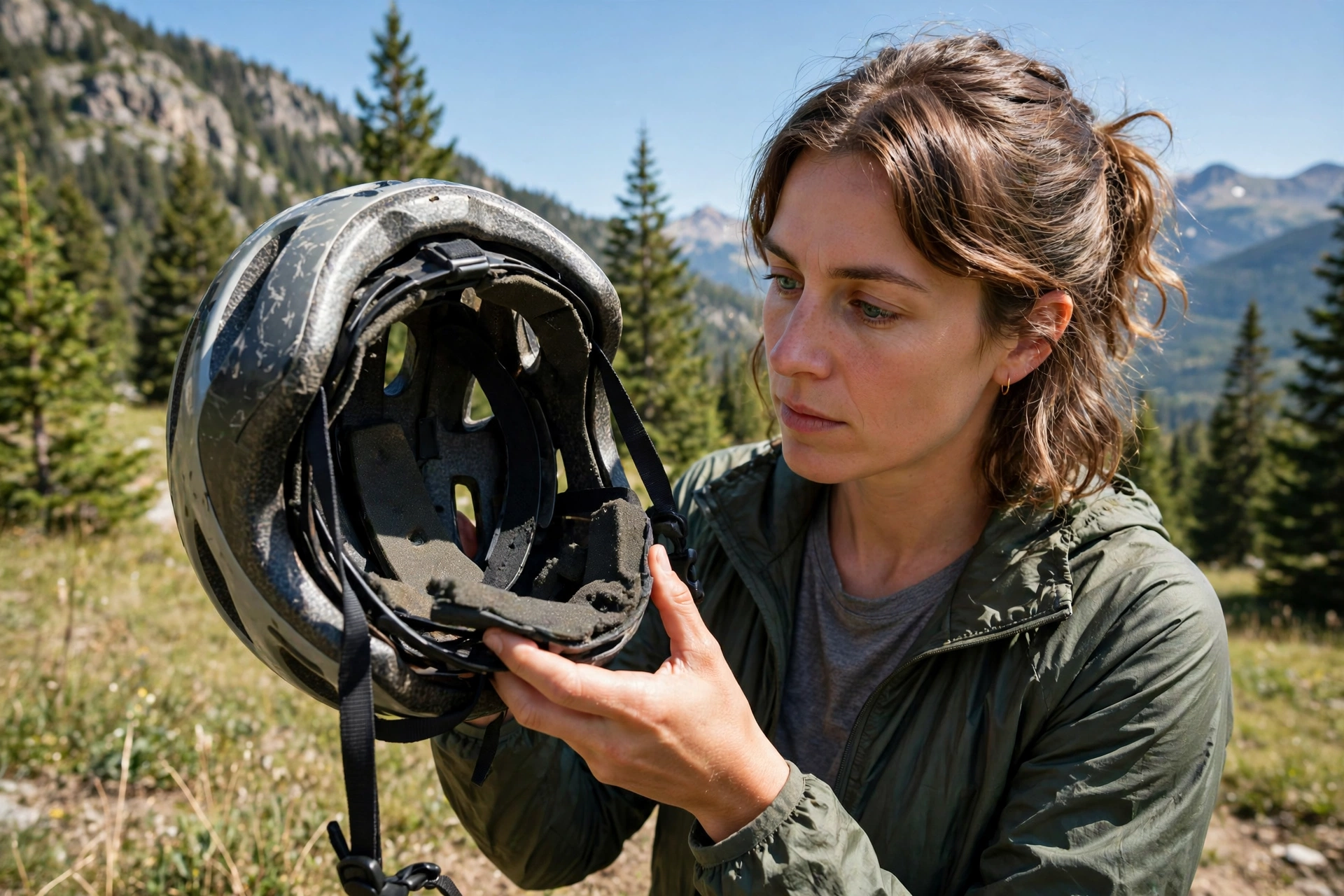
Test the strap and buckle. The strap should be free of fraying, and the buckle should fasten and release smoothly. Pull the strap firmly — it should not slip through the adjuster. Check the pads: are they intact, clean, and firmly attached? Worn pads can be replaced, but they are also a sign of how hard the helmet has been used.
Is the Certification Label Still There?
Every helmet sold for a sport should carry a certification label inside, showing which safety standard it meets. Check that the label is present and readable. A missing label is a warning sign: it may mean the helmet is a fake, an older model that predates the current standard, or a helmet whose label was removed to hide its age.
Compare the label with the helmet’s claimed model and age. If the seller says the helmet is two years old but the label shows a standard that was replaced years ago, something does not add up. A quick search for the helmet’s model name can confirm when it was made and what standard it should carry.
Be especially careful with helmets sold online without a clear photo of the label. A seller who will not show the label is a seller to avoid. If you are learning what the label means, reading about what MIPS is for helmets can help you understand one of the features you may see listed alongside the certification.
When Should You Walk Away?
Walk away if the seller cannot answer the basic questions, if the helmet’s age is unknown, or if any damage is visible. Walk away if the price seems too good to be true — a nearly new helmet sold for a fraction of its price may have a history the seller is not sharing.
Walk away if the helmet does not fit you properly. A used helmet that is the wrong size is no use, however cheap it is. Try it on, check that it sits level, feels snug without pressure points, and stays put when you shake your head. A helmet that moves around is a helmet that will not protect you properly.
Finally, walk away if you feel rushed or pressured. A genuine seller will let you inspect the helmet properly and answer your questions. If you feel you are being hurried into a decision, that is itself a reason to stop. A new helmet, bought with a warranty and a known history, is always the safer choice when a used one leaves you in doubt.
Frequently Asked Questions
Q: Is it safe to buy a used helmet at all?
A: In general terms, yes — if you know its history, it is undamaged, within its service life, and fits you properly. If any of those points is uncertain, a new helmet is the safer choice.
Q: Can I trust a seller who says the helmet was never crashed?
A: You can weigh their answer against the helmet’s condition and age, but you cannot verify it. A seller with a clear, detailed history is more trustworthy than one who gives vague answers.
Q: What is a fair price for a used helmet?
A: In general terms, a used helmet in good condition is worth far less than a new one, because it has a shorter life left and no warranty. If the price is close to new, buy new instead.

Olivia
Writer at Helmet Today, covering helmet reviews, fit and riding safety.