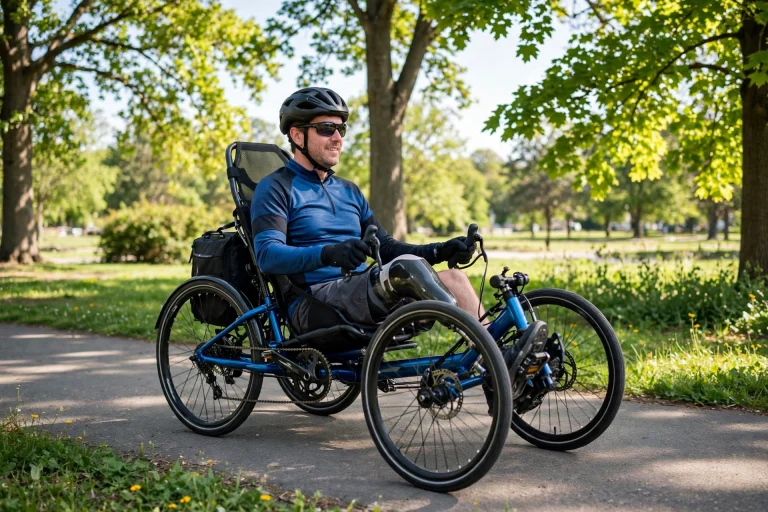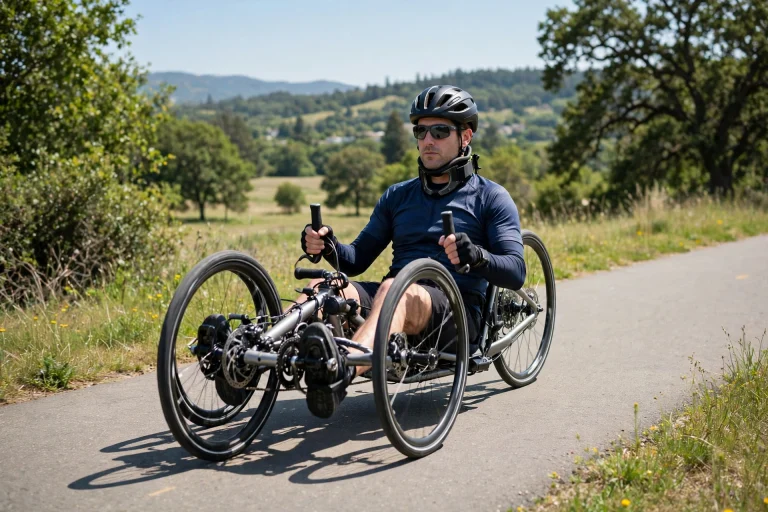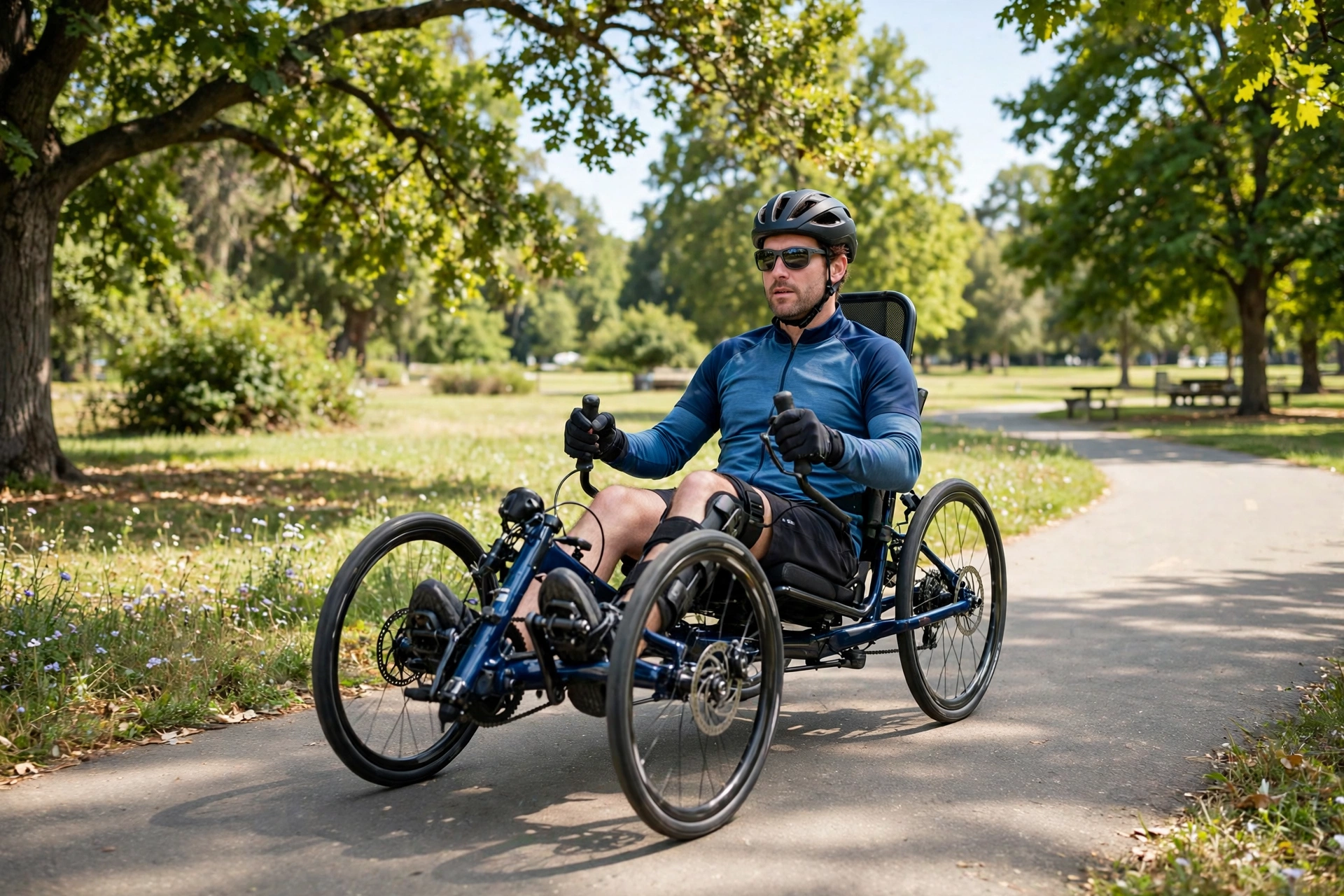
Adaptive cycling helmet fit for riders with limited mobility starts with one rule: the helmet must sit level, feel snug, and stay put without help from your hands. Riders who use a handcycle, recumbent trike, or adapted upright bike often sit in a reclined or supported position, so a helmet fitted while standing up may not fit the same way once they are in the saddle. The fit has to be checked in the riding position, not just in the shop.
Limited mobility can also mean less ability to reach up and adjust a helmet mid-ride, or less grip strength to work a buckle or dial. That makes the first fit even more important — a helmet that needs constant fiddling is a helmet that will distract you or, worse, be left at home. This guide walks through measuring, choosing, and adjusting a helmet for adaptive cycling, step by step.
How Do You Measure for an Adaptive Cycling Helmet?
Start with a head measurement. Wrap a soft tape measure around your head just above your eyebrows and ears, keeping it level all the way round. Take the measurement two or three times and use the largest reading. That number is your starting point for sizing, but it is only a starting point — helmet shapes vary between makers, so two helmets with the same size label can fit very differently.
If you wear a headrest, a neck support, or a head support on your cycle, measure and try helmets on with that support in place. A helmet that fits well on its own can press against a headrest, tilt forward, or catch on the support when you lean back.
Also think about anything else you wear on your head. Glasses, hearing aids, a cap, or a head covering can all change the fit. Try the helmet with all of it on, not one item at a time.
What Type of Helmet Suits Adaptive Cycling Best?
Most adaptive cyclists use a standard cycling helmet that meets a recognised safety standard for their region. The label inside the helmet will say which standard it meets. For handcycles and recumbent trikes, a road-style helmet with good ventilation usually works well, because the rider is low to the ground and the riding position is reclined rather than upright.
Coverage is worth thinking about. A helmet with a little more coverage at the back and sides of the head can suit a reclined position, where the back of the head is closer to the seat or headrest. Some riders prefer a helmet with a lower profile so it does not push against a headrest. There is no single right answer — it depends on your cycle, your seating, and your position.
Weight matters too. A lighter helmet is easier on the neck over a long ride, especially for riders who already have limited neck strength. But do not chase the lightest helmet at the expense of a good fit. A slightly heavier helmet that sits level and stays put is better than a featherweight one that rocks around. If you are comparing features, reading about what MIPS is for helmets can help you understand one of the systems you may see listed on the box.
How Do You Adjust the Fit Step by Step?
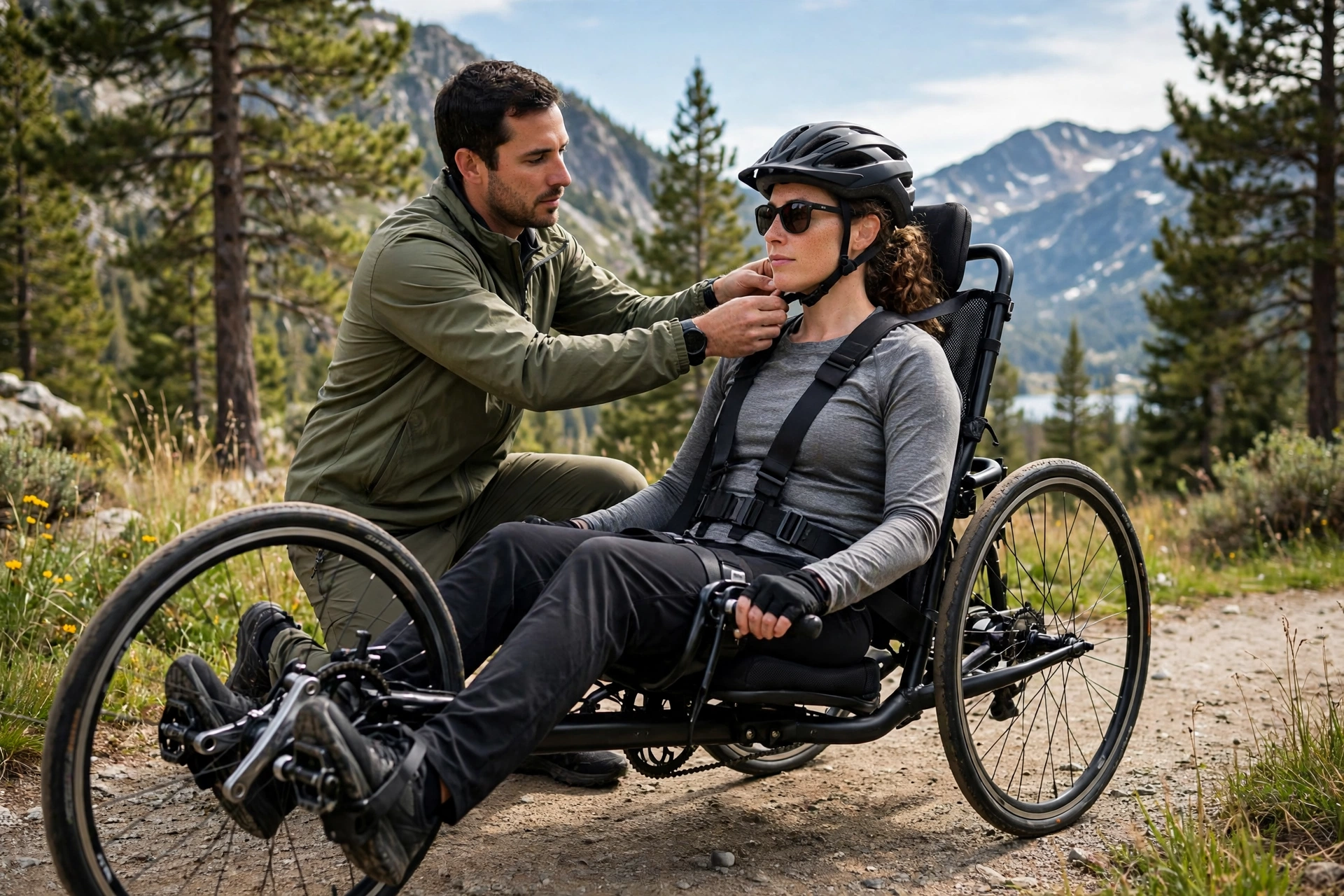
Fit the helmet in your riding position, ideally sitting on your cycle. First, place the helmet level on your head so the front edge sits just above your eyebrows — about two fingers’ width above them. If the helmet tilts back, it leaves your forehead exposed; if it tilts forward, it blocks your vision.
Next, adjust the retention system at the back. Most cycling helmets have a dial or cradle that tightens around the back of your head. Turn it until the helmet feels snug and stays in place when you shake your head gently, but not so tight that it hurts. If you have limited grip strength, look for a large, easy-to-turn dial, and ask someone to help you set it the first time so you know where it should sit.
Then set the straps. The side straps should form a V just below each ear, and the chin strap should be snug enough that you can fit about two fingers between the strap and your chin. Do the buckle up and check that the helmet does not lift when you pull gently at the front edge. Finally, look in a mirror or ask someone to check from the side: the helmet should look level, not tipped forward or back.
What If You Cannot Adjust the Helmet Yourself?
Some riders cannot reach the back of their own head easily, or cannot work a small dial or buckle. That is common, and it does not mean you cannot get a good fit — it means the fit needs to be set up with help, and then checked regularly.
Ask a helper, a family member, or a bike shop to set the helmet up with you sitting on your cycle. Once the retention system and straps are set, mark the strap positions with a small stitch or a dab of nail polish on the adjuster, so you can see at a glance whether anything has moved. A helmet that is set once and checked before each ride is far better than one that is re-adjusted badly every time.
Consider a helmet with features that make it easier to use. A magnetic buckle, a large dial, or a one-handed retention system can make a real difference. Try the buckle and the dial yourself before you buy, and if you cannot work them comfortably, ask the shop to show you other options.
How Do You Keep the Fit Right Over Time?
A good fit is not a one-time job. Pads compress, straps stretch, and your seating position can change as you get more comfortable on your cycle. Check the fit before each ride.
Wash or replace the pads when they get flat or sweaty. Flat pads let the helmet move around more, and a helmet that moves is a helmet that is not protecting you properly. Most helmets have removable, washable pads — check the maker’s instructions, and keep a spare set if you ride often.
Replace the helmet after any hard impact, and if the shell, foam, straps, or buckle show cracks, dents, or wear. In general terms, a helmet that has taken a hard knock may not protect as well a second time, even if the damage is hard to see.
Frequently Asked Questions
Q: Can I use a normal cycling helmet for adaptive cycling?
A: Yes, in general terms a standard cycling helmet that meets a recognised safety standard is the usual choice. The key is to fit it in your actual riding position, with any headrest or support in place.
Q: How tight should an adaptive cycling helmet feel?
A: Snug all around, with no pressure points that throb after a few minutes. It should not rock side to side or slide forward when you shake your head, and the chin strap should sit snugly under your chin.
Q: What should I do if my helmet presses on my headrest?
A: Try a lower-profile helmet, adjust the headrest position if you can, or try a different helmet shape. A helmet that is pushed forward by a headrest will not sit level, so do not just accept the pressure — change the setup.

Olivia
Writer at Helmet Today, covering helmet reviews, fit and riding safety.