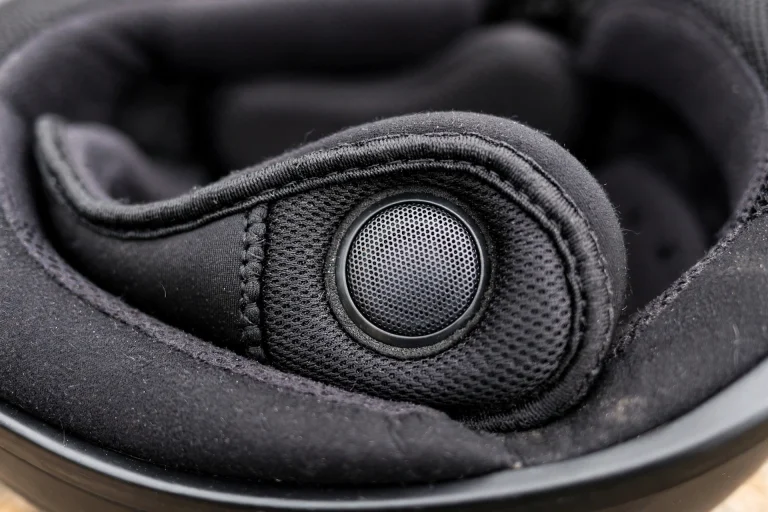
Helmet ear muffs for winter cycling are soft, insulated covers that fit over or under a cycling helmet to keep your ears warm in cold weather, and in general terms, helmet-compatible ear muffs are the simplest way to add warmth without changing your helmet. They work best when they are made to fit with a helmet, rather than ordinary ear muffs worn underneath it, because a snug helmet fit is what keeps the helmet in place. If the muffs push the helmet up or out, warmth is not worth the trade-off.
Cold ears are one of the first things winter cyclists notice. Wind chill on a descent can make ears sting within minutes, even when the rest of your body feels warm from pedalling. Ear muffs solve that specific problem: they block wind, trap a little warm air around the ears, and let you keep riding through the colder months. This guide explains the types available, how they fit with a helmet, and what to check before you buy.
What Are Helmet Ear Muffs for Winter Cycling?
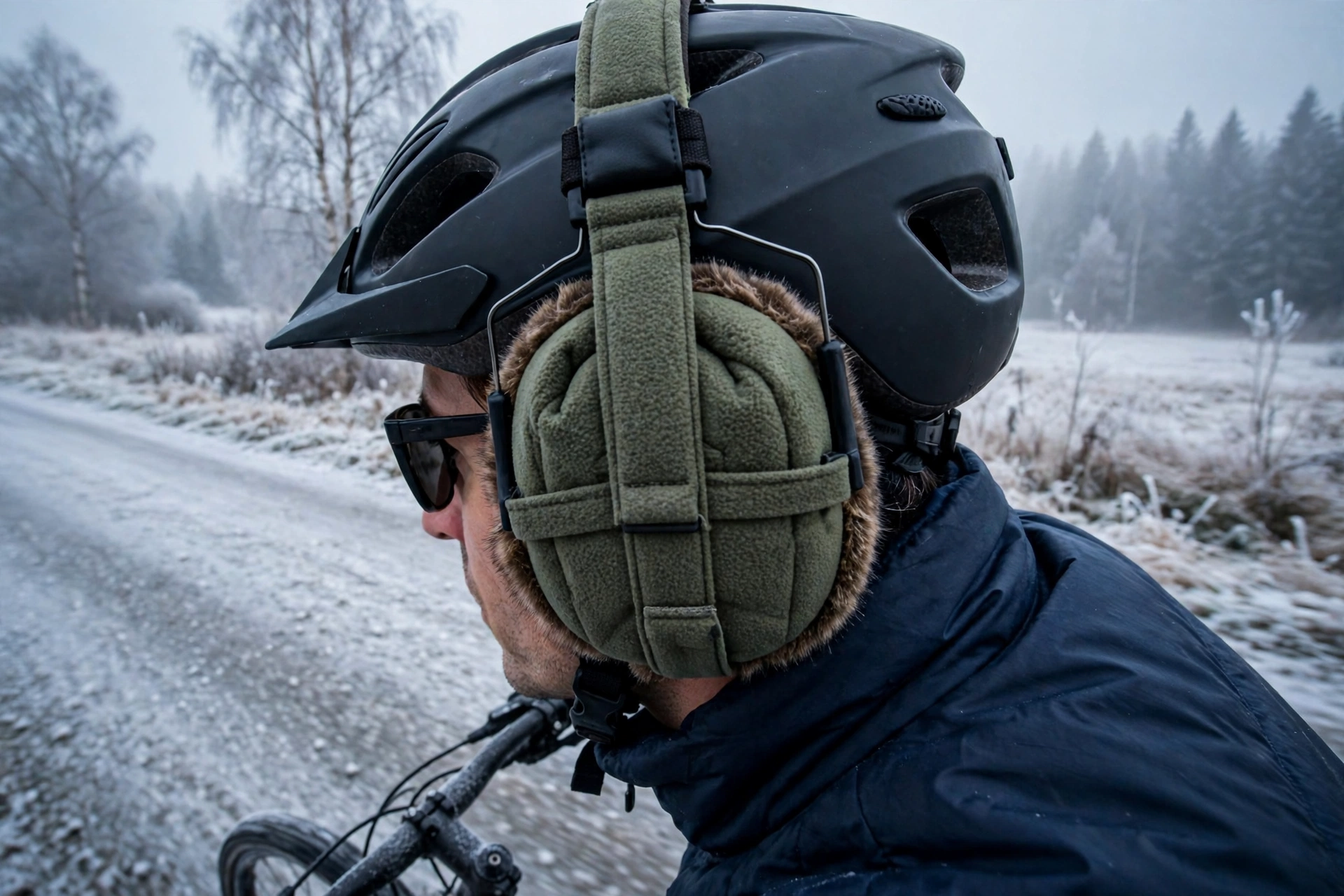
Helmet ear muffs for winter cycling are insulated ear covers designed to work alongside a bike helmet. Some are separate muffs with a low-profile band that sits under the helmet, while others are ear pads or covers that attach directly to the helmet straps or shell. A third type is built into a winter helmet liner or a helmet cover with ear flaps. All three aim at the same thing: warm ears without a bulky layer that disturbs the helmet.
The key difference from ordinary ear muffs is the profile. Standard ear muffs are often too thick to sit comfortably under a helmet, and their band can lift the helmet or press it sideways. Helmet-compatible versions use thinner padding, a flatter band, or a strap attachment so the helmet can still sit level and low on the forehead. If you have to loosen the helmet straps a lot to fit the muffs in, the combination is probably not right for your helmet.
How Do Helmet Ear Muffs Stay in Place Under a Helmet?
Most helmet ear muffs stay in place in one of three ways. Strap-mounted ear pads clip or slide onto the helmet straps and rest over the ears, held by the straps themselves. Band-style muffs use a thin, flexible band that runs under the helmet or behind the head, keeping the pads pressed gently against the ears. Helmet-cover ear flaps are part of a cover that stretches over the shell, so the flaps cannot slip on their own.
Whichever type you choose, the test is the same: put the helmet on with the muffs in place, fasten the strap, and shake your head gently from side to side. The helmet should not rock or slide, the muffs should stay over your ears, and nothing should press painfully after a few minutes. A good fit feels snug but not tight, and you should still be able to hear traffic and other riders reasonably well.
Do Helmet Ear Muffs Affect Your Hearing on the Road?
In general terms, any layer over the ears will muffle sound a little, and ear muffs are no exception. Thick, heavily padded muffs can dull traffic noise, voices, and the sound of a car approaching from behind. That matters on the road, where hearing is part of how you stay aware of what is around you. Thin, helmet-specific ear muffs usually muffle less, because they use lighter insulation and leave the ear canal less sealed off.
If you ride mainly on quiet lanes or off-road trails, a little muffling may not bother you. On busy roads, it is worth choosing the thinnest muffs that still keep you warm, and testing them on a quiet street first. Can you hear a car coming up behind you? Can you hear another rider calling out? If the answer is no, the muffs are too thick for that ride, or you may be better off with a thinner ear cover or a helmet with built-in ear pads.
What Should You Look for When Buying Helmet Ear Muffs?
Start with compatibility: check whether the muffs are made for your type of helmet, and whether they attach to the straps, the shell, or sit under it. A product that works well with a road helmet may not fit a mountain bike helmet with a peak, and vice versa. If you can, try the muffs with your own helmet before buying, or check the maker’s guidance on which helmets they suit.
Next, look at warmth and windproofing. A windproof outer layer makes a big difference on descents, where wind chill is strongest, while a soft fleece lining feels comfortable against the skin. Breathability matters too: muffs that trap sweat can feel damp and cold by the end of a ride, so a lining that wicks moisture is worth having. Washable muffs are a practical plus, since they sit against skin and pick up sweat.
Finally, think about the rest of the helmet’s features. If your helmet has a retention system at the back, reading about what MIPS is for helmets can help you understand how the liner inside your helmet works, and why keeping the helmet fitting as the maker intended matters when you add any accessory. Ear muffs should never force the helmet into a different position or stop the retention system from doing its job.
Are Ear Muffs Better Than a Winter Helmet Liner?
It depends on how cold it gets where you ride and what bothers you most. Ear muffs are best for riders whose ears get cold while the rest of the head stays comfortable, or for changeable days when a full liner would overheat you. They are easy to take on and off, pack small in a pocket, and can be added mid-ride when the temperature drops or a long descent begins.
A winter liner, by contrast, warms the whole head, including the top and back, and is a better choice for very cold rides, long winter commutes, or riders who feel the cold generally. Some liners include ear coverage as well, which can make separate muffs unnecessary. The downside is that a liner adds a layer under the whole helmet, so it can change the fit more than ear muffs do, and it may be too warm once you are working hard uphill.
Whichever you choose, the rule stays the same — the helmet must still fit level, snug, and stable, with the strap fastened properly. Warmth is a comfort feature; fit is a safety feature, and comfort should never push fit aside.
Frequently Asked Questions
Q: Can I wear normal ear muffs under a bike helmet?
A: In general terms, ordinary ear muffs are often too thick and can lift or tilt the helmet, so helmet-compatible muffs with a low profile are a safer choice. Always check that the helmet still sits level and snug with them in place.
Q: Do helmet ear muffs work with glasses?
A: Usually yes, but the combination can crowd the area around the ears. Try the muffs, helmet, and glasses together at home, and adjust the arms of the glasses so they sit comfortably without pressing.
Q: How do I wash helmet ear muffs?
A: Most can be hand-washed in mild soapy water and air-dried, but check the maker’s care label first. Let them dry fully before your next ride so they do not feel damp and cold.

Olivia
Writer at Helmet Today, covering helmet reviews, fit and riding safety.