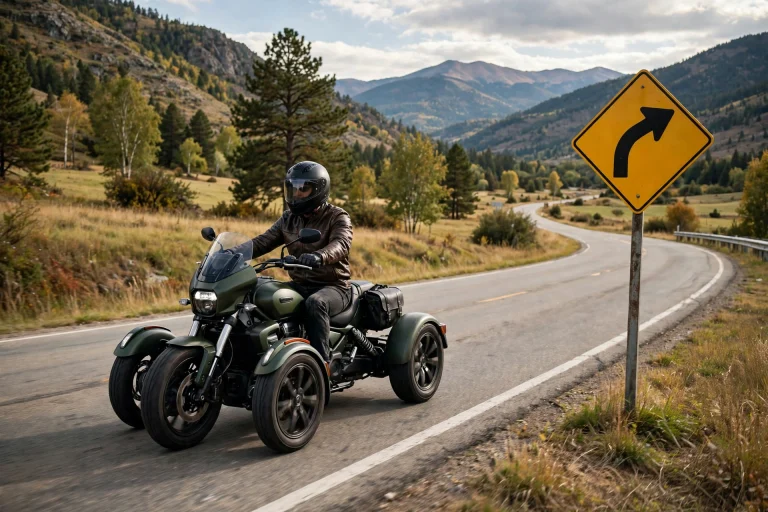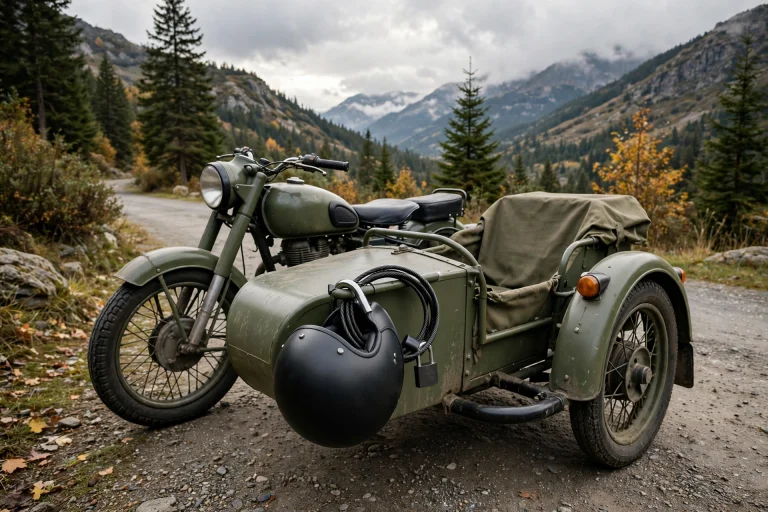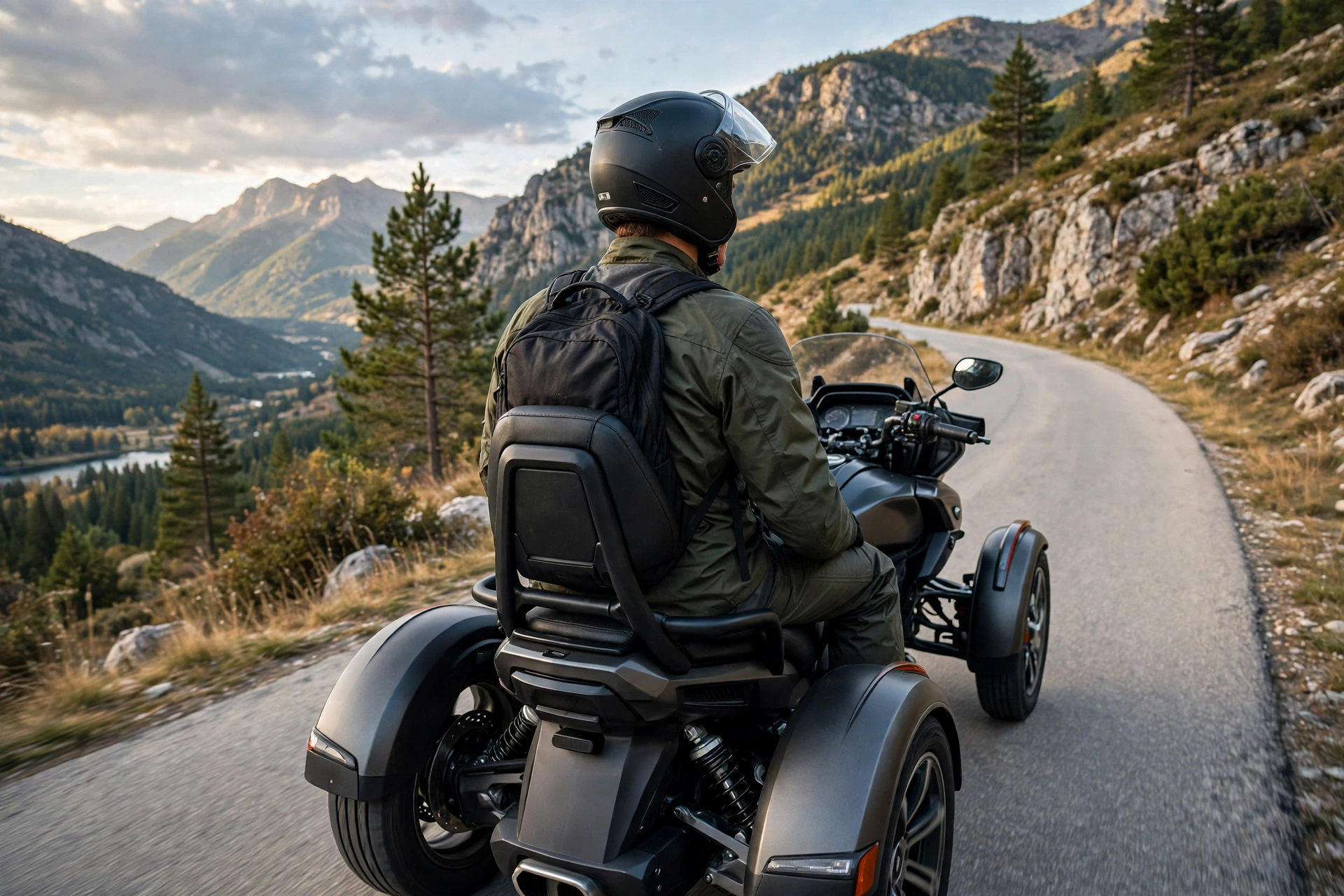
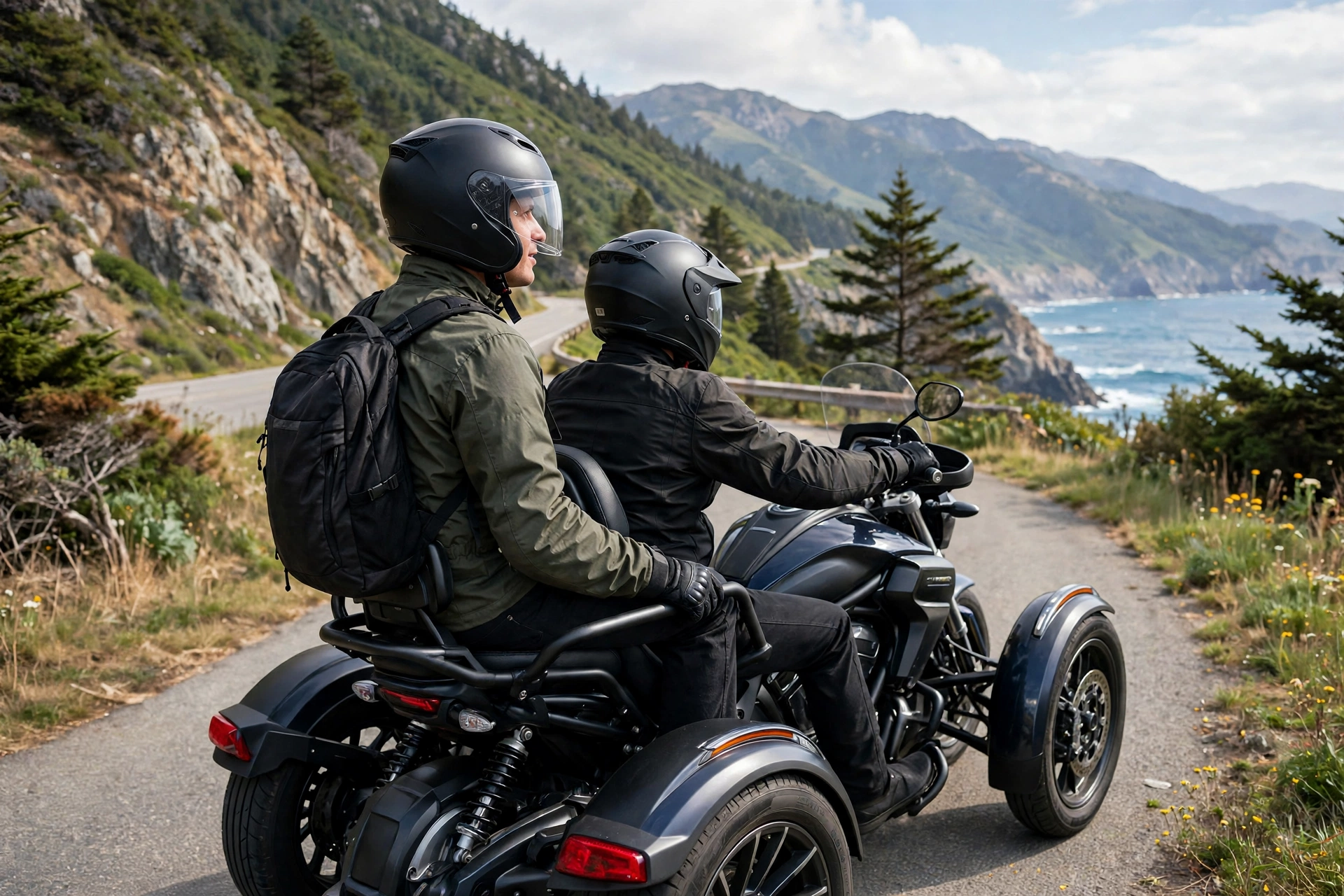
Trike passengers generally wear helmets, because they face the same road risks as the rider and in most places the same motorcycle helmet rules apply to anyone on a three-wheeled motorcycle. In general terms, a passenger on a trike is exposed to the wind, the road, and other traffic, with no roof or doors to protect them, so a helmet is their main head protection.
It is easy to assume that three wheels mean more safety and therefore less need for a helmet, but that is a misunderstanding. A trike is more stable than a two-wheeled motorcycle, but it is still an open vehicle, and a passenger can be thrown off in a crash or hit by debris. This guide explains why trike passengers wear helmets, what the rules generally say, and how to choose one.
Why Do Trike Passengers Need Helmets?
A trike passenger sits on the back of an open vehicle, often higher than the rider, with their head fully exposed. If the trike is hit from behind or the side, or if it swerves suddenly, the passenger can be thrown sideways or backwards. Unlike a car passenger, they have no seatbelt, no airbag, and no bodywork around them, so the helmet is the only thing protecting their head.
Passengers also have less control than riders. They cannot see the road ahead as well, they cannot anticipate bumps or turns, and they cannot brace in the same way. That makes them more vulnerable in a sudden movement, and it means they are less able to protect themselves if something goes wrong. A helmet also helps with everyday riding: it keeps wind, rain, stones, and insects out of the passenger’s face, and it cuts down wind noise, which makes a long ride much more pleasant.
Do Helmet Laws Cover Trike Passengers?
In most places with a motorcycle helmet law, the law covers every person on a motorcycle, which usually includes a passenger on a trike. The exact wording varies: some laws say the rider and any passenger must wear a helmet, while others say every person on a motor cycle must wear one. In general terms, if the rider must wear a helmet, the passenger must too, and it is worth checking the specific rules for the place you are riding before you set off.
Rules can differ between countries and regions, and a trike that is classed as a motorcycle in one place may be classed differently in another. Some places treat a trike as a motorcycle, others as a separate category of three-wheeled vehicle, and the helmet rules may follow that classification. If you are travelling across borders, check the helmet rules for each place you will pass through. When in doubt, wearing a helmet that meets a recognised standard is the safest choice, whatever the local rule says.
What Type of Helmet Suits a Trike Passenger?
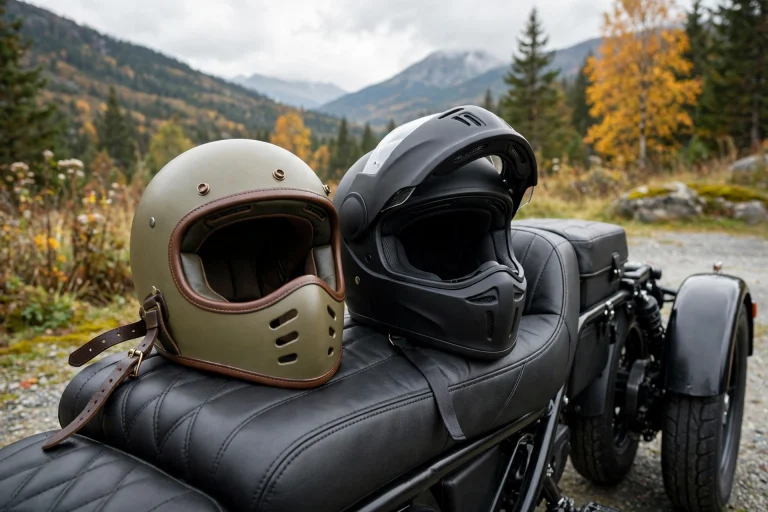
The best helmet for a trike passenger is one that fits well, meets a recognised motorcycle helmet standard, and suits the riding conditions. An open-face helmet is comfortable and gives a good view, which many passengers prefer, but it leaves the face exposed. A full-face helmet gives more protection and better weather cover, and it is often the better choice for longer rides or faster roads. A modular helmet, which lifts the chin bar up, is a useful compromise: the passenger can lift it at stops to talk or drink, then close it for riding.
Fit matters as much as type. A passenger helmet should be snug without pressure points, sit level on the head, and stay put when the passenger shakes their head. Because passengers do not always have their own helmet, it is worth checking the fit each time a different person rides on the trike, rather than assuming a spare helmet will fit anyone. A helmet that is too loose can shift in a crash, and one that is too tight will be uncomfortable within minutes.
How Should a Trike Passenger Wear a Helmet Comfortably?
Comfort matters, because a passenger who is uncomfortable will fidget, and fidgeting on the back of a trike can unsettle the machine. Make sure the helmet is fitted before the ride starts, with the strap done up snugly under the chin, and check that the passenger can see clearly over the rider’s shoulder. If the helmet has a visor, make sure it is clean and that the passenger knows how to open and close it, because a fogged visor is a common complaint for passengers who are not used to helmets.
For longer rides, earplugs or a helmet with good wind sealing can help, because the passenger sits in the full force of the wind behind the rider. A neck warmer can help in cold weather, though it should not interfere with the strap. If you want to understand the safety features on the helmet, reading about what MIPS is for helmets can help you make sense of one of the features you may see listed on the box, whether the helmet is for the rider or the passenger.
What Should the Rider Check Before Carrying a Passenger?
Before setting off with a passenger, the rider should check that the passenger has a helmet that fits, that the strap is done up, and that the passenger knows how to sit on the trike: feet on the footrests, hands holding the grab handles or the rider, and weight kept still, especially in turns. A passenger who leans the wrong way or shifts suddenly can change how the trike handles, so a short briefing before the first ride is worth the time.
The rider should also check that the trike is ready for two-up riding: tyre pressures, lights, and suspension settings if the trike has them. A trike handles differently with a passenger than without one, so the first few miles should be taken gently, with the rider getting used to the extra weight and the changed balance. A helmet is the passenger’s main protection, but a careful rider and a well-prepared trike are what keep the helmet from being needed.
Frequently Asked Questions
Q: Does a child passenger on a trike need a helmet?
A: Yes, in general terms a child passenger needs a helmet just as an adult does, and it must fit a child’s head properly. A loose adult helmet is not a substitute for a correctly sized child’s helmet.
Q: Can a trike passenger wear a bicycle helmet?
A: No, a bicycle helmet is not made for the speeds and forces of a motor vehicle. A trike passenger should wear a helmet made for motorcycle use that meets a recognised motorcycle helmet standard.
Q: Is a helmet needed for a short, slow trike ride?
A: Yes, because a crash can happen at any speed, and a passenger can be thrown off even at low speed. A helmet is worth wearing on every ride, however short it is.

Olivia
Writer at Helmet Today, covering helmet reviews, fit and riding safety.