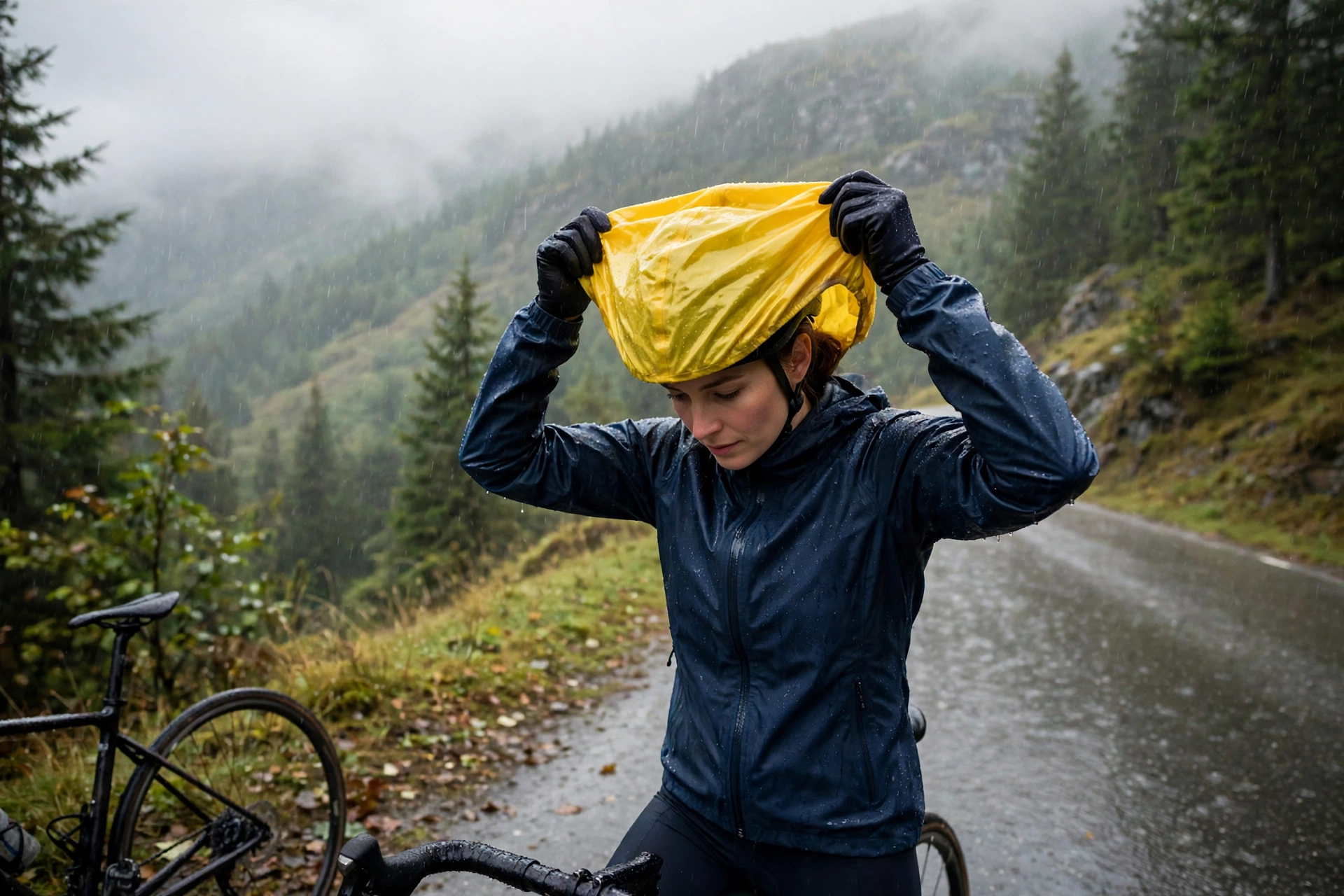
To fit a helmet cover for rain and mud, pull the stretchy cover over the helmet from front to back, smooth it down so it sits evenly over the shell, and fasten any strap or toggle underneath so it cannot blow off. In general terms, a good fit means the cover hugs the shell without sagging, leaves the vents and visor or goggles clear, and does not pull the helmet out of position on your head.
Helmet covers are simple, cheap, and easy to get wrong. A cover that is too loose flaps in the wind and lets rain in at the edges, while one that is too tight can distort the helmet or cover the vents you need. This guide walks through choosing the right size, fitting it properly, and keeping it in good shape through wet and muddy rides.
How Do You Choose the Right Helmet Cover Size?
Helmet covers are usually sold in sizes that match helmet sizes, such as small, medium, and large, or as a one-size stretch cover. The safest approach is to match the cover to your helmet’s size rather than guessing: a cover made for a small helmet will be too tight on a large one, and a large cover on a small helmet will sag and flap. If the maker lists helmet models the cover fits, check that list, because shell shapes vary and a cover shaped for a round shell may not suit a long, aerodynamic one.
Material matters too. A waterproof cover is usually made from a coated nylon or a similar water-resistant fabric, and it should keep rain off the shell and out of the vents. A mud cover, often used in cyclocross or mountain biking, may be a heavier fabric that also protects the shell from scratches and splashes. Some covers are brightly coloured or reflective, which adds visibility in poor weather, and that is a genuine bonus when rain and spray already make you harder to see. If you ride in both rain and mud, a waterproof cover with a snug fit covers both jobs.
What Is the Step-by-Step Way to Fit a Helmet Cover?
Start with the helmet off your head and the cover the right way round, with any reflective panel or logo at the back and any opening for a light or camera where you need it. Hold the front edge of the cover against the front of the helmet, then stretch it back over the crown and down the sides. Work it over the shell a little at a time, smoothing out folds as you go, until the cover sits evenly with no bunched fabric at the sides.
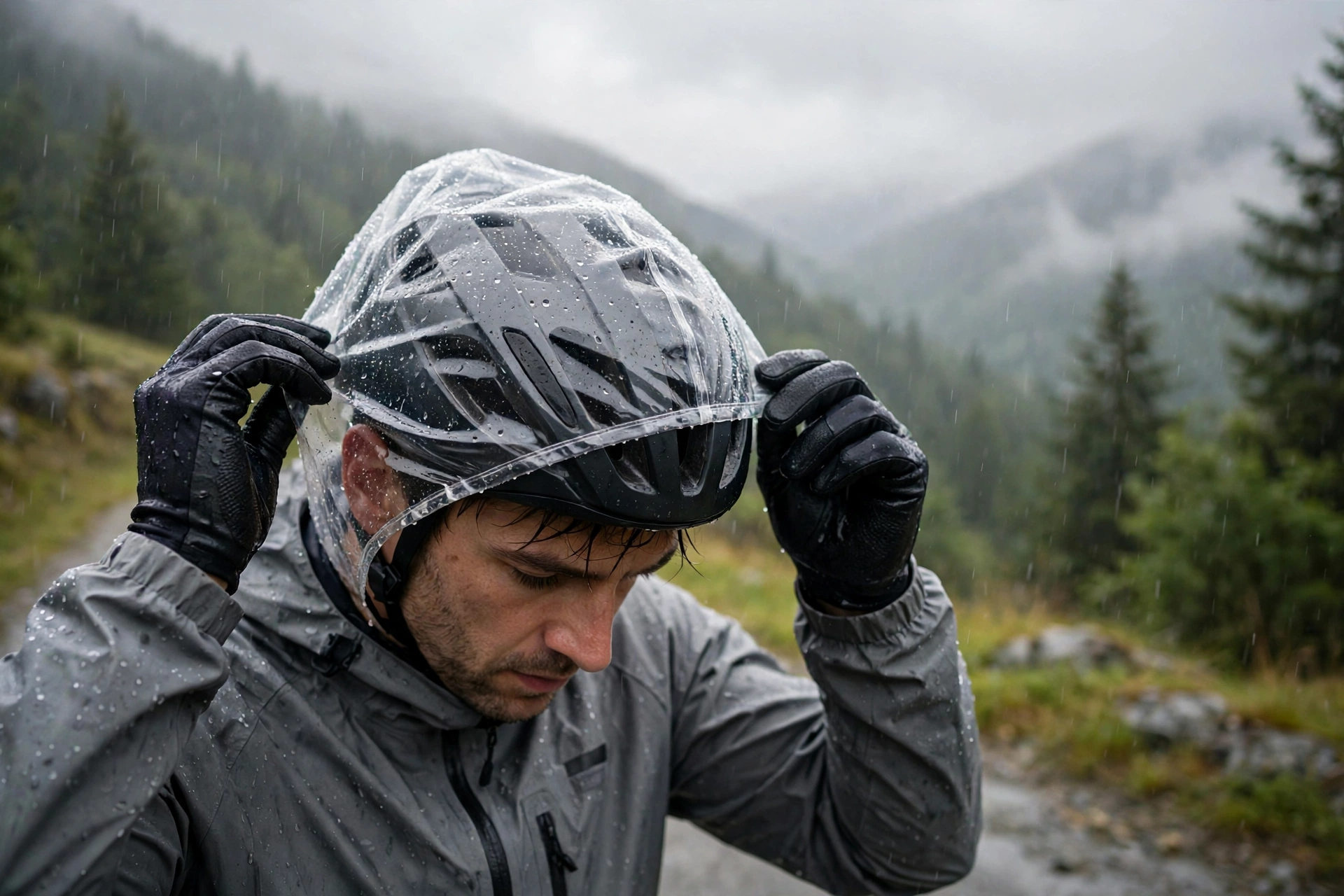
Once the cover is on, fasten it underneath. Many covers have an elastic hem that grips the bottom edge of the shell, and some add a toggle, a hook-and-loop strap, or a small clip that runs under the chin area. Pull the fastening snug, but not so tight that it pulls the cover out of shape or presses on the helmet’s vents. Then put the helmet on and check the fit: the cover should not shift when you shake your head, it should not cover your eyes or the front of your goggles, and the helmet should still sit level on your head.
Should a Helmet Cover Block the Vents?
A cover that blocks every vent will keep rain out, but it will also trap heat and sweat inside the helmet, which can fog goggles and make a long ride uncomfortable. In general terms, the best covers leave some airflow while still shedding rain: they cover the top vents that let rain in directly, but leave side or rear vents partly open, or they use a breathable waterproof fabric that lets moisture out while keeping rain off.
If your cover has vent openings or mesh panels, line them up with the helmet’s vents when you fit it, so you get the airflow the cover was designed for. On a short ride in heavy rain, full coverage matters more than airflow, and a fully sealed cover is fine. On a longer ride, or in light rain, a cover that breathes is more comfortable. After the ride, take the cover off and let both the cover and the helmet dry, because a damp cover left on a helmet can trap moisture against the shell and padding.
How Do Helmet Covers Cope with Mud?
Mud is a different problem from rain: it splashes up from the wheels and coats the shell, the vents, and the straps. A cover keeps most of it off the helmet itself, which means you can peel the cover off after the ride and have a clean helmet underneath. That is a real time-saver for cyclocross and mountain bike riders, who can otherwise spend a long time cleaning mud out of vents and padding.
For muddy riding, choose a cover that is easy to wash and quick to dry, and one that fastens securely, because a loose cover will let mud in at the edges and can slip off in a crash or a hard landing. A cover with a snug elastic hem and an under-chin strap holds best. After a muddy ride, rinse the cover with water and let it dry before folding it away, and check the helmet underneath for any mud that got in around the edges, especially in the vents and around the strap buckles.
How Do You Look After a Helmet Cover?
Helmet covers last longer if you treat them gently. Wash them with mild soap and water, and let them air-dry rather than putting them in a dryer, which can damage the waterproof coating. Check the elastic hem and any straps from time to time: elastic weakens with use and sun exposure, and a cover with a slack hem will not stay put. If the waterproof coating starts to wear, water will soak into the fabric instead of beading off, and at that point it is time to replace the cover.
Store the cover folded or rolled in a dry place, away from sharp objects that could tear it. Keep it somewhere easy to reach, such as a jersey pocket or a saddlebag, so you can put it on quickly when the weather turns. And remember that a cover is an accessory, not a substitute for the helmet itself: it should never change how the helmet fits or sits on your head. If it does, the cover is the wrong size or shape. Reading about what MIPS is for helmets can help you understand the protection inside the helmet you are covering, so you can choose accessories that work with it rather than against it.
Frequently Asked Questions
Q: Will a helmet cover make my helmet too hot?
A: It can, especially if it blocks all the vents. Choose a cover that leaves some airflow or uses breathable waterproof fabric, and take it off when the rain stops so heat and sweat can escape.
Q: Can I use a helmet cover on any helmet?
A: In general terms, yes, as long as the cover matches the helmet’s size and shell shape. A cover made for a road bike helmet may not fit a full face mountain bike helmet, so check the size and shape before buying.
Q: How do I stop a helmet cover blowing off at speed?
A: Make sure the elastic hem grips the bottom edge of the shell and fasten any under-chin strap or toggle. If the cover still blows off, it is probably too large for your helmet and you need a smaller size.

Olivia
Writer at Helmet Today, covering helmet reviews, fit and riding safety.