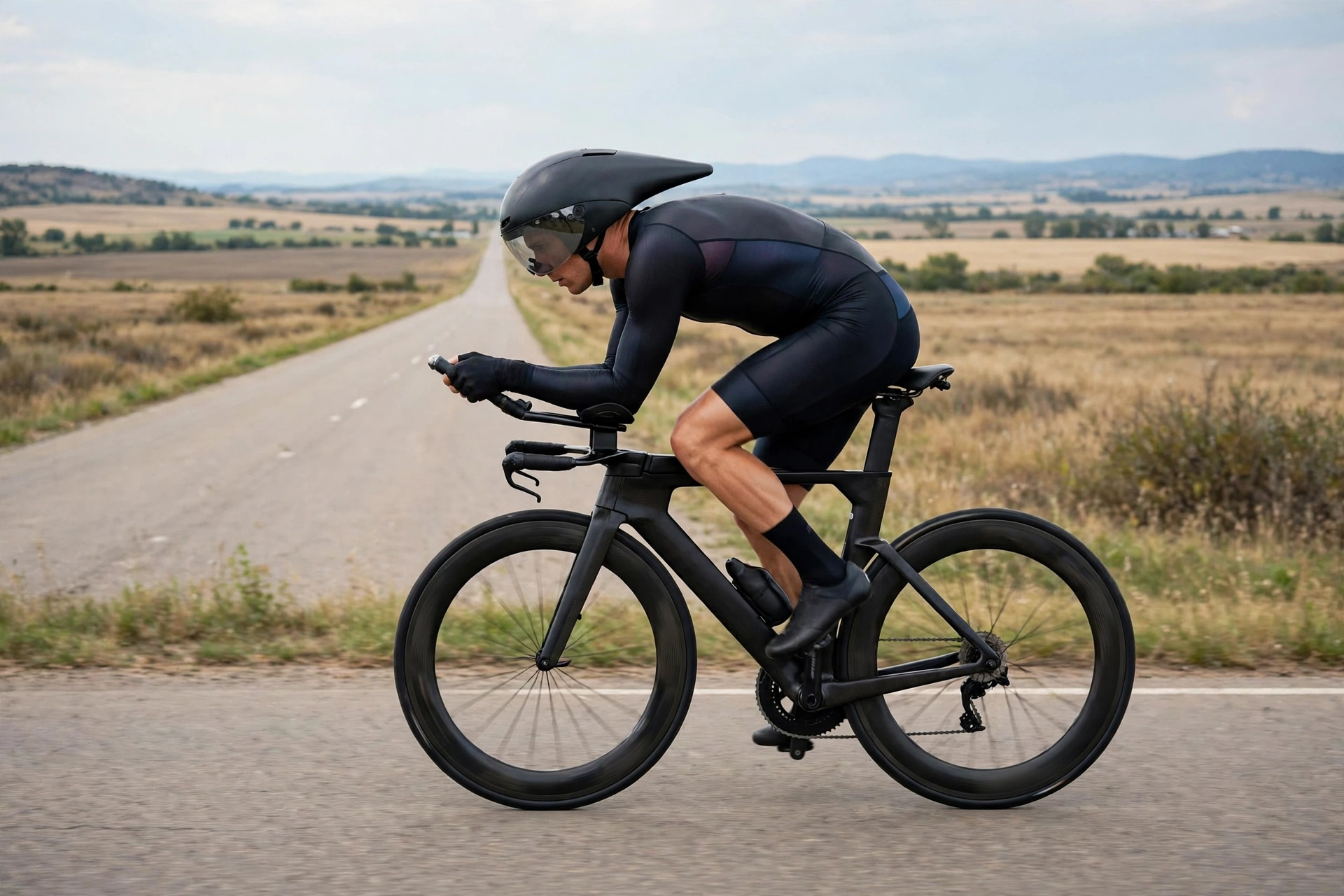
A time trial helmet is a long-tailed, smooth helmet built to cut aerodynamic drag, and the long tail exists to guide air cleanly off the back of the rider’s head and down their back. When a rider is tucked low in a time trial position, the tail fills the gap between the helmet and the shoulders, so air flows smoothly instead of tumbling into turbulence behind the head. In general terms, that smoother airflow is the whole point of the design.
Time trial helmets look strange compared with ordinary road helmets, and the long tail is the reason most people notice them. This guide explains why the tail is there, when it actually helps, what the trade-offs are, and whether a time trial helmet is worth considering for your own riding.
What Is a Time Trial Helmet?
A time trial helmet is a specialist cycling helmet designed for time trials, where a rider races alone against the clock over a set distance. There is no drafting, no pack to hide in, and no tactics beyond riding as fast as possible. Small aerodynamic gains matter, because the difference between winning and losing can be a matter of seconds over a long course.
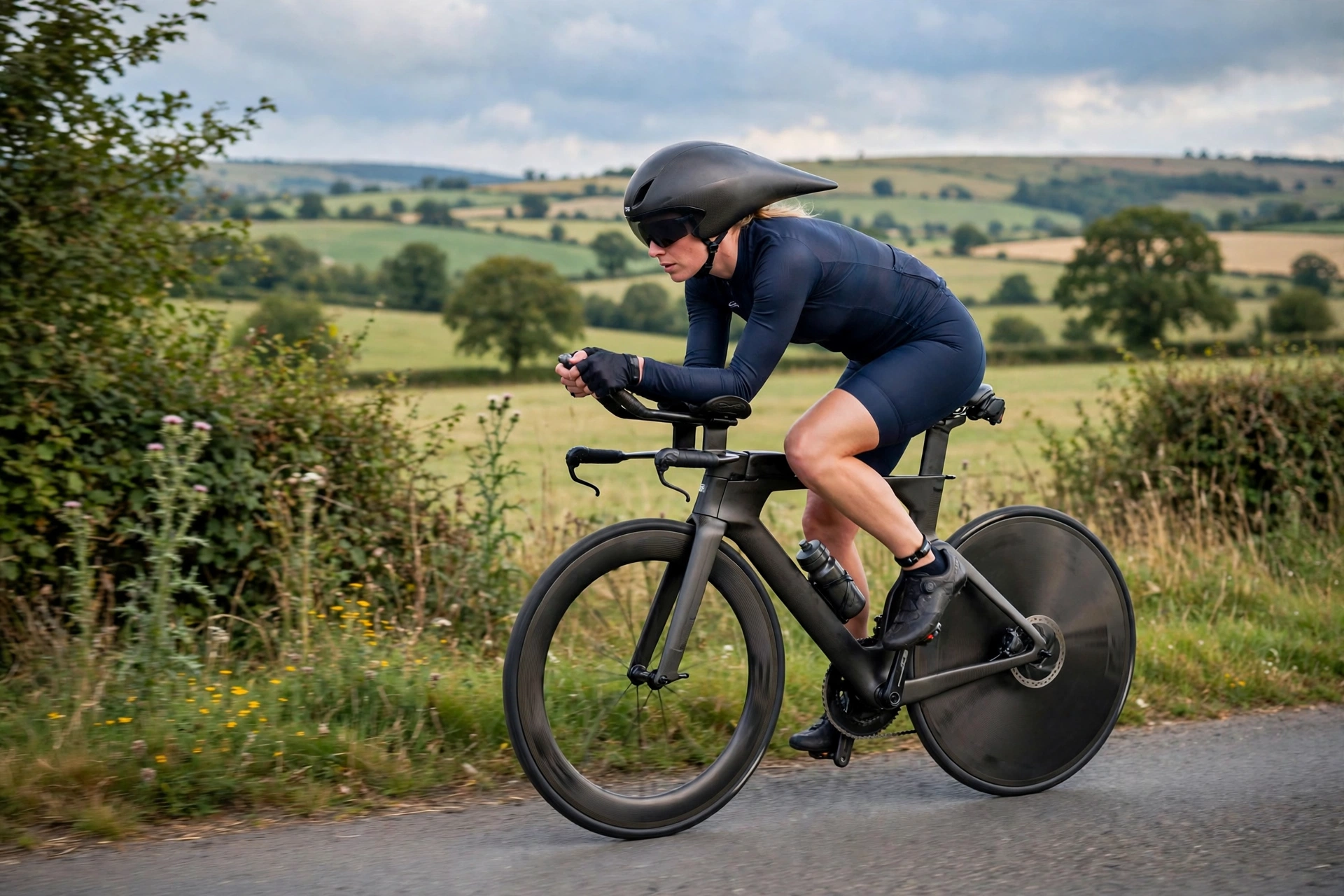
That is why time trial helmets look so different from road helmets. They have a smooth, enclosed shell with very few vents, a long tapered tail that extends backwards, and often a built-in visor instead of separate sunglasses. The visor keeps the front profile clean and removes the gap between glasses and helmet that can catch the wind.
Time trial helmets must still meet a recognised bicycle helmet safety standard for the region where they are sold. The long tail is not a structural weakness or a decorative extra; it is part of the aerodynamic shape, and it is designed to work with the rider’s tucked position rather than against it.
Why Does a Time Trial Helmet Have a Long Tail?
The long tail exists because of what happens to air as it flows over a rider’s head. At speed, air travels over the front of the helmet and needs somewhere to go. On a normal rounded helmet, it separates from the surface behind the head and becomes turbulent, which creates drag. The long tail gives the air a smooth surface to follow, guiding it down towards the rider’s back and letting it rejoin the airflow with less disturbance.
This only works when the rider is in the right position. A time trial rider is tucked low, with their head held still and their back flat, so the tail sits close to the back and forms a continuous line from helmet to shoulders. In that position, the tail does its job well. If the rider sits up, the tail sticks up into the air and stops helping, which is why time trial helmets are position-sensitive in a way road helmets are not.
The length of the tail is a balance. A longer tail can smooth the airflow more, but it is also heavier, harder to move with, and more likely to catch the wind from the side. Makers shape the tail to suit a typical tucked position, and some offer shorter-tail versions for riders who move their head more or who race on twisty courses.
How Much Difference Does the Tail Make?
In general terms, the tail helps, but how much depends on the rider, the course, and the position. A rider who holds a steady, low tuck on a flat, straight course will get more benefit than a rider who sits up often, looks around, or rides a hilly, technical course. The helmet is one part of a system that includes the bike, the wheels, the clothing, and the rider’s body position.
It is also worth remembering that the helmet alone does not make a rider fast. Position is far more important: a rider in a good tuck with a normal road helmet will usually be faster than a rider in a poor position with a time trial helmet. The tail is a finishing touch, not a substitute for good position and training.
That said, for riders who compete seriously in time trials, the tail is worth having. Over a long course, even a small reduction in drag adds up, and time trial racing is a discipline where seconds matter. For a rider who only does the occasional time trial for fun, the benefit is smaller, and a road helmet may be the more sensible choice.
What Are the Downsides of a Time Trial Helmet?
Time trial helmets have real trade-offs, and it is honest to name them. The first is heat. With very few vents, a time trial helmet traps warm air around the head, and on a hot day or a long course, that can be uncomfortable and distracting. Some riders find the heat affects their concentration more than the aerodynamic gain helps their speed.
The second is handling. A long tail catches crosswinds, and in gusty conditions it can tug at the rider’s head. The helmet is also heavier than a road helmet, and the visor can fog up in cold or damp weather. Hearing is slightly muffled too, because the enclosed shell covers more of the ears.
The third is practicality. A time trial helmet is awkward to carry and store, and the long tail is easy to damage if it knocks against something. It is also a helmet for one job only: it is not comfortable for a long road ride, a climb, or a ride in traffic. If you are learning about the features inside modern helmets, reading about what MIPS is for helmets can help you understand one of the options you may see when comparing models.
Should You Buy a Time Trial Helmet?
Buy a time trial helmet if you race time trials regularly and you already have your position sorted. It is a specialist tool for a specialist job, and it makes the most sense once the bigger gains — position, fitness, and the bike itself — are already in place. If you race a full season of time trials, the helmet will earn its place.
Do not buy one if you only ride time trials occasionally, or if you are looking for a general-purpose helmet. A good road helmet is lighter, cooler, more comfortable, and far more versatile, and it will serve you well on a time trial course too. Start with the road helmet, work on your position, and add a time trial helmet later if the racing justifies it.
Frequently Asked Questions
Q: Does the long tail make a time trial helmet unsafe?
A: Not in general terms. Time trial helmets must meet the same recognised safety standards as other bicycle helmets. The tail is part of the aerodynamic shape and is designed to work with a tucked riding position.
Q: Can I wear a time trial helmet on a normal road ride?
A: You can, but it is not a good idea. The lack of vents makes it hot, the tail sticks up when you sit up, and crosswinds can tug at your head. A road helmet is far more comfortable for everyday riding.
Q: Do I need a visor on a time trial helmet?
A: Not necessarily. Many time trial helmets have a built-in visor that keeps the front profile clean, but some riders prefer to wear sunglasses instead. Either can work, so choose whichever feels more comfortable and gives you a clear view.

Olivia
Writer at Helmet Today, covering helmet reviews, fit and riding safety.