
A velodrome helmet and a road helmet are built for different kinds of riding, and in general terms, the main differences are shape, ventilation, and weight. A velodrome helmet is usually smoother and more enclosed, with fewer vents and a shape designed to cut through the air on a banked indoor track. A road helmet is lighter and far more ventilated, with larger vents and a shape designed for long rides in changing weather and traffic.
Neither helmet is simply better than the other. The right choice depends on where you ride most. A rider who spends most weekends on the road will get far more from a road helmet, while a rider who races on the track may benefit from a velodrome helmet’s aerodynamic shape. This guide explains the differences in plain terms, so you can decide which one fits your riding.
What Is a Velodrome Helmet?
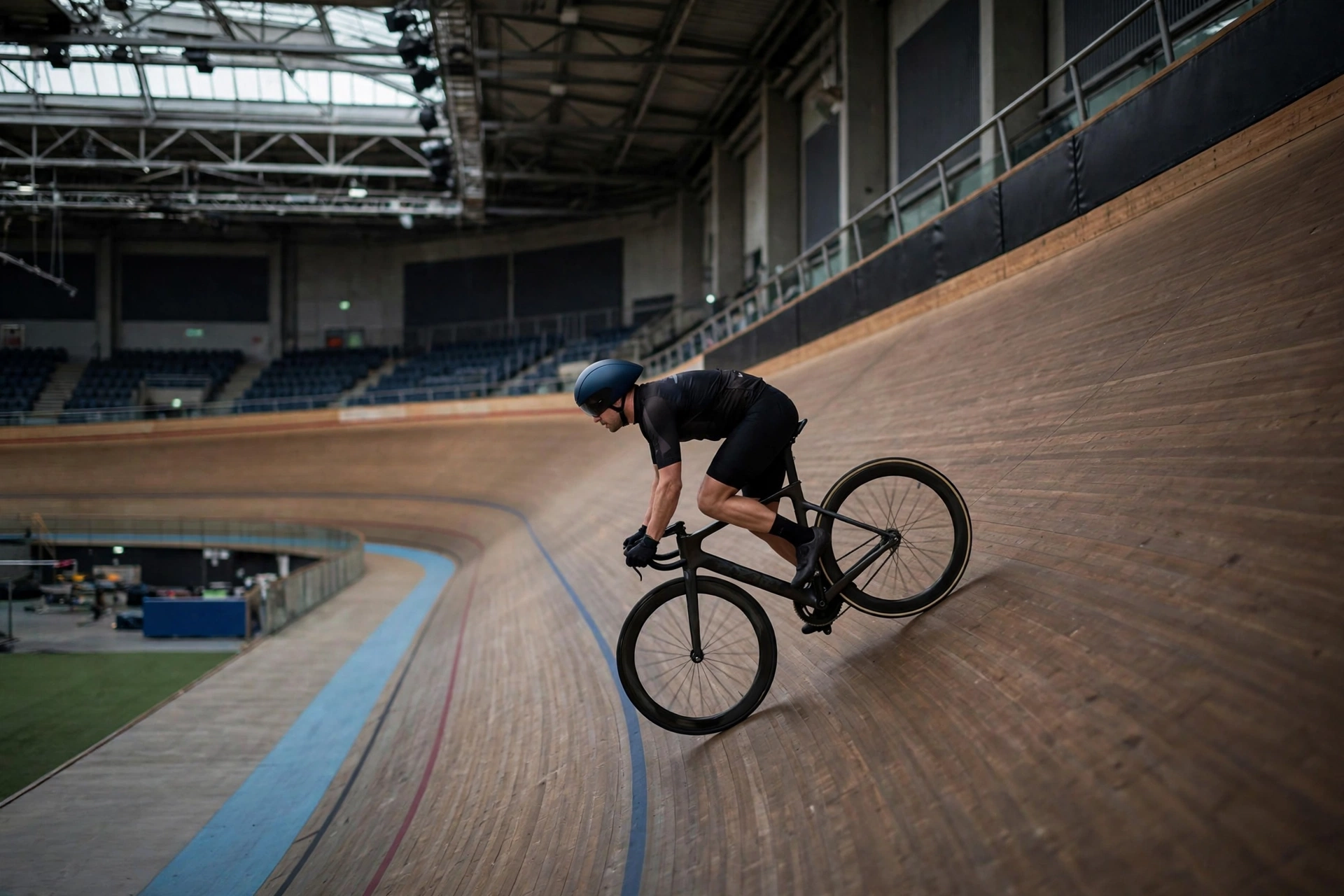
A velodrome helmet is a helmet designed for track cycling, which takes place on a steeply banked oval track, usually indoors. Track racing is fast, smooth, and predictable: there is no wind to fight in the same way as on the road, no traffic, no potholes, and no long climbs in hot sun. Riders hold a steady, tucked position and ride at high speed for relatively short efforts.
Because of that, velodrome helmets are shaped for aerodynamics above all else. Many have a smooth, rounded shell with very few vents, and some are full teardrop or long-tail designs that extend backwards over the rider’s neck. The idea is to let air flow smoothly over the helmet and the rider’s back without the turbulence that vents create. Some track helmets also have a built-in visor instead of separate glasses, which keeps the front profile clean.
Velodrome helmets still have to meet a recognised bicycle helmet safety standard for the region where they are sold, just like road helmets. The difference is in the priorities: a track helmet trades ventilation and lightness for a smoother shape, because on an indoor track, overheating is less of a concern.
What Is a Road Helmet?
A road helmet is designed for riding on open roads, where conditions change constantly. You climb hills in the sun, descend at speed, ride into headwinds, stop at junctions, and sometimes ride for hours at a time. Comfort over a long ride matters just as much as protection, and that shapes every part of a road helmet’s design.
Road helmets are light, with large vents that let air flow over your head and carry heat and sweat away. The shell is shaped to work with sunglasses, and the fit system at the back lets you adjust the helmet with one hand while riding. Most road helmets have a fairly compact, rounded shape, so they stay comfortable whether you are sitting upright or tucked low on the drops.
Road helmets are also made to be practical. They are easy to carry, easy to store, and they work well with a cycling cap underneath in cold weather. If you are learning about the technology inside modern helmets, reading about what MIPS is for helmets can help you understand one of the features you may see listed on the box.
How Do Velodrome and Road Helmets Differ in Shape?
Shape is the most visible difference between the two. A velodrome helmet is often longer and smoother, with a tail that extends backwards to fill the gap between the helmet and the rider’s back. When a track rider is in a tucked position, that long tail helps air flow cleanly off the helmet instead of tumbling into turbulence behind the head.
A road helmet, by contrast, is shorter and rounder. That shape works better across the range of positions a road rider uses: sitting up on a climb, tucked on the flat, and leaning into a descent. A long tail would stick up into the air whenever the rider sat up, which would create drag rather than reduce it.
How Do Ventilation and Weight Compare?
Ventilation is where the two helmets diverge most. A road helmet may have twenty or more large vents, with channels inside the shell that guide air over the scalp. On a long ride in warm weather, that airflow makes a real difference to comfort and concentration. A hot, sweaty head is a distracted head, and distraction on a busy road is a problem.
A velodrome helmet has far fewer vents, and some have almost none. On an indoor track, the air is cool and still, efforts are short, and riders are not climbing in direct sun, so the lack of vents is not the drawback it would be on the road. But take that same helmet out on a summer road ride and the heat builds up fast, with nowhere for it to go.
Weight follows a similar pattern. Road helmets are built light, because grams matter on a long climb and a heavy helmet becomes tiring over hours in the saddle. Velodrome helmets can be a little heavier, since the smooth shell adds weight, but track efforts are short enough that the extra weight is rarely noticed.
Can You Use a Velodrome Helmet on the Road?
You can use a velodrome helmet on the road in the sense that it will still protect your head, but in general terms, it is not a good choice for everyday road riding. The lack of ventilation makes it hot, the long tail works against you whenever you sit up, and the shape can make it harder to hear traffic around you. Some track helmets with built-in visors can also fog up or limit your view in rain.
There is also the question of practicality. A long-tail helmet is awkward to carry, awkward to store, and easy to damage if it knocks against something in a bag. A road helmet is made to be tossed in a pannier or hung on a hook without fuss.
The reverse is also worth noting: a road helmet works fine on a velodrome for training and casual track sessions. Many riders start on the track in their road helmet and only switch to a dedicated track helmet when they begin racing seriously.
Which Helmet Should You Choose?
Choose a road helmet if most of your riding is on open roads. It is lighter, cooler, more comfortable over long rides, and better suited to the changing positions and conditions of road cycling.
Choose a velodrome helmet if you race on the track regularly and want every aerodynamic advantage you can get. Even then, keep your road helmet for training rides and warm-up laps, and use the track helmet for the races where its shape actually helps.
Frequently Asked Questions
Q: Is a velodrome helmet safer than a road helmet?
A: Not in general terms. Both must meet a recognised safety standard, and neither is inherently safer. A velodrome helmet is more aerodynamic; a road helmet is lighter and better ventilated. Safety depends more on fit and on wearing the helmet every ride.
Q: Can I wear my road helmet at the velodrome?
A: Yes, for training and casual track sessions a road helmet is fine and is what most riders start with. A dedicated track helmet is mainly for riders who race regularly and want the aerodynamic benefit.
Q: Why do velodrome helmets have so few vents?
A: Vents create turbulence, which slows a rider down at track speeds. On an indoor track the air is cool and efforts are short, so the aerodynamic gain is worth more than the ventilation that would matter on a hot road ride.

Olivia
Writer at Helmet Today, covering helmet reviews, fit and riding safety.