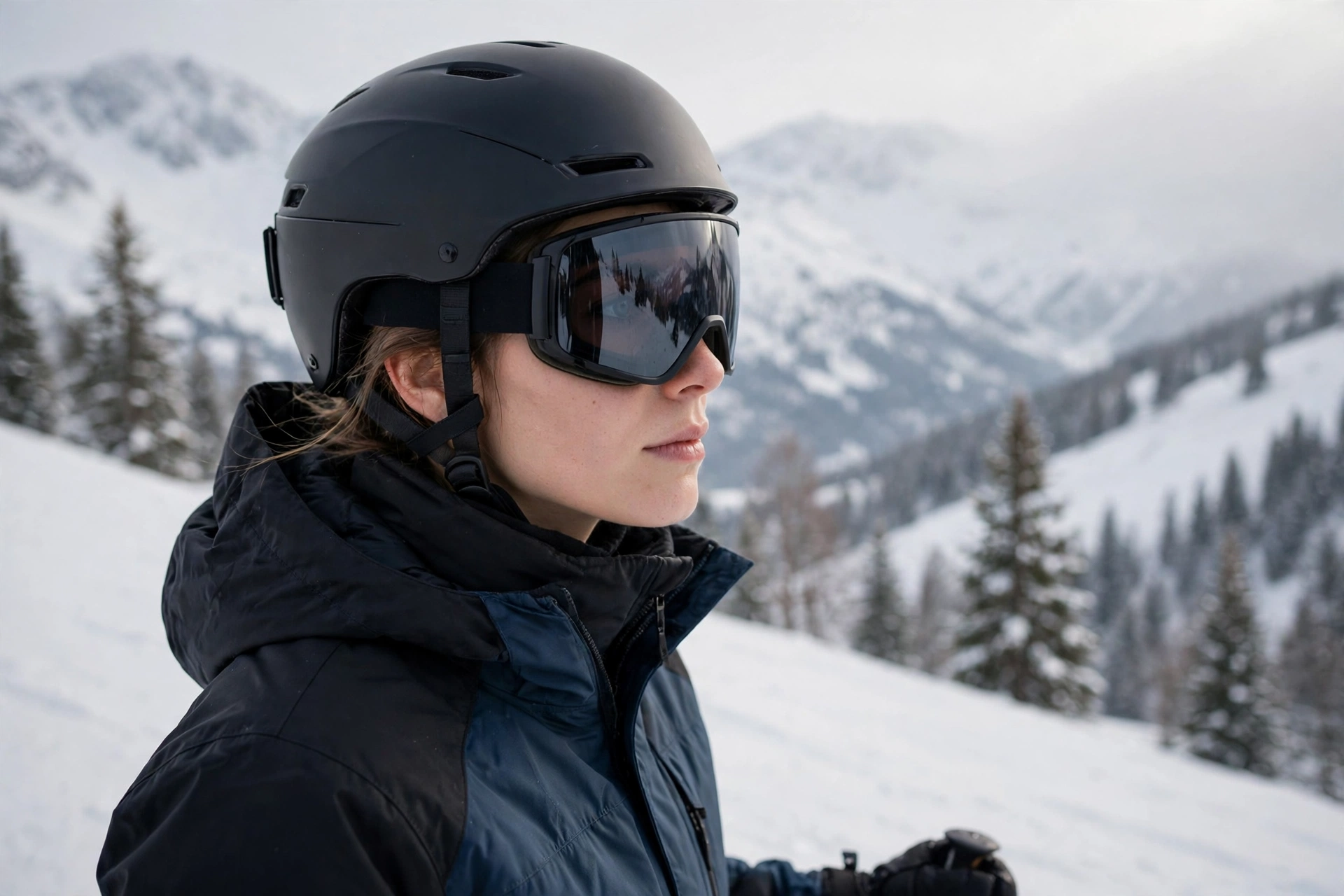
In general terms, a women’s ski helmet should fit snugly all round, sit level just above the eyebrows, and stay put when you shake your head — with no pressure points, no sliding forward, and enough room to wear it comfortably with goggles. Many women’s ski helmets are shaped for a slightly narrower head and a lower volume at the back, and some offer a ponytail opening, but the fit test is the same for everyone: snug, level, stable, and comfortable for a full day on the slopes.
Skiing is a long day in cold, changing conditions, so a helmet that fits well matters more than one that simply looks right. A helmet that is too loose will slide over your eyes on a turn, while one that is too tight will give you a headache by lunchtime. This guide explains what to look for in a women’s ski helmet, how to measure and try one on, and how to check the fit with goggles, hair, and a warm layer underneath.
How Do You Measure for a Women’s Ski Helmet?
Start by measuring your head with a soft tape measure. Wrap the tape around the widest part of your head, just above the eyebrows and ears, and keep it level all the way round. Take the measurement twice to be sure, and write it down in centimetres. Then compare that number with the size chart of the helmet you are considering, because sizes can vary between makers and between models from the same maker.
Think about how you will wear your hair on the slopes. If you usually wear a low ponytail, a braid, or a thin beanie under your helmet, try the helmet on with your hair in that style. A helmet that fits with loose hair may feel tight with a ponytail, and a helmet with a ponytail opening can make a real difference to comfort if that is how you ski. Measure and try on the helmet in the way you will actually wear it.
What Does a Good Women’s Ski Helmet Fit Feel Like?
A good fit feels snug all round, without a hard pressure point on the forehead, the temples, or the back of the head. When you put the helmet on, it should sit level, with the front edge just above your eyebrows — about the width of two fingers above them. It should not tilt back, exposing your forehead, and it should not sit so low that it presses on your eyebrows or blocks your view.
Shake your head gently from side to side and up and down. The helmet should move with your head, not slide around on its own. If it wobbles, it is too loose. If it leaves a red mark after a few minutes, or if it hurts at one spot, it is the wrong shape or the wrong size for you. The padding should touch your head evenly, with no gaps at the sides or the back.
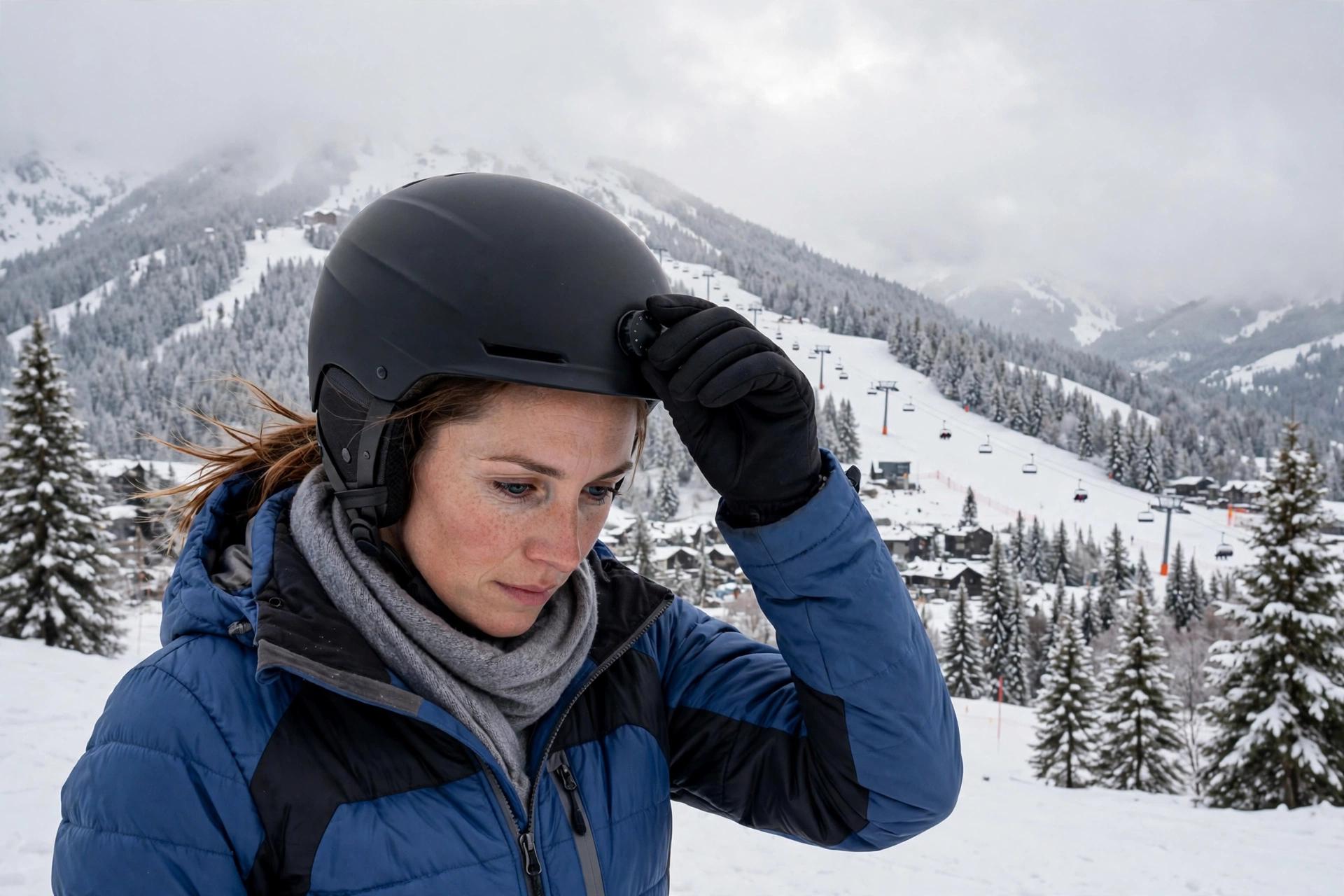
Use the fit system if the helmet has one. Many ski helmets have a dial or a simple adjustment at the back that tightens the inner band. Turn it until the helmet feels snug but not tight, and check that you can still move your jaw comfortably. The chin strap should sit snugly under your chin, with room for about two fingers between the strap and your chin, and it should hold the helmet firmly without digging in.
How Should a Women’s Ski Helmet Work with Goggles?
Goggles and a helmet need to work together, because a gap between them lets cold air in and can cause fogging. When you try on a helmet, bring your goggles with you, or try on a pair in the shop. Put the helmet on first, then the goggles, and check that the top of the goggles meets the front of the helmet with no bare skin showing — the gap that skiers call “goggle gap” should not be there.
The goggles should sit comfortably against your face without pressing hard on your nose, and the strap should fit over the helmet without slipping. Many ski helmets have a clip or a grip at the back to hold the goggle strap in place, so check that it works with your strap. If the goggles push the helmet up or the helmet pushes the goggles down, the pair does not match well, and you may need a different helmet or a different goggle shape.
What About Hair, Ponytails, and Warm Layers?
Hair makes a real difference to ski helmet fit, and it is worth planning for it. A low ponytail or a braid can change how a helmet sits at the back, so try the helmet on with your usual style. Some women’s ski helmets have a ponytail opening or a lower cut at the back that leaves room for tied hair, while others are shaped to sit comfortably over a braid without pressing on it. If you wear your hair loose, make sure it does not bunch up under the helmet and create a pressure point.
A thin beanie or a balaclava under the helmet can also change the fit. If you plan to wear one on cold days, try the helmet on with it, because a helmet that fits without a layer may feel tight with one. In general terms, a helmet should be tried on in the full set-up you will ski in, including any ear warmers or a neck gaiter that sits under the chin strap.
What Else Should You Check Before You Buy?
Before you buy, check the helmet’s weight and ventilation. A lighter helmet is less tiring over a full day, and vents you can open and close let you control warmth as the weather changes. Check that the vents are easy to adjust with gloves on, because you will not want to take your gloves off on a cold chairlift to change a setting. Also check that the helmet is compatible with any audio system or other accessory you plan to use.
Make sure the helmet meets the standard required for the slopes where you ski, and check the maker’s guidance on when to replace it. A helmet that has taken a hard impact should be checked and usually replaced, even if the damage is not visible. It is also helpful to understand the technology inside modern helmets, and reading about what MIPS is for helmets can help you understand one of the features you may see listed on a ski helmet.
Frequently Asked Questions
Q: Are women’s ski helmets different from men’s ski helmets?
A: In general terms, some are shaped for a slightly narrower head and lower volume at the back, and some have a ponytail opening. The fit test is the same, though: snug, level, stable, and comfortable with goggles.
Q: How tight should a women’s ski helmet feel?
A: It should feel snug all round, with even contact and no hard pressure point. It should stay put when you shake your head, and the chin strap should be snug with room for about two fingers.
Q: Should I try a ski helmet on with my goggles?
A: Yes. Try the helmet and goggles together to check for a gap between them, and make sure neither one pushes the other out of place. A good match keeps you warm and gives a clear view.

Olivia
Writer at Helmet Today, covering helmet reviews, fit and riding safety.