To store a helmet in a car boot safely, put it in its soft bag or hard case, place it where it cannot roll or slide, keep it out of direct sunlight, and never put heavy luggage on top of it. A car boot is a convenient place for a helmet, but it is also hot, bumpy, and full of hard objects, so a little care goes a long way.
Many riders keep a helmet in the car boot — on the way to a ride, after a ride, or between regular trips. It is easy to see why: the boot is out of the way, the helmet is always with you, and you do not have to carry it around. But a car boot is not a helmet store. It gets very hot in summer, very cold in winter, and everything in it slides around when you drive. This guide explains how to use the boot safely.
Why Is a Car Boot Hard on a Helmet?
Heat is the biggest problem. On a sunny day, the inside of a car boot can get far hotter than the air outside, and that heat ages the materials inside a helmet. The liner can dry out and go hard, the shell can be affected, and glues and foams can weaken over time. A helmet left in a hot boot day after day will not last as long as one stored indoors, and in general terms it is best to treat the boot as a short-term stop, not a permanent home.
How Should You Place a Helmet in the Boot?
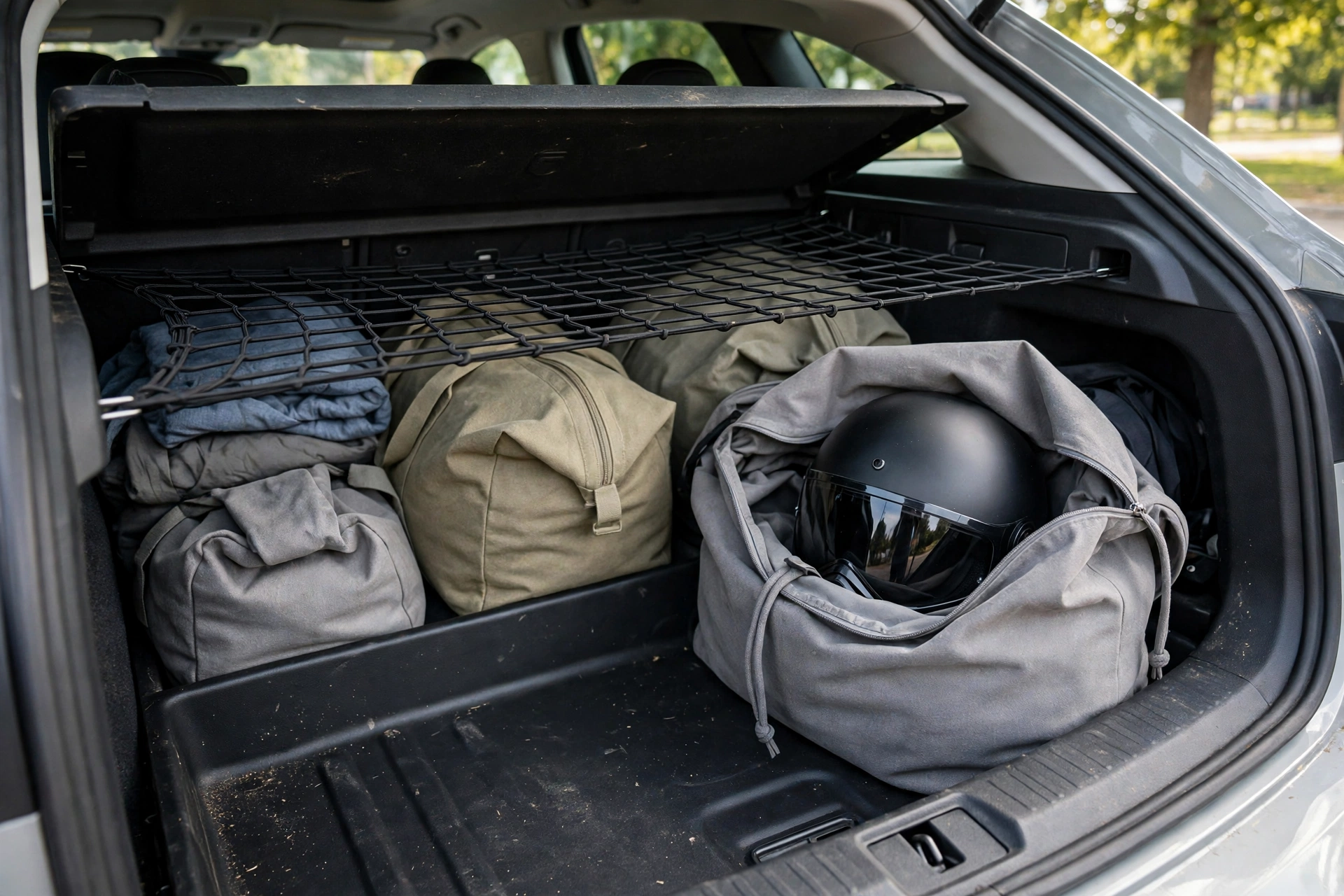
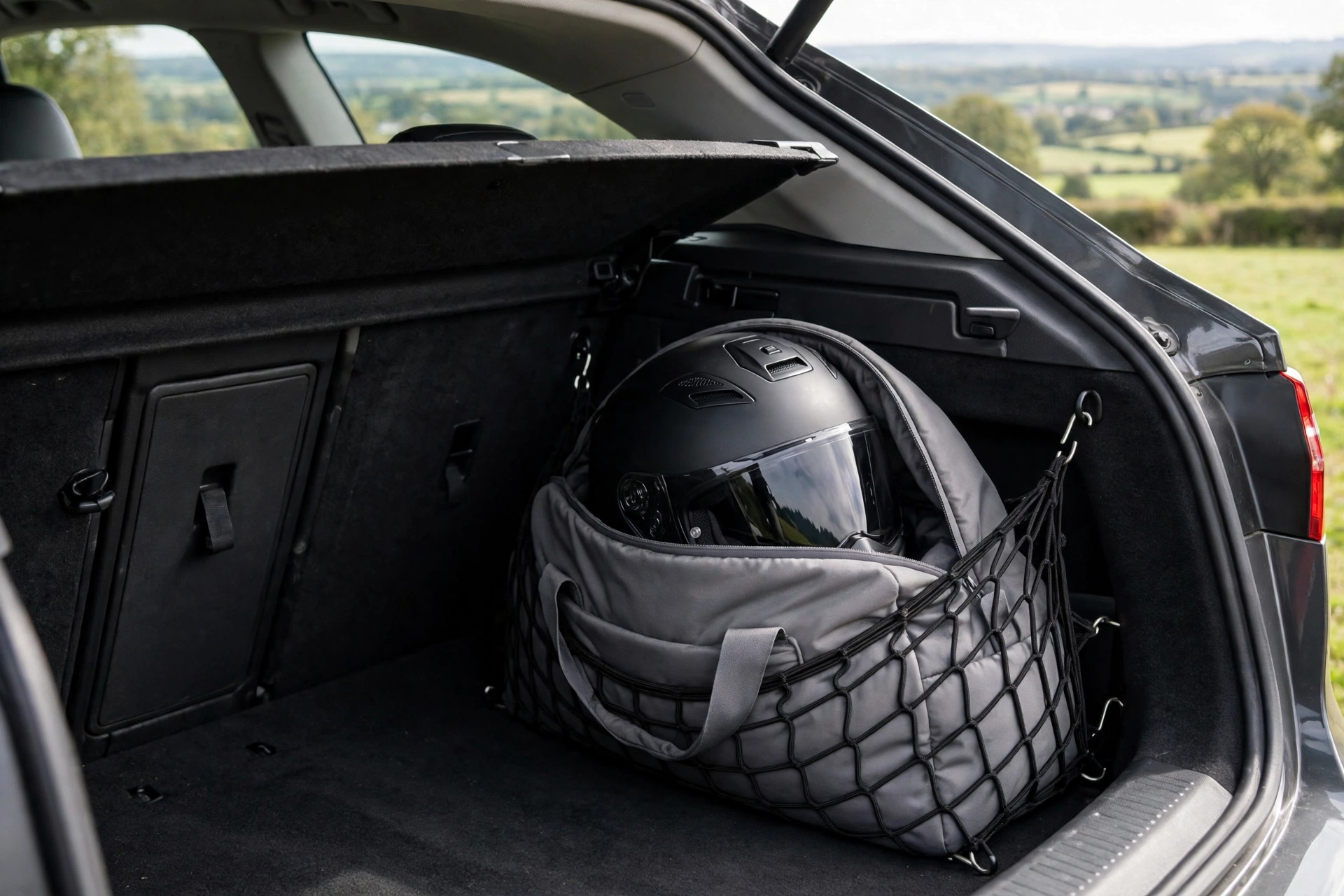
Put the helmet in its soft bag or hard case first. The bag keeps it clean and stops it scratching against other objects, while a hard case gives real protection against knocks. If you have neither, wrap the helmet in a clean towel or a soft cloth — anything is better than a bare shell rolling around loose.
Place the helmet in a spot where it cannot roll or slide. A corner of the boot, wedged gently between soft bags, works well, and a boot net, a storage box, or a non-slip mat can hold it in place. Put the helmet the right way up, with the opening facing down or to the side, so it cannot fill with dust or small objects. Never put the helmet on top of a pile where it can fall off when you open the boot.
Keep heavy objects away from the helmet. A toolbox, a bag of shopping, or a set of golf clubs should never sit on top of a helmet, because the weight can press on the shell and damage the liner inside. If the boot is full, put the helmet on the back seat in its bag, or take it indoors — it is better to carry the helmet than to crush it.
How Do You Protect a Helmet from Heat in the Boot?
The simplest answer is to limit the time the helmet spends in the boot. Take it indoors when you get home, and do not leave it in the car overnight or for days at a time, especially in summer. A helmet that is only in the boot for the drive to and from a ride is fine; a helmet that lives in the boot all summer is not.
Parking in the shade helps, and so does a boot liner or a light-coloured cover that reflects heat. If you must leave the helmet in the car for a few hours, put it in the passenger footwell or on the back seat in its bag, where it is shaded and a little cooler, rather than in the boot. In very hot weather, even a few hours in a closed car can be enough to make a helmet uncomfortably hot to the touch.
After a ride, let the helmet cool and dry before it goes in the boot. A sweaty helmet shut in a hot boot will steam up, and the damp can lead to smells and mould in the padding. If you can, air the helmet for a few minutes before you pack it away, and when you get home, take it out and let it dry properly in the open air.
What Should You Never Do with a Helmet in a Car Boot?
Never put a helmet in the boot with fuel, oil, solvents, or strong cleaning products. The fumes can damage helmet materials, and a spill can ruin a helmet outright. Keep the helmet away from anything chemical, and if you carry such products in the boot, put them in a sealed container on the opposite side from the helmet.
Never hang a helmet from a hook or a strap inside the boot, and never wedge it so tightly that the shell is under pressure. A helmet should sit freely, without anything pressing on it. And never leave a helmet loose in the boot — a helmet that rolls around will be scratched, and in a sudden stop it becomes a projectile.
If you are learning about how helmets handle different kinds of impact, reading about what MIPS is for helmets can help you understand one of the technologies used in modern helmet design. The liner that protects your head is easily damaged by heat and hard knocks, which is why careful storage in the car matters.
Is It Better to Take the Helmet Indoors?
In general terms, yes. A helmet stored indoors, on a wall mount or a shelf, in the open air and out of sunlight, will last longer and stay in better condition than one that lives in a car boot. The boot is fine for transport, but the house is the right place for storage. Make it a habit: when you get home, take the helmet out of the car with you, just as you would take your keys and your bag.
If you ride every day and the helmet is always in the car, that habit matters even more. A few seconds to carry the helmet indoors protects an expensive piece of safety kit, and it means the helmet is dry, cool, and ready for the next ride. It also means you can check it over — a quick look at the shell, the strap, and the visor takes a moment and can catch a problem early.
Frequently Asked Questions
Q: Can I leave my helmet in the car boot overnight?
A: In general terms, it is better not to, especially in hot or very cold weather. Bring the helmet indoors overnight so it stays cool, dry, and safe from temperature extremes.
Q: Should I store my helmet in a bag in the boot?
A: Yes — a soft bag or hard case protects the shell from scratches and light knocks, and it keeps dust and dirt off. Make sure the helmet is dry before it goes in the bag.
Q: Is it safe to drive with a helmet loose in the boot?
A: No. A loose helmet can roll around, get damaged, and become a heavy object flying around the car if you brake hard. Secure it in a corner with a net or a storage box, and never put heavy luggage on top of it.

Olivia
Writer at Helmet Today, covering helmet reviews, fit and riding safety.