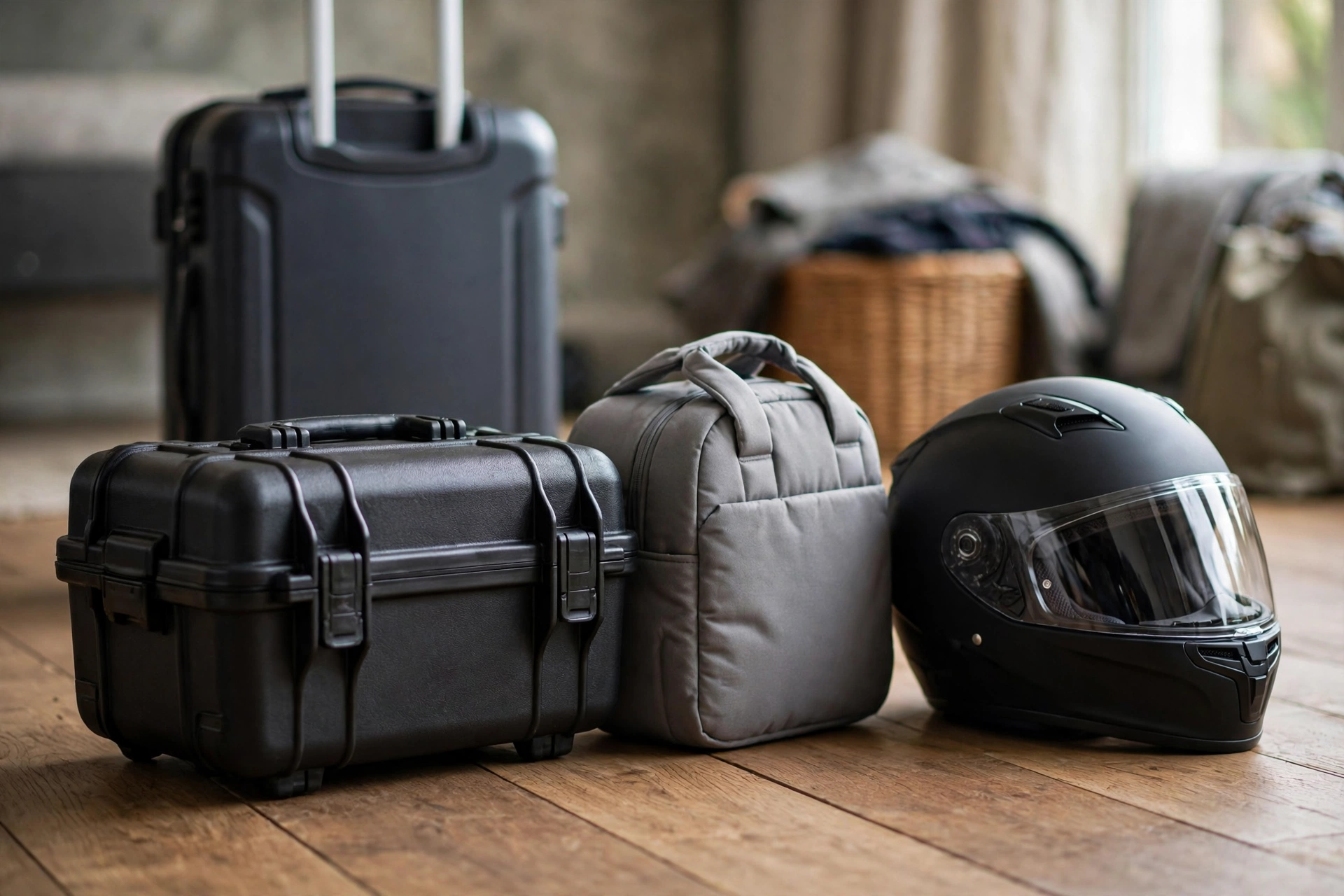
A helmet travel case is a hard, shaped shell that protects a helmet from knocks, crushing, and scratches, while a soft bag is a padded fabric cover that protects against dust and light scuffs but not against hard impacts. The case is the safer choice for flights and rough travel, and the bag is the lighter, simpler choice for short trips and everyday carrying.
If you travel with a helmet — to a race, a holiday, a training camp, or a riding trip — you need something to carry it in. A bare helmet tossed into a bag or a car boot will pick up scratches, and a hard knock in transit can damage it in ways you cannot see. The two main options are a hard travel case and a soft bag, and they suit different kinds of travel. This guide explains the difference so you can choose the right one.
What Is a Helmet Travel Case?
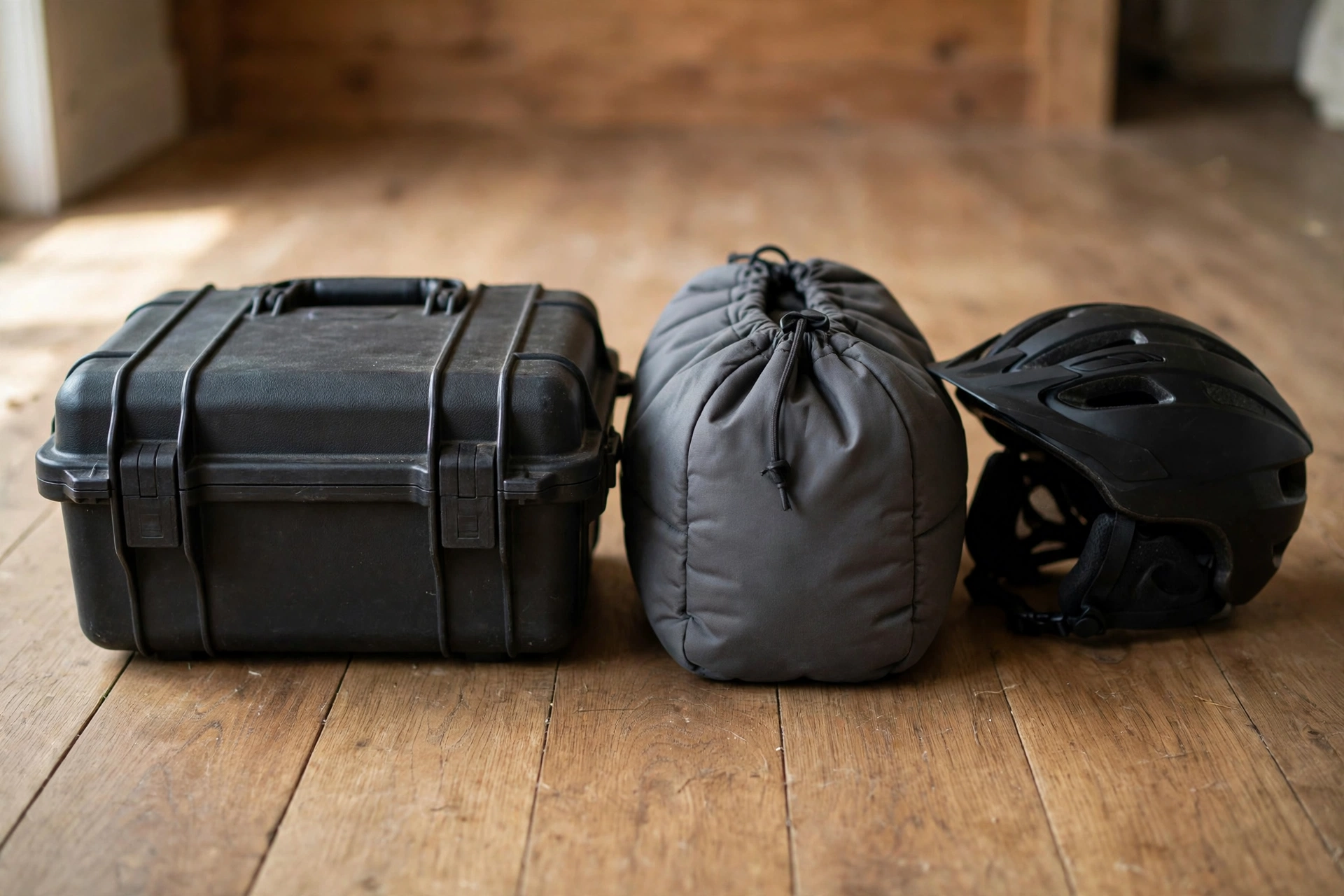
A helmet travel case is a hard shell, usually made of moulded plastic or a tough composite, shaped to fit a helmet closely. It closes with latches or a zip, and the inside is lined with foam or soft fabric that holds the helmet still. The hard shell spreads the force of a knock or a drop, so the helmet inside is protected from the kind of impacts that happen when luggage is thrown, stacked, or dropped.
Cases come in sizes to fit different helmet types, from small bike helmets to large full face motorcycle helmets, and some have room for extras such as a spare visor, goggles, or gloves. A good case has a comfortable handle, and some have wheels or a shoulder strap for easier carrying through an airport or a station. Look for a case with a strong latch that will not pop open if the case is dropped.
What Is a Helmet Soft Bag?
A helmet soft bag is a padded fabric cover, usually with a drawstring or a zip, that fits over a helmet like a sack. It protects the helmet from dust, light scratches, and scuffs, and it keeps the helmet clean in a cupboard or a car boot. Most helmet makers include a soft bag with a new helmet, and they are cheap and easy to buy on their own.
Soft bags are light, fold flat when empty, and take up almost no space, which makes them ideal for everyday use. If you carry your helmet to work, to the gym, or to a friend’s house, a soft bag is all you need. It also works well inside a larger bag or suitcase, where the other luggage around it gives some protection. A soft bag with a carry handle or a shoulder strap is easier to carry than one with just a drawstring.
The limit of a soft bag is that it does not protect against hard knocks. If a heavy bag falls on it, or if it is dropped onto concrete, the helmet inside can still be damaged. A soft bag is a dust cover and a scratch guard, not impact protection, and it should not be relied on for air travel or for any journey where the helmet will be handled roughly.
Which One Should You Choose for Flying?
For flying, a hard travel case is the better choice in general terms. Checked luggage is stacked, thrown, and squeezed, and a helmet in a soft bag inside a suitcase can be crushed by the weight of other bags. A hard case keeps its shape under pressure and protects the helmet from the knocks that are part of air travel. If you can, carry the case as hand luggage, where you control how it is handled.
If you must check the helmet in, put the helmet in its hard case, and pack soft clothing around the case inside the suitcase for extra padding. Make sure the case is latched or zipped shut, and that nothing heavy is packed directly on top of it. When you arrive, check the helmet before you ride: look at the shell for cracks, check the strap, and make sure the visor is undamaged.
Which One Is Better for Everyday Use?
For everyday carrying, a soft bag wins on simplicity. It is light, it folds away, and it is enough for the gentle handling a helmet gets on a normal day. If you ride to work and carry your helmet into the office, a soft bag keeps it clean and stops it scratching against other things in your bag. It also stops the helmet picking up dust on a shelf at home.
A hard case is overkill for a short trip across town, but it earns its keep on longer journeys by car, train, or coach, where luggage gets stacked and moved around. If you are driving to a riding weekend with several bags in the boot, a hard case protects the helmet from the other luggage shifting around on the road.
If you are learning about how helmets handle different kinds of impact, reading about what MIPS is for helmets can help you understand one of the technologies used in modern helmet design. The protection inside a helmet is delicate, which is why the way you carry it matters as much as the way you wear it.
Can You Use Both a Case and a Bag?
Yes, and many riders do. A soft bag inside a hard case gives the best of both: the bag keeps the helmet clean and stops it rattling inside the case, while the case gives the hard protection. When you arrive, you can take the helmet out in its soft bag for everyday carrying, and leave the case at your hotel or at home.
At home, a soft bag is the right storage for a helmet on a shelf or in a cupboard, because it keeps dust off without trapping damp. Make sure the helmet is fully dry before it goes in the bag, and store it in the open air when you can, rather than sealed away for months. A helmet that is put away damp can go musty, and mould can grow in the padding.
Frequently Asked Questions
Q: Is a soft bag enough protection for a helmet in a car boot?
A: In general terms, yes for a short journey if the helmet is not under heavy luggage. For a long trip with several bags, a hard case is safer, because luggage shifts around and can press hard on a helmet in a soft bag.
Q: Can I take a helmet travel case as hand luggage on a plane?
A: It depends on the airline and the size of the case, so check the hand luggage rules before you travel. Many riders carry a helmet in a soft bag by hand, which is usually accepted as a personal item.
Q: Does a hard case fit all helmet types?
A: No — cases are made in different sizes and shapes, so check that the case is made for your helmet type. A full face motorcycle helmet needs a larger case than a bike helmet, and a helmet with a peak may need a deeper case.

Olivia
Writer at Helmet Today, covering helmet reviews, fit and riding safety.