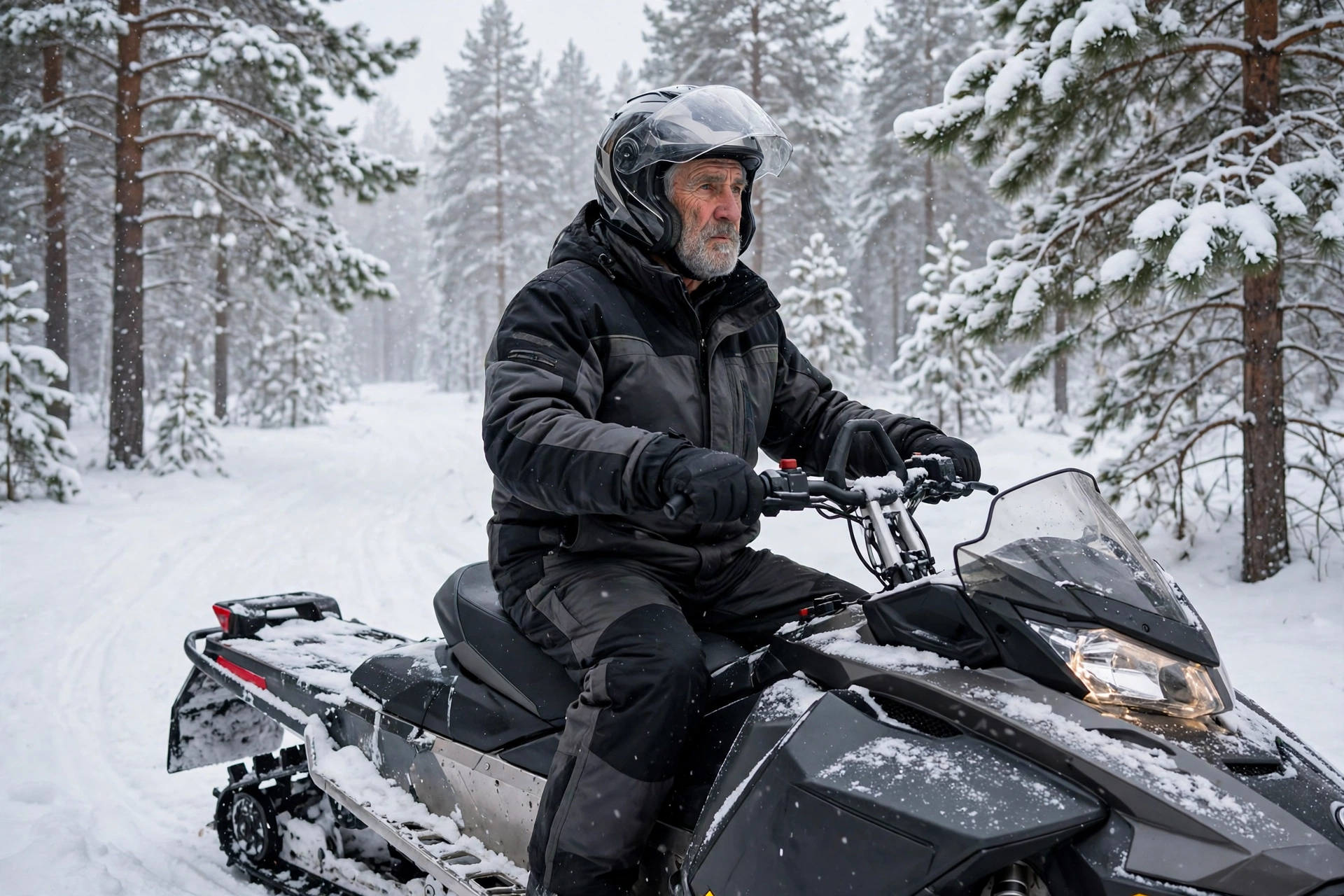
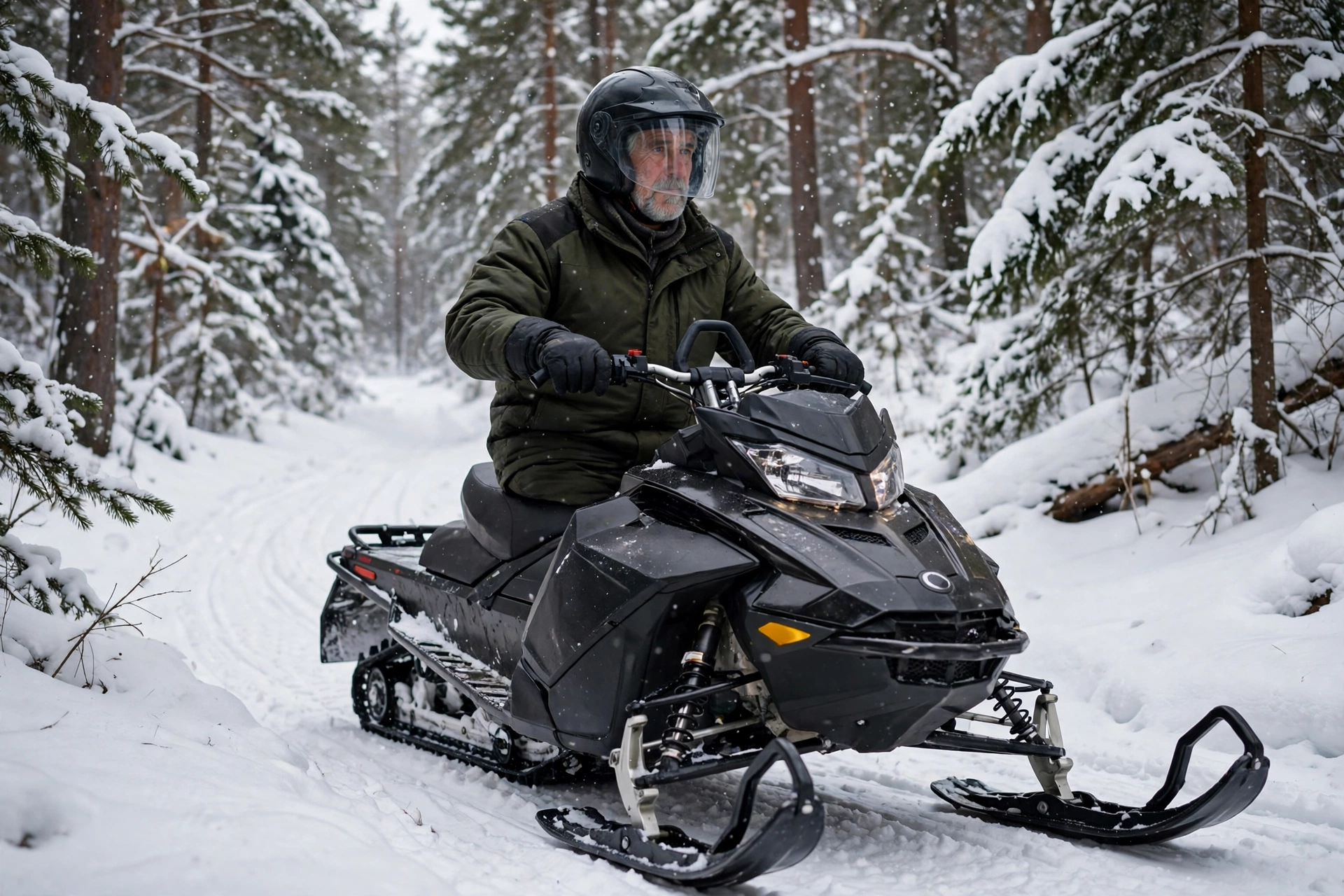
For an older snowmobile rider, the right helmet is a warm, well-sealed snowmobile helmet — usually a full face or modular design with a heated visor or good anti-fog protection, a breath guard, and a fit that works over a balaclava. Cold, wind, and snow make the wrong helmet miserable within minutes, so warmth and a clear view matter just as much as impact protection.
Snowmobiling is a winter sport that older riders often enjoy for years, whether it is a gentle trail ride through snowy forest, a trip to a mountain cabin, or a day out with family. But riding a snowmobile means sitting in cold air at speed, often for hours, with snow and wind in your face. A helmet built for snowmobiling handles those conditions in ways a motorcycle or ski helmet cannot. This guide explains what to look for.
What Makes a Snowmobile Helmet Different?
A snowmobile helmet is designed around cold-weather riding. It has a full face shell that seals out wind, a visor that covers the whole face, and a breath guard that directs your breath away from the visor so it does not fog up. Many snowmobile helmets also have a heated visor, powered by the snowmobile’s electrical system, which keeps the visor clear of frost and ice in very cold conditions.
There are two main styles. A full face snowmobile helmet is a single-piece shell with a fixed chin bar, which gives the best seal against wind and the most protection. A modular helmet has a chin bar that flips up, which makes it easier to talk, drink, or eat at a stop without taking the helmet off. Many older riders prefer a modular helmet for that convenience, especially on long trail rides with regular stops.
Why Is a Clear Visor So Important in Winter?
Your view is everything on a snowmobile trail. You need to read the trail surface, spot other riders, and see the markers that guide you through the forest. A visor that fogs, frosts, or ices over takes that view away, and in cold weather it can happen within minutes of setting off. That is why snowmobile helmets put so much effort into keeping the visor clear.
A heated visor is the most effective answer in very cold conditions. It runs off the snowmobile’s power supply through a cord, and it keeps the visor warm enough that frost cannot form. If you ride in deep cold, it is worth having. In milder conditions, a good double-pane visor and a breath guard may be enough, because the double pane insulates the inner surface from the cold outside air.
How Should a Snowmobile Helmet Fit an Older Rider?
Fit works a little differently in winter, because you will be wearing a balaclava or a thin neck warmer under the helmet. Try the helmet on with the balaclava you plan to wear, not without it. The helmet should sit level, feel snug all round, and stay put when you shake your head. It should not press hard on your forehead, and the chin strap should fasten comfortably over the balaclava.
If you wear glasses, check that they fit under the helmet without pressing on the sides of your head. Cold glasses can fog when you put the helmet on, so a helmet with a good breath guard helps here too — it keeps your warm breath away from both the visor and your glasses. Some riders find that contact lenses are easier in winter, but if you prefer glasses, test the combination in the shop before you buy.
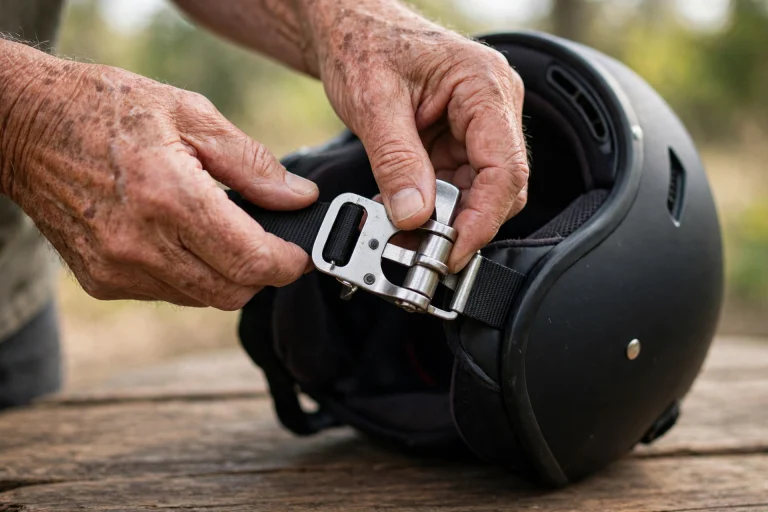
Easy fastening matters in the cold. Stiff fingers and thick gloves make a fiddly buckle hard to work, so look for a chin strap buckle you can operate with gloves on. A micrometric ratchet buckle is usually the easiest, and it lets you adjust the strap in small steps even with cold hands. Test it with your winter gloves on before you decide.
What About Warmth, Weight, and Comfort?
Warmth is the first comfort question in winter, and the helmet is part of a system that includes your balaclava, neck warmer, and jacket. The helmet should seal well around the neck so cold air cannot rush in from below, and a neck warmer or windproof collar helps close the gap. Check that the helmet’s vents close fully — a vent that leaks cold air onto your forehead will make a long ride unpleasant.
Weight matters on long trail rides, just as it does on any other kind of riding. A lighter helmet puts less strain on your neck, which matters more as you get older and when you are riding for hours. Try several helmets and notice how each one feels after a few minutes. A helmet that feels heavy in the shop will feel heavier still after a day on the trails.
If you are learning about how helmets handle different kinds of impact, reading about what MIPS is for helmets can help you understand one of the technologies used in modern helmet design. Some snowmobile helmets include this kind of protection, and it is worth knowing about when you compare models.
When Should an Older Snowmobile Rider Replace a Helmet?
In general terms, a snowmobile helmet should be replaced after any hard impact, even if the damage is not visible, because the liner inside can be damaged in ways you cannot see. It should also be replaced when the fit has loosened, the liner has gone flat, the visor seal has worn, or the heated visor no longer works properly. A helmet that has been dropped hard onto ice or concrete deserves the same treatment as one that has been in a crash.
Storage matters in the off-season. Keep the helmet indoors, in a cool, dry place, away from direct sunlight and away from fuel, solvents, and strong cleaning products. A helmet bag protects it from dust and scratches during the summer months. Do not store it in a cold garage or a damp shed if you can avoid it, because heat, cold, and damp all age the materials inside.
Frequently Asked Questions
Q: Can I use a motorcycle helmet for snowmobiling?
A: In general terms, it is not a good idea. A motorcycle helmet is not designed for cold-weather riding, so it will fog up, let in cold air, and leave you uncomfortable. A proper snowmobile helmet with a breath guard and a sealed visor is the right tool.
Q: Is a heated visor worth it for an older snowmobile rider?
A: In general terms, yes if you ride in very cold conditions, because it keeps the visor clear of frost and ice. In milder winter weather, a double-pane visor and a good breath guard may be enough on their own.
Q: Should I size up to fit a balaclava under my snowmobile helmet?
A: Not always — try the helmet on with the balaclava you plan to wear and let the fit decide. A thin balaclava often fits in your normal size, while a thick one may need a size up. The helmet should still feel snug, not loose.

Olivia
Writer at Helmet Today, covering helmet reviews, fit and riding safety.