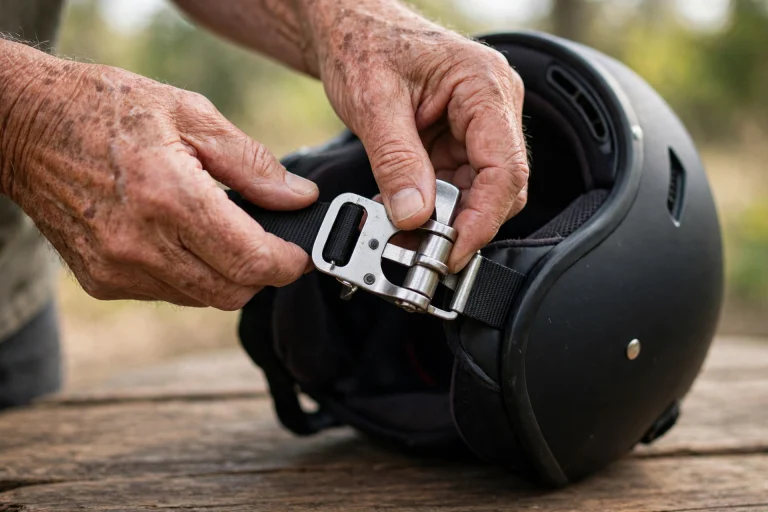
Women’s scooter helmet fit comes down to three things: the right shell size for your head, a shape that suits a narrower or smaller head, and a snug, level fit that stays put without pressing. Many women find standard scooter helmets too roomy, too heavy, or too loose around the cheeks, and that is usually because the helmet was shaped around a larger head. A helmet made or sized with smaller heads in mind fits better, feels lighter, and is more comfortable on every ride.
This guide explains how to measure your head, how to tell a good scooter helmet fit from a bad one, and what features to look for when you shop. It also covers visors, ventilation, and the small checks that make the difference between a helmet you enjoy wearing and one you want to take off after ten minutes.
How Do You Measure Your Head for a Scooter Helmet?
Use a soft tape measure and wrap it around your head just above your eyebrows and ears, at the widest point. Keep the tape level and snug, but not tight, and take the measurement twice. Write it down in centimetres, because most helmet size charts use centimetres.
Compare your measurement with the maker’s size chart, and look at the size range for each shell. Some helmets use one shell for several sizes and only change the padding inside, while others use two or three shell sizes. A helmet with a smaller shell will usually fit a smaller head better than a large shell filled with thick padding.
Measure with your hair as you normally wear it for riding. If you wear a ponytail or a bun, check how the helmet sits with it in place. A low ponytail usually works better than a high one, which can push the helmet forward or lift it at the back.
What Does a Good Scooter Helmet Fit Feel Like?
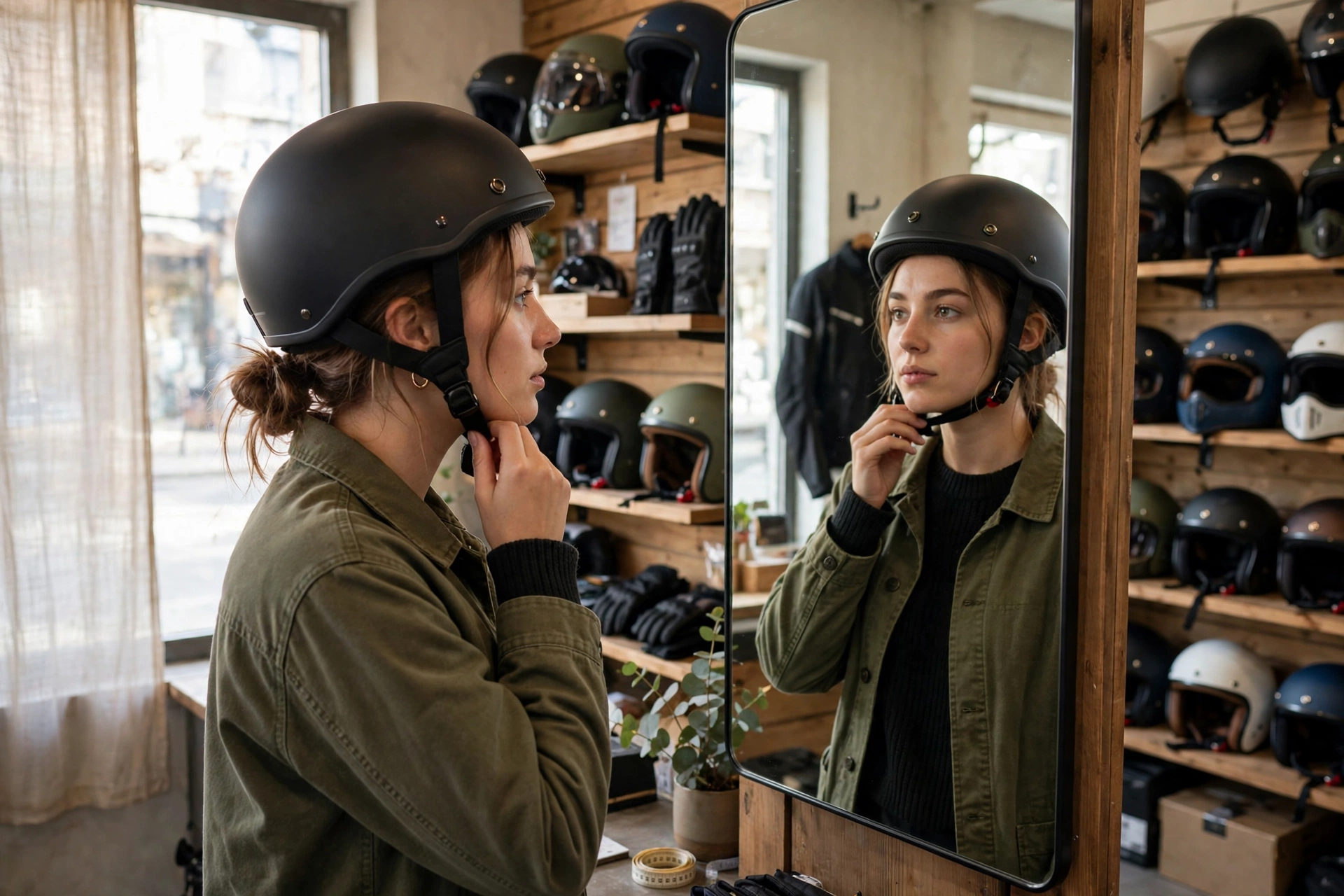
A good fit feels snug all round your head, with even pressure and no hard spots. The helmet should sit level, with the front edge just above your eyebrows, and it should not rock from side to side when you shake your head gently. When you try to twist the helmet, your skin on your forehead should move with it, which shows the helmet is gripping your head rather than floating on it.
The cheek pads should touch your cheeks firmly without squeezing them hard or pushing your lips together. If you can fit a finger easily between the pad and your cheek, the helmet is probably too big. If the pads press so hard that they hurt after a few minutes, the helmet may be too small, or you may need thinner pads.
Wear the helmet in the shop for at least ten minutes before you decide. A helmet can feel fine for a minute and then start to press on your forehead or temples. That kind of pressure usually means the shape does not match your head, and a different model will fit better.
Are Women’s Scooter Helmets Different from Men’s?
Some makers sell helmets labelled for women, but the label itself matters less than the size and shape. A women’s model is often built on a smaller shell with padding shaped for a narrower head, and it may come in smaller sizes that a standard range does not offer. Colours and graphics may differ too, but those are a matter of taste, not fit.
What matters most is the head shape the helmet was designed around. Helmet makers use different internal shapes, often described as round, intermediate, or long oval. A woman with a narrower head may fit better in a long oval shape, while a rounder head suits a round shape. Trying on several brands is the best way to find the shape that matches your head.
Do not assume a women’s label means a better fit. Some women’s helmets are the same shell as the men’s version with different colours. Always check the size chart, try the helmet on, and judge it by how it feels on your head, not by the label on the box.
What Should You Look for in a Scooter Helmet?
Weight is worth checking, because a heavy helmet can tire your neck on longer rides. A lighter helmet is usually more comfortable, especially if you ride every day. Look for a helmet that feels balanced on your head rather than pulling forward or back.
Ventilation matters too, especially in warm weather. Vents at the front and back let air flow through the helmet and help stop it feeling hot and stuffy. Try the vents in the shop to make sure they open and close easily, and check that they do not whistle loudly at speed.
The visor should give a clear view and seal well against the helmet when closed. A visor that fogs up easily is a common frustration, so look for one with an anti-fog treatment or a pinlock-ready design. If you are learning about how helmets handle different kinds of impact, reading about what MIPS is for helmets can help you understand one of the technologies used in modern helmet design.
How Do You Check the Strap and Fastening?
The chin strap should sit snugly under your chin without pressing hard into your throat. You should be able to fit about two fingers between the strap and your chin. If the strap is too loose, the helmet can come off in a crash, so this check matters.
Try fastening and unfastening the strap with gloves on, since that is how you will use it on the road. A micrometric buckle is quick and easy to adjust, while a double D-ring is secure but takes more practice. Choose the one you can operate confidently every time.
Check that the strap does not twist or rub against your neck. Some helmets have a soft chin curtain or padding where the strap meets the skin, which can make a long ride more comfortable. If the strap irritates your skin, a small strap cover or a different helmet may solve it.
Frequently Asked Questions
Q: Should a women’s scooter helmet feel tight when new?
A: It should feel snug, not painful. The padding settles slightly with use, so a firm fit when new is normal, but a hard pressure point on your forehead or temples means the shape is wrong.
Q: Can I wear a scooter helmet with glasses?
A: In general terms, yes. Look for a helmet with glasses-friendly padding or a channel for the arms of your glasses, and try it on with your glasses to check for pressure on the temples.
Q: How do I know if my scooter helmet is too big?
A: If it rocks from side to side when you shake your head, if you can fit a finger between the cheek pads and your face, or if it slides down over your eyes, it is probably too big.

Olivia
Writer at Helmet Today, covering helmet reviews, fit and riding safety.