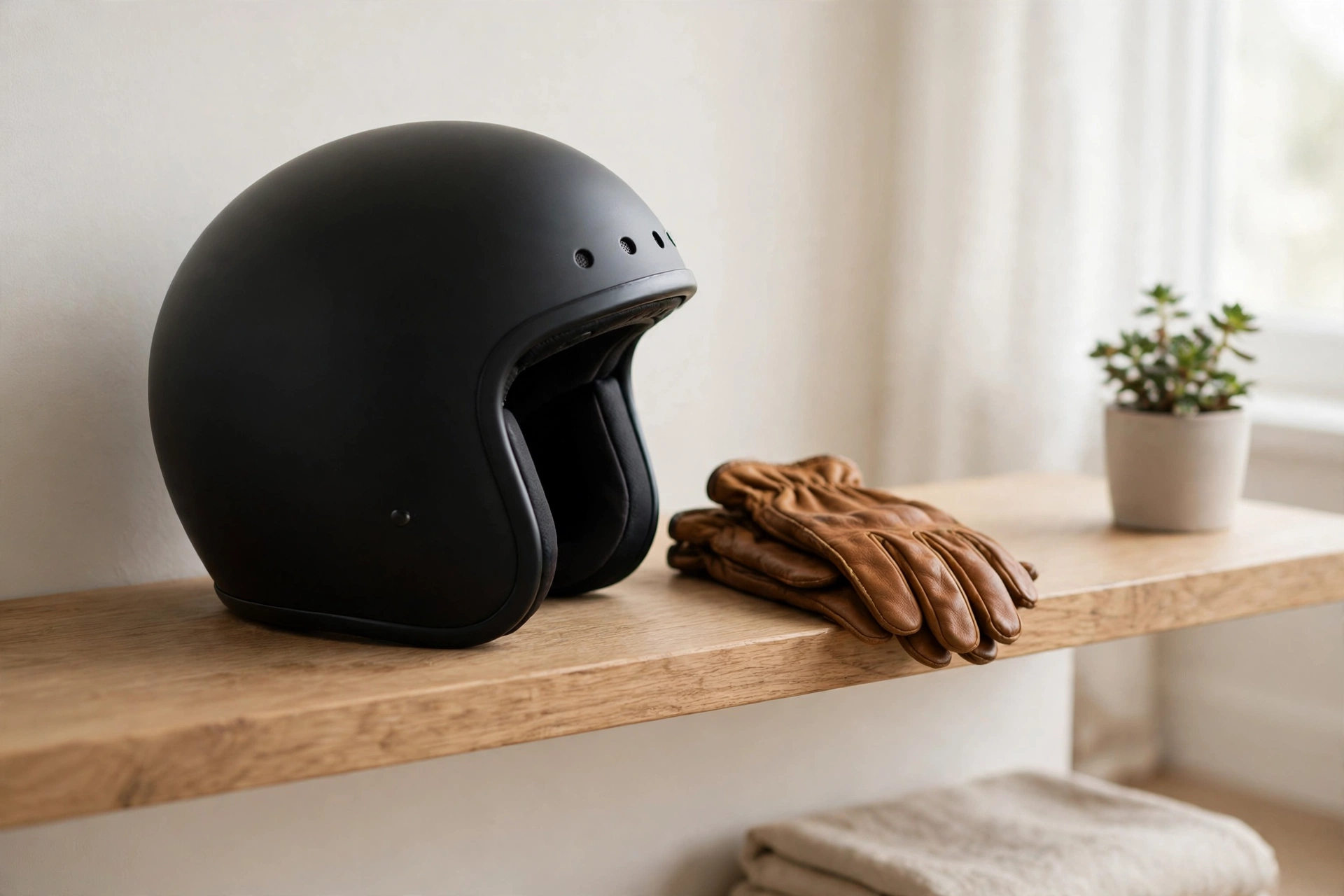
Store a helmet right way up, shell up and opening down, on a flat surface — that is the position it was designed to rest in, and it keeps the weight on the shell rather than on the padding, the visor, or the liner. Storing a helmet upside down is not dangerous in the short term, but over time it can compress the padding, put pressure on the visor, and let dust and moisture settle inside the helmet.
It is a small question with a simple answer, but it comes up often, because many people naturally put a helmet down upside down — it looks stable, and it is easy to drop gloves or keys inside it. The trouble is that a helmet stored that way for weeks or months is resting on exactly the parts you do not want to press on. This guide explains why right way up is better, and when upside down storage is acceptable.
Why Is Right Way Up the Best Storage Position?
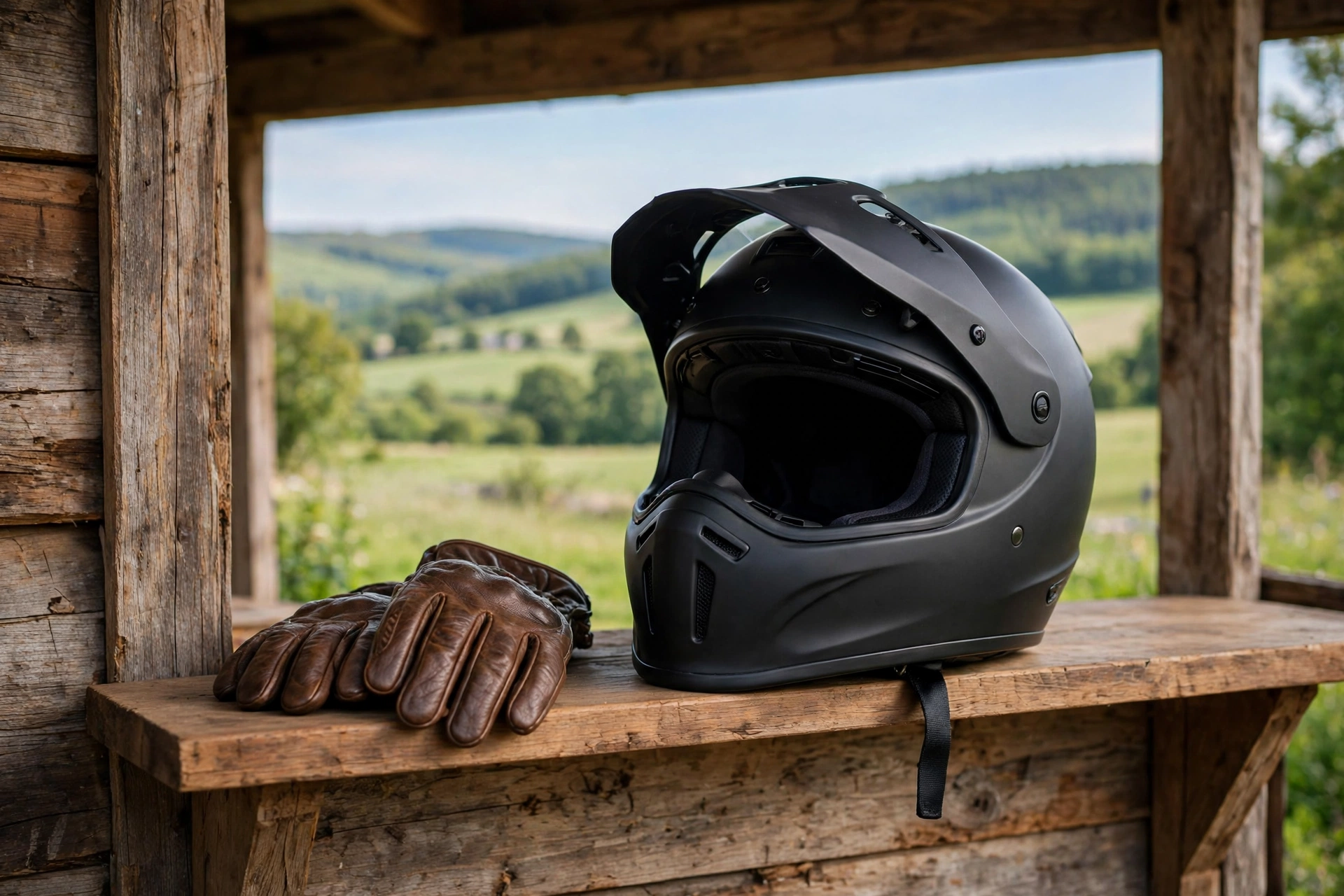
When a helmet sits right way up, its weight rests on the bottom edge of the shell, which is the strongest and most stable part to bear weight. The padding inside is not compressed, the liner is not pulled out of shape, and the visor — if the helmet has one — is up in the air, clear of the surface, where it cannot be scratched.
Right way up also keeps the inside of the helmet clean and dry. Dust falls on the outside of the shell instead of into the padding, and any moisture inside the helmet can drain and evaporate more easily, because the opening faces down and air can move through it. If the helmet is on a shelf in a ventilated room, air circulates around it naturally.
This position is also the most stable in general terms. A helmet sitting on its base is less likely to roll than a helmet balanced on its top, and if it is nudged, it tends to stay where it is rather than tipping over. On a flat shelf, right way up is the position a helmet is least likely to fall from.
What Happens If You Store a Helmet Upside Down?
Stored upside down, a helmet rests on its crown — the top of the shell — and its weight presses down through the shell onto the padding and liner at the top. Over time, that pressure can compress the foam at the crown, which is the area that should fit snugly against the top of your head. Compressed padding changes the fit, and a helmet that no longer fits well is less comfortable and less secure.
An upside-down helmet also exposes its inside to dust, insects, and anything that falls from above. The padding acts like a bowl, collecting dust and moisture, and in a garage or a shed it can even collect spiders or other small creatures. Finding something unpleasant inside your helmet is not a good start to a ride.
There is also a risk to the visor. On many helmets, the visor sits at the front, and when the helmet is upside down the visor may rest against the shelf or the surface below. Any grit on that surface can scratch the visor, and the weight of the helmet pressing on the visor mechanism can strain it over time. The same applies to a peak on an off-road helmet.
When Is Upside Down Storage Acceptable?
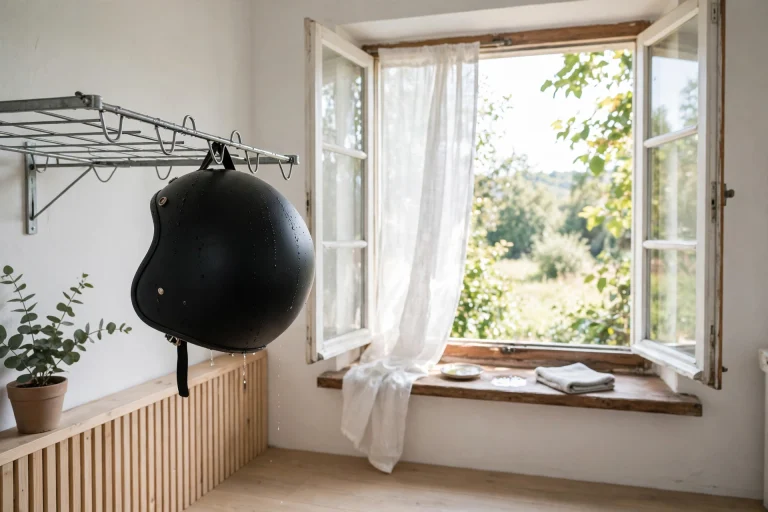
Upside down storage is acceptable for short periods. If you have just come in from a ride and you turn the helmet upside down for an hour or two to let the inside air out, that is fine — in fact, it can help the padding dry, because warm, damp air rises out of the opening. The problem only comes with long-term storage, where the weight presses on the same spot for weeks or months.
It is also acceptable if the helmet is resting on a soft, clean surface, such as a towel, and nothing is pressing on the visor. Some riders turn a helmet upside down briefly to put gloves or a balaclava inside it, or to keep the opening off a dusty surface. As a temporary measure, that is harmless.
How Should You Store a Helmet on a Shelf or in a Cupboard?
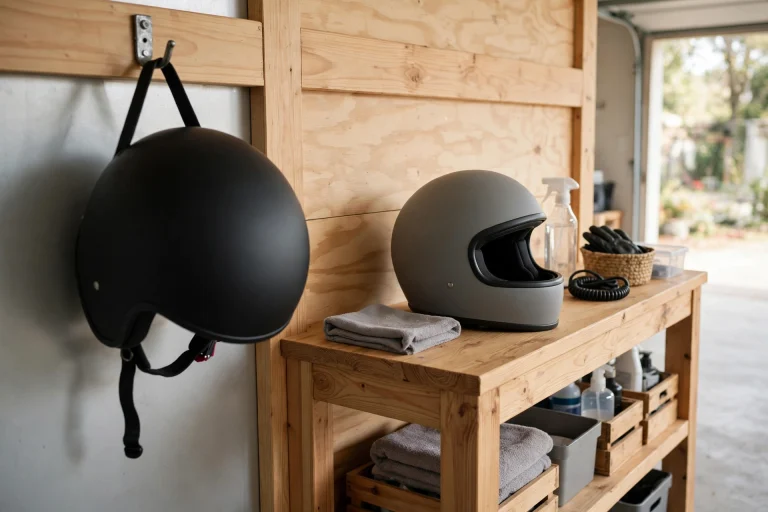
Store the helmet right way up on a flat, stable surface, with space around it so air can circulate. A shelf, the top of a wardrobe, or a cupboard shelf all work well, as long as the spot is cool, dry, and out of direct sunlight. Keep the helmet away from heat sources such as radiators, and away from chemicals such as paints and solvents.
Do not stack anything on top of the helmet, and do not stack helmets on top of each other. A heavy item on a helmet presses on the shell and the padding below, and a stack of helmets is unstable — the top one can easily fall. Each helmet needs its own space, even if that means using another shelf.
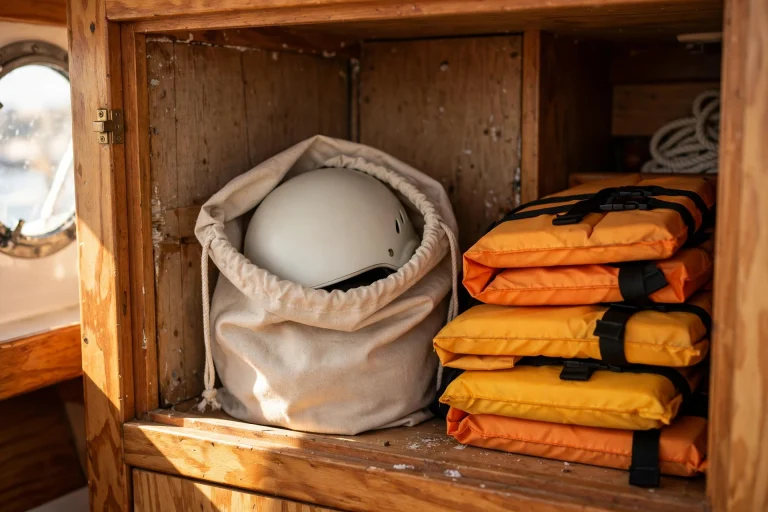
If you use a helmet bag, choose a breathable cloth bag rather than a sealed plastic one, and only put the helmet in the bag once it is fully dry. A helmet stored damp in a bag is likely to develop mould and smells. If you are learning how helmets protect the head, reading about what MIPS is for helmets can help you understand one of the technologies used in modern helmet design.
What About Storing a Helmet on Its Side?
Storing a helmet on its side is better than upside down, but not as good as right way up. On its side, the helmet rests on the shell at the side, which is strong, and the padding is not compressed as much as it is when the helmet is upside down. However, the helmet can roll, especially on a smooth shelf, and the visor or peak may press against the surface.
On its side is a reasonable compromise in a tight space, for example in a car boot or a small locker where the helmet will not stand upright. If you do store a helmet on its side, put a soft cloth underneath it to protect the shell, and make sure the visor faces up or away from the surface so it cannot be scratched.
In general terms, the ranking is simple: right way up is best, on its side is acceptable, and upside down is best kept to short periods only. Whichever position you choose, the other rules still apply — dry the helmet first, keep it out of the sun and away from heat, and give it space.
Frequently Asked Questions
Q: Will storing a helmet upside down damage it?
A: In general terms, not over a few hours, but storing it upside down for weeks or months can compress the padding at the crown and put pressure on the visor, so right way up is better for long-term storage.
Q: Can I store a helmet upside down to dry it after a ride?
A: Yes, for a short time. Turning it upside down for an hour or two can help damp air escape, but turn it right way up again once the padding feels dry.
Q: Is it okay to keep gloves inside a stored helmet?
A: It is better not to. Gloves can trap moisture in the padding and press on the liner, and small items can be forgotten inside. Store gloves separately, next to the helmet.

Olivia
Writer at Helmet Today, covering helmet reviews, fit and riding safety.