To store a helmet on a boat, keep it in a dry, ventilated locker or cabin space, in a breathable bag, shell up and wedged so it cannot slide or roll — and never leave it on deck, in the bilge, or anywhere it can get soaked by spray or salt water. A boat is a damp, moving environment, so helmet storage needs more care than it does at home, but the rules are simple: keep it dry, keep it secure, and keep it out of the sun.
Whether you are sailing, fishing, or riding a personal watercraft, your helmet will spend time on board between uses. A boat moves, heels, and bounces, so a helmet left loose will slide across a cabin, roll off a seat, and end up on the floor — or over the side. Salt water and damp air add a second risk, because salt and moisture attack padding, straps, and metal fittings. This guide explains how to store a helmet safely on board.
Where Is the Safest Place to Store a Helmet on a Boat?
The safest place is a dry locker or a cabin shelf, low down and close to the centre of the boat, where movement is least. A low locker keeps the helmet from falling far if it does come loose, and the centre of the boat moves less than the bow or the stern. Choose a locker that stays dry in normal use, away from the bilge and away from any place where water collects.
A cabin bunk or a seat can work for short stops, but only if the helmet is wedged in place. Use a towel, a lifejacket, or a soft bag to stop it rolling, and never leave it on a seat while the boat is under way. A helmet that rolls off a seat can land on a hard deck or slide underfoot, where it becomes a trip hazard as well as a damaged helmet.
Never store a helmet in the bilge, in an anchor locker, or in any compartment that gets wet. These places are damp, salty, and poorly ventilated, and a helmet left there will pick up moisture, smells, and mould quickly. In general terms, if a storage spot is too damp for your clothes, it is too damp for your helmet.
How Do You Keep a Helmet Dry on a Boat?
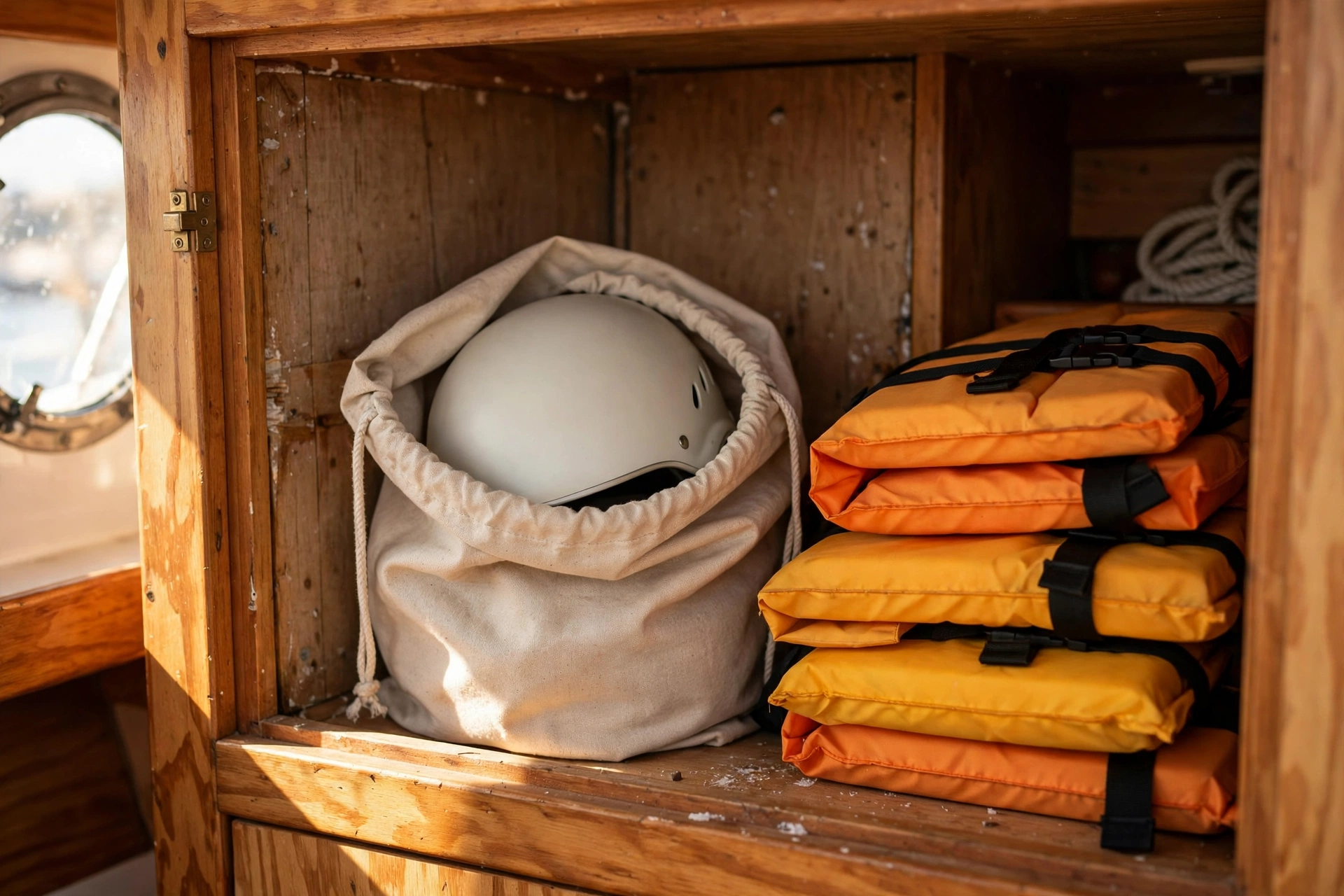
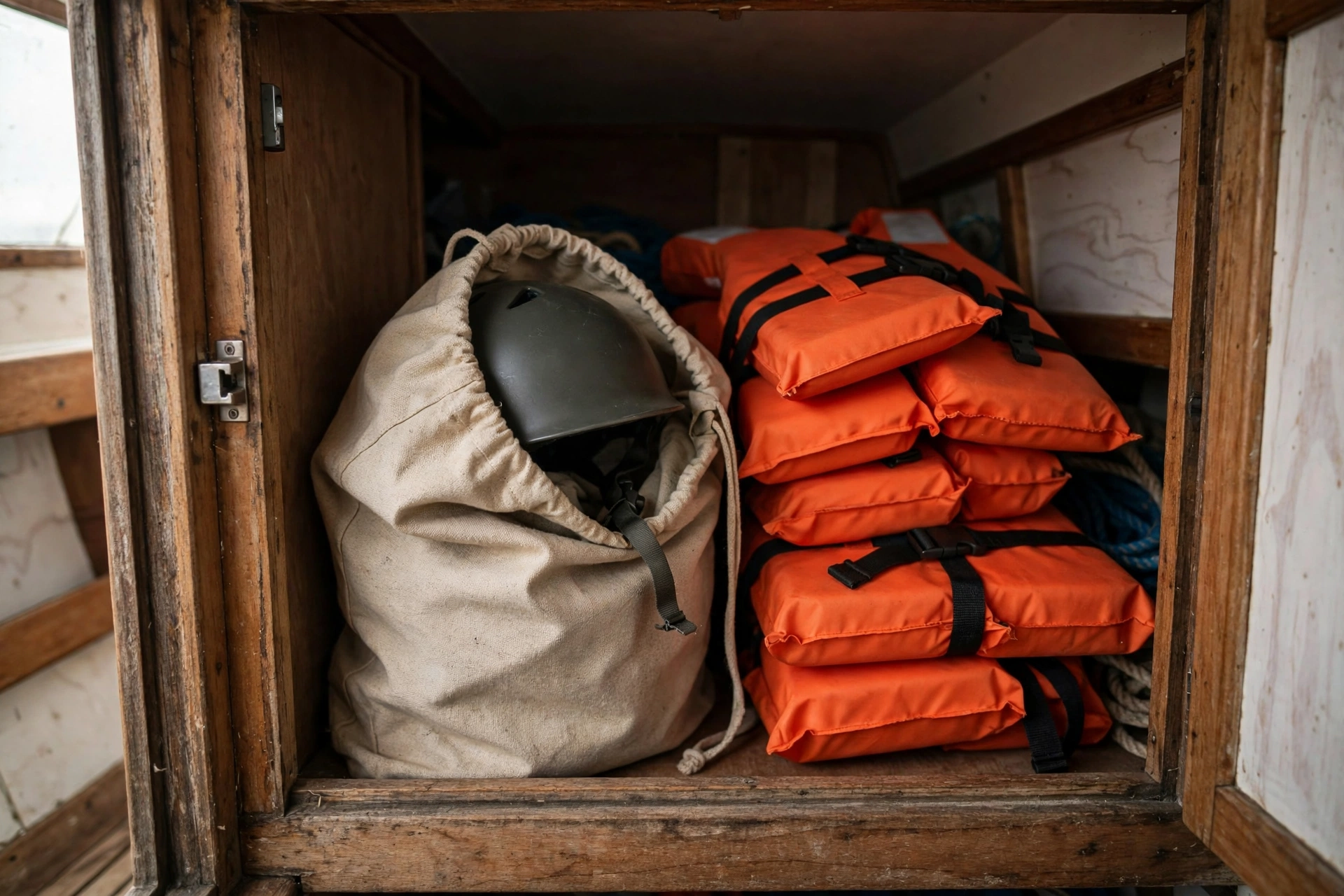
Keeping a helmet dry on a boat starts with a breathable bag. A cloth helmet bag keeps dust and spray off the helmet while letting air through, which helps the padding dry. A sealed plastic bag does the opposite: it traps moisture inside, and in the warm, damp air of a boat cabin that moisture quickly turns into mould and smells.
After a ride or a wet trip on deck, dry the helmet before you store it. Wipe the shell with a clean cloth, and leave the helmet out in a ventilated part of the cabin until the padding feels dry. If the helmet has been exposed to salt water or salt spray, rinse it gently with fresh water first — salt left on the shell and the fittings can corrode metal parts and stiffen straps over time. Rinse the visor too, and let everything dry in fresh air before you put the helmet away.
How Do You Stop a Helmet Sliding Around on a Boat?
A boat is always moving, so a helmet needs to be held in place. The simplest method is to wedge it: place the helmet shell up in a locker or a box, and pack soft items such as towels, clothes, or a lifejacket around it so it cannot move. The padding should not be squeezed, but the helmet should not be able to roll or slide either.
For small boats without lockers, a dedicated helmet bag with a carry handle can be clipped or tied to a fixed point in the boat. Make sure the fixing is strong, the bag is not in the way of anyone moving around, and the helmet cannot swing and hit the hull. On a personal watercraft, use the storage compartment if it is dry, and keep the helmet in its bag so it does not rub against hard surfaces.
What Damage Can Salt Water and Sun Do to a Stored Helmet?
Salt water is hard on helmets. Salt crystals left on the shell can scratch the finish, salt corrodes metal buckles and vents, and salt water soaked into padding leaves the helmet stiff and smelly once it dries. That is why a fresh-water rinse after salt exposure matters so much, and why a helmet should never be stored while it is still salty or wet.
Sun is the other enemy. A helmet left on deck in direct sun heats up quickly, and repeated heating can age the shell and the liner. The visor can also suffer, because strong sun and salt spray together leave marks that are hard to clean. Store the helmet out of direct sunlight, in a shaded locker or under a cover in the cabin, even if you are only stopping for lunch. If you are learning how helmets are built to protect the head, reading about what MIPS is for helmets can help you understand one of the technologies used in modern helmet design.
What Should You Check Before Using a Helmet Stored on a Boat?
Before you put on a helmet that has been stored on a boat, give it a quick check. Look at the shell for cracks or deep scratches, check the visor for marks or salt haze, and make sure the strap, buckle, and any vents still work smoothly. Smell the padding: a musty smell means damp has got in, and the helmet needs drying or cleaning before you wear it.
Check the fittings as well. Salt can seize small metal parts, so work the buckle and any vents a few times to make sure they move freely. If a buckle is stiff, rinse it with fresh water and let it dry; do not force it, and do not use oil or spray lubricants inside a helmet unless the maker says it is safe.
If the helmet has taken a knock — for example, if it fell on deck during rough water — have it checked before you rely on it again. A helmet that has hit a hard surface may be damaged inside even if the shell looks fine. When in doubt, replace it: a helmet is there to protect your head, and that job matters more than the cost of a new one.
Frequently Asked Questions
Q: Can I leave a helmet on deck under a cover?
A: In general terms, it is best not to. Deck storage exposes the helmet to sun, spray, and the risk of rolling overboard. A dry locker or cabin space is much safer.
Q: Should I rinse a helmet after salt water exposure?
A: Yes. Rinse it gently with fresh water, wipe it dry, and let it air dry fully before storing it, so salt does not corrode fittings or stiffen the padding.
Q: Can I store a helmet in a boat’s storage compartment?
A: Yes, if the compartment stays dry and the helmet is in a breathable bag, wedged so it cannot slide. Check that the compartment does not leak or collect water first.

Olivia
Writer at Helmet Today, covering helmet reviews, fit and riding safety.