For older motorcycle riders, the best helmet is a light, comfortable one that fits well, fastens easily, ventilates properly, and gives a clear view — because comfort and ease of use are what keep you riding safely for years. Age changes what matters in a helmet. Weight that once felt fine can start to tire your neck, a stiff buckle can become a daily frustration, and a helmet that fogs up or presses on your forehead can cut a ride short. Choosing with those changes in mind makes every ride better.
This guide looks at the features that matter most for older riders, from weight and fit to visors, ventilation, and hearing. It is written in general terms, because every rider is different, but the checks here will help you find a helmet that suits how you ride now.
Why Does Helmet Weight Matter More as You Get Older?
A helmet’s weight is carried by your neck, and over a long ride that weight adds up. As riders get older, neck muscles and joints may not cope as well with a heavy helmet, and a helmet that once felt fine can start to cause tiredness or a sore neck by the end of a ride. A lighter helmet reduces that strain and helps you stay comfortable and alert.
In general terms, a lighter helmet is not automatically a safer one, so weight is only one part of the choice. Look for a helmet that is light for its type, meets the standard you need, and feels balanced on your head. A helmet that pulls forward or back will feel heavier than one that sits evenly, even at the same weight.
Try helmets on and wear each one for several minutes in the shop. Turn your head, look over your shoulder, and notice how the weight feels. If a helmet makes your neck work hard just standing still, it will feel worse after an hour on the road.
What Fit Should an Older Rider Look for?
Fit is still the most important thing about any helmet. It should sit level, feel snug all round without pressing hard in one spot, and stay put when you shake your head. The cheek pads should touch your face firmly, and the helmet should not rock from side to side.
As we age, the shape of the head and face can change, and a helmet that fitted well ten years ago may not fit the same way now. If your old helmet feels loose or presses in new places, it is worth trying on new models rather than assuming the same size and brand will still suit you.
Also think about glasses. Many older riders wear glasses, and a helmet that presses the arms of your glasses into your temples will be uncomfortable within minutes. Look for a helmet with glasses-friendly padding, and always try it on with your glasses in place.

What Makes a Helmet Easy to Use?
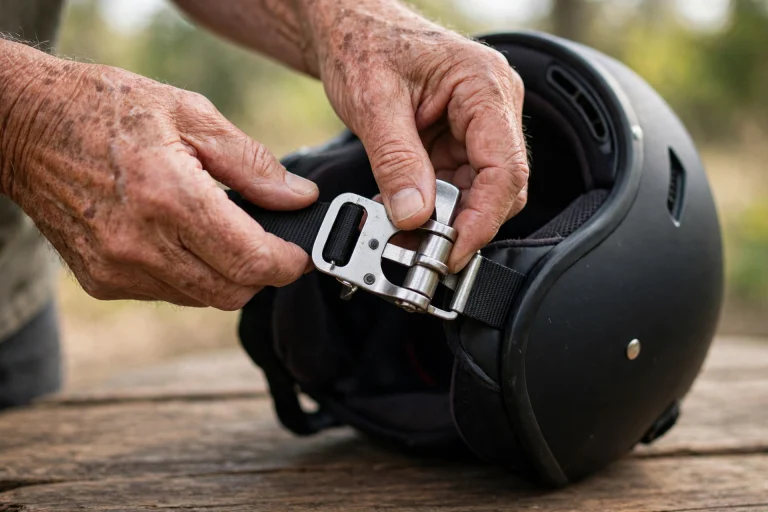
Easy fastening is a real benefit for older hands. A micrometric buckle can be fastened and adjusted with one hand, even while wearing gloves, while a double D-ring takes more finger strength and practice. If arthritis or stiff fingers make small buckles hard to manage, a micrometric buckle or a quick-release system is worth looking for.
The visor should be easy to open and close with gloves on. A large, easy-to-find visor tab helps, and a visor that clicks firmly into place is easier to trust than one that feels vague. Some helmets also let you change the visor without tools, which makes cleaning and swapping tints simpler.
Removable, washable padding is another practical feature. It keeps the helmet fresh, and it lets you replace worn padding rather than the whole helmet. If you are learning about how helmets handle different kinds of impact, reading about what MIPS is for helmets can help you understand one of the technologies used in modern helmet design.
How Important Are Ventilation and Noise?
Good ventilation keeps you cool and helps stop the visor fogging up. Look for vents you can open and close easily with gloves, and check that air flows through the helmet when you are moving. A helmet that feels stuffy in the shop will feel worse on a warm day in traffic.
Wind noise can be tiring on long rides, and hearing matters for awareness on the road. A helmet with a good seal around the visor and neck roll is usually quieter, and a chin curtain can cut down the wind rushing up from below. Earplugs are also worth considering for longer rides, as they reduce wind noise without blocking the sounds you need to hear.
Try the helmet at riding speed if you can, or ask other riders about the model you are considering. Noise and airflow are hard to judge standing still, and a short test ride can tell you more than any product description.
What About Open Face vs Full Face Helmets?
A full face helmet gives the most coverage, protecting your chin and jaw as well as the top of your head, and it also gives the best protection from wind, rain, and insects. For most older riders, a full face helmet is the practical choice for everyday riding.
A flip-up, or modular, helmet can be a good middle ground. It gives full face protection on the road, but the chin bar lifts up, which makes it easier to talk, drink, or get some air when you stop. It is also easier to put on and take off, especially if you wear glasses, because you can lift the chin bar first.
An open face helmet feels lighter and gives a wide view, but it leaves your face exposed. Some riders prefer it for short, slow rides in warm weather, but for most riding, the extra coverage of a full face or flip-up helmet is worth having.
Frequently Asked Questions
Q: How light should a motorcycle helmet be for an older rider?
A: There is no single number that suits everyone, but in general terms, lighter is easier on the neck. Compare models in the same style, and choose the lightest one that fits well and meets the standard you need.
Q: Is a flip-up helmet a good choice for older riders?
A: In general terms, yes. A flip-up helmet gives full face protection while riding and is easier to put on, take off, and talk through when stopped, which many older riders find helpful.
Q: Should older riders replace their helmet more often?
A: Replace it after any hard impact, when the fit loosens, or when the padding, straps, or visor are worn. In general terms, a helmet that has been used regularly for several years is worth checking carefully, even if it looks fine.

Olivia
Writer at Helmet Today, covering helmet reviews, fit and riding safety.