Yes, most helmet intercoms are built to handle rain — but “waterproof” and “water resistant” are not the same thing, and the difference matters when you ride in wet weather. In general terms, a unit sold as water resistant can cope with light rain and road spray, while a truly waterproof unit is sealed against heavier downpours. Knowing which one you own helps you decide when to keep riding and when to take extra care.
Helmet intercoms sit on the outside of the helmet, exposed to wind, rain, dust and vibration. Manufacturers design them for outdoor use, so some level of weather protection is standard on most models. Even so, water can still find its way in through speaker openings, charging ports and button gaps if a unit is old, damaged or poorly sealed. This guide explains what waterproofing means for a helmet intercom, how to read the ratings, and how to keep your unit working through wet rides.
What Does Waterproof Mean for a Helmet Intercom?
When a maker calls an intercom waterproof, it usually means the unit is sealed so that rain cannot reach the electronics inside under normal riding conditions. The case, buttons and seals are designed to keep water out while the unit is mounted on the helmet and in use. This does not mean the unit can be submerged or left out in a storm all day — it means it is built to survive the kind of rain a rider meets on the road.
Water resistant is the weaker claim. A water resistant intercom can handle light rain and splashes, but heavy or long-lasting rain may get past its seals. Many entry-level units use this wording, and it is worth checking before you buy if you ride in all weathers. Check the product page or manual; if it says neither, assume the unit needs protection from rain.
In practice, the difference shows up in the seals. Waterproof units tend to have rubber gaskets around the case, covered charging ports and sealed buttons. Water resistant units may have some of these features but not all. Over time, seals can wear, crack or loosen, so an older unit may be less protected than it was when new — another reason to check the condition of your unit before a wet ride.
What Do Water Resistance Ratings Actually Tell You?
Many intercoms carry an IP rating, which is a two-digit code that describes protection against dust and water. The first digit covers dust and solid objects; the second covers water. A rating such as IP65 means the unit is protected against water jets from any direction, while IP67 means it can survive brief immersion in shallow water. In general terms, a higher second digit means stronger water protection.
These ratings are useful, but they are measured in a laboratory under controlled conditions, not on a motorcycle at speed in a storm. Rain at riding speed hits harder than a gentle lab spray, and wind can drive water into gaps that a static test would not expose. So treat the rating as a guide to the unit’s design, not as a guarantee that it will stay dry in every downpour.
If your intercom has no IP rating, look at the maker’s own claims instead. Words like “weatherproof” or “rainproof” are marketing terms rather than tested standards, so they tell you less than a formal rating. A unit with a clear IP rating and sealed ports is usually the safer choice if you ride in rain often.
How Does Rain Affect Intercom Sound and Connection?
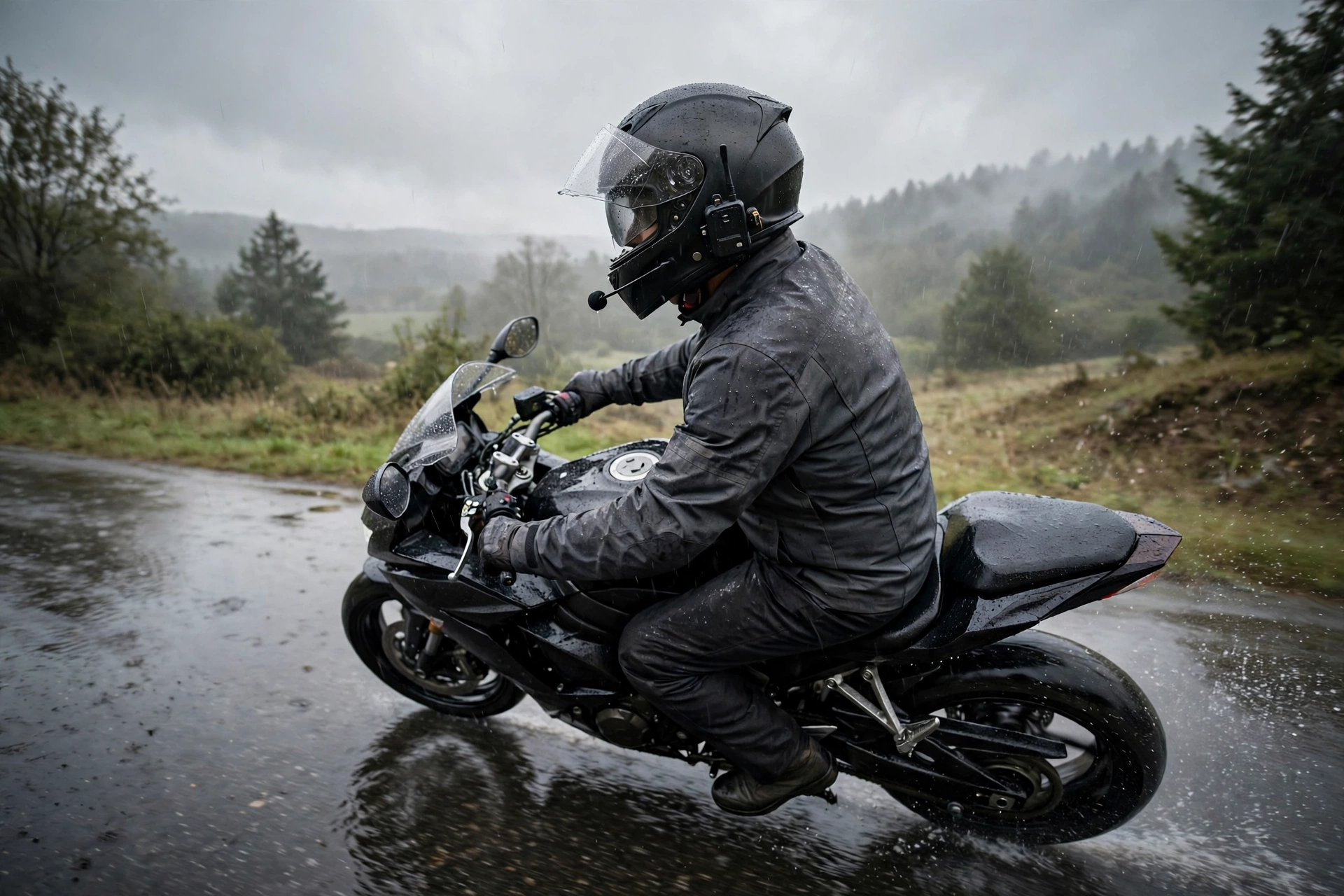
Rain can affect an intercom in two ways: by getting into the hardware, and by adding noise that makes it harder to hear. Water over the microphone can muffle your voice or create a crackling sound for the person listening. A wet speaker grille can also make audio sound dull or quiet until it dries out. These effects are usually temporary and clear up once the unit dries.
Heavy rain also adds to the background noise the intercom has to deal with. Rain hitting the helmet shell and visor creates a constant patter that the microphone may pick up, and wind noise tends to rise in wet, gusty conditions. Most modern units have some form of noise reduction that helps, but in a heavy downpour you may still need to speak more clearly or slow down to hold a conversation.
The wireless connection itself is rarely affected by rain. Bluetooth signals pass through rain without much trouble at the short distances between helmets. If your connection drops in wet weather, it is more likely to be caused by distance, interference or a low battery than by the rain itself.
How Can You Protect Your Intercom in Heavy Rain?
The simplest step is to keep the charging port closed. Most intercoms have a rubber cover over the port, and riding with it open lets water straight in. Check that the cover is seated properly before you set off, and replace it if it is torn or loose. The same goes for any other covers or flaps on the unit.
Mounting position matters too. A unit fitted low on the helmet, behind the shell’s edge, gets less direct rain than one sitting high and exposed. Some riders add a small rain cover over the top edge of the unit in heavy rain, which can help keep the worst of the water off. Just make sure nothing blocks the microphone or the buttons you need while riding.
After a wet ride, wipe the unit dry with a soft cloth and leave it in a ventilated place to air out. Do not use a hair dryer or put it near a heater, as heat can damage the battery and the seals. A few minutes of care after the ride can add months to the life of your intercom.
What Should You Do If Your Intercom Gets Soaked?
If your intercom has been through a serious soaking, switch it off and let it dry fully before you use it again. Remove it from the helmet if you can, wipe off surface water, and leave it somewhere dry and ventilated for a day. Do not plug it in to charge while it is still wet, as charging a wet unit can damage the electronics and the battery.
If the unit still crackles, cuts out or refuses to switch on after drying, the water may have reached the circuit board. In that case, contact the maker or a repair service rather than opening the case yourself, since opening it can void the warranty and may make the damage worse.
Finally, remember that the intercom is only one part of your helmet setup. If you are learning about the safety technology inside the helmet itself, reading about what MIPS is for helmets can help you understand how modern helmets handle rotational forces in a crash.
Frequently Asked Questions
Q: Can I ride in the rain with a helmet intercom?
A: In general terms, yes — most intercoms are designed for outdoor use and can handle rain. Check whether yours is waterproof or water resistant, and keep the charging port cover closed in wet weather.
Q: Will rain damage my intercom’s battery?
A: Rain on the outside of a sealed unit should not damage the battery, but water that gets inside through an open port or a worn seal can cause problems. Dry the unit after wet rides and never charge it while it is wet.
Q: Do I need a rain cover for my helmet intercom?
A: Not usually. A well-sealed unit is fine in normal rain without a cover. A cover can help in heavy, prolonged rain or if your unit is older and its seals are worn.

Olivia
Writer at Helmet Today, covering helmet reviews, fit and riding safety.