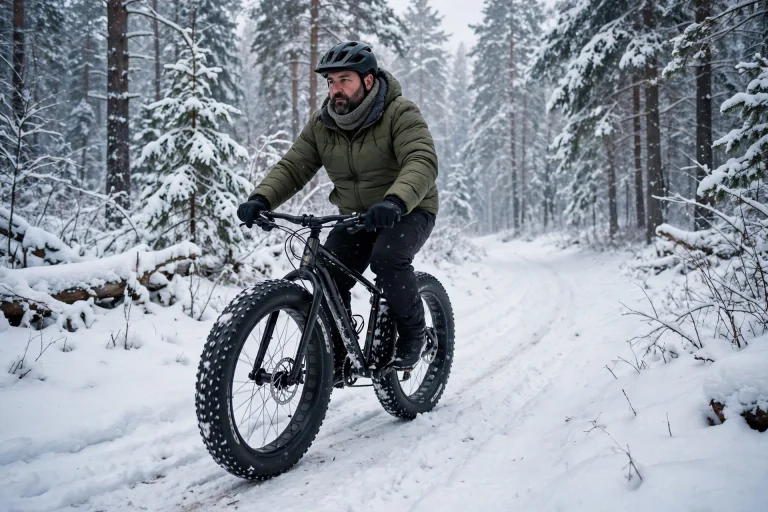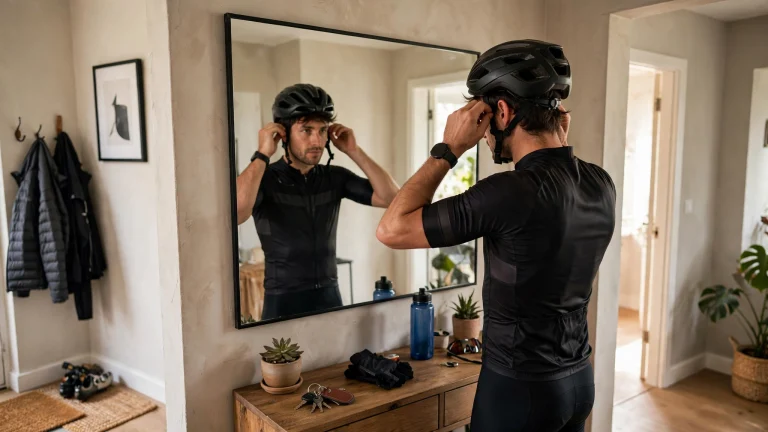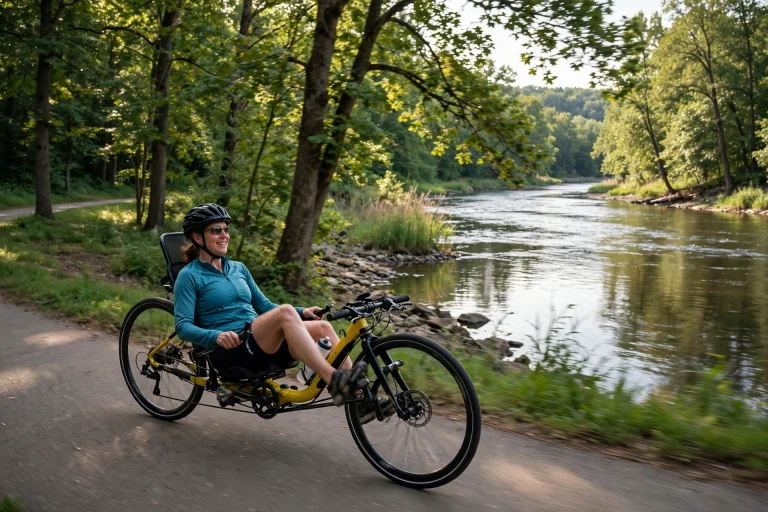
A cycle speedway helmet is a full face helmet worn for cycle speedway racing, where riders race fixed-gear bikes with no brakes around a short oval dirt track, often in close packs at high speed. The helmet protects the whole head, including the chin and jaw, because crashes in cycle speedway often involve contact with other riders, the track surface, or the barriers around the outside of the oval.
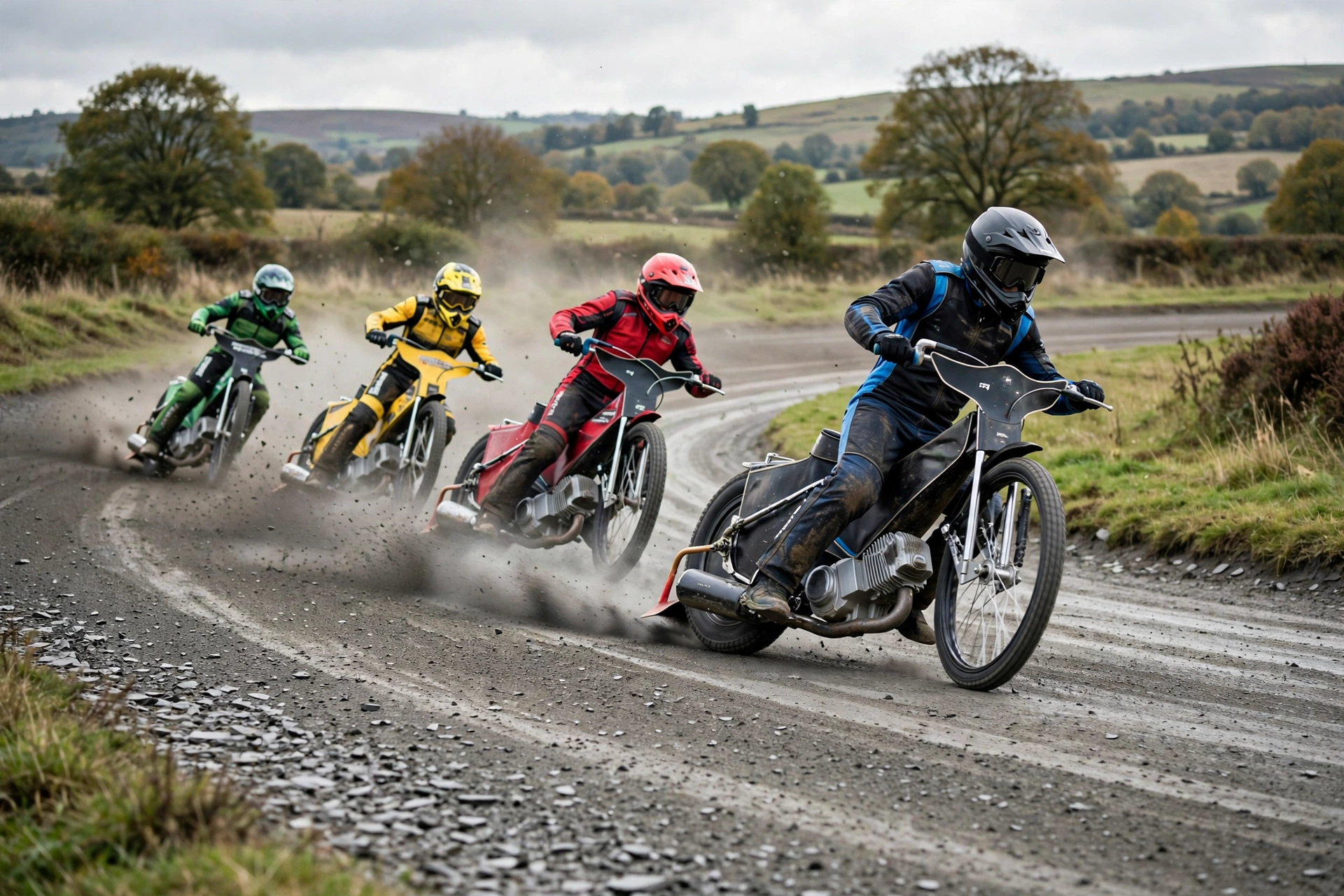
Cycle speedway is a fast, physical sport. Four riders race over four laps of a track that is usually around 70 to 80 metres long, sliding their back wheels through the corners and fighting for position on a loose dirt surface. This guide explains what kind of helmet cycle speedway riders wear, why it is built the way it is, and what to look for when you choose one.
What Is Cycle Speedway?
Cycle speedway is a form of bicycle racing on a short oval dirt track, ridden on single-speed bikes with no brakes and no gears. Riders control their speed with their legs and by sliding the bike sideways through the corners, which throws up dirt and makes the racing close and unpredictable. Races are short and sharp, with riders sprinting from a standing start and jostling for the inside line.
The track surface is usually shale or dirt, which is softer than tarmac but still hard enough to cause injury in a fall. Riders also race close to the outside fence, and a rider who runs wide can hit the barrier. These risks are why a proper helmet is part of the standard kit for the sport, alongside gloves and suitable clothing.
What Kind of Helmet Do Cycle Speedway Riders Wear?
Cycle speedway riders wear full face helmets, similar in style to those used in downhill mountain biking and BMX racing. The helmet has a hard shell, a chin bar that covers the jaw, and padding inside that holds it snug on the head. The shell is smooth and compact, which helps it slide on the dirt surface rather than catching if a rider falls.
Many riders choose a lightweight full face helmet, because cycle speedway races are short sprints and the helmet needs to feel comfortable during repeated heats through a meeting. Ventilation matters too, since riders work hard in a short burst and meetings often run through warm summer evenings. The helmet should let air flow through without letting in too much dust from the track.
Goggles or glasses are often worn with the helmet to keep dirt out of the rider’s eyes, especially when following another rider through a corner. The eye port of the helmet should be large enough to fit goggles comfortably, and the peak above the eye port should not block the rider’s view of the track ahead or of the riders alongside them.
How Is a Cycle Speedway Helmet Different from a Road Helmet?
A cycle speedway helmet is very different from a road cycling helmet. A road helmet is an open face design built for long rides on smooth tarmac, with lots of vents and a light, airy feel. It does not cover the chin or jaw, and it is not made for the kind of close contact and sliding falls that happen on a speedway track.
A cycle speedway helmet, by contrast, is built around full face coverage. The chin bar protects the jaw and teeth if a rider falls face first or collides with another rider, and the shell covers the ears and the back of the head more fully. The helmet is also built to cope with dirt and dust, with a shape that sheds debris rather than trapping it.
The fit is different as well. A road helmet sits lightly on the head and is adjusted with a dial at the back, while a speedway helmet fits more snugly all round, like a motocross or downhill helmet. In general terms, the two helmets are made for different risks, and a road helmet is not a suitable substitute for racing on a speedway track.
What Should You Look for in a Cycle Speedway Helmet?
Fit comes first. The helmet should sit level, feel snug all round, and stay in place when you shake your head. It should not press hard on your forehead or temples, and the chin bar should sit close to your chin without touching it when you open your mouth. Try the helmet on with your goggles, if you wear them, so you know the combination works together.
Next, think about weight and ventilation. A lighter helmet is easier to wear through a full meeting of several heats, and good vents will keep you cooler on a warm evening. Look for a helmet with a removable, washable liner, because the padding will pick up sweat and dirt from the track. A helmet that is easy to clean will last longer and feel better to wear.
Finally, check the strap and the peak. The strap should fasten securely under your chin and hold the helmet firmly in place, even during a hard slide through a corner. The peak should sit above your line of sight and stay put at speed. If you want to understand one of the technologies used in modern helmets, reading about what MIPS is for helmets can help you compare different models before you buy.
How Do You Fit and Care for a Cycle Speedway Helmet?
Measure your head around the widest part, just above your eyebrows and ears, and use the maker’s size guide as a starting point. Try the helmet on and fasten the strap so that two fingers fit snugly between the strap and your chin. The helmet should not rock forward or backward, and it should not slide down over your eyes when you lean forward into a racing position.
Check the fit with your usual racing kit on, including goggles or glasses if you wear them. A helmet that fits in the shop but feels loose once your goggles are on is not the right helmet. If the helmet moves easily, try a smaller size or a different brand, because head shapes vary and one maker’s medium may fit very differently from another’s.
After a meeting, wipe the shell with a damp cloth to remove dirt and dust, and let the helmet dry in the open air away from direct heat. Take the pads out now and then and wash them following the maker’s guidance. Store the helmet in a cool, dry place out of strong sunlight, and keep it away from solvents and harsh cleaners. Replace the helmet after a hard impact, even if the shell looks fine, because the liner inside can be damaged in ways you cannot see.
Frequently Asked Questions
Q: Do cycle speedway riders have to wear a full face helmet?
A: In general terms, yes. Full face helmets are the standard for cycle speedway racing, because the chin bar protects the jaw in the close, fast racing and sliding falls the sport involves.
Q: Can I use a BMX race helmet for cycle speedway?
A: In general terms, yes. A BMX race helmet is a full face design with similar coverage, and many riders use one. Check that it fits well with your goggles and meets the rules of your club or competition.
Q: How often should I replace a cycle speedway helmet?
A: In general terms, replace it after any hard impact, and follow the maker’s guidance on age and wear. A helmet that has taken a heavy knock should be checked and usually replaced, even if it looks undamaged.

Olivia
Writer at Helmet Today, covering helmet reviews, fit and riding safety.