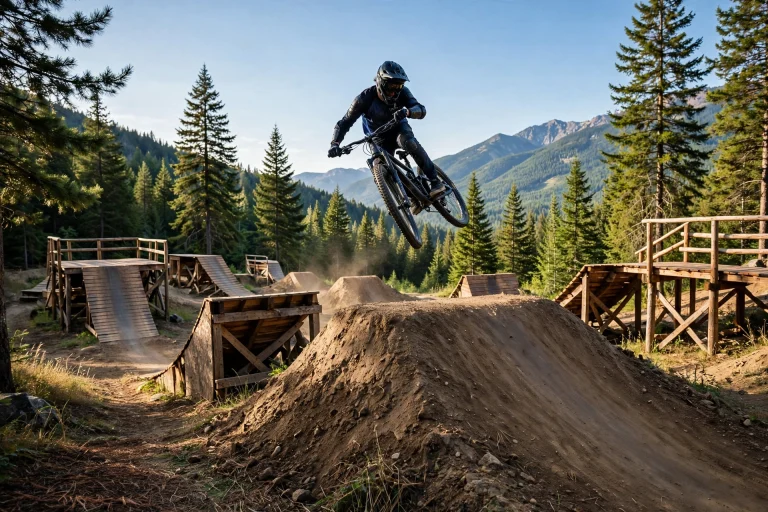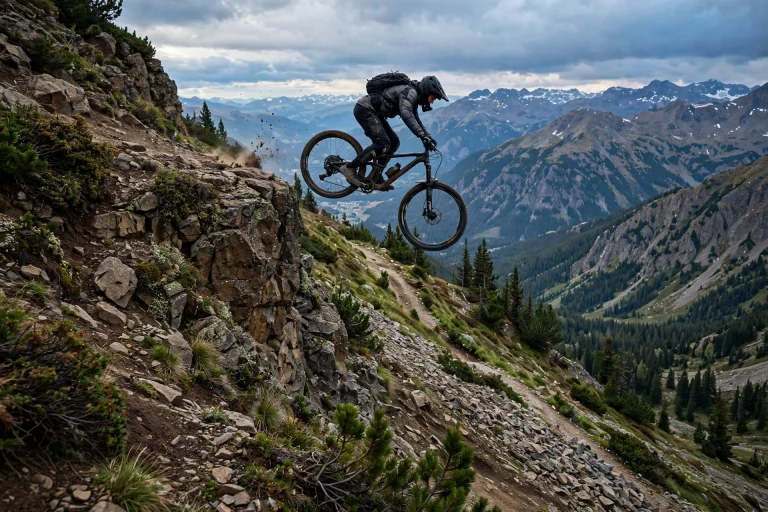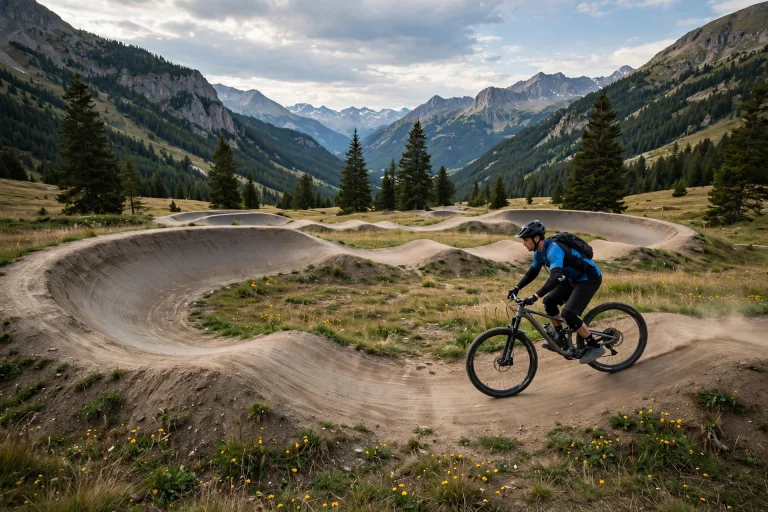
A mountain bike marathon helmet is a lightweight, well-ventilated helmet built for long-distance cross-country races that can last for hours over mixed terrain, from forest trails to steep climbs and fast descents. Marathon riders need a helmet that stays comfortable all day, keeps the head cool, and still gives solid protection on rocky descents and technical singletrack.
Mountain bike marathons are very different from short cross-country races. A marathon course can run for 60 kilometres or more, with long climbs, changing weather and hours in the saddle. This guide explains what makes a marathon helmet different, what features matter most, and how to choose one that will still feel good at the end of a long day on the bike.
What Is Mountain Bike Marathon Racing?
Mountain bike marathon racing, often called XCM, is a long-distance form of cross-country racing. Courses usually cover long distances over natural trails, forest tracks and fire roads, with a mix of climbs, descents and technical sections. Races can take several hours, and riders need to manage their energy, food and water as well as their riding.
The terrain is varied too. A single course can include smooth gravel, rocky descents, rooty singletrack and muddy sections, and a fall can happen anywhere along the way. The helmet therefore needs to protect the head in a range of crashes, from a slow fall on a climb to a faster spill on a descent.
What Kind of Helmet Do Marathon Riders Wear?
Most marathon riders wear an open face cross-country helmet, similar to the helmets used in Olympic cross-country racing. These helmets are light, with large vents that let air flow over the head, and they cover the top, sides and back of the head. The shell is shaped to sit low at the back, which gives extra coverage without adding much weight.
Some marathon riders choose a helmet with a small peak, which can help keep sun and rain out of the eyes and keep low branches away from the face on forest trails. Others prefer a helmet without a peak, or with a peak that can be removed, depending on the weather and the course. The choice is personal, but the peak should never block the rider’s view when they look ahead on a descent.
A few riders, especially those who race on rougher courses, choose a lightweight trail helmet with a little more coverage around the sides and back of the head. These helmets are slightly heavier than a pure cross-country helmet, but they give extra protection on technical descents. In general terms, the right choice depends on the course, the rider’s confidence, and how much they value lightness against coverage.

Why Does Ventilation Matter So Much in a Marathon Helmet?
Ventilation matters in a marathon helmet because the rider is working hard for hours, often in warm weather. A helmet that traps heat will make the rider hotter, more tired and less able to concentrate, which matters on a long course where small mistakes can lead to a fall. Good vents let air flow over the head, carrying heat away and keeping the rider cooler.
The design of the vents matters as well as their number. Vents at the front let air in, and vents at the back let it out, so air moves through the helmet rather than just sitting inside it. Internal channels in the helmet help guide that airflow over the head, and the padding should be thin enough in the right places to let the air reach the scalp.
On a long race, sweat is another factor. A helmet with padding that absorbs sweat and wicks it away will feel more comfortable than one that lets sweat run into the rider’s eyes. Some helmets have padding that can be removed and washed, which is useful after a muddy or sweaty race. In general terms, a marathon helmet should feel cool and dry for as long as possible, not just for the first hour.
What Should You Look for in a Marathon Helmet?
Fit comes first, and it matters more in a marathon than in a short race, because a small pressure point will become painful over several hours. The helmet should sit level, feel snug all round without pressing hard anywhere, and stay put when you shake your head. Use the adjustment dial at the back to fine-tune the fit, and try the helmet on with the sunglasses or glasses you plan to race in.
Next, look at weight and ventilation together. A lighter helmet puts less strain on your neck over a long race, and good vents keep you cooler. Pick the helmet up and compare it with others in the same style, and look at how the vents are arranged. A helmet with large, well-placed vents and internal airflow channels will usually feel cooler than one with small vents in the wrong places.
Finally, check the strap, the padding and the peak. The strap should fasten securely under your chin and sit comfortably without rubbing. The padding should be removable or washable if possible. If you want to understand one of the technologies used in modern helmets, reading about what MIPS is for helmets can help you compare different models before you buy.
How Do You Fit and Care for a Marathon Helmet?
Measure your head around the widest part, just above your eyebrows and ears, and use the maker’s size guide as a starting point. Try the helmet on and adjust the dial at the back until it feels snug but not tight. Fasten the strap so that two fingers fit snugly between the strap and your chin, and check that the helmet does not rock forward or back when you move your head.
Test the fit on a longer ride before race day, if you can. A helmet that feels fine in the shop can reveal a pressure point after two or three hours, and it is better to find that out in training than in the middle of a race. Wear the same glasses and any head covering you plan to race in, so the fit you test is the fit you will ride in.
After a race, wipe the shell with a damp cloth, remove the pads if you can, and wash them following the maker’s guidance. Let the helmet dry in the open air away from direct heat, and store it in a cool, dry place out of strong sunlight. Replace the helmet after a hard impact, even if the shell looks fine, because the liner inside can be damaged in ways you cannot see.
Frequently Asked Questions
Q: Can I use a road helmet for a mountain bike marathon?
A: In general terms, a road helmet will fit and feel light, but a mountain bike helmet usually gives more coverage at the back and sides. For rough or technical courses, a mountain bike helmet is the better choice.
Q: Do marathon riders need a full face helmet?
A: In general terms, no. Most marathon riders wear an open face helmet, because the courses are long and the emphasis is on lightness and ventilation. Full face helmets are more common in downhill and enduro racing.
Q: How often should I replace a marathon helmet?
A: In general terms, replace it after any hard impact, and follow the maker’s guidance on age and wear. A helmet that has taken a heavy knock should be checked and usually replaced, even if it looks undamaged.

Olivia
Writer at Helmet Today, covering helmet reviews, fit and riding safety.