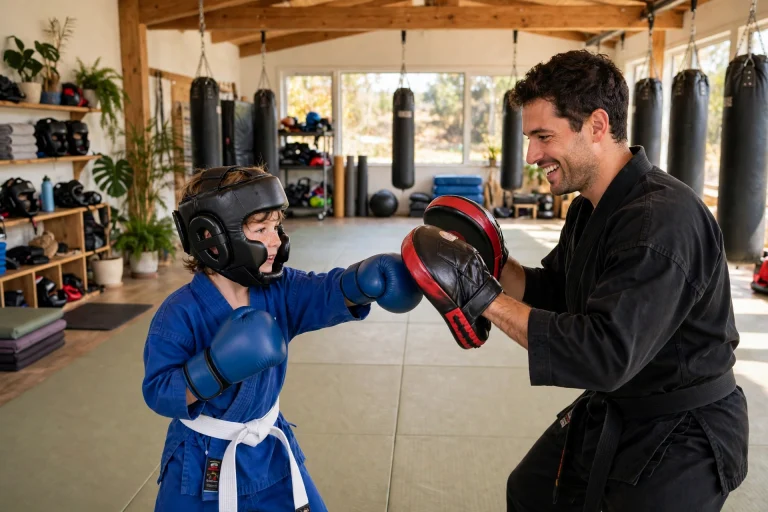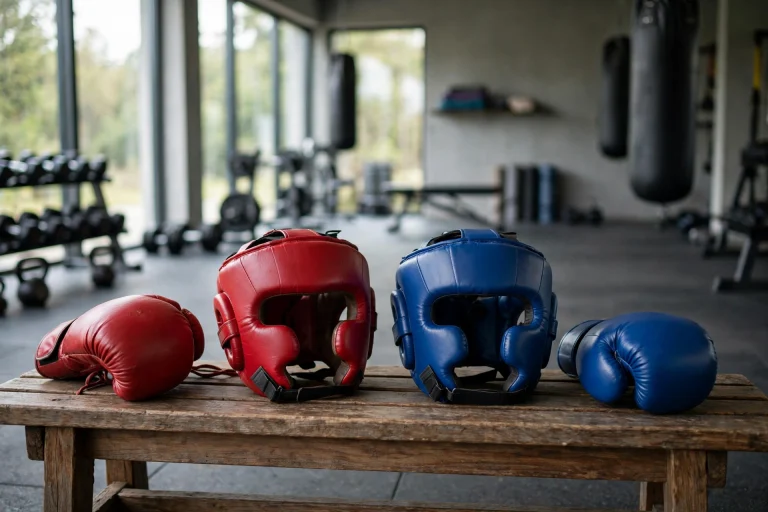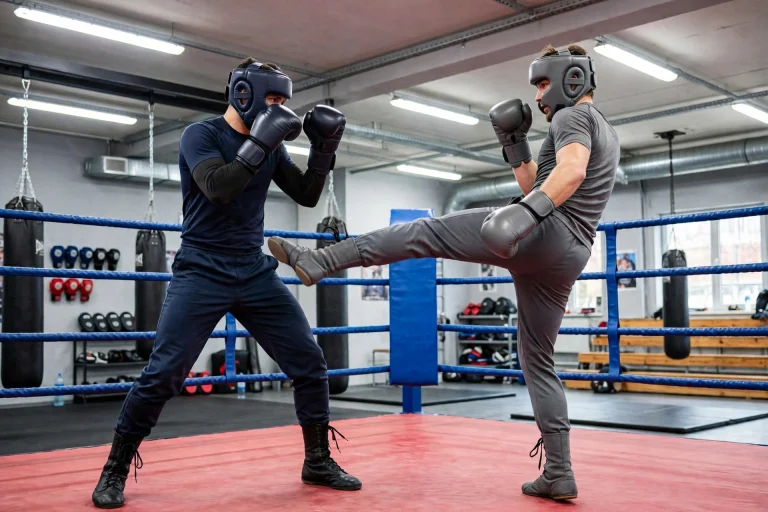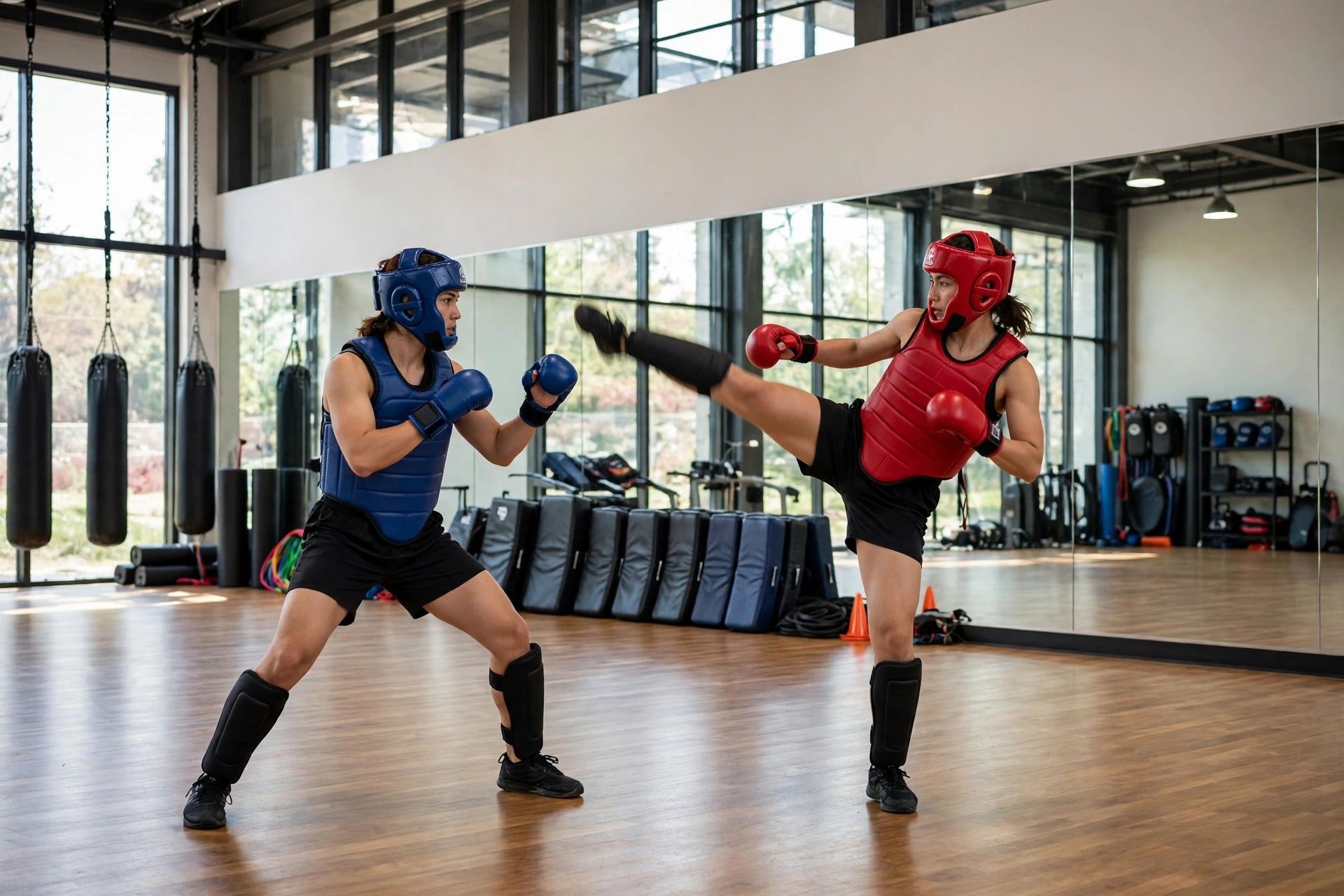
Wushu and kung fu headgear is light padded protection worn during sparring and competition to soften strikes to the head while keeping the face open for vision and breathing. In wushu sanda, the full-contact sparring form of the sport, headgear is standard kit for training and for many competitions. In traditional kung fu forms and non-contact training, it is usually not worn at all. The design is a soft padded guard that covers the forehead, temples, ears, and the back of the head, fastened with straps under the chin.
Wushu covers a wide range of disciplines, from flowing empty-hand forms to sanda sparring, where athletes trade punches, kicks, and throws. Because the contact level varies so much between those disciplines, the need for headgear varies too. This guide explains what wushu and kung fu headgear is, when it is worn, how it differs from boxing headgear, and what to look for when choosing a pair.
What Is Wushu and Kung Fu Headgear?
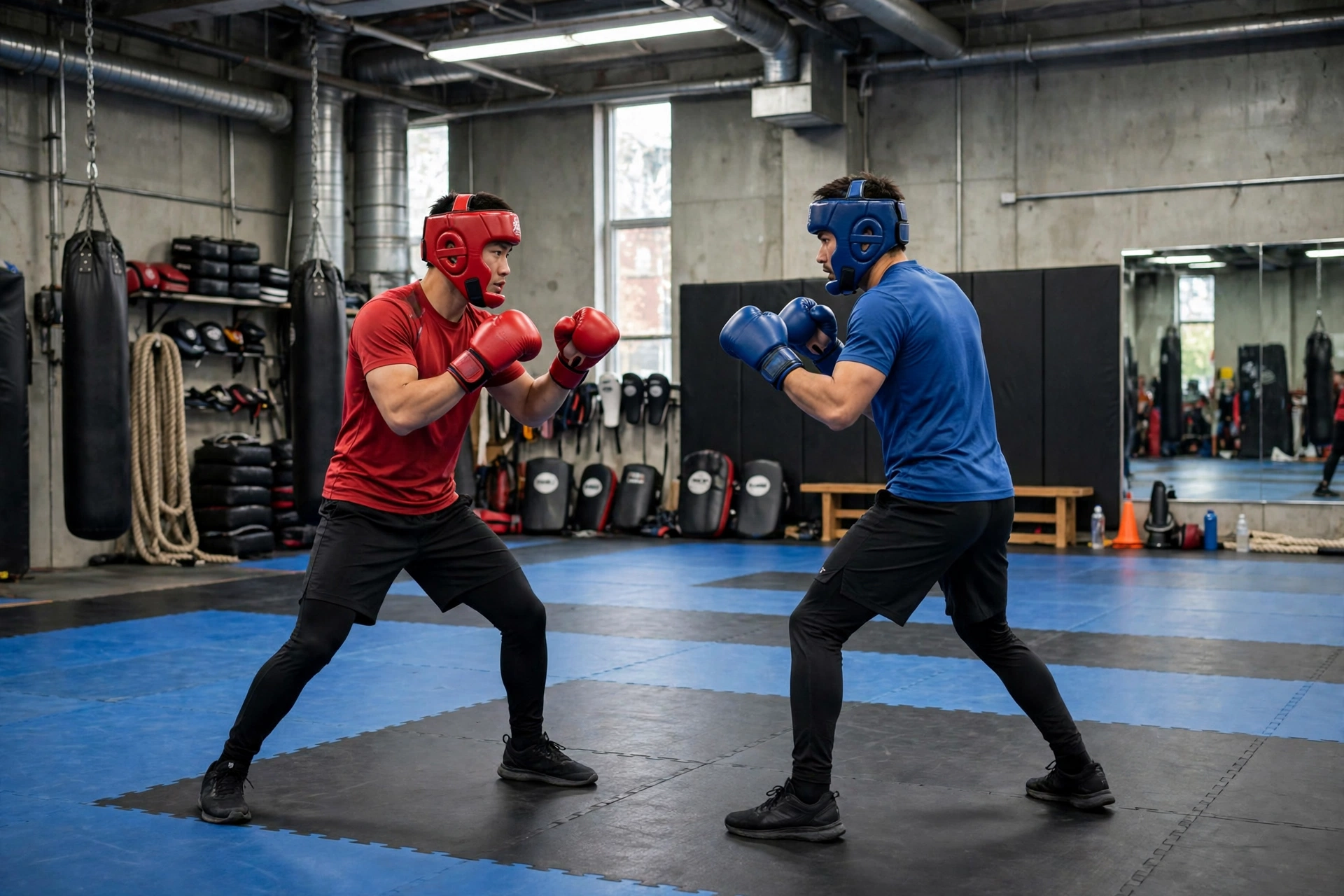
Wushu and kung fu headgear is a padded guard shaped to the head, made from synthetic leather or vinyl over layers of foam. It covers the forehead, the temples, the ears, and the back of the head, and it fastens with Velcro straps or laces under the chin. The face stays open, so the eyes, nose, and mouth are uncovered and the athlete can see clearly and breathe freely during fast exchanges.
The padding is usually lighter and thinner than the padding on a boxing head guard. That is because sanda sparring is fast and mobile, with kicks, throws, and sweeps as well as punches, and a heavy guard would slow the athlete down and tire the neck. The guard is there to take the edge off glancing blows and to protect the ears and the skin, rather than to absorb heavy repeated punches to the head.
How Is Wushu Headgear Different from Boxing Headgear?
The biggest difference is weight and bulk. Boxing headgear is built for a sport where the head is the main target and punches arrive constantly, so it tends to be thicker, heavier, and more heavily padded around the cheeks and forehead. Wushu headgear is lighter, because sanda involves kicks to the body and legs, throws, and footwork, and the head is only one of several targets. A heavy guard would make it harder to move, duck, and react.
Coverage differs too. Boxing guards often have large cheek protectors and a padded bar across the forehead, designed to block hooks and straight punches. Wushu guards usually have slimmer cheek sections and a more open face, which suits a sport where the athlete needs a wide field of vision to watch for kicks and takedown attempts coming from below as well as punches from the front. In general terms, a wushu guard trades some padding for mobility and vision.
When Is Headgear Worn in Wushu and Kung Fu?
Headgear is worn for sanda sparring, both in training and in competition where the rules require it. In sanda, athletes wear gloves and headgear, and kicks, punches, and throws are all allowed, so the head is a live target. Coaches usually require headgear for all sparring in the club, especially for beginners, because controlled contact still produces knocks, and a guard reduces cuts, bruises, and ear injuries.
It is not worn for forms practice, known as taolu, where the athlete performs set routines without an opponent. There is no incoming strike in forms, so headgear would only add weight and restrict movement for no benefit. It is also not worn for most weapon forms, for the same reason. The exception is paired weapon drills, where some schools use padded protection, but that is a different kind of guard from sparring headgear.
What Should You Look for When Choosing Wushu Headgear?
Fit comes first. The guard should sit level, with the brow padding just above the eyebrows, and it should stay put when you shake your head or duck. It should feel snug without squeezing your temples or pressing on your ears. Try it on with your mouthguard in, because that changes how the straps sit under the chin, and check that you can still hear your instructor clearly through the ear padding.
Next, check the vision. Look left and right, and up and down: you need to see kicks coming from low angles and punches from straight ahead. A guard with very thick cheek padding can block the lower part of your view, which is a problem in sanda, where sweeps and low kicks are common. The guard should protect your cheeks without hiding your opponent’s feet.
Finally, look at the build quality. The outer material should be smooth and easy to wipe clean, the stitching should be neat with no loose threads, and the straps should hold firmly when pulled tight. Foam that feels lumpy or uneven will not protect evenly, so press the padding all over and check for thin spots. If you are learning about how helmets handle different kinds of impact, reading about what MIPS is for helmets can help you understand one of the technologies used in modern helmet design.
How Do You Care for Wushu Headgear?
Headgear picks up sweat every session, so wipe it down after training with a damp cloth and a little mild soap, then let it air-dry away from direct sunlight or a radiator. Heat can make the foam harden or the outer material crack, so never leave it in a hot car or on top of a heater. Turn it inside out occasionally to let the inner lining dry fully, which helps prevent smells and keeps the padding fresh.
Check the straps and stitching regularly. Velcro loses its grip over time, especially if it collects fluff and dust, so clean the hooks with a small brush now and then. If a strap no longer holds, or the stitching along the edge has come apart, repair or replace the guard before it fails in the middle of a sparring round. A guard that slips or comes loose during sparring is worse than no guard at all, because it distracts you at the wrong moment.
Replace headgear when the foam stops springing back after you press it, or when the padding has gone flat in the spots where blows land most often. In general terms, a guard used several times a week will last a season or two of regular training before the padding starts to wear out. Keep it in a kit bag away from sharp objects, and do not stack heavy gear on top of it, which can crush the foam out of shape.
Frequently Asked Questions
Q: Is headgear required for wushu sanda competition?
A: In general terms, yes, for many amateur sanda competitions, especially for younger age groups — but the exact rules depend on the organisation running the event, so check before you compete.
Q: Can I use boxing headgear for wushu sparring?
A: In general terms, yes, for light training, but boxing guards are heavier and bulkier, so a wushu or sanda guard usually suits the faster footwork and wider vision the sport needs.
Q: Do kung fu forms practitioners need headgear?
A: No. Forms practice involves no opponent and no incoming strikes, so headgear is not worn for taolu or weapon forms — it is sparring kit, not forms kit.

Olivia
Writer at Helmet Today, covering helmet reviews, fit and riding safety.