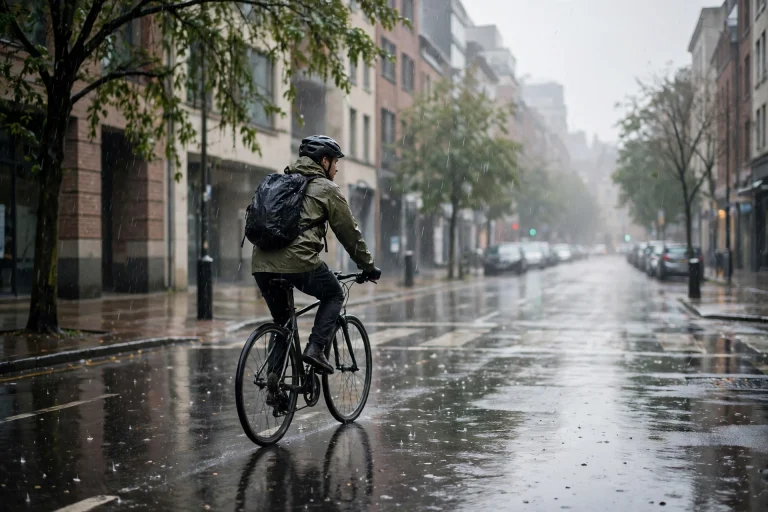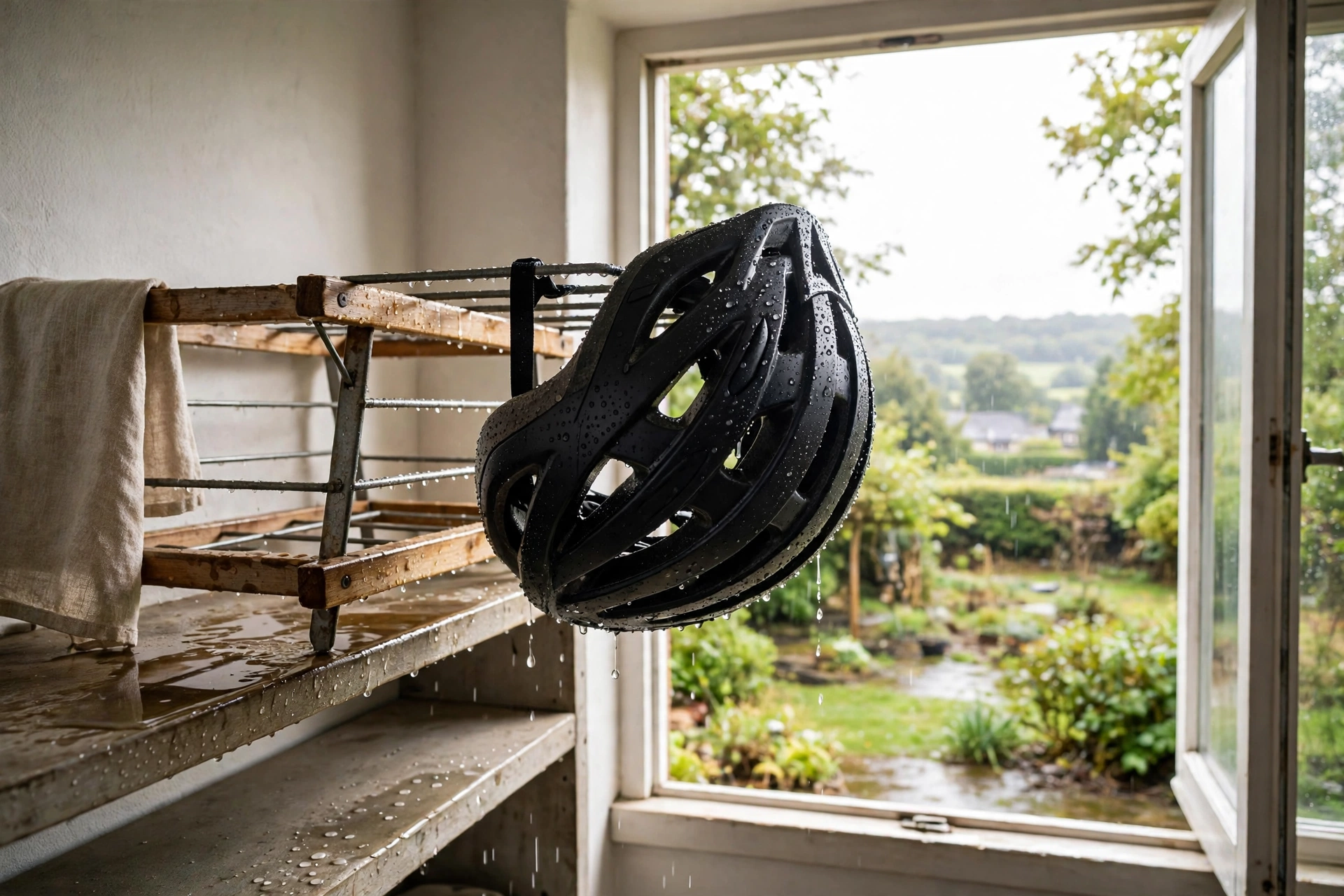
To dry a helmet quickly between wet rides, remove the liner and cheek pads, wipe the shell and vents dry, and let air circulate through the helmet in a warm, ventilated room — that combination dries a helmet far faster than leaving it shut in a bag or on a cold floor. A wet helmet is not just uncomfortable; a damp liner can smell, feel cold on your next ride, and stay wet for days if it is stored without airflow. The good news is that a few simple steps can cut drying time sharply, even when your next ride is only a few hours away.
This guide covers, in general terms, what to do as soon as you come in from the rain, how to dry the shell, liner, and straps, and what to avoid. It is written for cyclists and motorcyclists who ride in wet weather, and for commuters who may need a dry helmet again the same day.
What Should I Do First When I Come In From a Wet Ride?
Start by taking the helmet off and giving it a quick shake outside the door, so loose water drops off rather than running inside. Wipe the outside of the shell with a clean, dry towel or cloth, paying attention to the vents, the visor or peak, and the rim where water collects. If you wear glasses or a visor, wipe those too, so they are clear for your next ride.
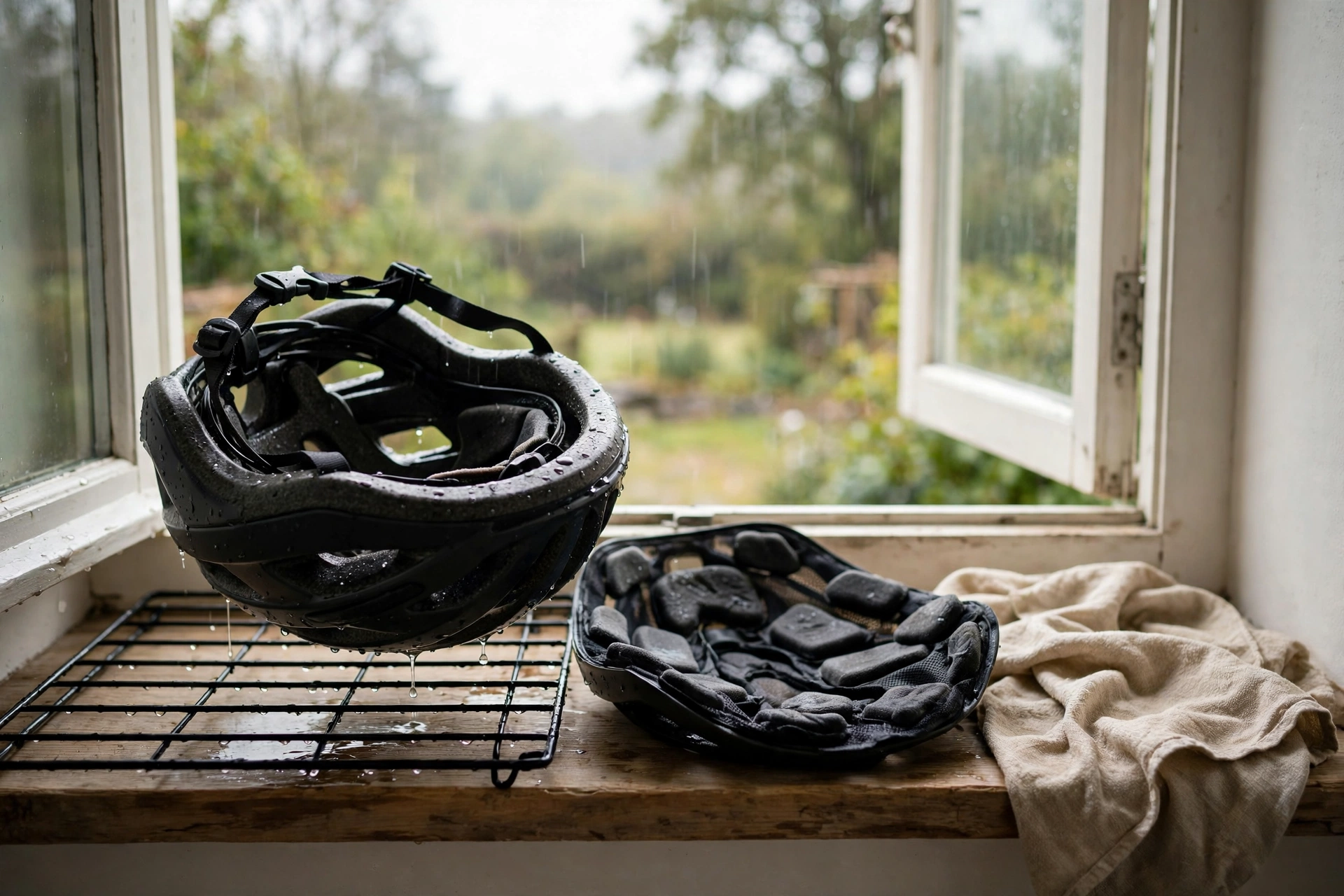
Next, open up the helmet as much as you can. Lift the visor, if it has one, and open every vent. A closed helmet traps damp air inside, while an open one lets it escape. If the liner is removable, take it out now, because the liner holds most of the moisture and dries much faster on its own than it does inside the shell. Lay the liner flat on a towel rather than bunching it up.
How Can I Dry the Liner and Pads Fastest?
The liner and cheek pads hold sweat and rain, so they are the slowest parts to dry. After removing them, press them gently between two clean towels to squeeze out as much water as you can. Do not wring them hard, because twisting can damage the foam and the fabric. A gentle press, repeated with a dry part of the towel, removes a surprising amount of water.
Then lay the pads flat in a well-ventilated place, turning them once or twice as they dry. A fan blowing gently across them speeds things up, and so does a warm room, but avoid direct heat. Radiators, hair dryers on a hot setting, and tumble dryers can shrink fabric, warp foam, or weaken adhesives, so they are best avoided even when you are in a hurry. In general terms, warm moving air is the fastest safe option.
If your helmet liner is not removable, you can still speed drying by stuffing the inside loosely with dry towels or newspaper, which draws moisture out of the padding. Replace the stuffing once it feels damp, and keep the helmet open to the air. This is slower than removing the liner, but it is still much faster than leaving the helmet closed and untouched. If you are learning about how helmets handle different kinds of impact, reading about what MIPS is for helmets can help you understand one of the technologies used in modern helmet design.
How Do I Dry the Shell, Vents, and Straps?
The shell itself dries quickly once it is wiped down, but water hides in the vents, under the visor, and around the strap fittings. Use a dry cloth to wipe inside the vents, and tip the helmet gently so water runs out of the channels rather than pooling inside. A soft cloth wrapped around a finger can reach into vent openings without scratching the shell.
Straps dry best when they are laid flat and spread out, rather than left bunched or buckled tight. Wipe them with a towel, then leave them unbuckled so air can reach both sides. The chin strap and its padding can hold moisture, so give them the same attention as the liner. If the straps smell damp, a wipe with a cloth dampened with mild soapy water, followed by a rinse wipe, can freshen them up.
What Should I Avoid When Drying a Helmet?
Avoid strong heat, because it is the most common way riders damage a helmet while trying to dry it. A helmet left on a radiator, in front of a hot fan heater, or on a car dashboard in strong sun can suffer warped padding, loosened glue, or a misshapen liner. The shell may look fine while the inside is quietly damaged, so it is not worth the risk for a slightly faster dry.
Avoid sealing a wet helmet in a plastic bag or an airtight box. That traps moisture, encourages smells, and can leave the liner damp for days. It also creates the kind of damp, enclosed conditions where odours build up quickly. If you must carry a wet helmet, use a breathable bag or leave it open to the air as soon as you can.
Do not use strong cleaners, solvents, or deodorising sprays inside a helmet to deal with damp smells. These can damage the liner fabric, the foam, and the adhesives that hold the padding in place. If a helmet smells after drying, a gentle hand wash of the removable liner with mild soap is a safer fix than a chemical spray.
How Can Commuters Keep a Helmet Dry Between Daily Rides?
Commuters face the hardest drying challenge, because the helmet may need to be dry again in a few hours. The best habit is a quick routine every time you arrive: wipe the shell, remove the liner if you can, open the vents, and set the helmet somewhere airy at work or at home. A small fan at your desk or in a hallway can make a real difference, and a spare liner set means you can wear a dry one while the other dries.
It also helps to plan for rain. A helmet cover or a light waterproof bag can keep the worst of the rain off on the ride itself, which means less water to dry afterwards. Even a simple cover reduces how wet the liner gets, and that shortens the drying time when you arrive. Over a wet week, that small habit can be the difference between a fresh helmet and a permanently damp one.
Frequently Asked Questions
Q: How long does a wet helmet take to dry?
A: In general terms, a wiped shell can dry in an hour or two with good airflow, while a soaked liner may need several hours or overnight. Removing the liner and using a fan can cut that time sharply, but a very wet liner may still need until the next day.
Q: Can I use a hair dryer on my helmet?
A: A hair dryer on a cool setting, held at a distance, is generally safer than hot air, but warm moving air from a room fan is a better choice. Avoid hot settings, radiators, and direct strong heat, which can damage padding, foam, and adhesives.
Q: Why does my helmet smell after wet rides?
A: A damp liner stored without airflow can develop a smell quickly. Drying the liner fully, washing it regularly with mild soap, and storing the helmet in a ventilated place usually solves it. If the smell persists after a full wash and dry, the liner may need replacing.

Olivia
Writer at Helmet Today, covering helmet reviews, fit and riding safety.