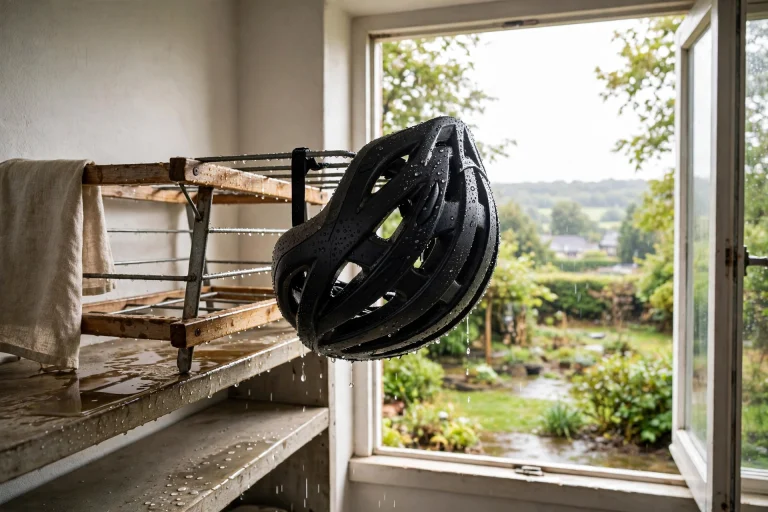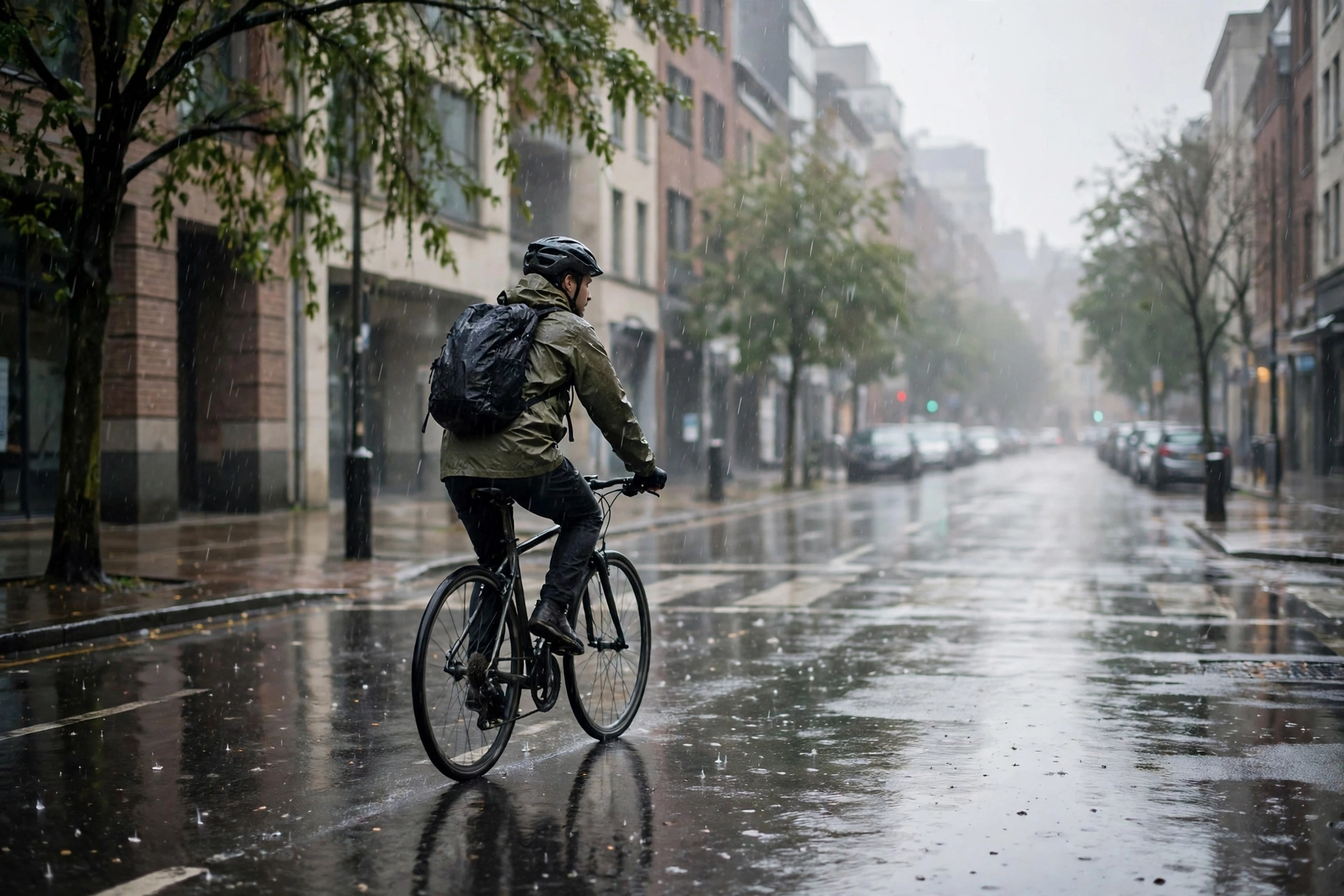
For rain riding, a commuter’s helmet checklist is simple: a clean visor or glasses, a working fit, a dry liner, a helmet cover or waterproof layer, and a plan for drying the helmet at work — check those five things before you leave, and wet commutes become far easier. Rain changes a ride in ways that dry weather does not. Visibility drops, roads get slippery, and a helmet that was comfortable on a dry day can feel cold, wet, and distracting when it is soaked through. A short checklist, run through before every wet ride, catches the small problems before they become miserable ones.
This guide is written for commuters who ride in all weathers, whether by bicycle or motorcycle. It covers, in general terms, the helmet checks that matter most in rain, the extra gear that helps, and the habits that keep your helmet in good shape through a wet season.
Is My Helmet Fit Still Right in Wet Weather?
Fit is the first check, because rain makes a poor fit feel worse. A helmet that is too loose can shift when it is wet, and a helmet that is too tight can press harder as the liner absorbs water and swells slightly. Before you leave, put the helmet on, fasten the strap, and shake your head gently from side to side. It should move with your head, not slide around on its own.
Check the strap too. Wet straps can feel different against the skin, and a strap that was comfortable when dry may rub when it is damp. Make sure it is snug enough to hold the helmet — you should be able to fit about two fingers between the strap and your chin — but not so tight that it digs in. If your helmet has a dial or adjustment at the back, use it to fine-tune the fit before you set off.
Can I See Clearly Through Rain on My Visor or Glasses?
Clear vision is the most important rain check of all. If you ride with a visor, wipe both sides clean before you leave, and check for scratches, fogging, or water spots that blur your view. A visor that is clean at home can fog up within minutes in rain, so make sure the vents are open and the visor is not sealed tight against the helmet. Some riders leave the visor cracked open a little, which lets air flow through and reduces fog.
If you wear glasses under your helmet, the same rules apply. Clean the lenses, and consider how rain will reach them. A peak can help keep rain off glasses, and a helmet cover with a small brim can do the same. Carry a small cloth in a pocket or bag, so you can wipe your visor or glasses at a traffic light or when you stop, rather than riding on with blurred vision.
Check your lights and reflective gear as well, because other road users need to see you in rain just as much as you need to see them. A helmet with reflective strips or a bright cover helps you stand out in grey, wet conditions. In general terms, visibility in rain is a two-way job: you need to see, and you need to be seen. If you are learning about how helmets handle different kinds of impact, reading about what MIPS is for helmets can help you understand one of the technologies used in modern helmet design.
Do I Need a Helmet Cover or Extra Waterproof Gear?
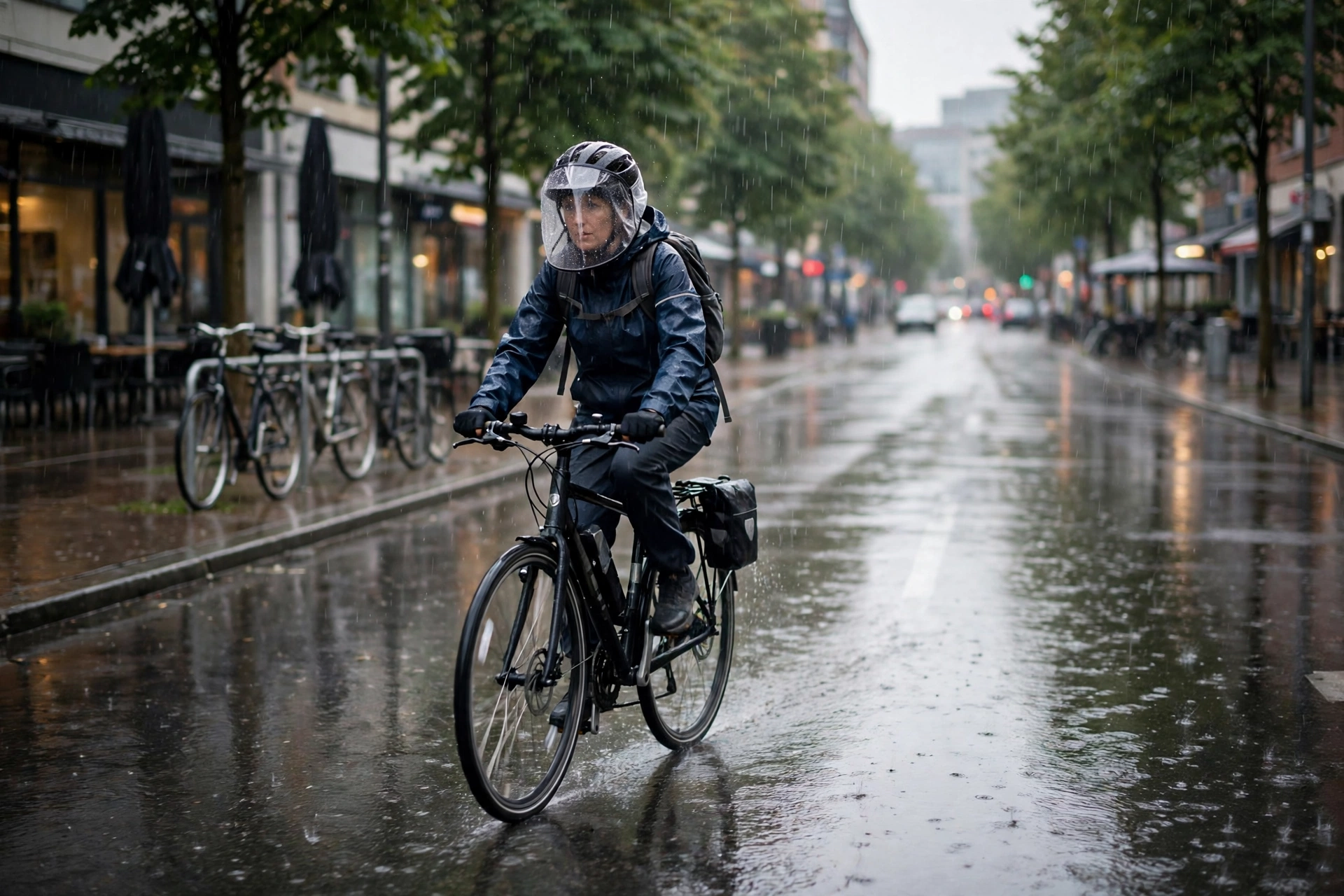
A helmet cover is one of the simplest and most useful pieces of rain gear a commuter can own. It is a light, waterproof shell that fits over the helmet, keeps rain out of the vents, and stops the liner from soaking through. Many covers are bright or reflective, which also helps visibility. They fold up small, so you can keep one in a bag or a jacket pocket and put it on when the rain starts.
Check that the cover fits your helmet properly before you rely on it. A cover that is too loose can flap in the wind or slip over your eyes, while one that is too tight may not fit over the peak or visor. Try it on at home, adjust the drawstring or elastic, and ride a short distance to make sure it stays in place and does not block your view or your vents completely.
What Should I Check on the Helmet Itself Before a Wet Ride?
Give the helmet a quick once-over before every wet commute. Check the shell for cracks or damage, because a damaged shell may not protect as it should, and rain can make small problems harder to spot. Look at the vents to make sure they are not blocked with mud or debris, and check that any vent covers or sliders still move freely.
Check the fasteners, the strap buckle, and the liner attachments too. Wet conditions can make a worn buckle stick or a loose liner shift, so it is better to find those issues at home than halfway through a rainy ride. If anything feels loose, stiff, or broken, fix it or swap the part before you leave.
Finally, check that you have a drying plan for when you arrive. Know where you will put the helmet at work, whether there is a ventilated spot or a hook, and whether you have a spare liner or a towel in your bag. A helmet that is left wet in a closed locker will still be damp for the ride home, so a little planning in the morning saves discomfort in the evening.
How Do I Look After My Helmet Through a Wet Season?
Wet seasons are hard on helmets, so a little regular care goes a long way. After each wet ride, wipe the shell dry, open the vents, and let the helmet air out. Remove the liner when you can, and wash it regularly with mild soap and lukewarm water, letting it dry fully before you refit it. A clean, dry liner is more comfortable and lasts longer than one that is left damp day after day.
Check the straps and padding for wear more often in wet weather, because damp conditions can speed up wear and encourage smells. If the liner starts to smell even after washing, or if the padding feels flat and no longer holds the helmet snugly, it may be time for a replacement liner. Spare liners are usually easy to fit and far cheaper than a new helmet.
Frequently Asked Questions
Q: Should I ride in the rain with my normal helmet?
A: In general terms, yes, if the helmet fits well, the visor or glasses are clean, and you have a way to dry it afterwards. A helmet cover and a drying plan make wet commutes much more comfortable, but the helmet itself does not need to be a special rain model.
Q: How do I stop my visor fogging up in the rain?
A: Keep the vents open and leave the visor cracked open slightly so air can flow through. Wipe the visor clean before you leave, and carry a small cloth so you can wipe it during the ride if needed.
Q: What should I do with a wet helmet when I get to work?
A: Wipe the shell, open the vents, remove the liner if you can, and set the helmet somewhere with moving air. Avoid closed lockers and plastic bags, which trap moisture and leave the helmet damp for the ride home.

Olivia
Writer at Helmet Today, covering helmet reviews, fit and riding safety.