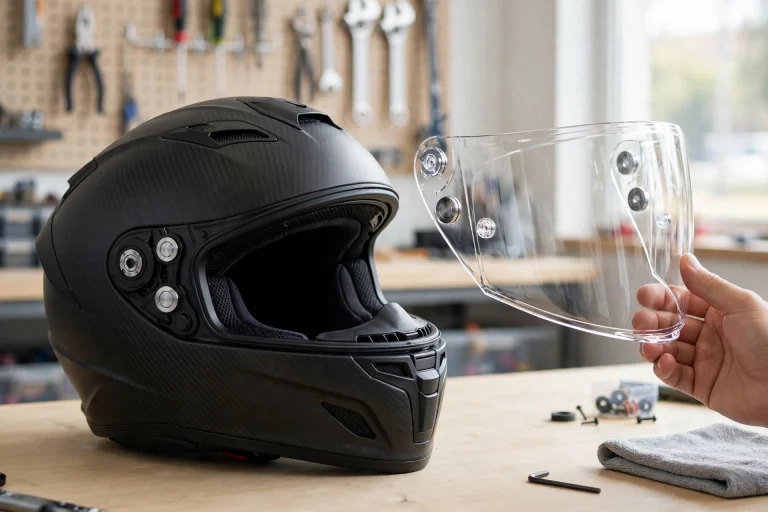
A helmet with a quick-release visor is a helmet whose visor can be removed and refitted in seconds without tools, usually by pressing a button, lifting a latch, or turning a simple lever. Instead of undoing screws, the rider operates a small mechanism that frees the visor from its mounts, so a visor swap that might otherwise take several minutes can be done at the roadside with gloves on. The visor itself is the same kind of clear or tinted shield found on a standard helmet; only the way it attaches is different.
Quick-release visors are common on motorcycle helmets, where riders often switch between a clear visor for night riding and a tinted one for bright daylight, and they also appear on some cycling and off-road helmets. The appeal is practical: when the light changes, when the visor gets dirty, or when you need to clean it properly, you can take it off quickly and put it back just as fast. This guide explains what a quick-release visor is in general terms, how the mechanism works, and what to look for when you use one.
What Is a Quick-Release Visor?
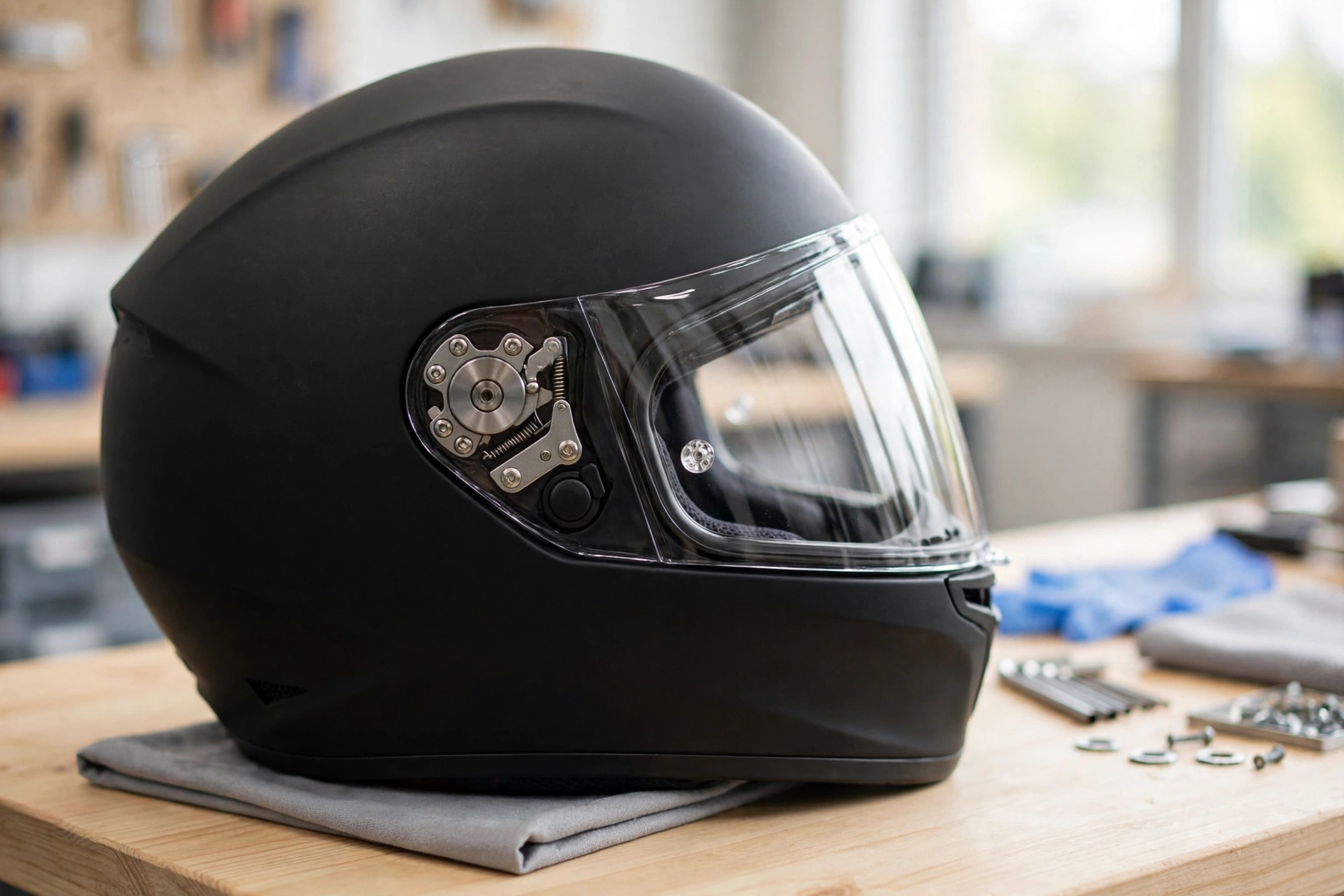
A quick-release visor is a face shield or peak that is held on a helmet by a mechanism designed for fast removal. On most motorcycle helmets, the visor pivots on a small plate on each side of the shell, and that plate has a release button or a lever. Pressing the button or moving the lever frees the visor from the plate, and the visor lifts away. To refit it, the rider lines the visor up with the plates, presses it into place, and hears or feels a click that tells them it is locked.
The exact design varies from one helmet maker to another. Some systems use a push button on each side, some use a single central latch, and some use a twist-and-lift motion that needs no button at all. What they share is the aim of making visor removal a one-handed, tool-free job. In general terms, the mechanism is meant to be simple enough to operate without looking at it, so a rider can manage it by feel while wearing gloves.
How Does a Quick-Release Visor Work?
On a typical motorcycle helmet, the visor sits on two side plates that are fixed to the shell. Each plate has a shaped slot that the end of the visor fits into, and a spring-loaded catch that holds it there. When the visor is closed, the catch keeps it from lifting off, but the visor can still pivot up and down on the plates so the rider can open it for ventilation or close it against the wind. To remove the visor, the rider opens it part way, presses the release on each side, and lifts the visor clear of the plates.
Refitting is the reverse, and it is usually the part that takes a little practice. The rider offers the visor up to the plates, lines up the shaped ends with the slots, and presses firmly until both sides click into place. It is important to check that both sides have clicked, because a visor that is only locked on one side can sit crooked, leave a gap, or come loose while riding. Most riders find that after a few tries, the motion becomes quick and natural. If you are learning about how helmets handle different kinds of impact, reading about what MIPS is for helmets can help you understand one of the technologies used in modern helmet design.
Why Do Riders Choose a Quick-Release Visor?
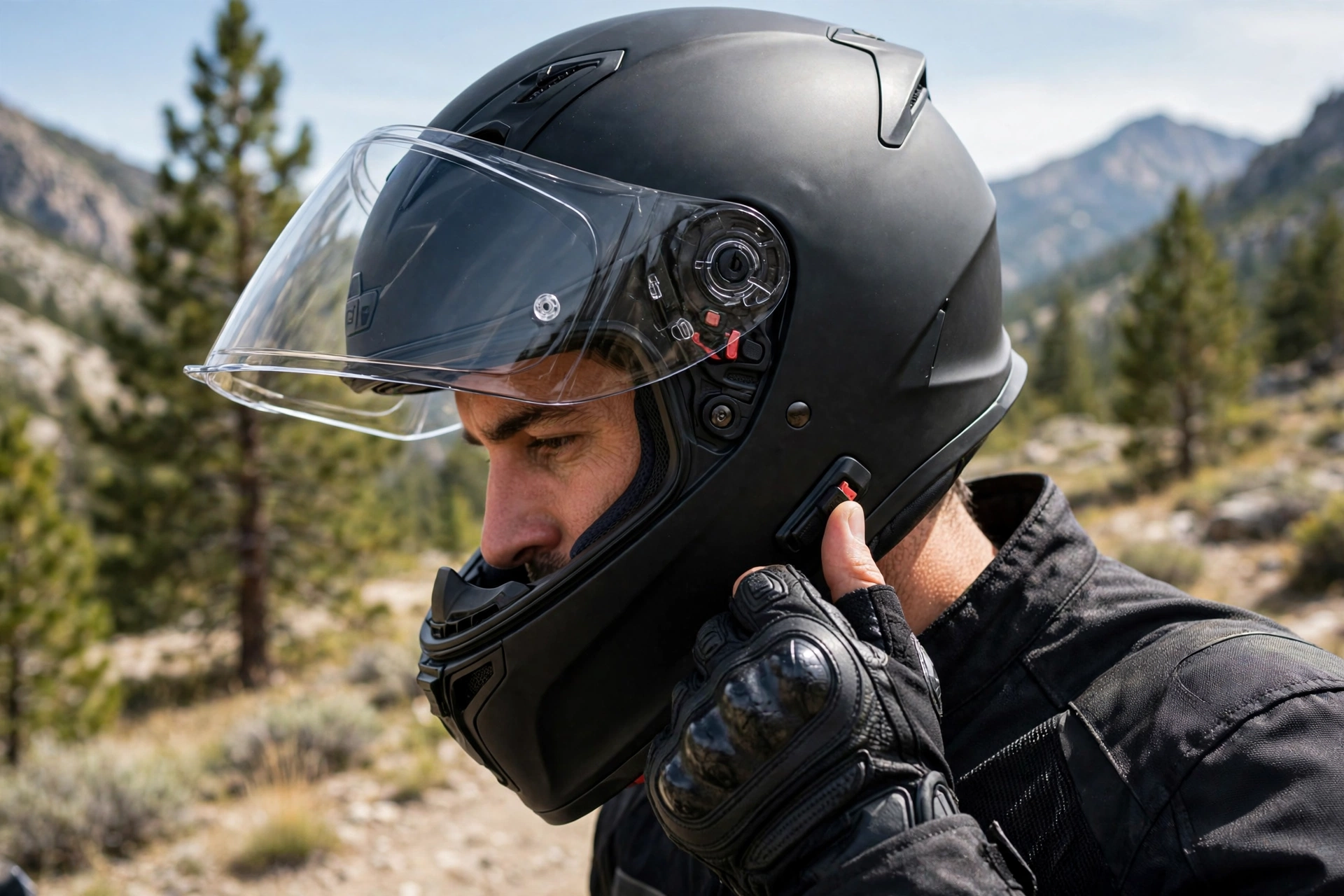
The main reason is convenience. A rider who sets off in the morning may need a clear visor for a dull start and a tinted visor by midday, and a quick-release system makes that change a matter of seconds. The same applies when a visor gets covered in insects, dust, or rain: rather than trying to clean it while it is still on the helmet, the rider can take it off, clean it properly, and clip it back on.
Cleaning is easier for another reason too. A visor that comes off the helmet can be washed under running water, dried with a soft cloth, and checked for scratches in good light, all without the helmet getting in the way. That matters because a scratched or dirty visor can distort vision, especially in low sun or at night. Being able to remove the visor also makes it easier to clean the inside of the visor and the seal around the helmet opening, where dirt and moisture can collect.
What Are the Drawbacks of a Quick-Release Visor?
The main drawback is that a mechanism with moving parts can wear over time. The small catches, springs, and plates that make a quick-release system work are usually made of plastic or light metal, and after many removals they can become loose or less positive in their action. A visor that once clicked firmly into place may start to feel sloppy, or may need an extra push to lock. In general terms, this is a gradual process, and it is one reason to check the mechanism regularly rather than assuming it will work perfectly forever.
How Do You Fit, Remove and Look After a Quick-Release Visor?
Start by learning the release on your own helmet before you need it on the road. Read the helmet’s instructions, then practise removing and refitting the visor at home a few times until the motion feels natural. Open the visor to the position the instructions suggest — often part way up — press the release on one side, then the other, and lift the visor away gently. When refitting, line up both sides before pressing, and check that each side has clicked by tugging gently on the visor.
Look after the mechanism by keeping it clean. Wipe the side plates and the ends of the visor with a soft, dry cloth after riding in rain or dust, and do not force the visor if it will not seat — take it off and try again, checking for dirt or a small stone caught in the slot. Avoid using harsh solvents on the visor or the plates, and store a spare visor in a soft bag so the mounting ends do not get chipped or bent.
Frequently Asked Questions
Q: Can I remove a quick-release visor while wearing gloves?
A: In general terms, yes. Most quick-release systems are designed to be operated by feel and with gloves on, though the exact motion takes a little practice. Try it at home a few times before you need to do it at the roadside.
Q: Will a quick-release visor come off while I am riding?
A: It should not, as long as both sides are fully locked and the mechanism is in good condition. Always check for a firm click on each side after refitting, and check the visor before every ride if the mechanism is worn.
Q: Can I fit a quick-release visor to a helmet that did not come with one?
A: Usually not. The side plates and locking slots are part of the helmet’s design, so a quick-release visor will only fit a helmet made for that system. If your helmet has screw-on visors, it will normally need to stay with that type.

Olivia
Writer at Helmet Today, covering helmet reviews, fit and riding safety.