KinetiCore is a helmet technology in which the foam liner itself is shaped into small controlled crumple zones, designed to help the helmet absorb energy in an impact — including the twisting motion of an angled impact — without needing a separate slip layer inside the helmet. Instead of adding a plastic sheet or splitting the liner into moving parts, KinetiCore builds the protection into the foam, using shaped blocks and channels that are meant to fold and crush in a controlled way when the helmet is struck. The aim is a lighter, simpler helmet that still addresses both direct and rotational motion.
KinetiCore was developed by the helmet maker Lazer, and it is found mainly in Lazer cycling helmets, including road, mountain bike, and commuter models. It is one of several approaches that helmet makers have taken to the problem of rotational motion, and it is different from MIPS in an important way: where MIPS adds a layer that slides, KinetiCore changes the shape of the foam itself. This guide explains what KinetiCore is in general terms, how it works, and what to think about when choosing a helmet that uses it.
What Is KinetiCore in a Helmet?
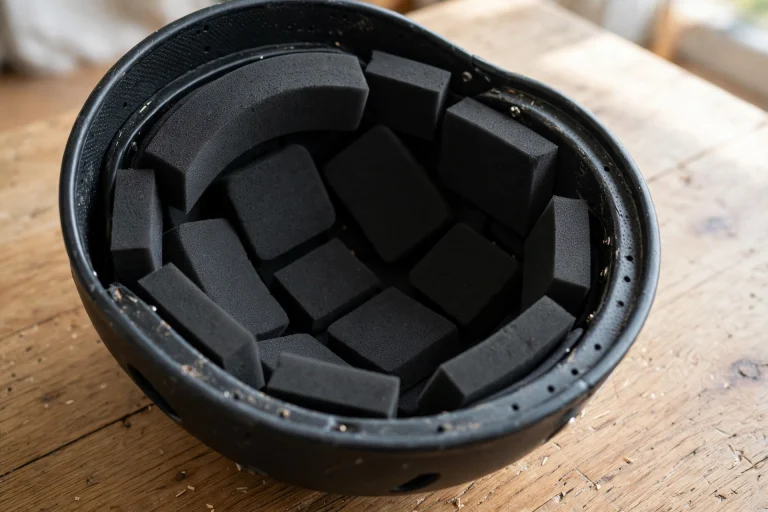
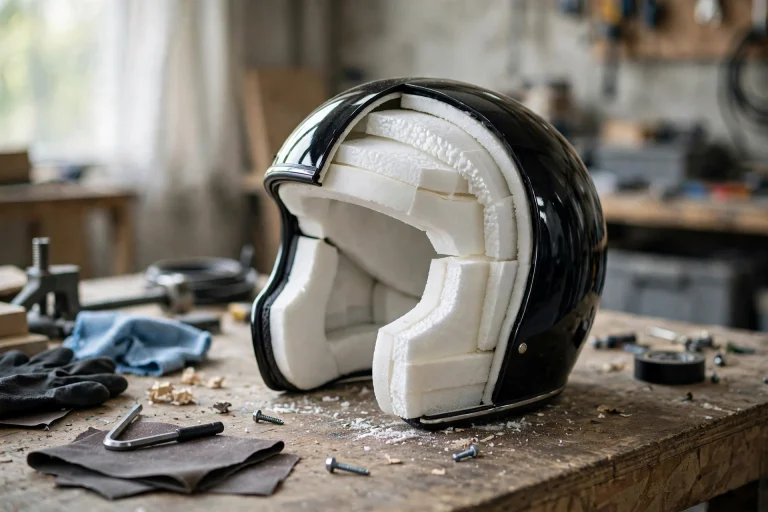
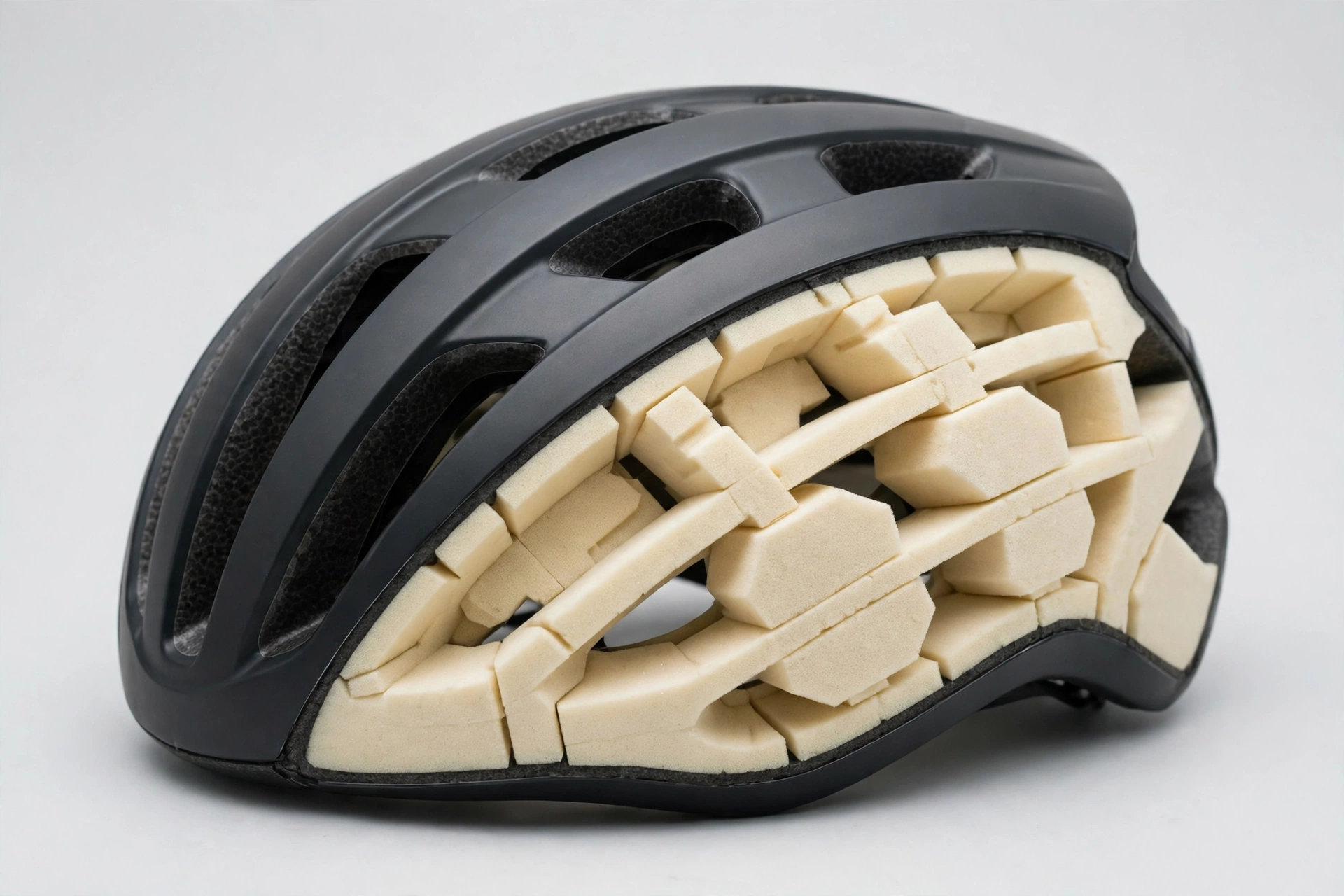
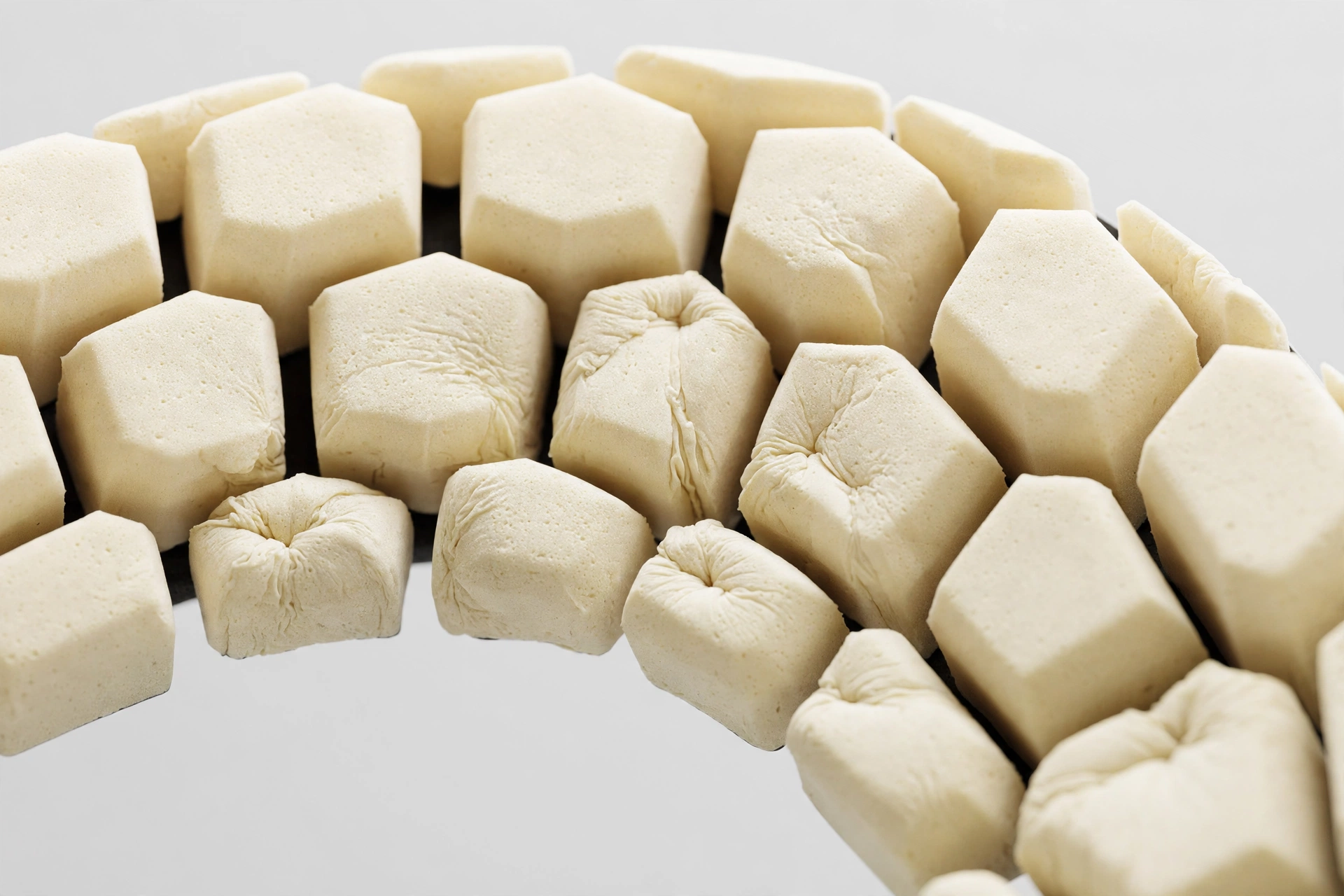
KinetiCore is a helmet liner technology that deals with impact energy by shaping the foam liner into small, separate blocks, often called controlled crumple zones. In a conventional helmet, the liner is usually a smooth, solid piece of foam that crushes when the helmet is hit. In a KinetiCore helmet, the liner is divided into blocks with small channels or gaps between them, and those blocks are designed to fold, crush, and shear in a controlled way when the helmet is struck.
The idea is that by shaping the foam in this way, the helmet can absorb energy in more than one direction. In a straight, direct impact, the blocks crush in the usual way, absorbing the force before it reaches the head. In an angled impact, where the force also tries to twist the helmet, the blocks can fold and shear sideways as well, which may help to reduce the amount of twisting motion that is passed on to the head. In general terms, the liner is meant to work a little like the crumple zone of a car: it deforms in a planned way so that the energy of the impact is taken up by the helmet rather than by the head.
How Does KinetiCore Work?
The working idea is straightforward in general terms. The foam liner in a KinetiCore helmet is made of expanded polystyrene, the same kind of foam used in most cycling helmets, but it is moulded with a pattern of blocks and channels. When the helmet is hit, those blocks are designed to crush and fold in a controlled way, absorbing energy as they deform. Because the blocks are separate from each other, they can also move sideways a little, which is what allows the liner to deal with the twisting motion of an angled impact as well as the straight force of a direct one.
That small, controlled deformation is the key to the system. It does not stop the impact, and it does not make the helmet able to absorb all of the energy or all of the rotational motion — no helmet system can do that. What it aims to do is take up more of the impact energy in the liner itself, by letting the foam deform in a planned way, so that less of that energy and twisting motion reaches the head. The deformation happens in the very short time of the impact itself, and once it has happened, the liner cannot return to its original shape. If you want a broader introduction to rotational-motion systems in general, reading about what MIPS is for helmets can help you understand one of the other technologies used in modern helmet design.
How Is KinetiCore Different from Other Rotational Systems?
The main difference is that KinetiCore does not add a moving part. In standard MIPS, a thin plastic layer slides against the foam liner. In MIPS Spherical, two foam layers slide against each other. In MIPS Integra, the comfort padding slides against the liner. In each of those designs, the rotational-motion feature comes from one part moving against another. In KinetiCore, there is no sliding part at all — the rotational-motion feature comes from the shape of the foam itself, and from the way those shaped blocks are designed to fold and shear.
That difference has a few practical effects. A KinetiCore helmet is often lighter than a helmet with an added slip layer, because there is no extra part to carry, and it can have better ventilation, because the channels between the foam blocks give air a path through the helmet. The inside of the helmet also looks and feels simpler, with no plastic sheet or second layer to notice. On the other hand, the technology is specific to one maker, so it is only found in that maker’s helmets, and a rider who wants KinetiCore has to choose from that maker’s range.
What Are the Benefits and Limits of KinetiCore?
The main benefit claimed for KinetiCore is that it addresses both direct and rotational motion without adding weight or complexity to the helmet. Because the protection is built into the foam, the helmet can be lighter and better ventilated than a helmet with a separate slip layer, and the inside of the helmet can feel simpler and more comfortable. Some riders also like the fact that there is no extra layer to shift, creak, or trap sweat, and that the helmet is easy to clean because the liner is a single shaped piece of foam.
How Do You Choose a Helmet with KinetiCore?
KinetiCore is found in Lazer cycling helmets, so the first step is to try on the models that use it and see which fits you. Check that the helmet sits level on your head, that it feels snug without pressure points, and that the straps adjust easily. Check that the ventilation suits the kind of riding you do — road riding in warm weather needs more airflow than a short commute — and that the helmet is comfortable enough to wear for a full ride. The presence of KinetiCore should be a factor in your choice, but it should not be the only factor.
Frequently Asked Questions
Q: Is KinetiCore the same as MIPS?
A: No. Both aim to help with the twisting motion of an angled impact, but they work differently. MIPS uses a layer that slides, while KinetiCore shapes the foam liner itself into blocks that are designed to fold and crush in a controlled way, with no separate sliding layer.
Q: Does a KinetiCore helmet feel different to wear?
A: In general terms, no. The inside of a KinetiCore helmet looks and feels like normal foam, because the technology is built into the liner itself. Most riders notice the fit, weight, and ventilation of the helmet rather than the liner technology.
Q: Can a KinetiCore helmet be used again after a crash?
A: No. Like any helmet, a KinetiCore helmet should be replaced after a serious impact, because the foam blocks that have deformed cannot return to their original shape and will not protect in the same way again.

Olivia
Writer at Helmet Today, covering helmet reviews, fit and riding safety.