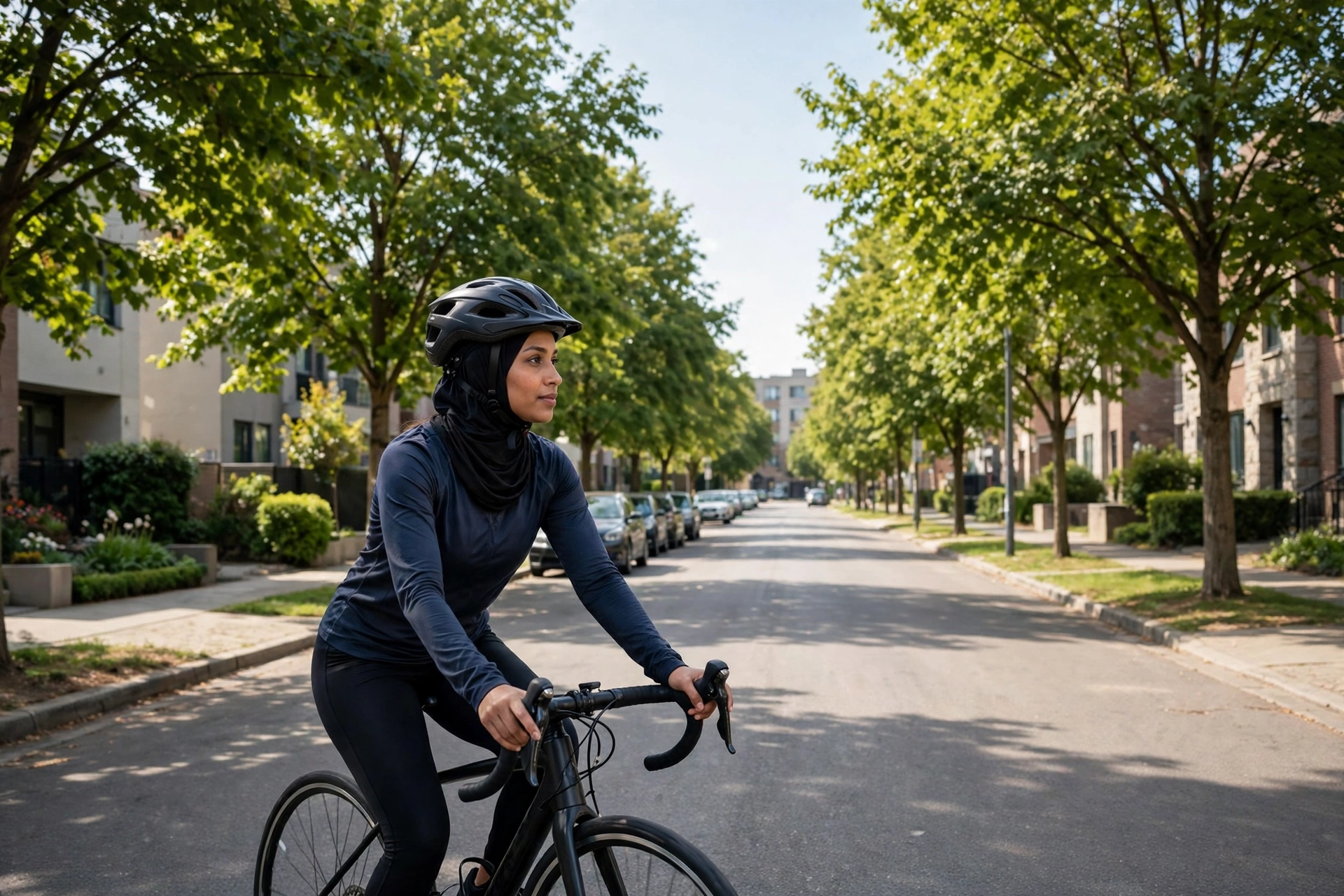
In general terms, a rider who wears a hijab can wear a helmet safely by choosing a slightly larger or deeper helmet, wearing a thin, smooth hijab or sports hijab underneath, and checking the fit with the hijab on exactly as it will be worn on the ride. The hijab adds a layer between the head and the helmet, and the way it is arranged changes how the helmet sits, so the fit must be judged with the hijab in place — never fitted without it and then worn with it.
Many hijab-wearing riders find that standard helmets feel tight, sit too high, or press uncomfortably, and some are told, wrongly, that they must choose between the hijab and the helmet. That is not the case: with the right size, the right under-layer, and a careful fit check, the two work together well. This guide explains how to arrange a hijab under a helmet, what to look for when choosing one, and how to check the fit properly.
How Does a Hijab Change the Way a Helmet Fits?
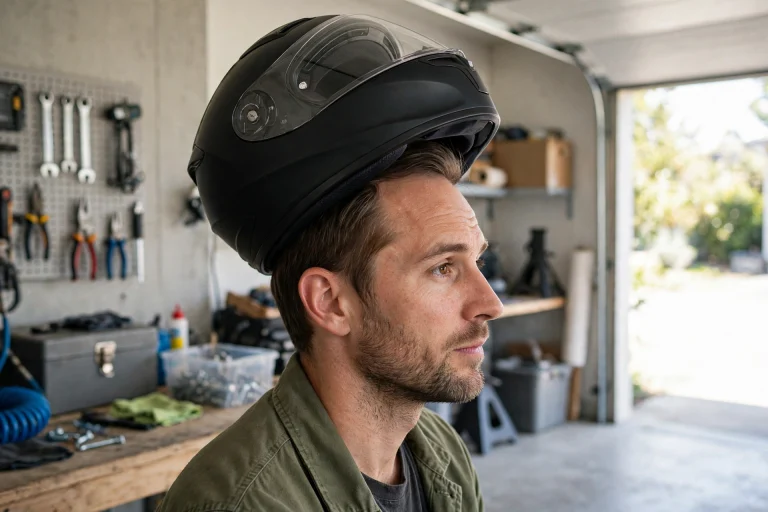
A hijab adds a layer of fabric over the hair, around the sides of the face, and often under the chin, and that layer changes the fit in two ways. First, it makes the head effectively larger, so a helmet in the size you would expect from a bare-head measurement may feel tight or may not sit down far enough. Second, folds and layers of fabric can create uneven bulk, especially at the back of the head or around the ears, which can lift the helmet or make it sit unevenly.
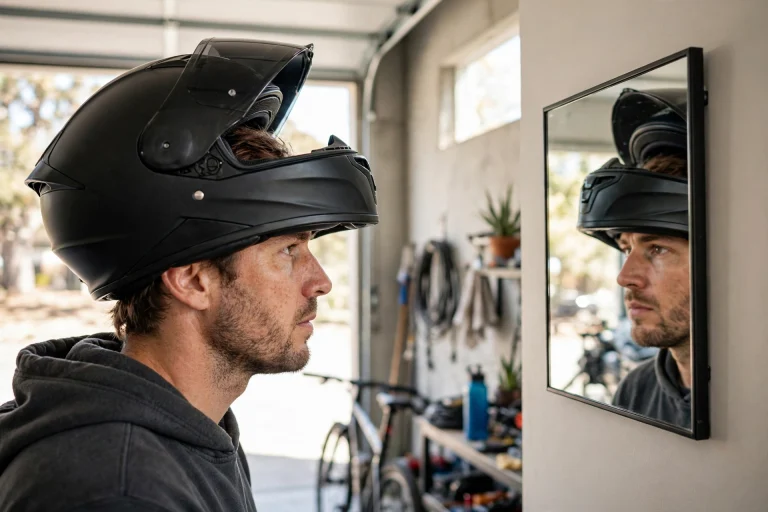
The result, if the fit is not checked properly, is a helmet that sits too high on the forehead, rocks from side to side, or presses painfully at the temples. In general terms, the helmet should still sit level, with the front edge about two fingers’ width above the eyebrows, and it should move with your head rather than sliding on its own. If the hijab stops the helmet from sitting that low, the size or the way the fabric is arranged needs to change.
How Should You Arrange a Hijab Under a Helmet?
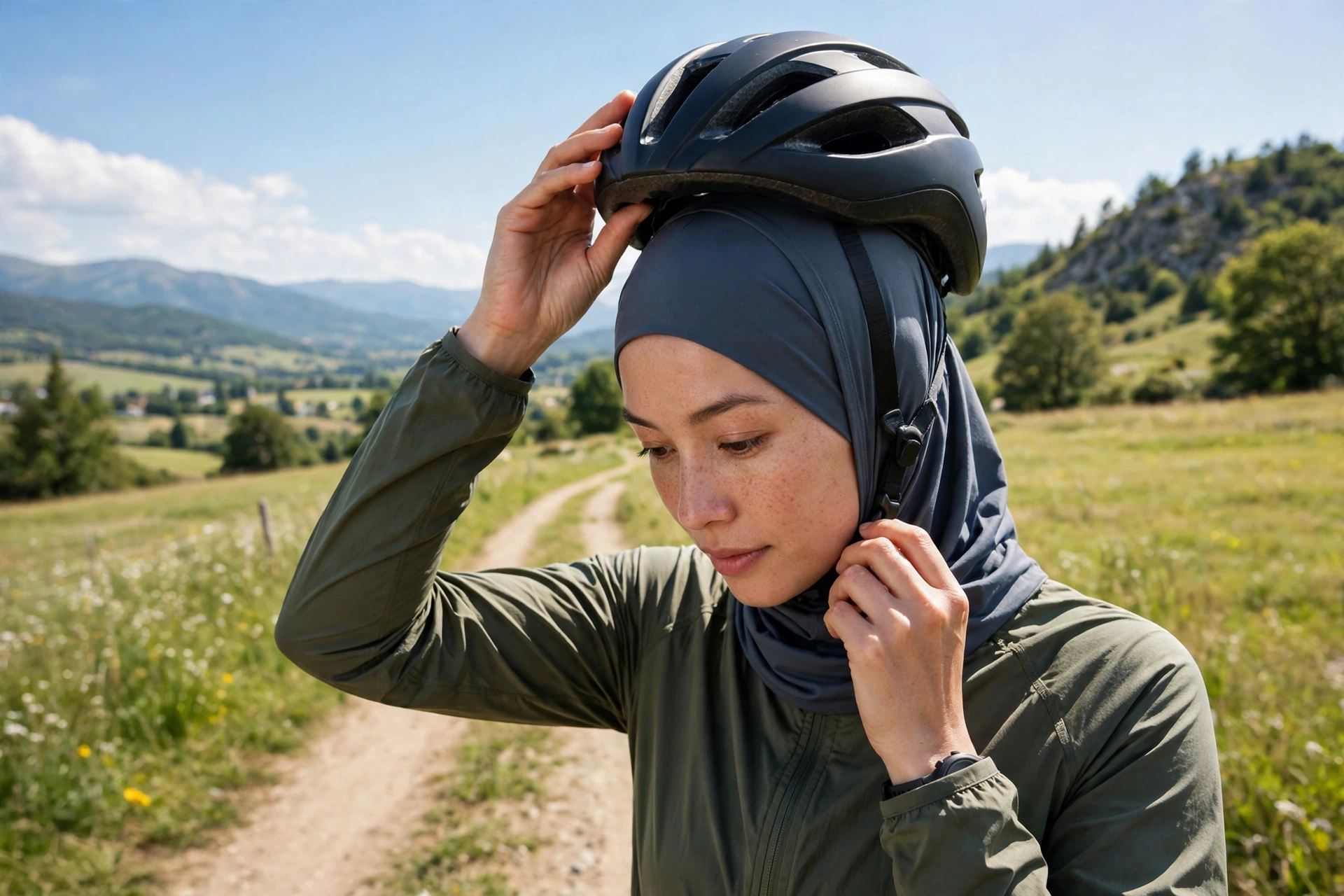
Keep the hijab as flat and smooth as possible where the helmet sits. A sports hijab, which is designed to fit closely to the head with minimal bulk, is often the best choice for riding, because it stays in place and leaves a smooth surface for the helmet. If you wear a regular hijab, wrap it neatly and tuck any loose ends flat, avoiding folds or knots at the crown or the back of the head where the helmet needs to sit close.
Wear the hijab low at the back rather than in a high bun or knot, because a high knot pushes the helmet up and forward and leaves the back of the head exposed. If your hair is gathered underneath, keep it in a low bun or a low braid at the nape of the neck, and spread the fabric smoothly over it rather than letting it bunch. The aim is a smooth, even layer with no lumps under the helmet.
What Should You Look for When Choosing a Helmet?
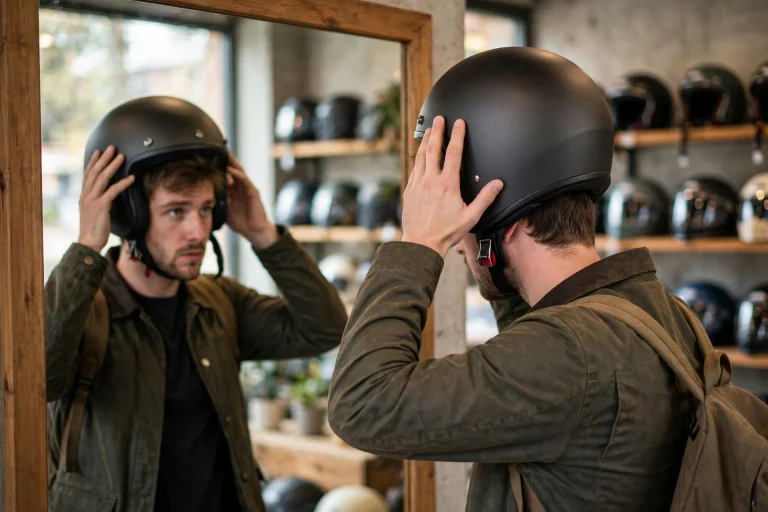
Start by measuring your head with the hijab on, in the style you will ride in, and use that number to pick the size range. Many hijab-wearing riders find they need one size up from the size a bare-head measurement suggests, and that is normal: the size label is a guide, and the fit check matters more than the number. Try helmets on with your hijab on, and do not be surprised if the right size is larger than you expected.
Look for a helmet with a deep fit and plenty of adjustment. A dial at the back that adjusts in small steps, and pads in different thicknesses, gives you more room to fine-tune the fit over the fabric. Helmets with a slightly rounder or deeper shell often suit hijab wearers better than shallow, narrow models, because they leave more room over the crown. A helmet with a ponytail-friendly opening at the back can also help if your hair is gathered low underneath.
Comfort and ventilation are worth considering too, because an extra layer under a helmet adds warmth. A helmet with good airflow will feel more comfortable on a longer ride, and a thin, breathable sports hijab will help the air move. If you want to understand how some helmets handle the twisting forces that can happen in a fall, reading about what MIPS is for helmets can help you decide whether that feature is worth looking for, but it should never come before fit.
How Do You Check the Fit with a Hijab On?
Do the whole fit check with the hijab on exactly as you will ride, including any under-cap or pins you use. The helmet should sit level, with the front edge about two fingers’ width above the eyebrows, and it should cover the forehead and the back of the head evenly. Shake your head gently from side to side: the helmet should move with your head, not slide around on its own.
Check the straps next. The side straps should meet in a V just below each ear, over the fabric, and the chin strap should be snug enough that only one or two fingers fit underneath. Open your mouth wide: the helmet should pull down slightly, which shows the strap is holding it in place. If the helmet lifts when you open your mouth, the strap is too loose, or the fabric is pushing the helmet up.
What Mistakes Should Hijab-Wearing Riders Avoid?
The most common mistake is fitting the helmet without the hijab and then wearing it with the hijab on. The helmet will be too small, it will sit too high, and the straps will not adjust properly, which leaves the rider less protected and less comfortable. Always fit the helmet with the hijab on, in the style you will ride in.
Another mistake is wearing a thick or bulky wrap under the helmet, or a high knot at the back of the head. Both push the helmet up and make a good fit impossible. A thin sports hijab, or a neatly wrapped regular hijab with the hair kept low, gives a far better result. In general terms, the flatter and smoother the layer under the helmet, the better the helmet will fit.
Frequently Asked Questions
Q: Can I wear a helmet over a hijab?
A: Yes. Many riders wear a helmet over a hijab every day. Choose a slightly larger or deeper helmet, wear a thin, smooth hijab or sports hijab underneath, and check the fit with the hijab on exactly as you will ride.
Q: What type of hijab works best under a helmet?
A: A sports hijab is often the best choice, because it fits closely with minimal bulk and stays in place. If you wear a regular hijab, wrap it neatly and flat, keep any hair gathered low, and avoid folds or knots where the helmet sits.
Q: Will the helmet straps work properly over a hijab?
A: Yes, in general terms. The straps sit over the fabric, and they should still be snug, with the side straps forming a V below each ear and only one or two fingers fitting under the chin strap. If the strap slips on the fabric, smooth the fabric underneath or choose a fabric with a little more grip.

Olivia
Writer at Helmet Today, covering helmet reviews, fit and riding safety.