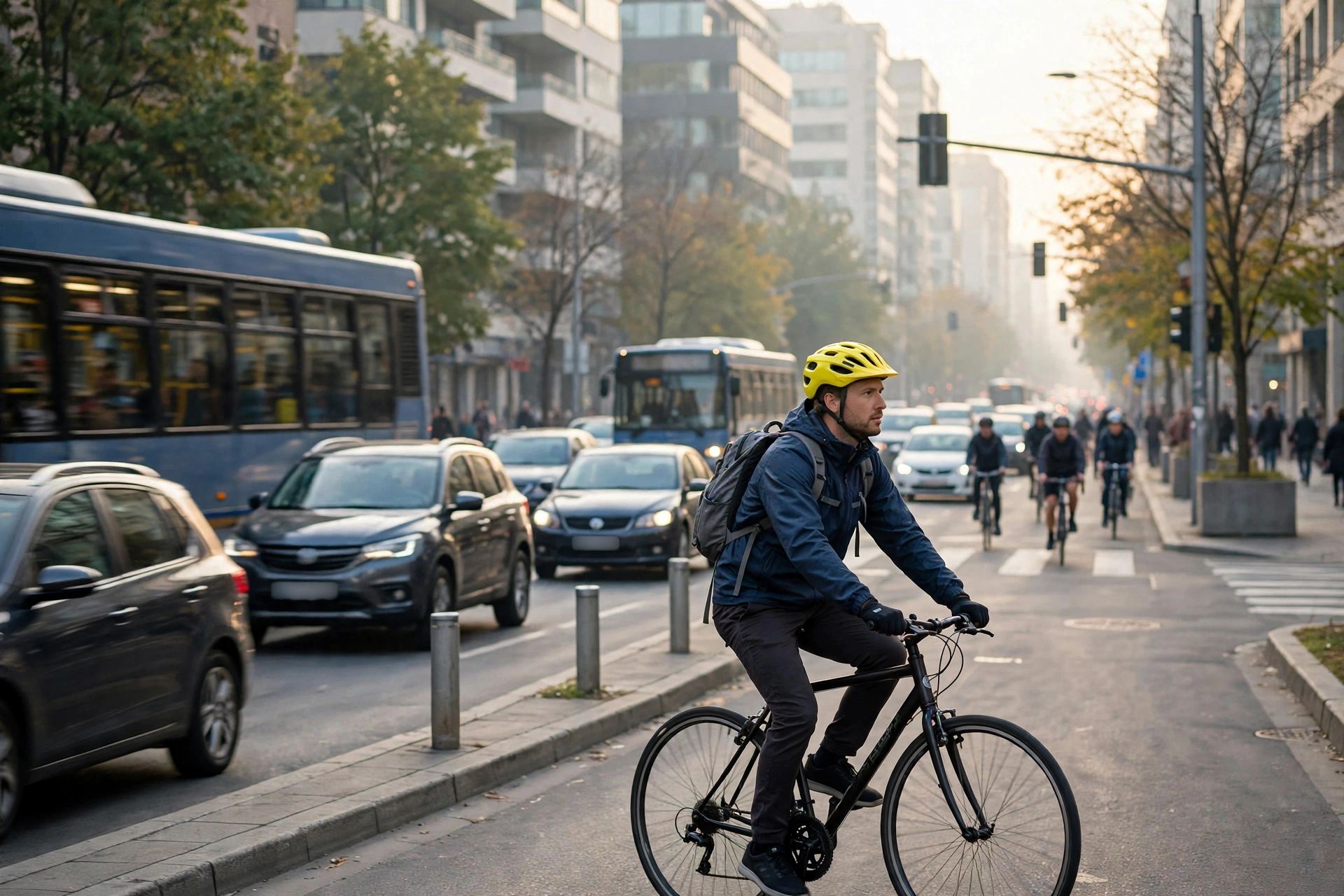
For city cycling in traffic, choose a well-fitting, well-ventilated helmet with good visibility — in general terms, a lightweight road or commuter helmet with a bright colour, reflective details, and a secure fit matters far more than weight or racing aerodynamics. Your helmet needs to protect your head if you fall, keep you cool on a slow, stop-start ride, and help drivers notice you, while staying comfortable enough to wear every single day. If a helmet is uncomfortable, you will be tempted to leave it at home, and the best helmet is the one you actually wear.
City cycling is very different from weekend riding on open roads. You ride slowly through traffic, stop at lights and junctions, look over your shoulder constantly, and share the road with buses, lorries, taxis, and pedestrians. You may be carrying a bag, riding in work clothes, and locking your bike outside all day. A commuter helmet has to cope with all of that: rain, heat, sweat, and being knocked about in a bag or on a bike lock. This guide explains, in general terms, how to choose one that suits daily city riding.
What Makes a Good Helmet for City Commuting?
A good commuter helmet starts with fit. It should sit level on your head, covering your forehead without sliding down over your eyes, and the straps should form a neat V around each ear with the buckle sitting just under your chin. Shake your head gently: the helmet should move with your head, not slide around on its own. If it wobbles, it is too loose, and if it presses or gives you a headache after a few minutes, it is the wrong shape for you. Try several models, because helmets from different makers suit different head shapes.
Ventilation matters more in the city than many riders expect. Commuting is slow, with long waits at traffic lights, so there is little airflow to cool you down. A helmet with plenty of vents keeps your head cooler and reduces sweat, which makes the ride to work far more pleasant. Look for vents you can feel working when you ride, and padding that absorbs sweat without becoming soggy. A helmet that stays comfortable in summer heat is one you will keep wearing all year.
How Important Is Visibility in City Traffic?
Visibility is one of the most important features of a commuter helmet, and it costs nothing in weight or comfort. A bright colour — white, yellow, orange, or a bright red — stands out against grey roads and dark cars far better than black or dark grey. Reflective strips or logos on the helmet catch car headlights in low light, which is especially useful on dark winter mornings and evenings when many commuters ride. Some helmets also have a built-in rear light or a mount for one, which puts a light at driver eye level.
Being seen is not the same as being safe, and a bright helmet is no substitute for careful riding, good road position, and working bike lights. But in busy traffic, anything that helps a driver spot you a second earlier is worth having. When you compare helmets, hold them up in the shop and ask yourself which one you would notice first from across a busy street. If you want to understand more about the safety technology inside modern helmets, reading about what MIPS is for helmets can help you compare designs.
It is also worth thinking about how the helmet works with the rest of your kit. If you wear a high-visibility jacket or carry a bright bag, the helmet should add to that rather than clash with it. And if you ride in the rain, a helmet with a small peak or a rain cover can keep water out of your eyes. In general terms, choose visibility features you will actually use every day, not features that sound good but stay switched off.
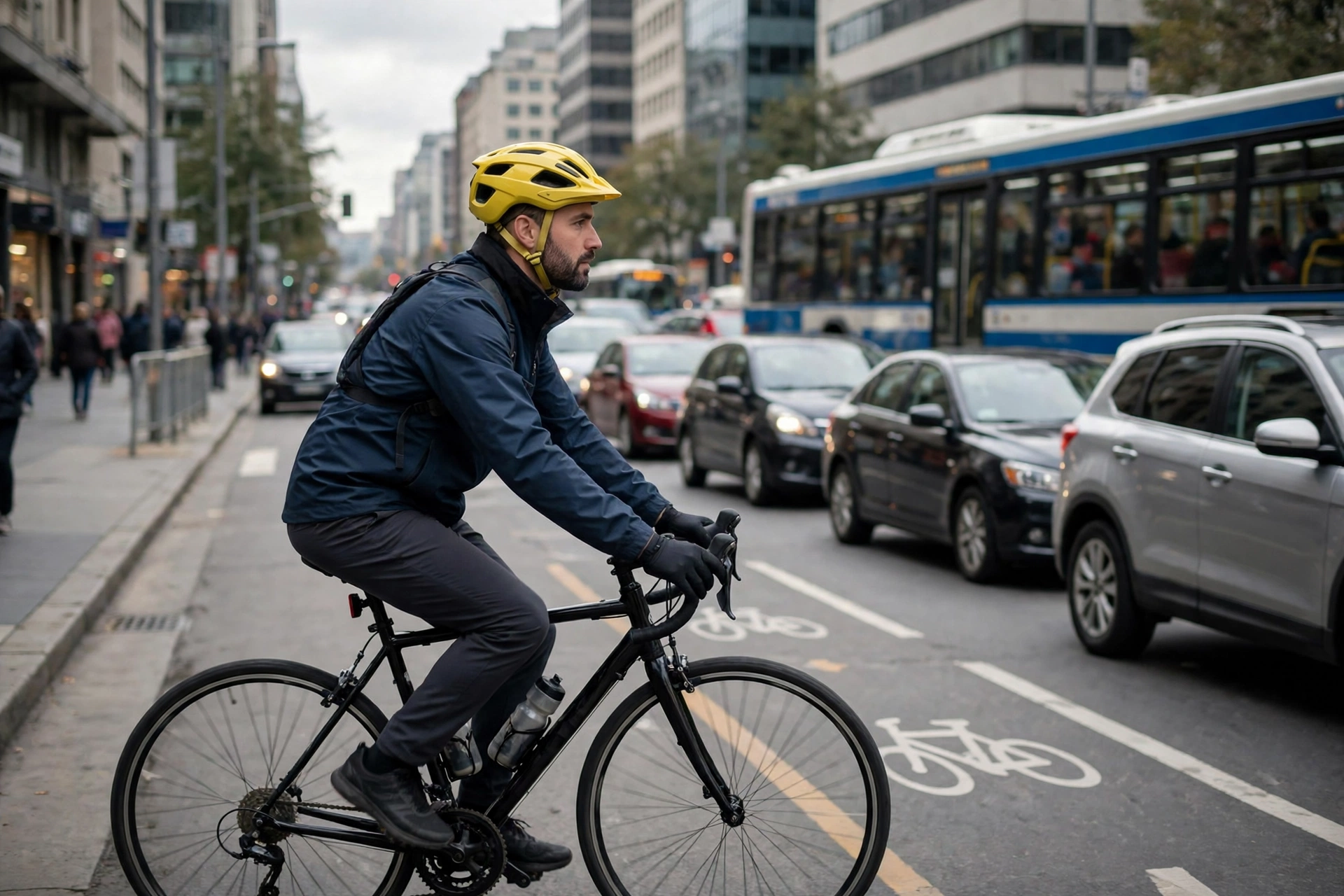
Should a Commuter Helmet Have a Peak or a Light?
A peak, or small visor, is a matter of personal taste, but it has real benefits in the city. It shades your eyes from low sun, keeps rain off your face, and can help when you are riding into a headwind. Some riders find a peak gets in the way when they look up at traffic lights, so try it in the shop by tilting your head back as if you were checking a light overhead. Many commuter helmets have a small, removable peak, which lets you try it both ways.
A built-in light is one of the most useful commuter features. A small rear light built into the helmet sits higher than a light on your bike, so drivers see it over the top of parked cars and over your bag. Some helmets have a light that is always on when you ride, and some have a rechargeable unit you can remove for charging. If your helmet does not have one built in, look for a helmet with a light mount or a strap clip, so you can add a light without it wobbling loose.
How Do You Choose the Right Size and Fit?
Start by measuring around your head just above your eyebrows and ears, and compare that measurement with the maker’s size guide. Sizes vary between brands, so a medium in one brand can feel like a large in another, and the measurement is only a starting point. Always try the helmet on before you buy if you can, and wear it for several minutes in the shop, because a helmet that feels fine for thirty seconds can start to press after five minutes.
Once the shell size is right, adjust the fit system. Most helmets have a dial at the back that tightens a cradle around your head: turn it until the helmet feels snug all round, without any one point pressing hard. Then adjust the straps so they sit flat against your face and form a V under each ear, and fasten the buckle so you can fit two fingers between the strap and your chin. The helmet should stay level and should not rock forward or back when you push it gently.
How Do You Look After a Commuter Helmet?
A commuter helmet lives a harder life than a weekend helmet, so a little care goes a long way. Wipe the shell and vents after a wet or dusty ride, and wash the padding regularly with mild soap and water, letting it dry naturally away from direct heat. Do not leave the helmet in a hot car or hanging on a handlebar in strong sun for hours, because heat can damage the materials inside over time. Store it somewhere cool and dry, ideally on a shelf rather than dangling by its strap.
Frequently Asked Questions
Q: What is the best type of helmet for city commuting?
A: In general terms, a lightweight, well-ventilated road or commuter helmet with a bright colour and reflective details is the best choice. Fit and comfort matter more than racing features, because the best helmet is the one you wear every day.
Q: Do I need a helmet with a built-in light for commuting?
A: Not necessarily, but a built-in rear light or a light mount is very useful in the city. It puts a light at driver eye level, which helps you be seen over parked cars, especially on dark mornings and evenings.
Q: How do I know if my commuter helmet fits properly?
A: It should sit level on your head, feel snug all round without pressing anywhere, and stay put when you shake your head gently. The straps should form a V around each ear, with the buckle just under your chin.

Olivia
Writer at Helmet Today, covering helmet reviews, fit and riding safety.