For hot-weather road cycling, choose a lightweight, highly ventilated helmet with a light colour — in general terms, the best hot-weather helmet is one with large vents, air channels that pull air over your head, and padding that manages sweat, so you stay cool enough to ride safely rather than overheating. Heat is a real hazard on a summer ride: it drains your energy, makes you sweat, and can leave you dizzy or unfocused long before you notice. A helmet that traps heat makes all of that worse, while a helmet designed for airflow works with the wind to keep your head cool.
Hot-weather riding brings its own set of problems. The sun beats down on your helmet, the air feels still when you climb slowly, and sweat runs into your eyes. This guide explains, in general terms, what makes a helmet work well in the heat, how to stay cool and safe, and what to check before a summer ride.
What Makes a Helmet Good for Hot Weather?
Ventilation is the first thing to look for, and it is more than just counting vents. A good hot-weather helmet has large vents at the front that scoop air in, internal channels that carry that air over the top of your head, and exhaust vents at the back that let the warm air out. When you ride, you should be able to feel air moving through the helmet, and on a fast descent the airflow should be obvious. A helmet with many small vents can look airy but move very little air, so feel is more important than numbers.
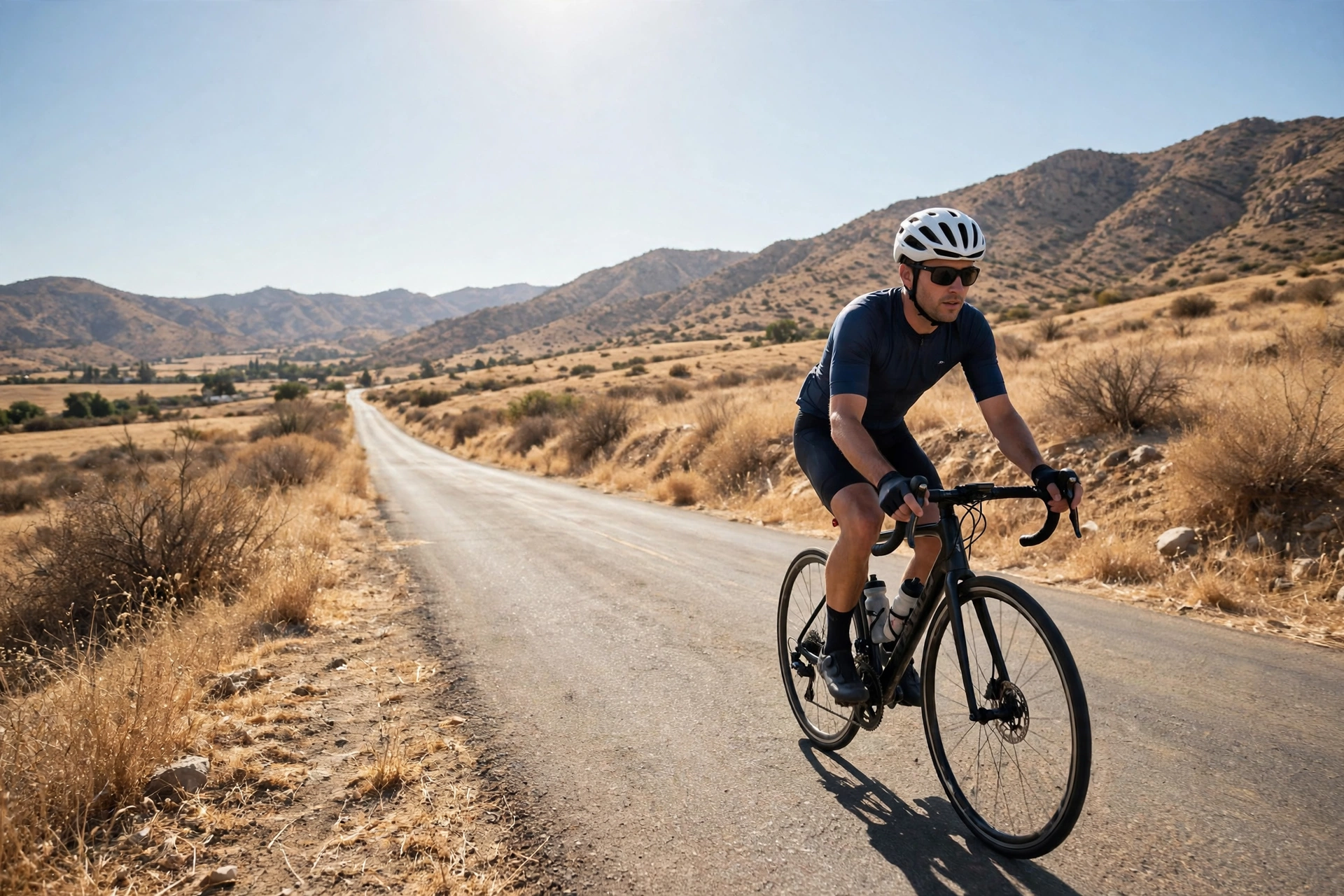
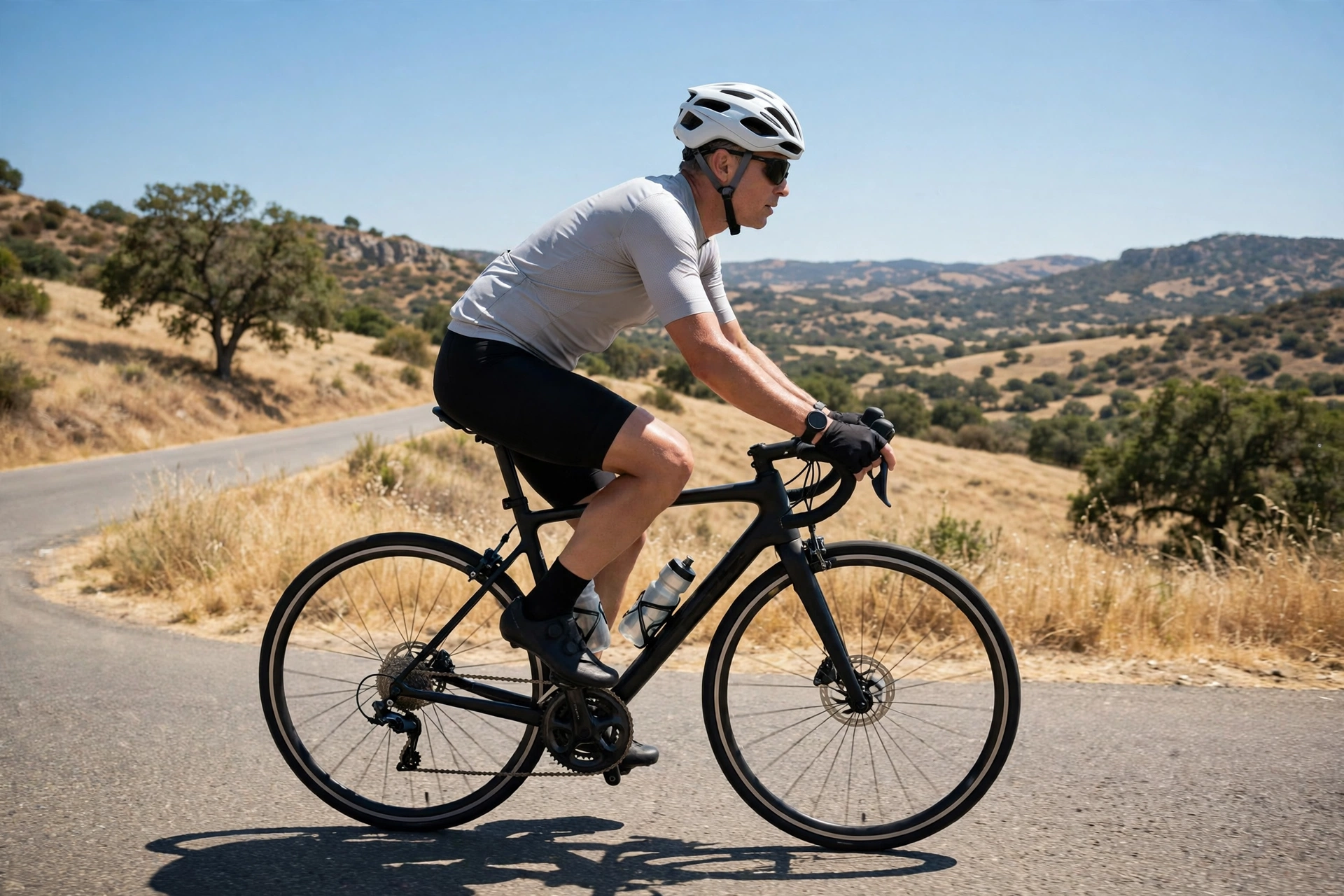
Colour matters in the heat too. A white or light-coloured helmet reflects sunlight, while a black helmet absorbs it and can feel noticeably hotter on a sunny day. If you already own a dark helmet, a light-coloured helmet cover can help, but a light shell is the simplest answer. The shell also needs to be light in weight, because a heavy helmet feels heavier still when you are hot and tired, and it can press on your head as the padding becomes damp with sweat.
How Does Heat Affect Your Riding?
Heat affects your body before it affects your helmet. As you ride in hot weather, your body sweats to cool itself, and you lose water and salts that need to be replaced. If you do not drink enough, you can become dehydrated, which leads to tiredness, headaches, and slower reactions. A helmet that keeps your head cooler slows this process, but it cannot replace drinking, so carry more water than you think you need and drink little and often rather than waiting until you feel thirsty.
Heat also affects your concentration. A rider who is overheating finds it harder to judge traffic, read the road, and make good decisions, and that is when mistakes happen. If you feel dizzy, nauseous, or unusually tired, stop in the shade, take your helmet off, drink water, and cool down before you carry on. In general terms, the safest response to heat is to slow down and rest, not to push through it, and a cool helmet helps you notice the warning signs earlier. If you want to understand more about the safety technology inside modern helmets, reading about what MIPS is for helmets can help you compare designs.
Sweat in your eyes is a smaller but very real problem. When sweat runs down your forehead into your eyes, it stings and blurs your vision, often at the moment you are climbing hard or riding in traffic. A helmet with a sweat channel or a brow pad that guides moisture to the sides helps a lot, and so does a thin sweatband or skullcap worn under the helmet. Make sure any extra layer fits comfortably under your helmet and does not make it too tight.
How Do You Stay Cool on a Hot Road Ride?
Staying cool starts before you get on the bike. Plan your ride for the cooler parts of the day if you can, such as early morning or late afternoon, and choose a route with shade and places to refill water. Wear light-coloured, loose clothing that lets air through, and put sunscreen on the back of your neck and any exposed skin, because sunburn makes overheating worse and is painful under a helmet strap.
On the ride itself, use water to cool down as well as to drink. Pouring a little water over your head and helmet at a stop can drop your temperature quickly, and wetting your skullcap or bandana before you set off gives you a cool start. Open all the vents on your helmet, and if your helmet has a removable peak, take it off in the heat so air can flow freely. Take your helmet off at rest stops and let your head cool in the shade.
- Carry more water than usual and drink little and often, even before you feel thirsty.
- Plan stops in the shade and take your helmet off to let your head cool down.
- Wear a thin, light skullcap or sweatband to keep sweat out of your eyes.
- Slow down on climbs and in the hottest part of the day rather than pushing your pace.
- Watch for warning signs such as dizziness, nausea, or unusual tiredness, and stop if they appear.
What Should You Check Before a Summer Ride?
Before a hot-weather ride, check your helmet as carefully as you would check your tyres. Make sure the padding is clean and dry, because old sweat can irritate your skin in the heat, and check that the vents are clear of dirt and insects. Adjust the fit dial and straps, and if you plan to wear a skullcap or sweatband, fit the helmet with it on, because it changes how the helmet sits.
Check your water and your route. Know where you can refill, and carry a little extra in case a stop is closed or a fountain is dry. Put sunscreen on before you put your helmet on, and remember the parts of your head the helmet does not cover, such as the back of your neck and your ears. If you wear sunglasses, make sure they sit comfortably with the helmet and do not press into your temples when you sweat.
How Do You Care for a Helmet After Riding in the Heat?
Summer riding is sweaty riding, and your helmet needs more care in summer than in winter. After a hot ride, take the padding out and wash it with mild soap and water, then let it dry naturally away from direct heat. Wipe the shell and the vents, and check for salt marks or grime that can build up around the straps. A helmet that is washed regularly smells better and feels better, and clean padding is kinder to your skin.
Frequently Asked Questions
Q: What is the best helmet colour for hot weather?
A: In general terms, a white or light-coloured helmet is best for hot weather because it reflects sunlight instead of absorbing it. A dark helmet can feel noticeably hotter on a sunny day.
Q: Do more vents always mean a cooler helmet?
A: Not always. What matters is how air flows through the helmet, from front vents through internal channels to rear exhausts. A helmet with well-designed airflow feels cooler than one with many small vents that move little air.
Q: How do I stop sweat running into my eyes while cycling?
A: A helmet with a sweat channel or brow pad helps, and so does a thin sweatband or skullcap under the helmet. Keeping air flowing through the vents also reduces sweat build-up on your forehead.

Olivia
Writer at Helmet Today, covering helmet reviews, fit and riding safety.