For cycle couriers, the best helmet is a tough, well-ventilated, highly visible helmet that stays comfortable for a full working day — in general terms, a lightweight road or commuter helmet with a bright colour, reflective details, and a secure fit matters far more than racing features, because you will wear it for hours in all weathers. A courier’s helmet is work equipment, not a weekend accessory.
Cycle courier work is one of the hardest uses a helmet gets. You ride in heavy traffic all day, stop and start constantly, carry parcels, climb stairs, and lock your bike dozens of times. You ride in the rain, in the heat, and in the dark, and you cannot choose your hours or your weather. A helmet that is uncomfortable after an hour, hard to see in traffic, or fragile when knocked is a poor tool for this job. This guide explains, in general terms, what couriers should look for in a helmet and how to keep it working through a full working week.
What Does a Courier Need from a Helmet?
Comfort over a long day comes first. A courier wears a helmet for far longer than most cyclists, often for most of a working shift, so even a small pressure point becomes a serious problem by the afternoon. The helmet should feel snug without pressing anywhere, stay put when you look over your shoulder, and be light enough that you forget it is there. A fit dial you can adjust with one gloved hand is very useful, because you may need to tighten or loosen the helmet as the day goes on.
Ventilation matters just as much. Courier work is stop-start, with long waits at lights and junctions, so there is little airflow to cool you down. A helmet with large vents and air channels keeps your head cooler and reduces sweat, which makes the whole day more bearable. Padding that absorbs sweat and is easy to wash is also important, because a helmet worn all day, every day, needs washing far more often than a weekend helmet.
How Important Is Visibility for a Courier?
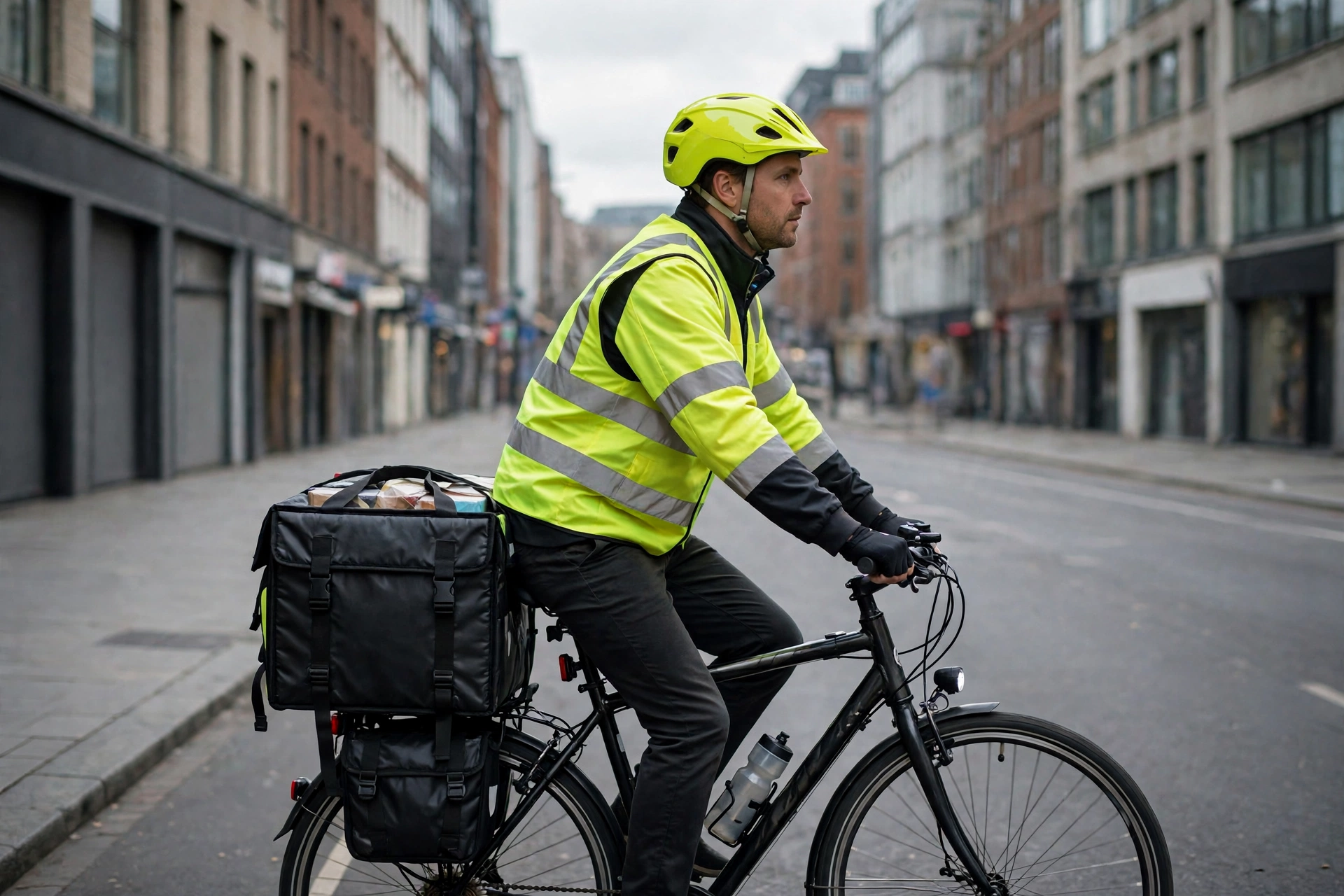
Visibility is critical for couriers, because you spend all day in traffic and much of it in poor light. A bright helmet — white, yellow, or orange — stands out against cars and grey streets far better than a dark one, and reflective strips catch headlights on dark mornings and evenings. Some helmets have a built-in rear light or a mount for one, which puts a light at driver eye level, above your bag and above parked cars. That extra height can make the difference between being seen and being missed.
Being visible is not a substitute for careful riding, and a bright helmet will not protect you if you ride carelessly. But when you are making dozens of deliveries a day, crossing junctions and filtering through traffic, anything that helps a driver spot you a second earlier is worth having. If you want to understand more about the safety technology inside modern helmets, reading about what MIPS is for helmets can help you compare designs.
It is also worth thinking about how the helmet works with your work gear. A high-visibility vest or jacket, a bright bag, and a bright helmet all add up to a rider who is hard to miss. And if you ride at night, a helmet light that you can switch on easily, even with gloves, is a practical feature rather than a gimmick. In general terms, choose visibility you will actually use on every shift, not features that stay switched off.
Should a Courier Helmet Have a Peak or a Light?
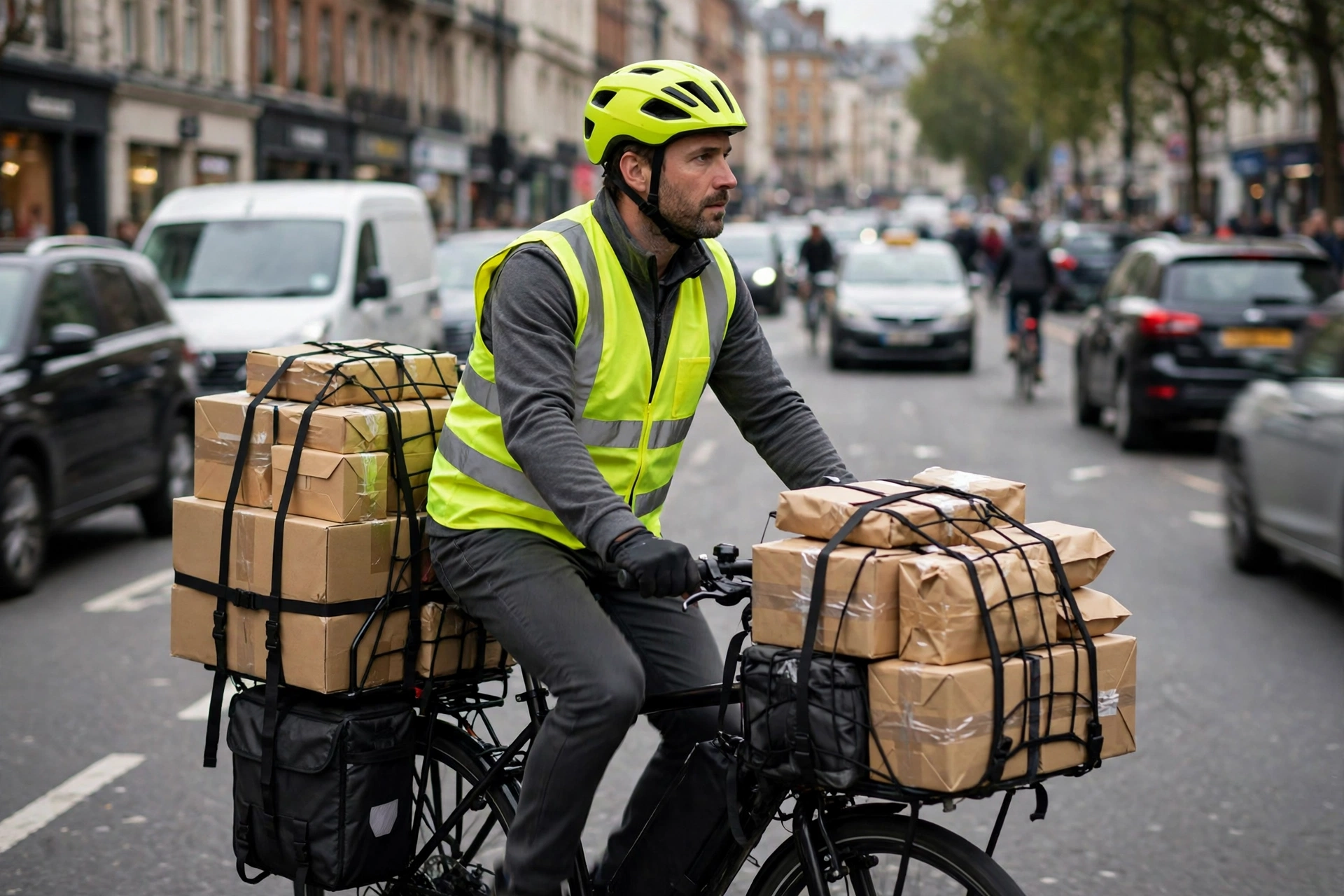
A peak is useful for couriers because it shades your eyes from low sun and keeps rain off your face, and you will face both in a single working day. A small, removable peak is the most flexible choice, because you can take it off if it gets in the way when you look up at street signs or traffic lights. Try the helmet with the peak fitted and tilt your head back before you buy, because a peak that blocks your upward view is a problem when you are checking signs and lights all day.
A built-in light is one of the best features a courier helmet can have. A rear light on the helmet sits higher than a light on the bike, so drivers see it over the top of parked cars and over your delivery bag. Some helmets have a rechargeable light built in, and some have a mount that takes a standard light. Either way, make sure the light is easy to switch on and off with gloves, and that you can charge it or change its batteries without a fuss.
How Do You Look After a Helmet Used Every Day?
A helmet worn for work every day needs more care than a weekend helmet, but the care itself is simple. Wipe the shell and vents after a wet or dusty shift, and wash the padding regularly with mild soap and water, letting it dry naturally overnight. If you ride in the rain, let the helmet dry in a well-ventilated room rather than leaving it in a damp bag or locker, because a helmet put away wet will smell and can irritate your skin.
Check the helmet often for signs of wear. Look for cracks in the shell, frayed straps, a buckle that no longer clicks firmly, and a fit dial that slips. Courier helmets take more knocks than most, so check after any drop or bump, and replace the helmet after a crash or a hard impact, even if it looks fine, because the protective material inside can be damaged without any visible sign. Keep a spare helmet if you can, so a damaged or soaking-wet helmet does not leave you without protection for a shift.
- Wash the padding regularly — a work helmet gets sweaty every single day.
- Dry the helmet in a ventilated room after wet shifts, never in a sealed bag.
- Check straps, buckle, and fit dial weekly for wear from daily use.
- Replace the helmet after any crash or hard drop, even if it looks undamaged.
- Keep a spare helmet so you are never tempted to ride without one.
How Do You Stay Comfortable on a Long Courier Shift?
Comfort on a long shift is about more than the helmet, but the helmet is where it starts. Take the helmet off whenever you stop for a delivery or a break, and let your head cool down. Drink water regularly, even if you do not feel thirsty, because courier work is physical and dehydration makes you tired and less alert. Wear a thin skullcap or sweatband under the helmet if sweat runs into your eyes, and make sure it fits comfortably without making the helmet too tight.
Frequently Asked Questions
Q: What type of helmet is best for cycle couriers?
A: In general terms, a lightweight, well-ventilated commuter or road helmet with a bright colour and reflective details is best. Comfort over a full working day matters more than racing features.
Q: Do couriers need a helmet with a built-in light?
A: It is very useful but not essential. A built-in rear light sits at driver eye level and helps you be seen over parked cars, but a good clip-on light on a helmet with a mount works well too.
Q: How often should a courier replace their helmet?
A: Replace it after any crash or hard drop, and when straps, padding, or the fit system show wear. In general terms, a helmet used every day wears out faster than a weekend helmet, so inspect it often.

Olivia
Writer at Helmet Today, covering helmet reviews, fit and riding safety.