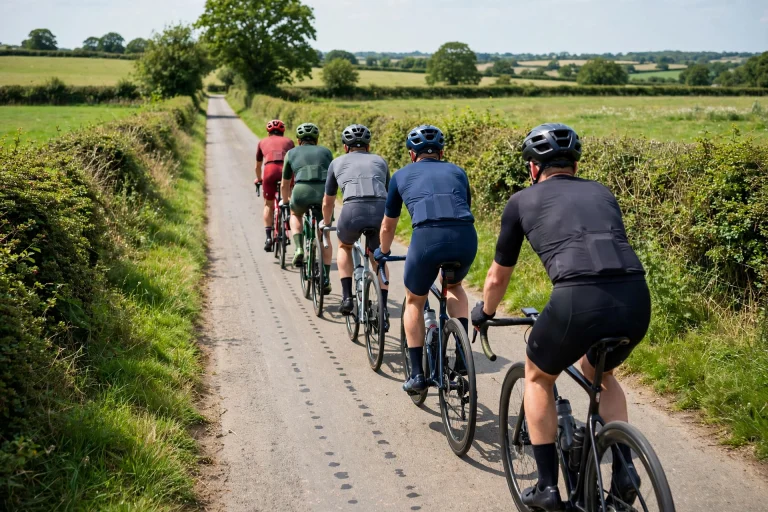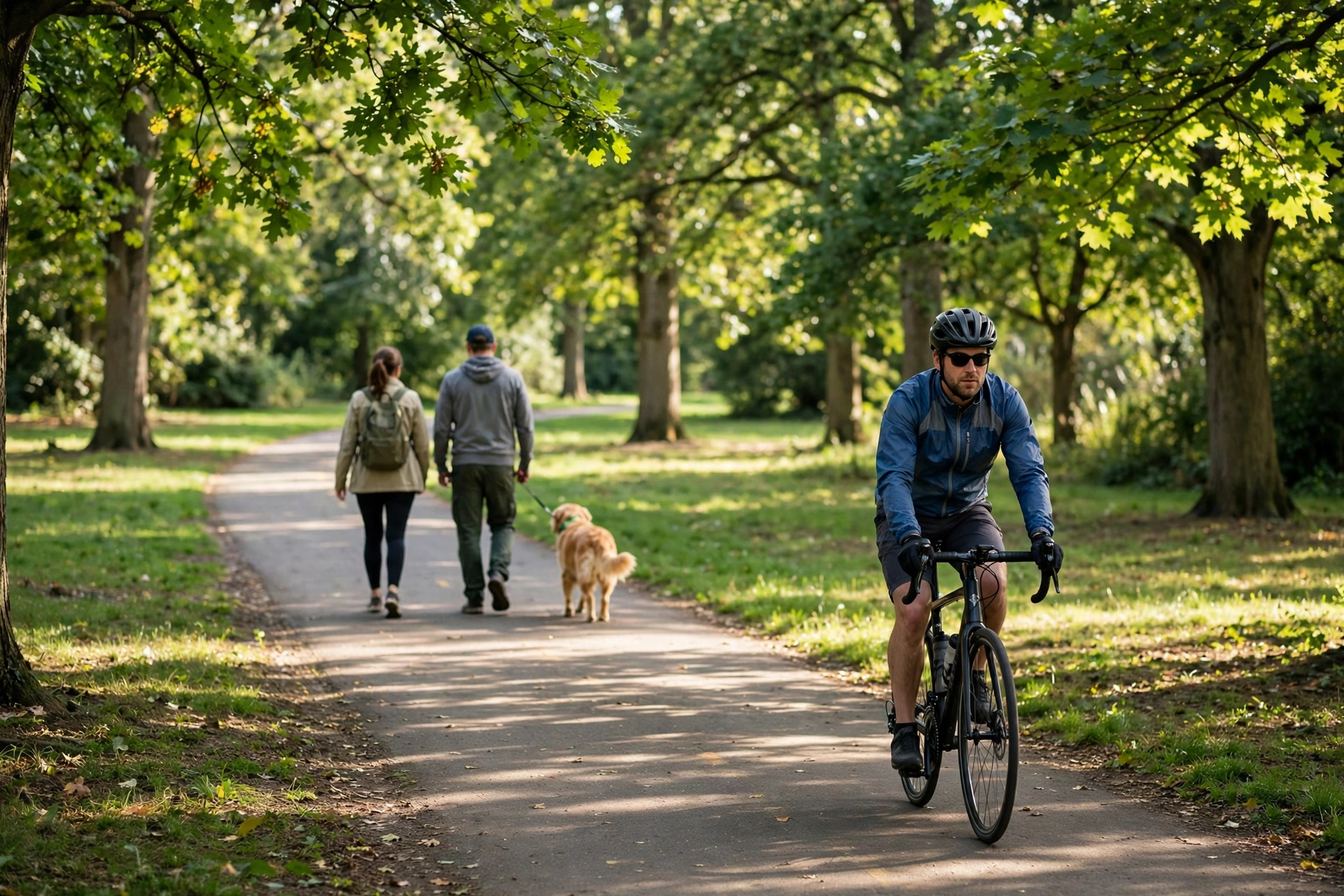
A bike helmet for riding on shared paths is a well-fitting helmet that keeps you cool, lets you hear people around you, and stays secure at the slower, stop-start pace of a path shared with walkers, runners, and other cyclists — because on a shared path, awareness matters as much as protection. Shared paths are the mixed-use trails, canal towpaths, park routes, and riverside paths where cyclists ride alongside pedestrians, dog walkers, children, and runners. Speeds are lower than on the road, but the hazards are different: people step out without looking, dogs run across the path, and the surface can change from smooth tarmac to gravel without warning. The best helmet for a shared path is a comfortable, well-ventilated one that fits securely and does not block your hearing.
This guide explains what shared-path riding asks of a helmet, how to choose one that suits slower, mixed-traffic riding, and how to ride considerately alongside other path users. It covers fit and comfort, visibility and hearing, the differences between path helmets and road helmets, and the habits that keep shared paths safe for everyone.
What Makes Shared Paths Different from Roads?
Shared paths are not roads, and the riding is different in almost every way. There are no lanes, no traffic lights, and no clear rules about who goes where. Pedestrians may walk two or three abreast, children may wander, and dogs may be off the lead. The surface varies too: a path can be smooth tarmac one minute and loose gravel, mud, or tree roots the next. Speeds are lower, so a fall is usually less severe than on a busy road, but the unexpected is more common, and that unpredictability is what your helmet is there for.
The slower pace changes what you need from a helmet. On a road ride at speed, aerodynamics and maximum ventilation matter most. On a shared path, you are riding more slowly, stopping more often, and turning your head constantly to check for people behind you and children ahead. A helmet that is comfortable at low speed, stays put when you turn your head, and does not make you overheat when you are riding gently is more useful than a racing helmet designed for high speed.
How Should a Helmet Fit for Shared-Path Riding?
Fit matters just as much at low speed as at high speed, and the rules are the same. The helmet should sit level on your head, low at the front, with roughly two fingers’ width between your eyebrows and the rim. It should feel snug all round without pressing painfully anywhere, and it should move with your head when you shake it gently, not slide around on its own. The retention dial at the back should be adjusted until the helmet feels secure, and the straps should form a neat V under each ear, with the buckle just under your chin.
On a shared path, you will be stopping and starting often — at gates, at road crossings, to let walkers pass, or to wait for a child to move aside. A helmet that shifts every time you look over your shoulder will become irritating quickly, and a strap that dangles can catch on a branch or a bag strap. If you are learning about how helmets handle different kinds of impact, reading about what MIPS is for helmets can help you understand one of the technologies used in modern helmet design.
What Type of Helmet Suits a Shared Path Best?
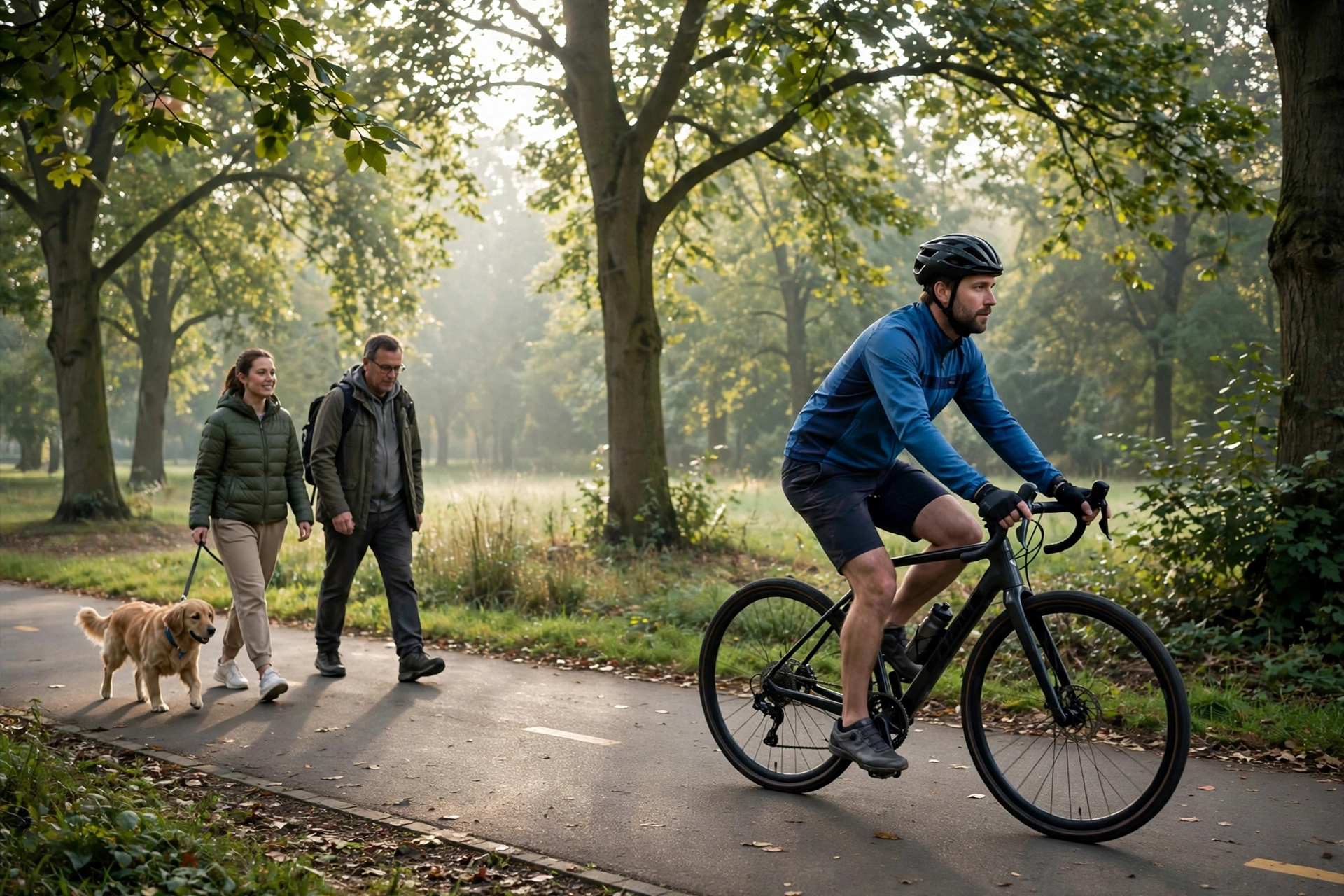
In general terms, there is no single helmet type made only for shared paths, and that is good news: you can choose from road helmets, commuter helmets, and hybrid helmets, and any of them can work well. A road helmet is light and well ventilated, which suits longer rides on smooth paths. A commuter or urban helmet often has more coverage at the back and sides, a built-in light or a peak, and a sturdier feel, which suits shorter rides and stop-start traffic. A hybrid helmet sits somewhere between the two.
Think about what your rides actually look like. If your shared path is part of a longer commute on smooth tarmac, a light road helmet with good ventilation will keep you cool and comfortable. If your path is a rough canal towpath or a park trail with low branches, a helmet with a small peak can help keep sun and twigs out of your eyes, and a bit more coverage at the back can feel reassuring.
How Do You Ride Considerately on a Shared Path?
A helmet protects you, but good manners protect everyone else. The most important habit on a shared path is to slow down when you approach other people. Walkers, children, and dogs do not move predictably, and they may not hear you coming, especially if they are wearing headphones. Slow down well before you reach them, and give them plenty of room when you pass. A wide pass is safer and friendlier than squeezing through a narrow gap.
Use your voice or your bell to let people know you are there, but do it early and politely. A bell rung from a distance gives people time to react; a bell rung right behind someone can startle them into stepping sideways, into your path. A friendly “on your left” or “coming past” works well too, as long as you say it early enough. Remember that not everyone knows what “on your left” means, so be ready for someone to step the wrong way.
What Should You Check Before a Shared-Path Ride?
Before you set off, check your helmet for damage. Look for cracks in the shell, check that the straps are not frayed, and make sure the retention dial works smoothly. If the helmet has been dropped hard or involved in a crash, replace it, even if it looks fine from the outside. A helmet that has already absorbed an impact may not protect you properly next time.
Check your bike too. On a shared path, you will be stopping often, so make sure your brakes work well and your tyres are pumped up. Carry a basic repair kit — a spare tube, a pump, and a multi-tool — because a puncture on a quiet path can leave you a long walk from help. Finally, think about the route: some shared paths have gates, barriers, or narrow sections that are awkward for wider handlebars or trailers. Knowing the path before you ride it makes the whole trip calmer, and leaves you free to enjoy the ride.
Frequently Asked Questions
Q: Do I need a helmet on a shared path if I am riding slowly?
A: In general terms, yes, it is a sensible choice. Falls on shared paths often happen unexpectedly — a dog crossing, a loose surface, a child stepping out — and a helmet protects your head even at low speed.
Q: Is a road helmet or a commuter helmet better for shared paths?
A: Either can work well. A road helmet is lighter and better ventilated, while a commuter helmet often offers more coverage and extras like a peak or a rear light. Choose the one that fits best and suits the riding you do most.
Q: How do I warn walkers without startling them?
A: Ring your bell or call out early, from a good distance, and slow down as you approach. A friendly, early warning gives people time to react calmly, while a late bell can startle someone into stepping into your path.

Olivia
Writer at Helmet Today, covering helmet reviews, fit and riding safety.