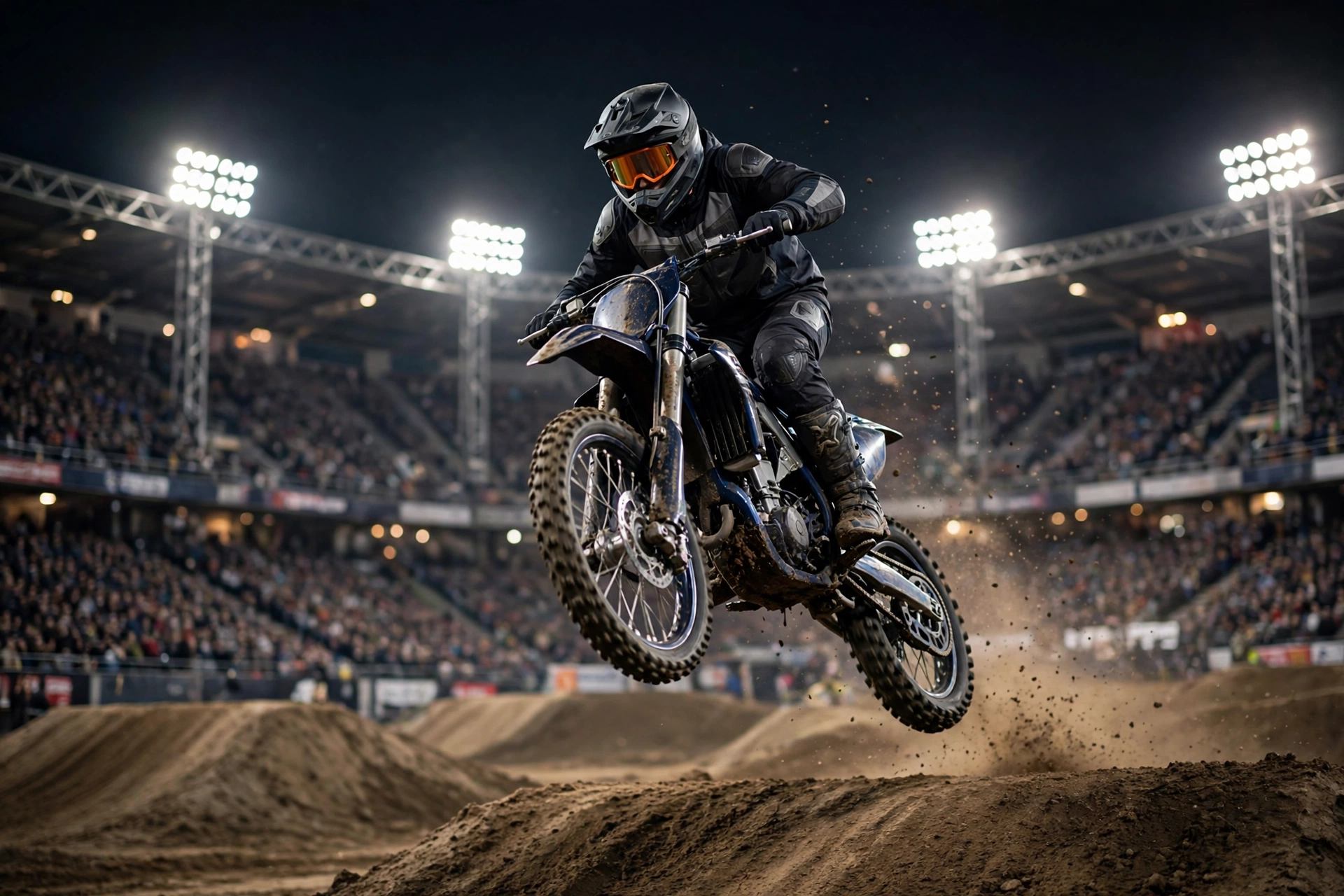
A supercross helmet is a lightweight, full-face off-road helmet built for short, explosive races on tight indoor dirt tracks — a helmet that protects against hard landings and close racing while giving the rider a wide view, strong airflow, and room to breathe hard. Supercross is motocross moved indoors: a compact track built from dirt inside a stadium, packed with steep jumps, tight rhythm sections, and banked turns, all raced under lights in front of a crowd. Races are short and intense, with riders launching over jumps, landing hard, and fighting for the same line into every corner. In general terms, a supercross helmet is an off-road helmet with a peak, a large eye port for goggles, and generous ventilation to cope with the heat and effort of racing indoors.
This guide explains what a supercross helmet is, how it differs from an outdoor motocross helmet, and what to look for when choosing one. It covers fit, goggles and the peak, ventilation, the demands of indoor racing, and how to look after a helmet that lives in dust and mud. Whether you are racing supercross yourself or moving from outdoor motocross, the right helmet helps you see clearly, breathe freely, and stay protected when the track gets rough.
What Is Supercross and What Does It Ask of a Helmet?
Supercross takes motocross and squeezes it into a stadium. The track is built from trucked-in dirt, with jumps, whoops, and rhythm sections packed into a small space, and the racing is close and aggressive from the start.
The indoor setting adds its own demands. There is no wind to cool the rider, and the stadium lights and the crowd make the air warm. Riders work hard in short, intense bursts, and they sweat heavily. A helmet that traps heat will fog the goggles and tire the rider quickly. In general terms, supercross helmets are built for maximum airflow, with large vents that move air across the rider’s head even at low speeds, and a shape that works with goggles rather than a visor.
How Should a Supercross Helmet Fit?
Fit follows the same rules as any off-road helmet, but with a few supercross details. The helmet should be snug all round, with even pressure and no loose spots, and it should not move when you shake your head. It should sit low enough to protect your forehead, with the eye port giving you a wide view of the track ahead and to the sides. Try it on with your goggles, because the goggles and the helmet work together: the goggles should seal against the eye port without a gap, and the strap should sit comfortably over the helmet.
Pay attention to how the helmet feels when you move your head. In supercross, you are constantly looking ahead to the next jump, glancing sideways for a rider alongside you, and bracing for landings. The helmet should move with your head, not flop around, and it should not press on your collarbone when you tuck for a jump. If you are learning about how helmets handle different kinds of impact, reading about what MIPS is for helmets can help you understand one of the technologies used in modern helmet design.

What About Goggles and the Peak?
Goggles are part of the helmet system in supercross. The eye port is large so the goggles fit inside it, and the goggles seal against the helmet to keep dust out of your eyes. Choose goggles that fit the eye port of your helmet well, with a strap that sits flat and a lens that suits the lighting. Indoor stadiums are lit by bright artificial light, so a clear or lightly tinted lens usually works best, and a lens that fogs easily will cost you vision at the worst moment.
The peak — the visor that sticks out over the goggles — has a real job in supercross. It shields your eyes from stadium lights and from dirt thrown up by the bike ahead, and it helps deflect roost, the spray of dirt and stones kicked up by other riders. The peak should be adjustable, so you can set it high enough to see the track ahead on steep jumps, and it should be flexible enough to bend rather than snap if it catches on something in a fall. Check the peak screws regularly, because they can loosen with vibration.
Why Does Ventilation Matter So Much Indoors?
Supercross is raced indoors, where there is little natural airflow, and the rider is working at full effort in a hot, crowded stadium. A helmet with poor ventilation will trap heat and sweat, and the goggles will fog, which is dangerous when you are landing a jump at speed. Good supercross helmets have large intake vents at the front and exhaust vents at the back, with channels inside that move air across the rider’s head even when the bike is moving slowly through a tight section.
Ventilation also matters because the races are short and intense. There is no time to cool down between laps, and a rider who overheats will lose concentration and make mistakes. A well-ventilated helmet helps the rider stay sharp from the first lap to the last, and it keeps the goggles clear, which is essential for judging jumps.
How Do You Look After a Supercross Helmet?
A supercross helmet lives a hard life. It is covered in dust and mud, it gets knocked around in the pits, and it takes hard landings on a rough track. After each race, clean it properly. Wipe the shell with a soft, damp cloth, and clean the vents so they are not blocked with dirt. Remove the lining if it comes out and wash it according to the maker’s instructions, or air it out well if it does not. Clean the goggles separately, and check the lens for scratches.
Check the helmet for damage before every event. Look for cracks in the shell, check the peak and its screws, and make sure the goggle strap and the chin strap are in good condition. If the helmet has been involved in a crash or a heavy impact, it should be replaced, even if it looks fine, because the damage that matters may be inside the shell. Store the helmet in a cool, dry place, away from fuel and chemicals, and keep it in its bag when you are not using it. A well-kept helmet is one less thing to worry about when the gate drops.
Frequently Asked Questions
Q: Is a supercross helmet the same as a motocross helmet?
A: In general terms, they are very similar — both are lightweight, full-face off-road helmets with a peak and a large eye port for goggles. A supercross helmet may have more ventilation for indoor racing, but many riders use the same helmet for both.
Q: Do I need special goggles for supercross?
A: You need goggles that fit your helmet’s eye port well and seal against it without a gap. A clear or lightly tinted lens usually suits indoor stadium lighting, and an anti-fog lens helps keep your vision clear.
Q: How often should I replace a supercross helmet?
A: Replace it after any crash or heavy impact, even if it looks undamaged. Otherwise, follow the maker’s guidance on lifespan, and replace it sooner if the lining is worn, the fit has loosened, or the shell shows any damage.

Olivia
Writer at Helmet Today, covering helmet reviews, fit and riding safety.