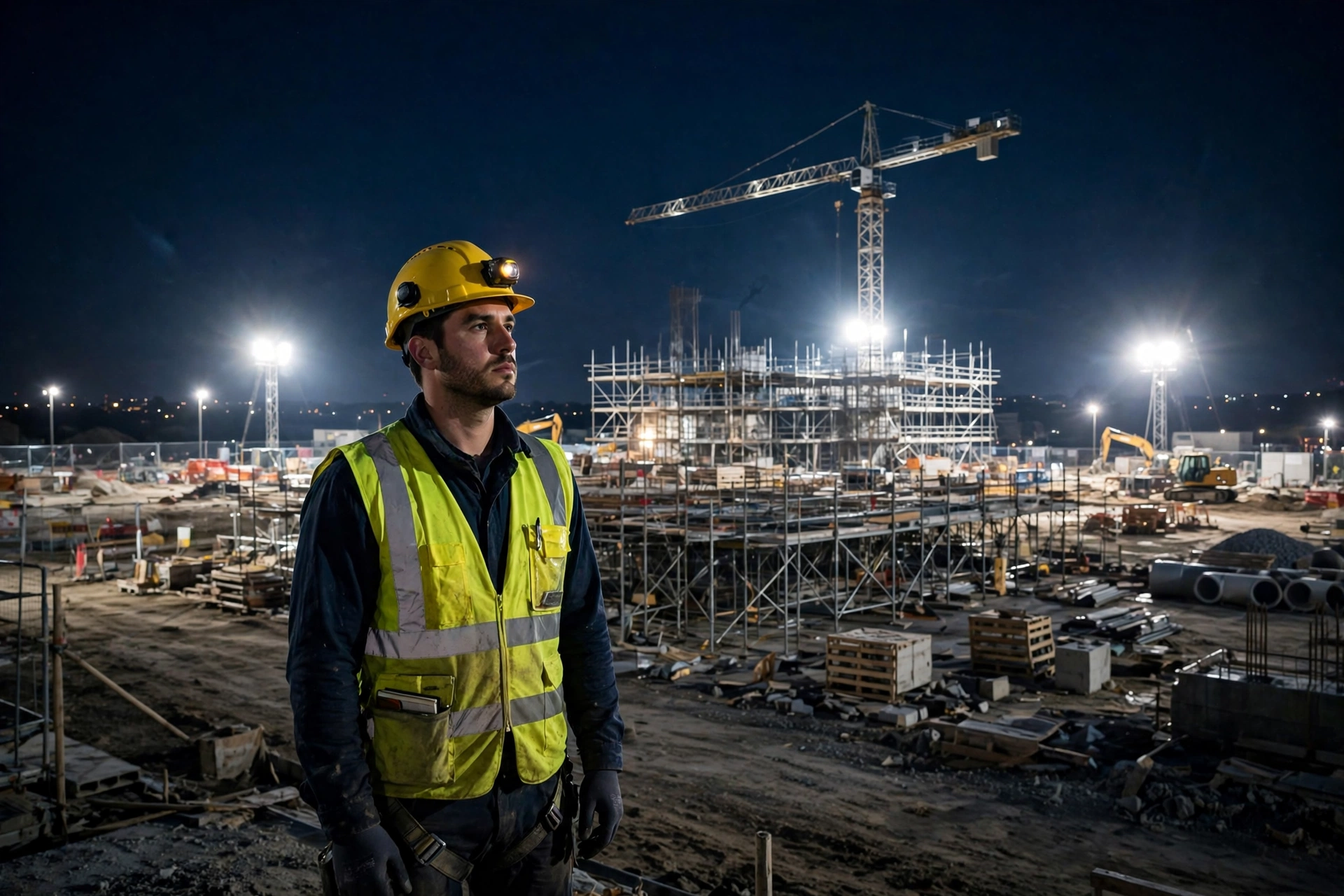
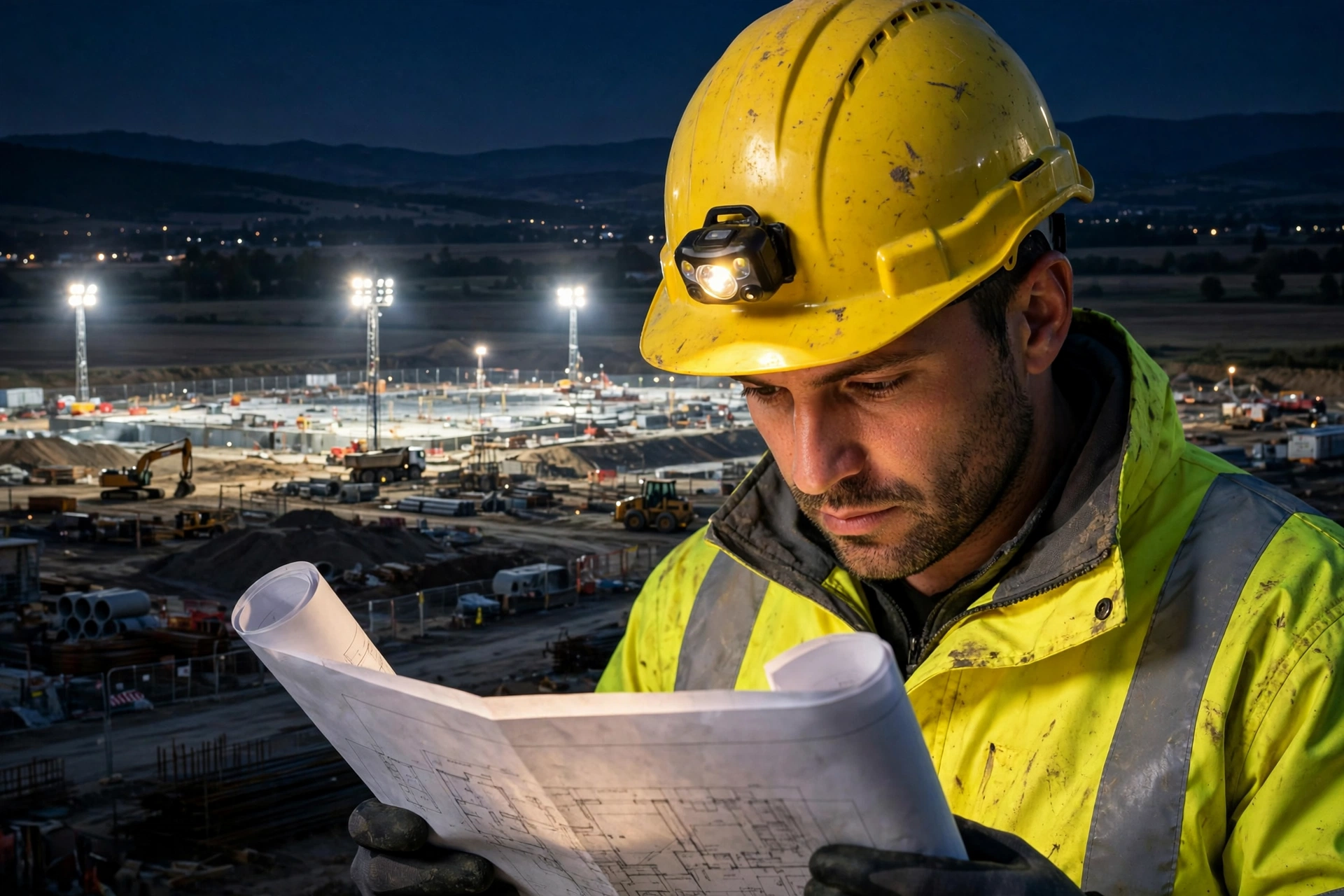
A night shift construction worker helmet is, in general terms, a hard hat built for low-light work: a sturdy shell that protects against falling objects and bumps, usually in a bright colour with reflective markings, and often fitted with a headlamp or clip-on light. It does the same basic job as any construction hard hat, but it is set up for the extra risks of working after dark — poor visibility, tired workers, and moving plant and vehicles that are harder to see and hear at night.
Night work on a construction site brings challenges that daytime work does not. Floodlights create bright pools of light and deep shadows, reversing vehicles are harder to spot, and edges, holes, and overhead loads can be easy to miss. A helmet designed for night shifts helps in two ways: it protects the head, and it helps other people see the worker. This guide explains what makes a night shift construction helmet different, what features matter most, and how to choose and look after one.
What Makes a Night Shift Construction Helmet Different?
Chin straps matter more at night too. A helmet that slips or falls off when a worker bends down or looks up is no use at all, and on a night shift a dropped helmet can be hard to find in the dark. A four-point chin strap that keeps the helmet in place is a sensible choice for anyone working around moving plant, scaffolding, or overhead loads after dark.
Why Is Visibility So Important on a Night Shift?
Visibility also helps supervisors and banksmen keep track of where everyone is. On a large site at night, it can be hard to tell how many people are in a work area, and bright helmets make headcounts and communication easier. Some workers add extra reflective stickers or a reflective cover to their helmet, which can help, but it is worth checking that anything stuck to the shell does not hide damage or weaken the material.
It is also worth remembering that a helmet cannot make up for poor site lighting. Floodlights, task lights, and lit walkways are the main defence against trips, falls, and collisions at night. The helmet is a back-up: it protects the head if something goes wrong and helps others see the worker, but it does not replace good lighting, clear signage, and a site layout that keeps people and vehicles apart.
What Features Should You Look For?
When choosing a helmet for night shift construction work, start with fit and comfort. A helmet that is worn for a full night shift needs to sit comfortably for hours, so look for an adjustable headband, a padded sweatband, and ventilation that lets heat escape. A helmet that pinches or slides around will be taken off or worn badly, and a helmet that is not on the head protects no one.
Next, look at the mounting options. Slots on the sides of the shell let you fit ear defenders or a visor, and a clip or bracket at the front takes a headlamp. If you already own a headlamp, check that it fits the helmet you are buying, since mounts differ between brands. Some helmets also have a slot at the back for a small rear light, which helps workers behind you see where you are.
Reflective markings are another feature worth checking. Some helmets come with reflective strips built in, while others need stickers added afterwards. Either can work, but factory-fitted markings tend to last longer and sit in the right place. Also check the shell for a rain gutter or brim, which helps keep rain off the face and neck during outdoor night work in wet weather.
Finally, think about the work you actually do. A worker who spends the night on scaffolding may want a helmet with a good chin strap and a low profile that does not catch on beams. A worker driving plant may want a lighter helmet with good ventilation. There is no single best helmet for every night shift job, so match the features to the tasks you do most.
How Do You Look After a Night Shift Helmet?
A helmet needs regular checks, and night use can hide damage that daylight would reveal. Before each shift, look over the shell in good light for cracks, dents, deep scratches, or signs that the colour has faded badly in the sun. Check the suspension inside for frayed straps, cracked fittings, or a headband that no longer adjusts smoothly. If anything looks damaged, take the helmet out of service.
Clean the helmet regularly with mild soap and warm water, and let it dry away from direct heat. Dirt and concrete dust can hide cracks, and a dirty reflective strip reflects far less light than a clean one. Avoid solvents, strong cleaners, and paints, which can weaken the shell material. Stickers and markings are fine in general terms, but do not cover the whole shell, since that can hide damage.
How Does a Night Shift Helmet Fit Into Wider Site Safety?
A helmet is only one part of staying safe on a night shift. It works alongside high-visibility clothing, safety boots, gloves, and eye protection, and it works best when the whole site is set up for night work. That means clear walkways, barriers between people and vehicles, good floodlighting, and a plan for rest breaks, since tired workers make more mistakes.
Fatigue is a real factor on night shifts. A worker who is tired may be slower to notice a hazard, and that is another reason visibility matters so much after dark. Taking breaks, staying hydrated, and speaking up when you feel too tired to work safely are all part of the job. If you are unsure how modern helmets handle different kinds of impact, reading about what MIPS is for helmets can help you understand one of the technologies used in modern helmet design.
It also helps to agree on signals and communication before the shift starts. At night, hand signals can be hard to see, so radios, torches, and clear rules about who moves where and when matter more. A helmet with a lamp and reflective markings supports that communication, but it does not replace it. The safest night sites are the ones where everyone knows the plan and everyone can be seen.
Frequently Asked Questions
Q: Is a normal hard hat good enough for night shift construction work?
A: In general terms, a standard hard hat protects the head just as well at night, but a night shift helmet adds bright colours, reflective markings, and lamp mounts that make the worker easier to see and work in the dark. For regular night work, those extras are worth having.
Q: Do I need a headlamp on my helmet for night work?
A: A headlamp is very useful when you need light exactly where you are looking, such as inside trenches or ceiling voids. Site floodlights alone often leave shadows, so a small helmet lamp is a sensible addition for most night shift tasks.
Q: How often should I replace a night shift construction helmet?
A: Replace it after any heavy knock, and follow the manufacturer’s guidance on service life. Check the shell and suspension before every shift, and replace the helmet if you find cracks, dents, or worn straps.

Olivia
Writer at Helmet Today, covering helmet reviews, fit and riding safety.