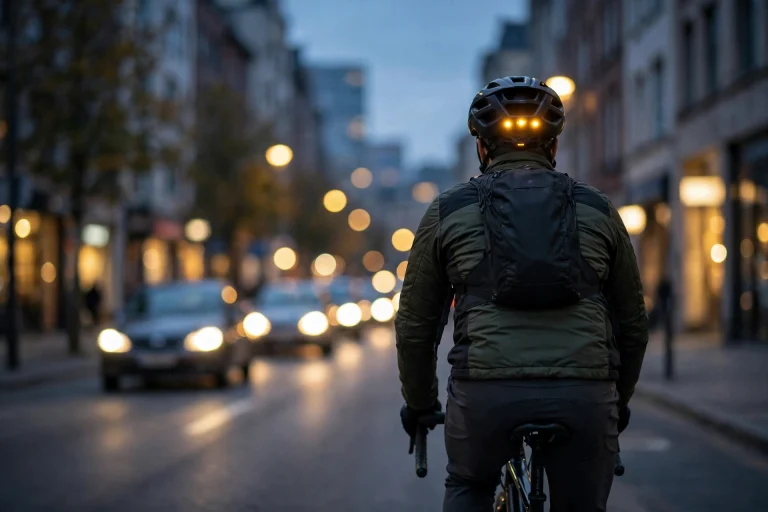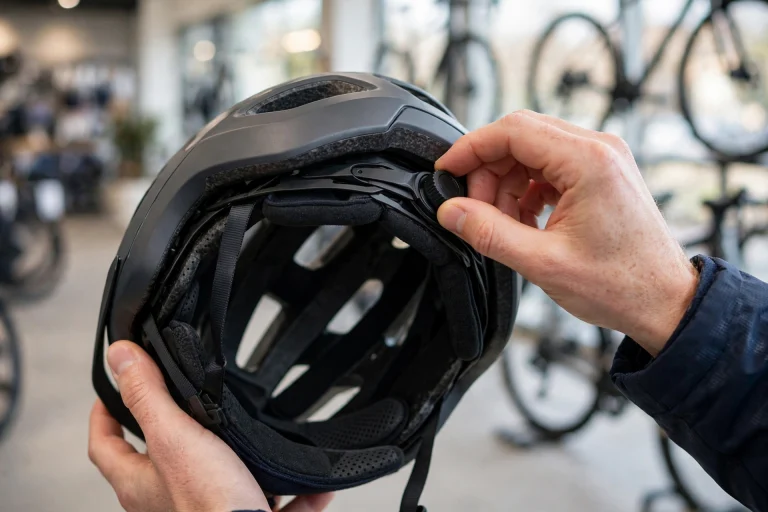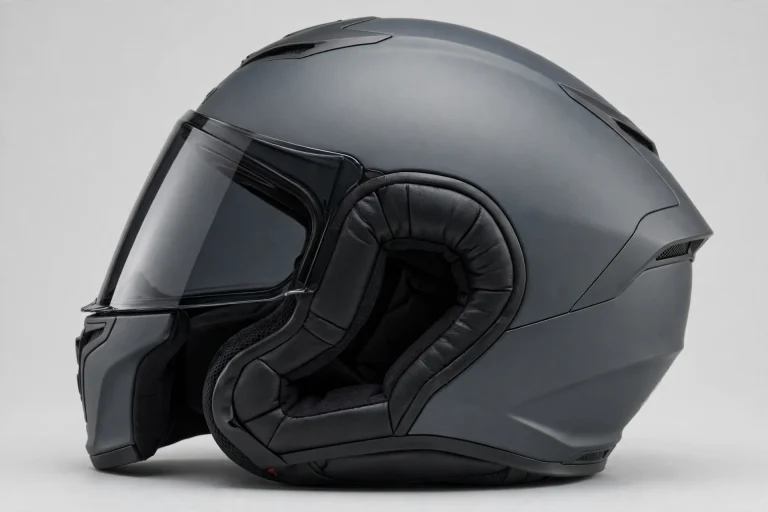
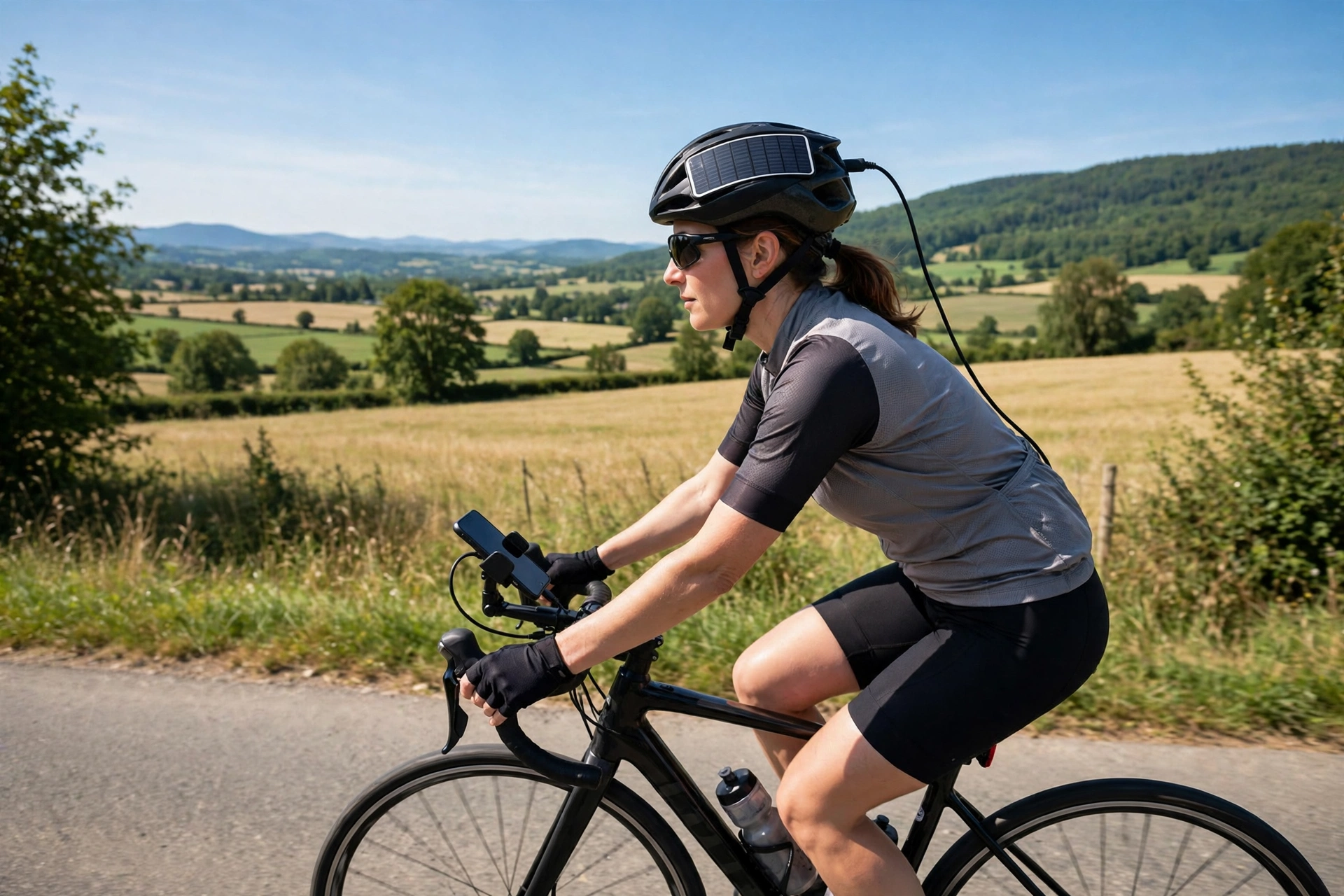
A helmet with a solar charging panel is a helmet that has a small solar panel built into or attached to its outer shell, which collects sunlight and turns it into electricity to charge a device such as a phone, a light, or a Bluetooth headset. It is a piece of wearable technology that combines head protection with a portable power source. The idea is simple: a helmet spends a lot of time outdoors in the sun, so why not use that sunlight to keep a small device charged while you ride, work, or travel?
How Does a Solar Charging Helmet Work?
A solar charging helmet works like any small solar charger, but it is built into a helmet. The solar panel is made of photovoltaic cells, which turn sunlight into an electric current. That current is sent through a cable or a built-in circuit to a battery or directly to a device, such as a phone plugged into a USB port on the helmet.
In general terms, the panel charges slowly, because it is small and the amount of sunlight it receives depends on the weather and the angle of the sun. It is best thought of as a top-up charger rather than a fast charger: it can keep a phone or a light going for longer, but it will not charge a flat battery quickly. Some designs store the energy in a small built-in battery, so the power can be used later when the sun has gone down.
What Can a Solar Helmet Charge?
A solar helmet can charge small, low-power devices, such as a phone, a Bluetooth headset, a small camera, or a helmet-mounted light. The USB port on the helmet is usually the same kind found on a portable power bank, so most small devices can be plugged in and charged while the wearer is on the move.
It cannot charge large devices, and it is not a replacement for a mains charger or a big power bank. A laptop or a tablet needs far more power than a small helmet panel can provide, and trying to charge one would be a waste of time. In general terms, a solar helmet is useful for keeping a phone alive on a long ride, not for charging a full set of gadgets.
Who Uses a Helmet With a Solar Panel?
Helmets with solar panels are used by cyclists, commuters, and outdoor workers who spend long hours in the sun and need to keep a device charged. A cycle commuter who rides to work in the morning and home in the evening can use the panel to keep a phone or a light topped up. A delivery rider or a field worker who is outdoors all day may find the extra power useful too.
They are also popular with travellers and adventurers who spend days away from mains power. A solar helmet will not replace a proper solar charger or a power bank, but it can add a little extra power on a long trip. In general terms, the people who get the most from a solar helmet are those who are already outdoors for hours at a time and who need to keep a small device alive.
Does the Solar Panel Affect Helmet Safety?
This is the most important question to ask about a solar helmet. A helmet’s job is to protect the head, and anything added to the shell must not make it less safe. A solar panel that is glued or bolted to the outside of a helmet can change how the helmet behaves in a crash: it can catch on the ground, it can crack into sharp pieces, or it can stop the shell from sliding smoothly across a surface.
That is why a solar helmet should be bought as a complete product from a maker who has tested the helmet with the panel fitted, rather than made by sticking a panel onto an ordinary helmet. A helmet that has been modified after it was certified may no longer meet the standard it was tested to. If you want to understand one of the safety technologies used in modern helmets, reading about what MIPS is for helmets is a good place to start, since a solar panel adds weight and changes the helmet’s balance as well.
What Are the Drawbacks of a Solar Charging Helmet?
The main drawback of a solar helmet is that the charging is slow and depends on the weather. On a cloudy day, or in winter when the sun is low, the panel will produce very little power. The panel also adds weight to the helmet, and it can make the helmet hotter to wear, since the dark panel absorbs heat from the sun.
Cost is another drawback. A helmet with a built-in solar panel usually costs more than a similar helmet without one, and the extra money buys only a small amount of charging power. For many riders, a separate power bank carried in a pocket would charge a phone faster and more reliably. In general terms, a solar helmet is a clever idea, but it is not the most practical way to charge a device.
Should You Buy a Helmet With a Solar Charging Panel?
Whether a solar helmet is worth buying depends on how you will use it. If you spend long hours outdoors in strong sun, and you need to keep a small device charged, a solar helmet can be a useful piece of kit. It is at its best as a top-up charger for a phone or a light on a long, sunny ride.
If you ride mainly in cloudy weather, or you need to charge a device quickly, a solar helmet is probably not the right choice. A power bank is cheaper, faster, and more reliable, and an ordinary helmet will be lighter and cooler to wear. Before buying, check that the helmet meets a recognised safety standard with the panel fitted, and that the panel is part of the certified design rather than an add-on.
Can a solar helmet charge a phone fully?
Not usually. In general terms a small helmet panel charges slowly and is best for topping up a phone, not for charging a flat battery from empty.
Is a solar panel helmet safe in a crash?
Only if the helmet was tested and certified with the panel fitted. A panel stuck onto an ordinary helmet afterwards may change how the helmet behaves in a crash and could make it less safe.
Does a solar helmet work on a cloudy day?
It works, but much more slowly. Solar panels need sunlight to produce power, and cloud cover cuts the output a lot, so a cloudy day gives only a small charge.

Olivia
Writer at Helmet Today, covering helmet reviews, fit and riding safety.