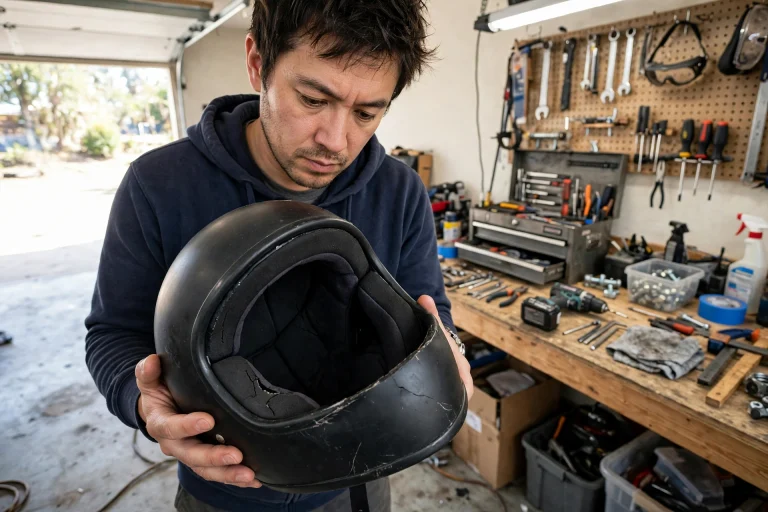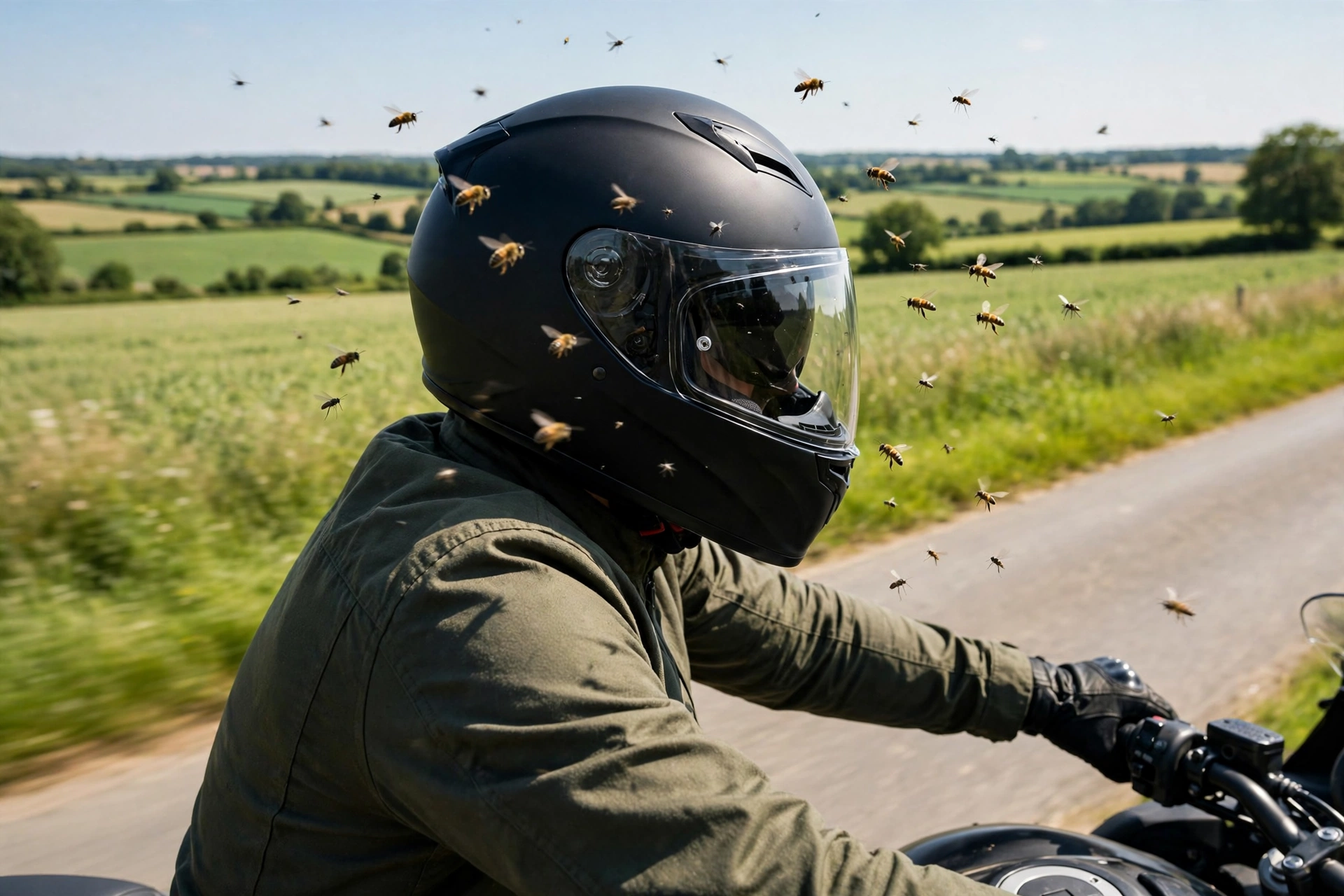
Yes, in general terms a helmet can protect against insect stings on the head, because the shell and liner cover the scalp and keep flying insects from reaching the skin while you ride. A wasp, bee, or fly that hits a helmeted head bounces off the hard shell instead of landing on bare skin, and that alone prevents many stings that would otherwise happen at speed. A helmet is not a guarantee, though: insects can still find their way in through vents, under the edge of the helmet, or inside an open-face design, so the protection is real but not complete.
Why Are Insects a Problem for Helmet Wearers?
Insects are a problem for riders because speed turns a small insect into a painful impact. A bee or wasp hitting a bare face or scalp at cycling or motorcycle speed arrives with enough force to sting on contact, and the surprise can make a rider flinch, swerve, or lose focus at exactly the wrong moment. Even a harmless fly can sting the eyes or crawl into an ear, and on a hot summer ride, insects are drawn to sweat, bright colours, and the warmth of a rider’s body.
For motorcyclists, the problem is worse because of the higher speeds and the larger area of exposed skin around an open-face helmet. A wasp trapped inside a helmet is a well-known hazard: it panics, it stings, and the rider cannot easily deal with it while moving. In general terms, insects are one of those small hazards riders forget about until one arrives, and a helmet is the first line of defence.
How Does a Helmet Keep Insects Away From Your Head?
A helmet keeps insects away from the head in a straightforward way: it puts a hard barrier between the insect and the scalp. The shell covers the top, sides, and back of the head, so an insect flying into the rider from the front or above simply hits the shell and bounces off. The liner and padding underneath add a second layer, so even an insect that gets past the shell has to find its way through padding before it can reach skin.
Full-face helmets offer the most protection, because they also cover the face with a visor, closing off the cheeks, chin, and mouth. An open-face helmet still protects the top of the head, but leaves the face exposed, so insects can still sting the cheeks or fly into the mouth. Vents are the weak point in any helmet: they let air in for cooling, and they can let small insects in too, which is why some riders fit fine mesh over vents or wear a thin balaclava underneath. If you want to learn about a safety system that helps helmets manage impact forces, reading about what MIPS is for helmets is a good place to start.
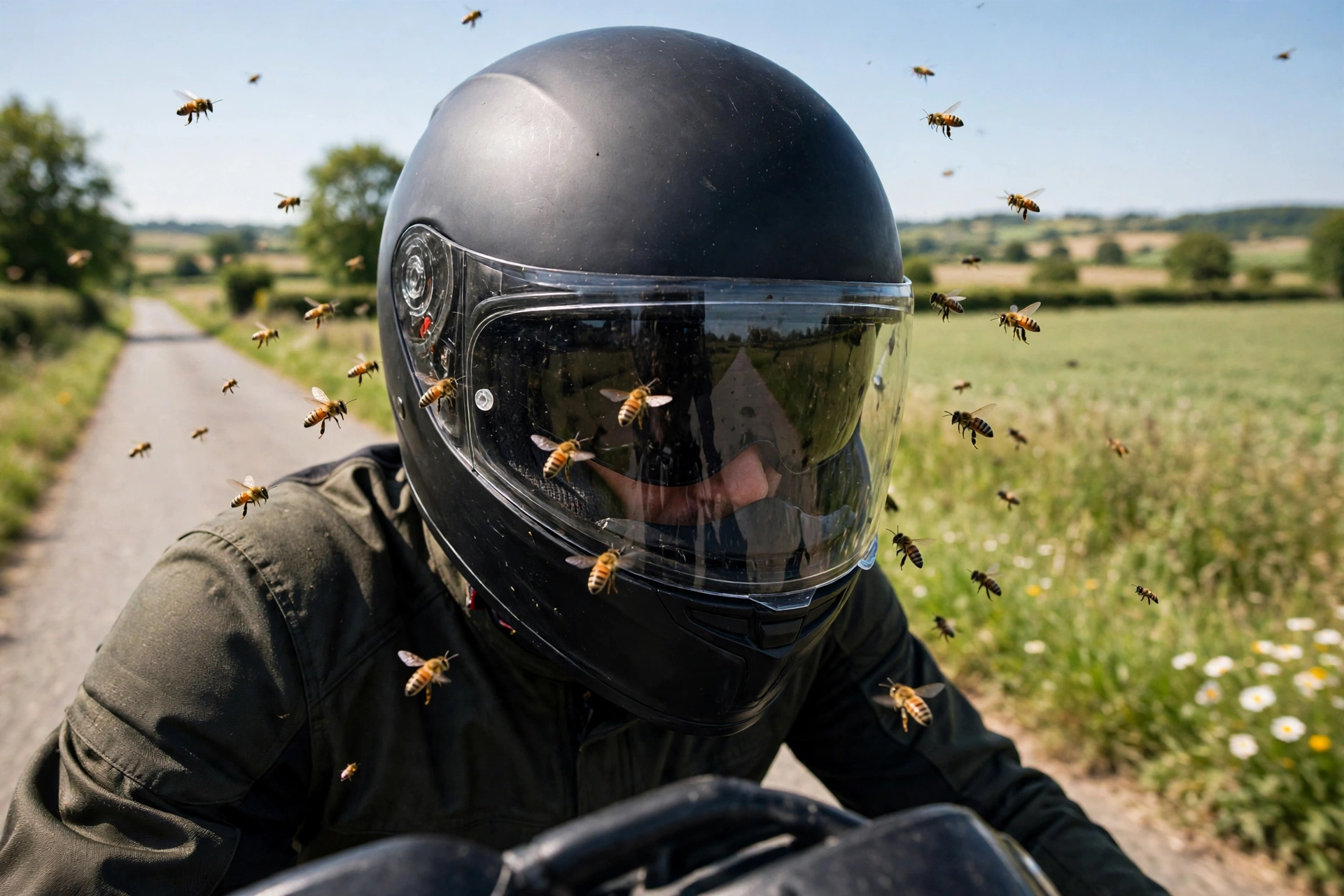
Can Insects Still Sting You While Wearing a Helmet?
Yes, they can, and it is worth knowing how. The most common way is through the vents: a small wasp or bee can fly into a vent and become trapped between the liner and the scalp, where it may sting before the rider can stop and remove the helmet. Another route is under the rim of the helmet, especially if the helmet is loose or the straps are not fastened snugly, leaving a gap at the back or sides where an insect can crawl in.
Open-face helmets leave the whole face exposed, so stings to the cheeks, lips, and chin are still possible, and an insect can fly into the mouth or up a nostril. Even a full-face helmet with the visor up offers little face protection. In general terms, a helmet greatly reduces the chance of a sting on the head, but it does not remove it entirely, and riders who are allergic to stings should carry their prescribed medication and take extra care.
What Should You Do If an Insect Gets Inside Your Helmet?
If an insect gets inside your helmet while you are riding, the most important thing is to stay calm and keep control of your vehicle. Do not swat at your head, shake the helmet violently, or take both hands off the controls, because a crash is a far bigger danger than a sting. Slow down smoothly, signal, and pull over somewhere safe before you deal with the insect.
Once you have stopped, take the helmet off carefully and shake it out away from your body. If you have been stung, check the sting site, remove the sting if you can see it, and clean the area. If you are allergic to stings, follow your allergy plan and seek medical help straight away. Prevention is better than cure: check your helmet for trapped insects before you put it on, especially if it has been hanging in a shed or garage.
How Can You Stop Insects Getting Into Your Helmet?
There are several simple steps that help keep insects out of a helmet. First, keep the visor down on a full-face helmet whenever you are moving, since an open visor is an open door for insects. Second, make sure the helmet fits snugly all round, with the chin strap fastened, so there are no gaps at the back or sides where insects can crawl in.
Third, consider a thin balaclava or skull cap under the helmet in summer, which adds a layer of fabric between your skin and any insect that gets inside. Some riders also fit fine mesh or vent covers over the larger vents, though you should check that this does not block airflow too much. Finally, store your helmet somewhere insects cannot nest in it: a closed cupboard or a helmet bag is better than an open shelf in a garage, where wasps sometimes build nests inside an unattended helmet.
Are Some Helmets Better Than Others for Insect Protection?
Yes, the design of the helmet makes a real difference. A full-face motorcycle helmet with a closed visor gives the most protection, because it seals off the face as well as the head. A modular helmet with the chin bar down offers similar protection, while a modular helmet with the chin bar up behaves more like an open-face helmet. A bicycle helmet, with its large vents and open design, gives the least protection against insects, though it still covers the scalp, which is where most stings on the head would land.
Some helmets have smaller vents or built-in insect mesh, and these are worth looking for if you ride in areas with lots of wasps or bees. In general terms, the more of the head and face a helmet covers, and the fewer open gaps it has, the better it will protect against insects. The trade-off is ventilation and heat: a fully sealed helmet is hotter on a summer day, so riders often balance insect protection against comfort, and a balaclava can be a good compromise.
Do helmets protect against insect stings?
Yes, in general terms a helmet protects against insect stings on the head by putting a hard shell between insects and the scalp, though insects can still get in through vents or under a loose-fitting helmet, so the protection is not complete.
What should I do if a wasp gets inside my helmet while riding?
Stay calm, keep control of your vehicle, slow down, and pull over somewhere safe before removing the helmet. Do not swat at your head or take your hands off the controls while moving.
Can insects nest inside a stored helmet?
Yes, wasps sometimes build nests inside helmets left in sheds or garages, so store your helmet in a closed cupboard or helmet bag and check inside it before you put it on.

Olivia
Writer at Helmet Today, covering helmet reviews, fit and riding safety.