Yes, in general terms a helmet can protect against falls from height, because it cushions the head and reduces the force of the impact when you land, but no helmet can guarantee protection from a very high fall. A helmet is designed to absorb a large part of the energy of a head impact, and in a fall from a modest height it can be the difference between a serious head injury and a much lighter one. From a great height, though, the energy involved is far beyond what any helmet is built to handle, and the rest of the body is at risk too, so a helmet should never be treated as making a high fall safe.
How Does a Helmet Help in a Fall From Height?
A helmet helps in a fall from height in the same way it helps in any head impact: the hard outer shell spreads the force of the blow over a wider area, and the foam liner inside crushes as it absorbs energy, slowing the head down more gently than a sudden stop on a hard surface would. That gentler slowing protects the brain, because much of the damage in a head impact comes from the brain moving suddenly inside the skull.
In a fall, the head often strikes the ground, a ledge, or another hard surface, and the helmet is the only thing between the skull and that surface. Even a short fall, such as falling off a ladder or a low roof, can cause a serious head injury without a helmet, because the head is heavy and the ground is unforgiving. In general terms, a helmet turns a direct blow into a cushioned one, and that can matter a great deal even when the fall is short.
What Are the Limits of Helmet Protection in a High Fall?
The limits of helmet protection in a high fall come down to energy. The higher the fall, the faster you are moving when you land, and the more energy your body carries. Helmets are tested against impacts at speeds and energies that match the accidents they are designed for, such as a fall from a bike or a ladder, not against the energy of a fall from several storeys. Beyond those design limits, the liner can only absorb so much before it is fully crushed, and the remaining energy passes through to the head.
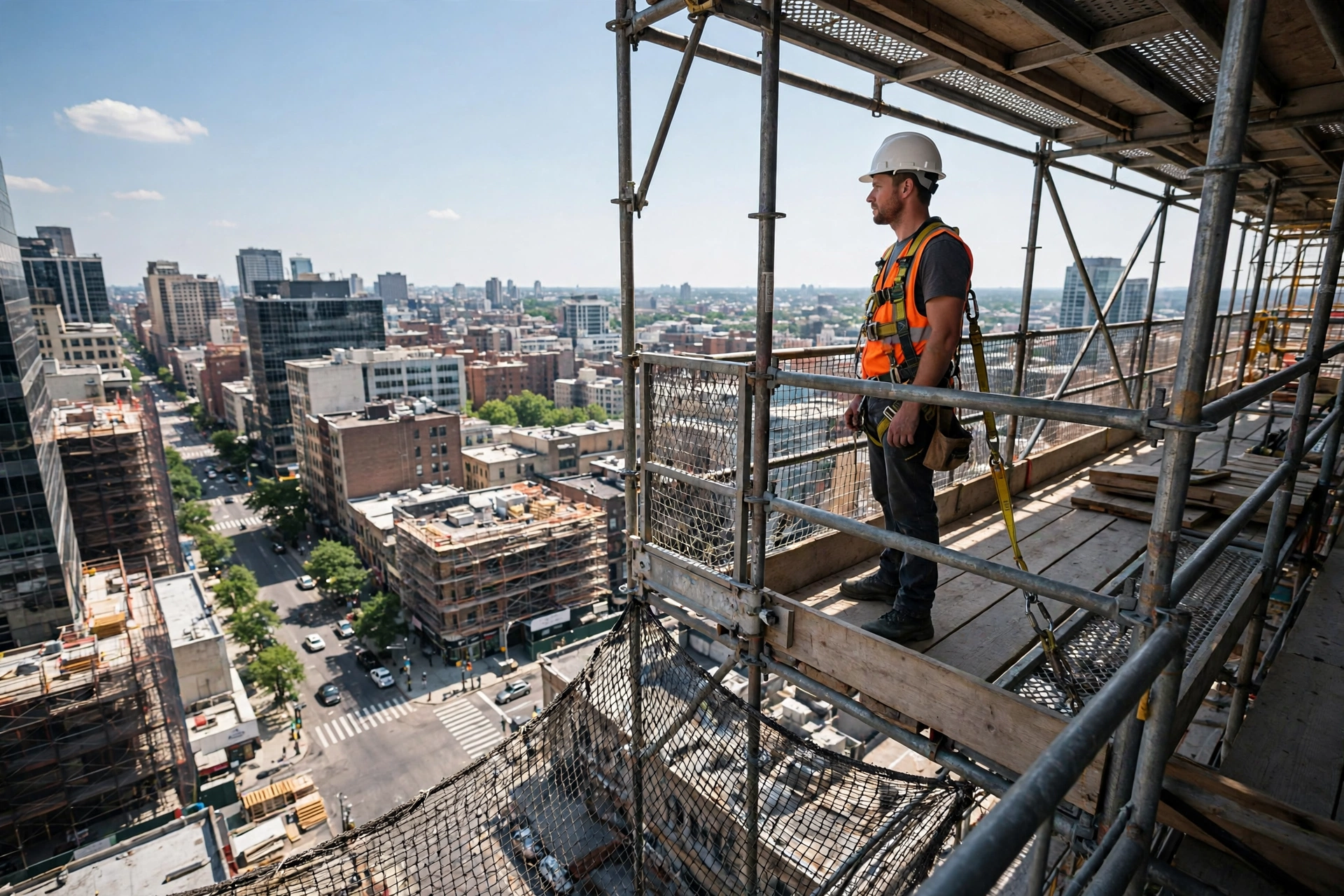
The rest of the body is also a limit. In a high fall, the spine, pelvis, legs, and internal organs can all be seriously injured even if the head is protected, so a helmet cannot make a high fall survivable on its own. That is why work at height relies on guardrails, harnesses, nets, and scaffolding, with the helmet as a last line of defence rather than the main protection.
Do Different Helmets Protect Differently in Falls?
Yes, different helmets are built for different kinds of falls, and the protection they offer varies. A hard hat on a construction site is designed for impacts from above and for short falls, with a suspension system inside that creates a gap between the shell and the head, giving the helmet extra room to absorb an impact.
A climbing helmet is designed for both falling rock and falls onto rock, and it is often built with a hard shell that can take repeated small knocks as well as one big impact. A cycling helmet is designed for falls at speed onto a hard road, with a liner that absorbs a single heavy impact. If you want to understand one of the safety technologies used in modern helmets, reading about what MIPS is for helmets is a good place to start. The lesson is to wear the helmet made for your activity, because its design matches the falls you are most likely to have.
What Should You Do After a Fall From Height?
After a fall from height, the first priority is to get medical help, even if you feel fine and the helmet seems to have done its job. Head injuries can develop slowly, and symptoms such as headache, dizziness, confusion, or nausea can appear hours after the fall. If you fell from any real height, it is sensible to be checked by a medical professional rather than assuming the helmet has taken care of it.
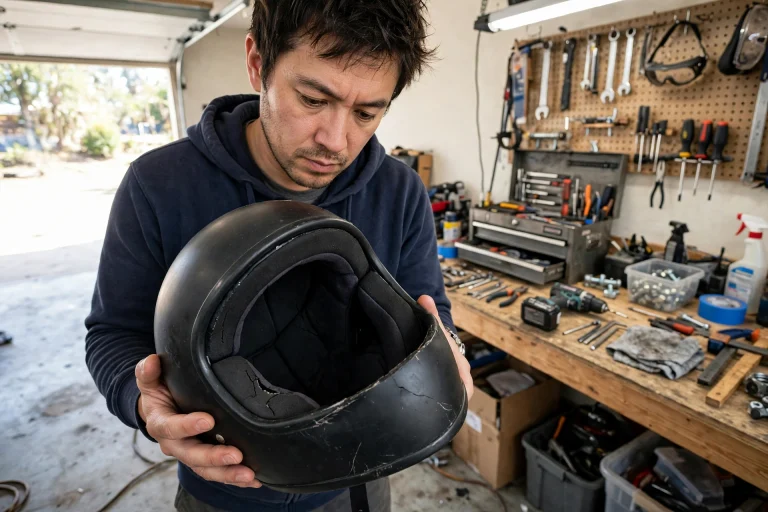
You should also retire the helmet if it took a heavy impact. The liner inside may be crushed or cracked even if the shell looks undamaged, and a helmet that has already absorbed one hard blow will not protect as well the next time. Check the shell for cracks, the straps for damage, and the liner for dents, and replace the helmet if anything looks wrong. Finally, report the fall and think about what caused it, because it is a warning that something in the work method, the equipment, or the environment needs to change.
How Can You Reduce the Risk of Falls From Height?
The best way to reduce the risk of a fall from height is to avoid working at height when you can, and to use proper fall protection when you cannot. Guardrails, scaffolding, and safety nets keep people from falling, and a harness and lanyard can arrest a fall before the person hits the ground. A helmet is part of this system, but it is the last line of defence, not the first.
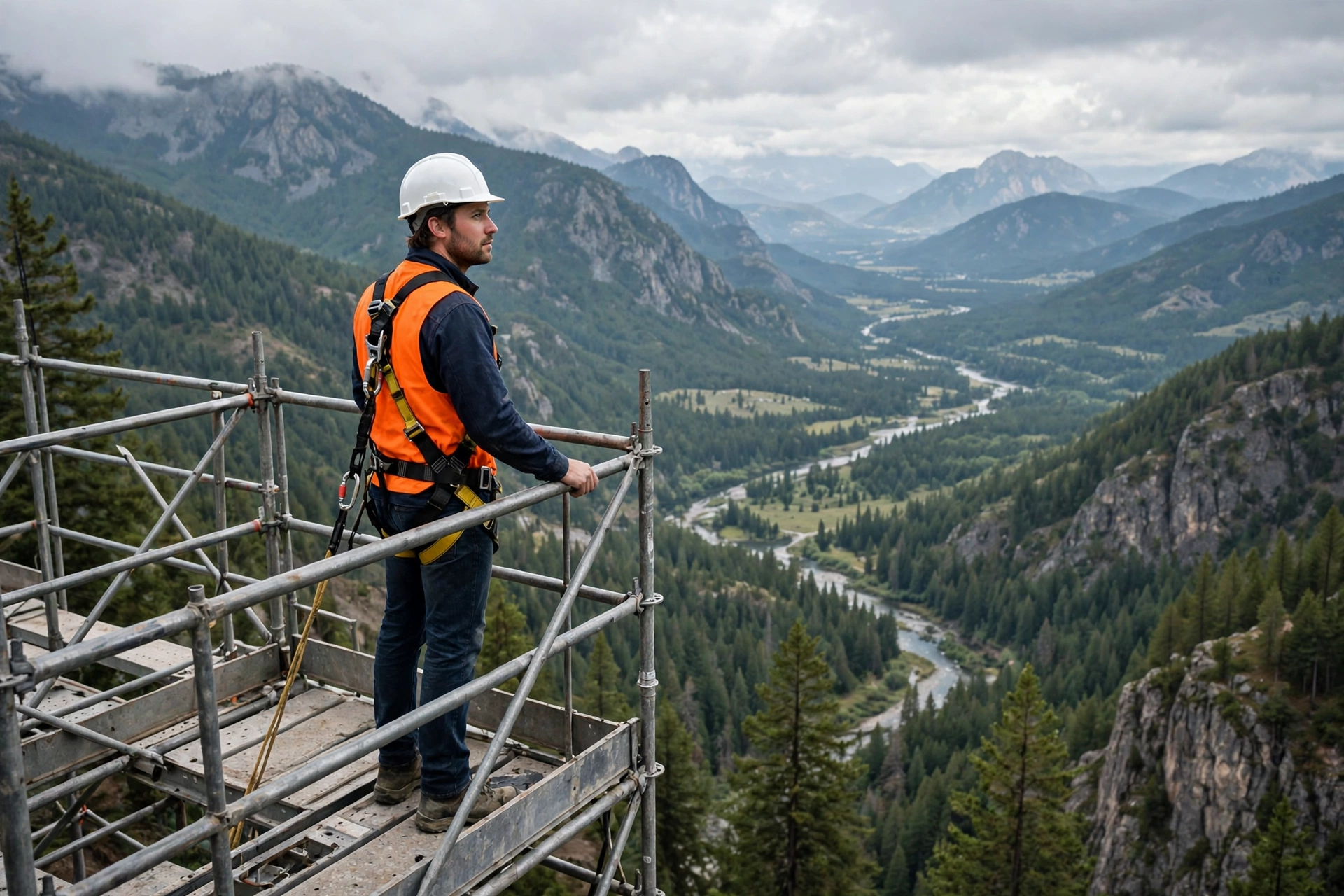
For climbers and outdoor workers, the habits are similar: check your equipment, use ropes and anchors properly, and never rely on a helmet to save you from a fall that should have been prevented. For cyclists and motorcyclists, a fall from a moving vehicle is hard to prevent entirely, so the habit is simply to wear the helmet on every ride. In general terms, the helmet is there for the fall you did not expect, and the rest of your safety system is there to make sure that fall never happens.
Does Wearing a Helmet Make People Take More Risks at Height?
This is a question that comes up often, and the honest answer is that it can: when people feel protected, they sometimes take risks they would not otherwise take, a pattern psychologists call risk compensation. A worker who feels safe in a hard hat might lean out further on a scaffold, or a climber might take a route they would have avoided without a helmet.
The answer is not to stop wearing helmets, but to remember what they can and cannot do. A helmet reduces the harm from a head impact, but it does not stop a fall, and it does not protect the rest of the body. The safest workers and riders wear a helmet and still behave as if they do not have one: careful, aware, and respectful of the height. In general terms, a helmet is a safety net, and the best safety net is the one you never have to use.
Do helmets protect against falls from height?
Yes, in general terms a helmet protects against falls from height by cushioning the head and absorbing some of the impact energy, but it cannot guarantee protection from a very high fall, where the energy is beyond what any helmet is designed to handle.
Should I replace my helmet after a fall from height?
Yes, if the helmet took a heavy impact. The liner inside may be crushed or cracked without visible damage outside, so it is sensible to replace the helmet rather than trusting it again.
Does a helmet make a high fall safe?
No. A helmet reduces the risk of head injury, but it does not protect the rest of the body, and a high fall can cause serious injuries even with a helmet, which is why guardrails, harnesses, and nets matter.

Olivia
Writer at Helmet Today, covering helmet reviews, fit and riding safety.