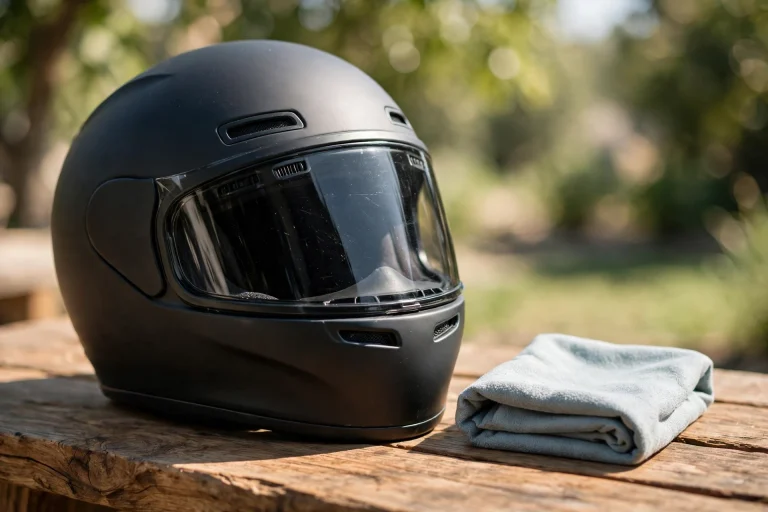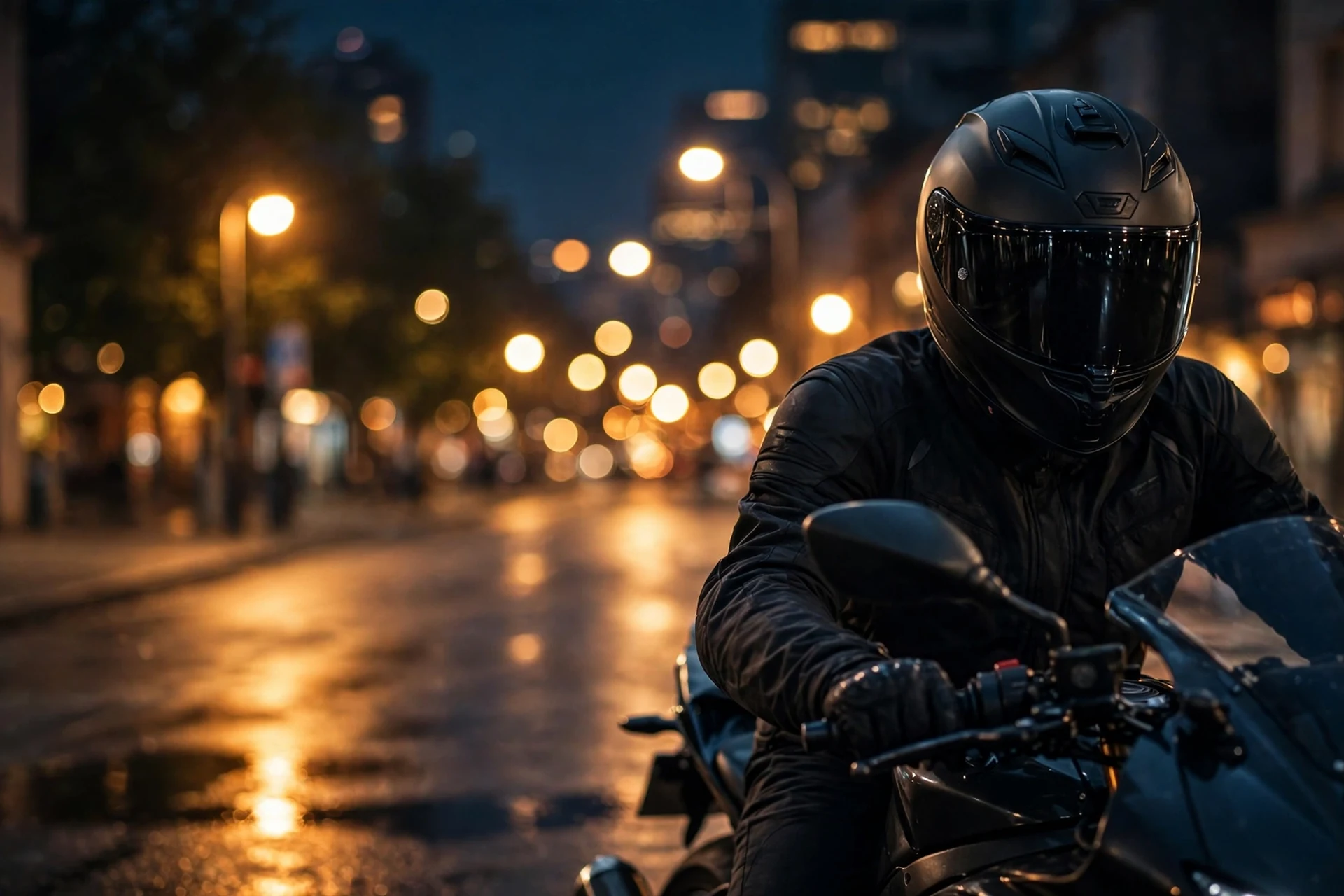
A tinted visor is not a good choice for night riding. In general terms, a dark or heavily tinted visor cuts down the light that reaches your eyes, and at night there is already very little light, so it can make it harder to see hazards, road markings, and other vehicles in time. Many riders love a tinted visor on a bright day, when it cuts glare and keeps the sun out of their eyes, but the same dark lens that helps at noon becomes a handicap after dark. If you plan to ride at night, the safe choice is usually a clear visor, swapped in before you set off.
What Does a Tinted Visor Do?
A tinted visor is a helmet visor with a dark or coloured lens that reduces the amount of light passing through it. Tints come in different shades, from a light smoke that only slightly dims the view to a very dark smoke or mirrored finish that blocks most of the light. The visor sits in front of your eyes and works much like a pair of sunglasses, cutting glare from the sun and from bright reflections off wet roads, chrome, and other vehicles.
On a sunny day, that can make riding more comfortable and less tiring, because your eyes do not have to squint against the glare. The trade-off is simple and unavoidable: whatever light the tint blocks during the day, it also blocks when the light is already poor.
Why Is a Tinted Visor a Problem at Night?
At night, your eyes need every bit of available light to pick out the road ahead. Street lights, headlights, and reflective markings all help, but the scene is still much darker than in daylight, and your eyes adapt by letting in more light. A tinted visor works against that adaptation by cutting the light before it reaches your eyes, so potholes, debris, animals, and unlit vehicles can appear later than they would through a clear visor.
The problem is worse in rain or fog, when light is scattered and visibility is already poor, and on unlit country roads, where there is almost no ambient light at all. In general terms, a dark visor at night reduces contrast as well as brightness, so it can be harder to judge distances and to tell where the edge of the road is. That smaller margin is what makes a tinted visor a poor choice after dark. If you want to understand how helmets protect the head in a crash, reading about what MIPS is for helmets is a useful starting point, though no visor choice can replace a well-fitting helmet.
Are Light Tints Safe After Dark?
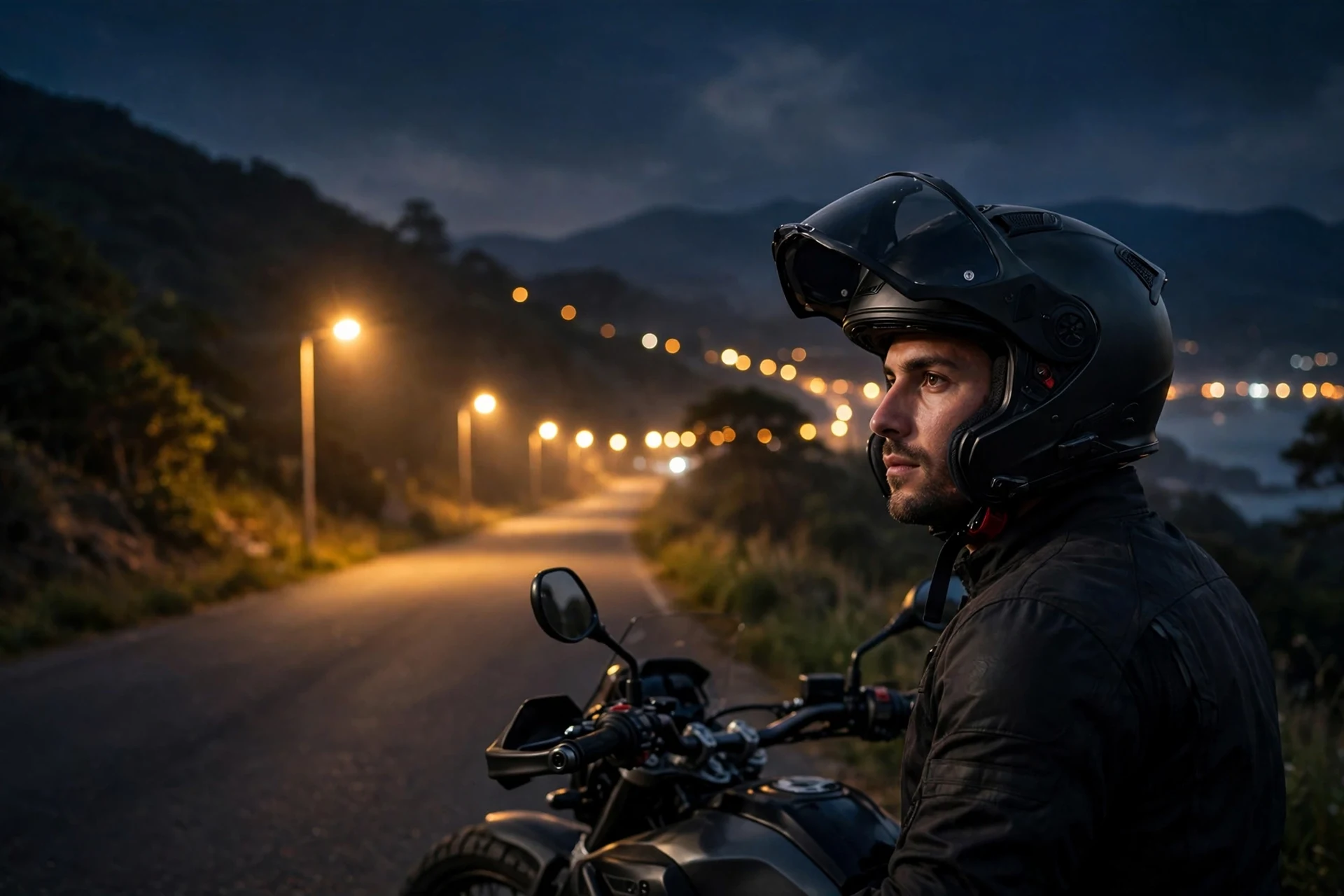
A very light smoke tint lets through far more light than a dark tint, so it is less of a problem at night, but it still reduces the light reaching your eyes to some degree. Whether it feels safe depends on the tint, the road lighting, and your own eyesight. On a well-lit city street, a light tint may cause no obvious trouble, while on a dark rural road the same tint can make the difference between spotting a hazard early and spotting it too late.
Some visors are sold as suitable for day and night use, and these are usually the lightest tints. Even so, it is worth testing one on a familiar road before trusting it on an unfamiliar route at night. In general terms, if you notice that you are straining to see, the tint is costing you vision. A clear visor removes that doubt entirely, which is why most experienced night riders carry one.
What Should You Use Instead at Night?
The simplest and safest option for night riding is a clear visor. A clear visor lets through as much light as possible while still protecting your eyes from wind, rain, insects, and road debris. Modern clear visors often have an anti-scratch coating on the outside and an anti-fog treatment on the inside, which helps keep the view sharp in cold or damp night air. Keeping the visor clean matters too, because scratches and smears scatter light from oncoming headlights.
Another option is a photochromic visor, which darkens in bright sunlight and clears again in low light. In general terms, a photochromic visor can be a practical compromise for a ride that starts in daylight and ends after dark, because it adapts as the light changes. It is not perfect, though, since it may not clear fully or quickly enough, and it can stay slightly tinted behind a windscreen that blocks the ultraviolet light it reacts to. A separate clear visor, carried as a spare, remains the most reliable solution.
How Do You Swap a Visor Before a Night Ride?
Swapping a visor is usually a quick job once you know how your helmet works. Most modern helmets have a simple release mechanism, often a lever, button, or tab on each side of the visor, that lets you lift the visor off its pivots without tools. It is worth practising the swap at home first, so you can do it calmly in a car park or at the roadside rather than fumbling with it in the dark.
Before a ride that will run into the night, check the sunset time and plan the swap before the light fades. Carry the spare visor in a soft pouch or cloth bag so it does not get scratched in your luggage. When you fit the clear visor, check that it clicks firmly into place on both sides and that it opens and closes smoothly. A visor that is not seated properly can let in wind and rain, so a quick check before you ride is worth it.
How Do You Look After a Tinted Visor?
A tinted visor needs the same care as a clear one, and a little extra, because scratches and wear show up clearly in a dark lens and can scatter light. Clean it with lukewarm water and a soft cloth, or with a cleaner made for helmet visors, and avoid paper towels, solvents, or household glass cleaners, which can damage coatings. Rinse off grit and insects first, so you do not drag them across the surface while wiping.
Store the visor in a soft pouch when it is not on the helmet, and keep it away from heat and direct sunlight when you are not riding. Check the tint from time to time: if the coating is peeling, bubbling, or scratched in the line of sight, it is time to replace the visor rather than put up with a distorted view. In general terms, a visor is a consumable part of the helmet, and replacing a worn one is a small cost compared with the value of clear vision on the road.
Can I ride at night with a lightly tinted visor?
You can, but a clear visor is safer. Even a light tint cuts some light, and on dark roads that can make hazards harder to spot, so most riders swap to clear before night riding.
Is a photochromic visor good for night riding?
In general terms, yes, because it clears in low light. It may not clear fully or quickly, though, so a separate clear visor is still the most reliable choice for a long night ride.
Does a tinted visor help with glare from headlights?
It can reduce glare, but it also dims everything else, including the road ahead. A clean clear visor with an anti-glare coating is usually a better way to deal with headlight glare at night.

Olivia
Writer at Helmet Today, covering helmet reviews, fit and riding safety.