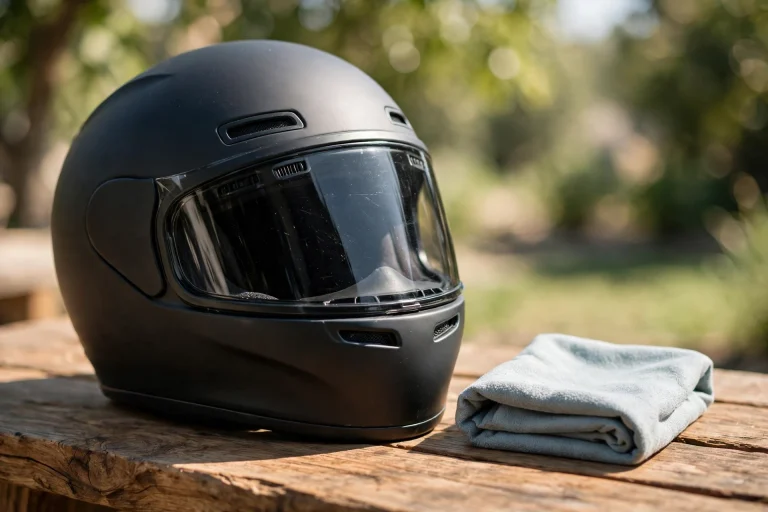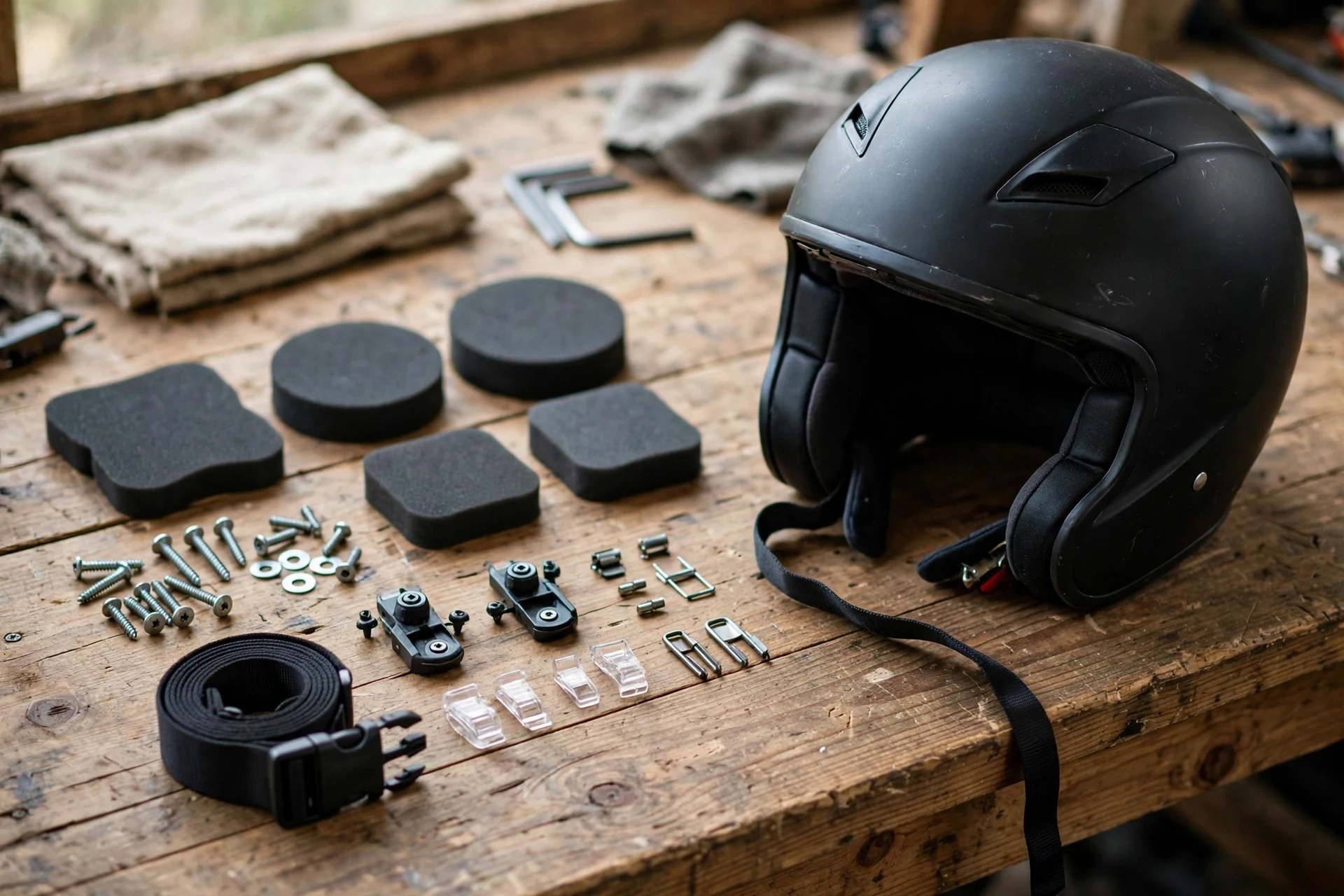
A helmet spare parts kit is a pack of replacement parts for your helmet, such as pads, screws, visor fixings, vents, and chin strap parts. In general terms, it is a small box of the bits most likely to wear out or get lost, so you can repair your helmet at home instead of replacing it or hunting for each part separately. Helmets are used hard: pads wear out, screws work loose, vents get knocked, and small clips break. A spare parts kit keeps the common fixes in one place, which is handy if you ride often or travel with your helmet.
What Is in a Helmet Spare Parts Kit?
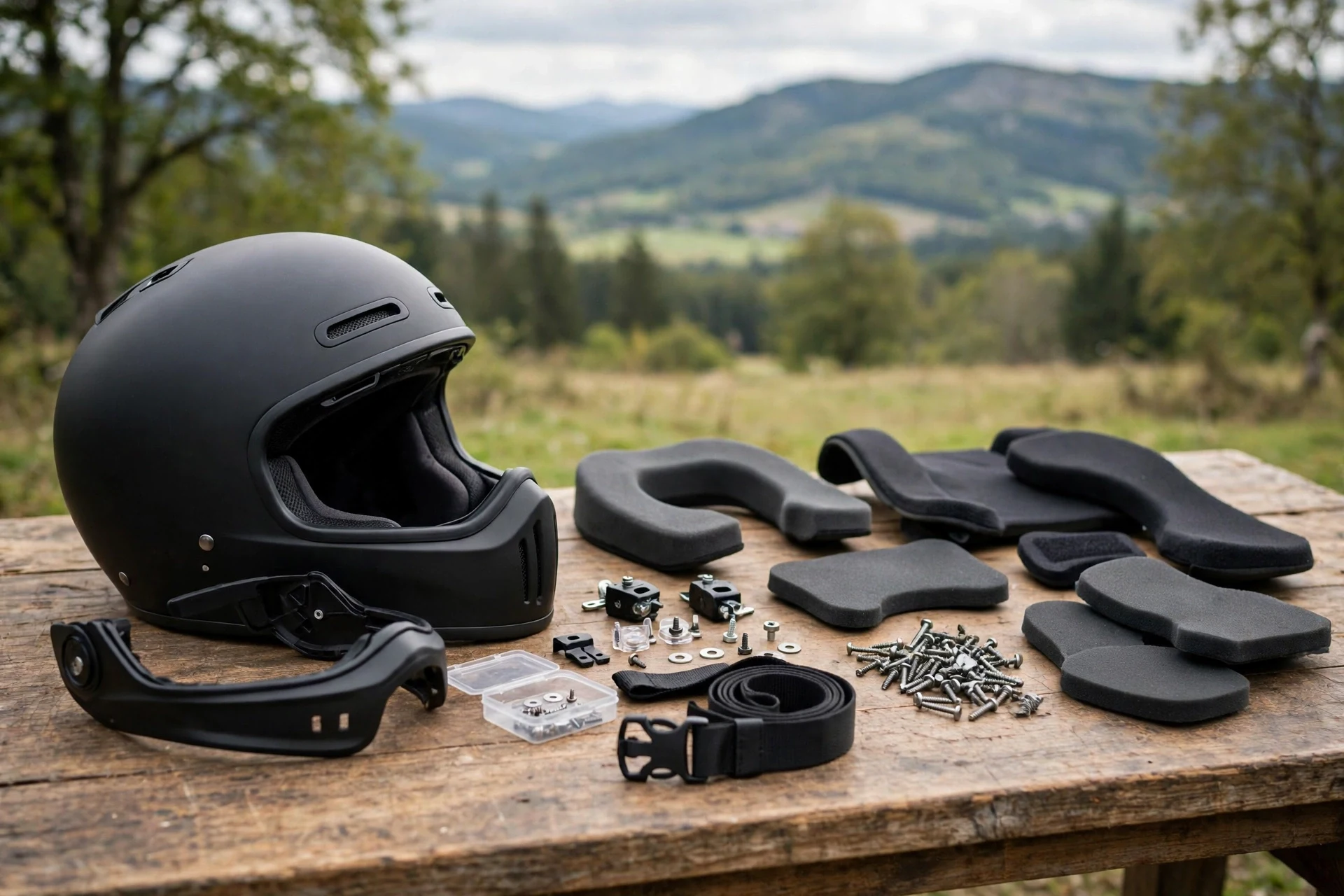
What is in a spare parts kit depends on the helmet, but most kits cover the same basics. A typical kit might include a set of interior pads, a spare visor screw or pivot kit, a chin strap buckle or clip, spare vent covers or sliders, and a few small screws and washers. Some kits are made for a specific helmet model, and they include the exact parts that fit that model. Others are more general, with a selection of common parts that fit a range of helmets.
Model-specific kits are usually the better choice, because helmet parts are rarely interchangeable between makers or models. A visor screw from one helmet may not fit another, and a pad from a different model may not sit correctly. Before you buy a kit, check the helmet model and size it is made for, and compare that with the label inside your own helmet. A kit that does not match your helmet is of little use, however good the parts inside it are.
Why Keep a Spare Parts Kit?
Keeping a spare parts kit means you can fix small problems quickly, before they become big ones. A loose visor screw, a broken vent slider, or a worn cheek pad can all be fixed in minutes if you have the part to hand, but each one can be annoying or even unsafe if you have to wait days for a replacement.
A kit is also useful when you travel. If a part breaks or goes missing on a trip, a spare in your luggage can save the day. In general terms, the parts in a kit are the ones that wear out first, so having them ready is a sensible part of looking after a helmet you use often. It is not a substitute for a proper check of the helmet, though: a kit can fix a worn pad or a loose screw, but it cannot fix a cracked shell or a damaged liner.
Which Parts Wear Out First?
Interior pads usually wear out first, because they sit against your head and soak up sweat on every ride. Cheek pads and crown pads compress over time, and their fabric can tear or wear thin. Chin straps and buckles come next: the strap can fray where it rubs, and the buckle can wear or crack after years of use. Visor screws and pivots can work loose with vibration, and they are easy to lose if they are not checked.
Vents and vent sliders can also break, especially if the helmet is dropped or knocked in transit. Small clips and covers are easy to lose and hard to replace without the right part. In general terms, the parts that move, rub, or get handled most often are the ones that wear first. Checking them regularly, and replacing them when they show wear, keeps the helmet comfortable and working as it should. If you want to understand how helmets protect the head in a crash, reading about what MIPS is for helmets is a useful starting point, though spare parts do not change the helmet’s safety rating.
How Do You Use a Spare Parts Kit?
Using a spare parts kit is usually a matter of swapping the worn part for the new one, following the helmet maker’s instructions. For pads, unclip or peel off the old pad and press the new one into place, checking that it sits flat. For visor screws, remove the old screw, fit the new one, and tighten it just enough to hold the visor firmly without over-tightening, which can crack the pivot. For a chin strap buckle, thread the strap through the new buckle in the same way as the old one.
It is worth practising these small jobs at home, so you know how they work before you need them on a trip. Keep the parts in their packaging or in a labelled box, so you know which part is which. After fitting a new part, always check the helmet: put it on, check the fit, open and close the visor, and work the vents and buckle.
What Should You Look For When Buying a Kit?
When buying a spare parts kit, the first thing to check is fit: the kit should be made for your helmet’s maker, model, and size. A kit for the wrong model may look similar but fit badly, and a part that fits badly can affect how the helmet sits or works. Check what is actually in the kit, and whether it includes the parts you are most likely to need, such as pads and visor fixings, rather than parts you will never use.
Quality matters too. In general terms, parts made by the helmet maker are the safest choice, because they are made to the same standard as the originals. Cheaper copies may look the same but can be made from weaker materials, and a buckle or screw that fails is not a saving. It is also worth checking whether the kit is complete: a kit missing a screw or a washer is frustrating to discover when you are halfway through a repair. Buy from a reputable seller, and keep the receipt in case a part is wrong.
When Is a Spare Part Not Enough?
A spare parts kit can fix wear and small damage, but it cannot fix a helmet that has been in a crash or that has a damaged shell or liner. If the shell is cracked, dented, or deeply scratched, or if the liner is compressed or cracked, the helmet should be replaced, not repaired. The same applies if the helmet no longer fits, or if the chin strap is damaged in a way that a new buckle cannot fix.
Age matters as well. A helmet that has been used hard for many years may have wear in places a kit cannot reach, such as the liner inside the shell. In general terms, a kit is for maintenance, not for rescue: it keeps a good helmet in good condition, but it does not make a worn-out or damaged helmet safe again. If you are in any doubt about your helmet’s condition, have it checked by a specialist or replace it, rather than relying on spare parts to keep it going.
Are spare parts kits universal?
No, in general terms they are made for specific helmet models. Always check that the kit matches your helmet’s maker, model, and size before you buy, since parts from another helmet may not fit.
What should be in a basic spare parts kit?
A useful kit includes interior pads, visor screws or pivots, a chin strap buckle, and spare vent parts. These are the parts that wear out or get lost most often.
Can I fit spare parts myself?
Yes, most small parts, such as pads, screws, and buckles, are designed to be fitted at home. Follow the maker’s instructions, and check the helmet carefully afterwards to make sure everything works as it should.

Olivia
Writer at Helmet Today, covering helmet reviews, fit and riding safety.