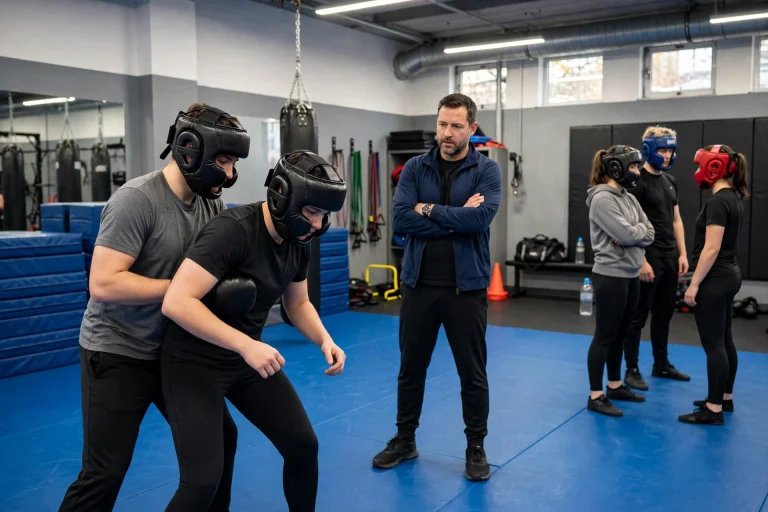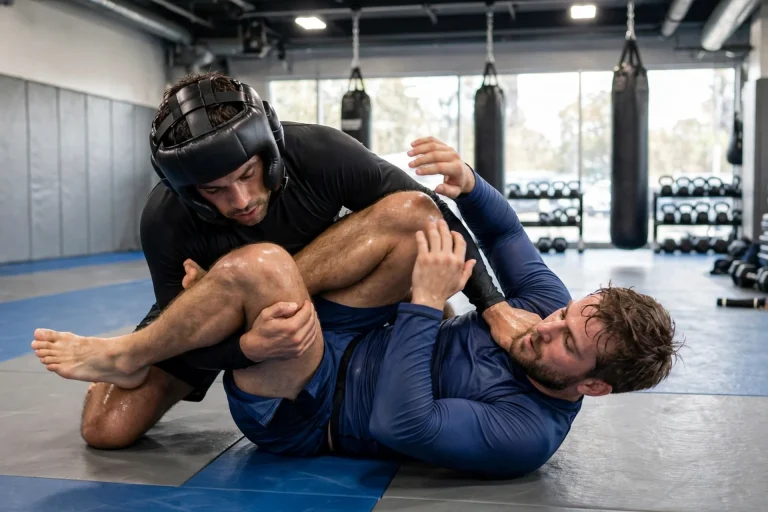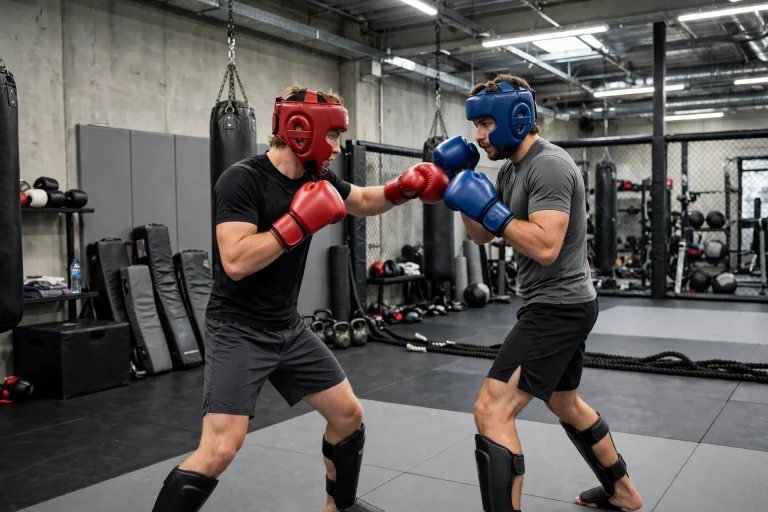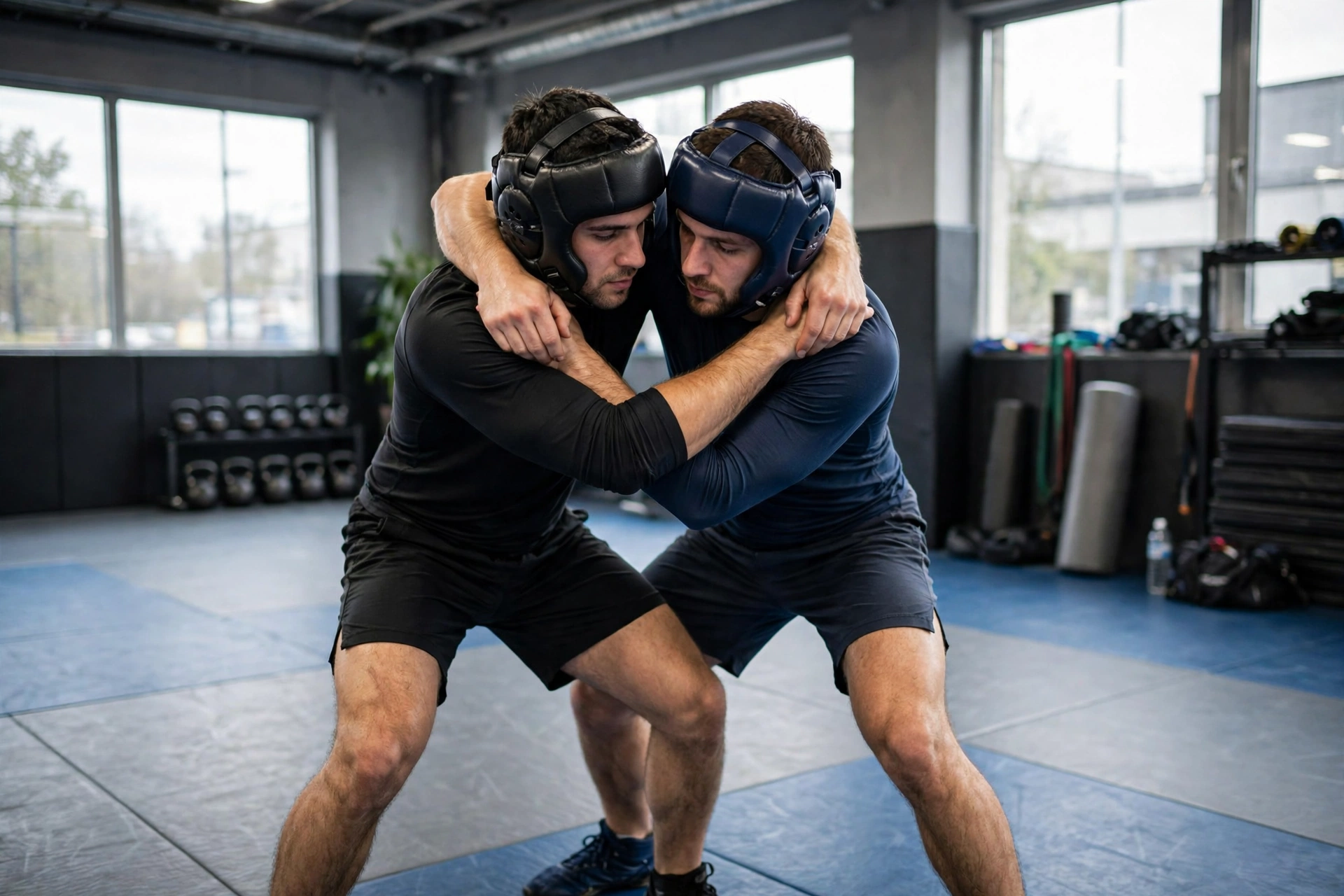
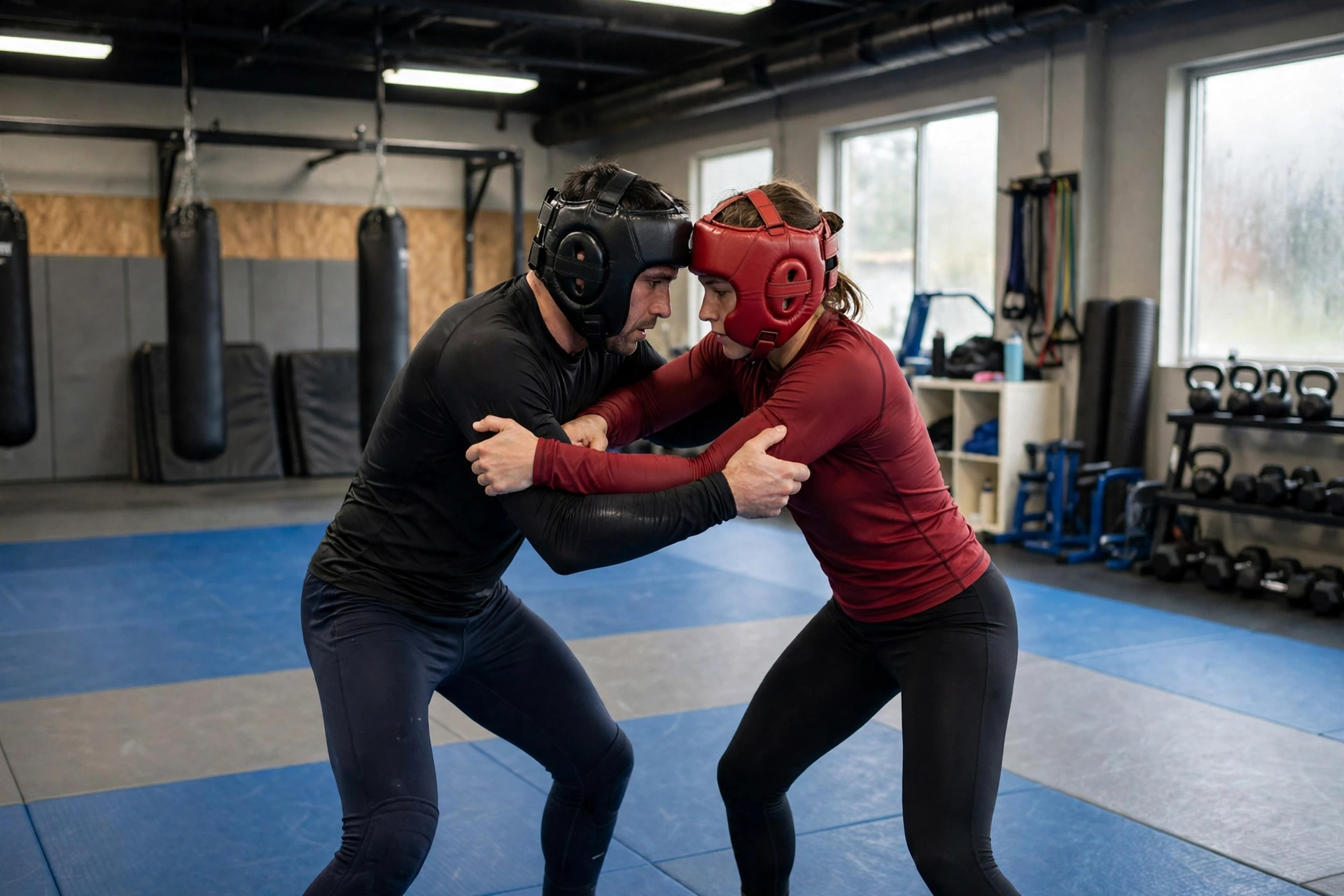
Headgear for grappling is soft, close-fitting protective headgear worn during grappling sports such as wrestling, Brazilian jiu-jitsu, and judo. It covers the ears and parts of the head with padded cups and straps, and it is designed to reduce cuts, bruises, and ear injuries during close contact on the mats. Grappling involves constant head-to-head contact, holds, and scrambles, so the ears and scalp take a lot of friction and pressure over time. Headgear does not make grappling risk-free, but in general terms it is one of the simplest ways to protect the ears and head during training, and many grapplers choose to wear it for every session.
What Is Grappling Headgear?
Grappling headgear is a lightweight piece of protective gear made from soft, padded material, usually with two ear cups joined by straps that run over the top of the head and under the chin. It is built to stay close to the skull so that it does not get in the way during rolls, holds, and escapes. Unlike a hard helmet, it is flexible and low profile, which matters in a sport where the head is often pressed against a partner or the mat.
Most grappling headgear is made from foam padding covered in a smooth, durable fabric, with adjustable straps so the fit can be tightened or loosened. Some designs use a simple three-strap layout, while others add extra straps for a more secure fit. The ear cups are the most important part: they are shaped to cover the ear fully and spread the pressure of contact, which is what helps protect the ears during training.
What Does Grappling Headgear Protect Against?
The main thing grappling headgear protects against is injury to the ears. Repeated friction and pressure on the ears during grappling can cause swelling and damage to the cartilage, a condition often called cauliflower ear. The padded ear cups of headgear reduce the rubbing and squeezing that cause this damage, and many grapplers wear headgear mainly for this reason.
Headgear also offers some protection against cuts, scrapes, and bruises to the scalp and the sides of the head. When heads clash during a scramble, or when a grappler is pressed hard into the mat, the padding can soften the blow and reduce skin damage. If you want to understand one of the safety technologies used in modern helmets, reading about what MIPS is for helmets is a good place to start, though most soft grappling headgear does not use that system.
How Should Grappling Headgear Fit?
Grappling headgear should fit snugly all round the head, with the ear cups sitting directly over the ears and the straps tightened enough that the headgear does not shift during a roll. It should feel secure without pressing painfully on the ears or the top of the head. If the ear cups sit too high or too low, they will not protect the ears properly, so it is worth adjusting the straps until each cup is centred.
A good test is to shake the head from side to side and nod up and down: the headgear should stay in place and the ear cups should not slide away from the ears. The chin strap should be snug but not so tight that it makes swallowing or breathing uncomfortable. Because heads differ in shape, it is worth trying headgear on before buying when possible, and checking the fit again after a few sessions once the padding has settled.
What Types of Grappling Headgear Are There?
The most common type of grappling headgear is the classic wrestling style, with hard or firm ear cups and a set of adjustable straps. This style has been used in wrestling for many years and is widely available. It offers firm ear protection and is a popular choice for both wrestling and Brazilian jiu-jitsu, because it stays put during hard training.
There are also softer, low-profile designs made mainly for Brazilian jiu-jitsu, with thinner padding and a closer fit that some grapplers find more comfortable under pressure. These are often chosen by people who find classic headgear bulky or who want something that interferes less with their movement. In general terms, either style can work well, and the best choice is the one that fits your head, stays in place, and feels comfortable enough to wear for a whole session.
How Do You Care for Grappling Headgear?
Grappling headgear picks up sweat quickly, so it is worth cleaning it after each session. Most headgear can be wiped down with a damp cloth and mild soap, then left to air dry away from direct heat. It is a good idea to let it dry fully before putting it away in a kit bag, because damp gear left in a closed bag can develop odours and wear out faster.
Check the straps and stitching regularly, since these take a lot of strain during training. If a strap is fraying, a buckle is cracked, or the padding inside an ear cup has gone flat, the headgear may not protect as well as it should. Keeping headgear clean and dry also helps the fabric and foam last longer, so a little care after each session goes a long way.
When Should You Replace Grappling Headgear?
Grappling headgear should be replaced when the ear cups no longer hold their shape, the padding has flattened, or the straps no longer keep it secure on the head. Once the padding is compressed, it cannot spread pressure as well, and the ears get less protection. If the headgear shifts during rolls when it used to stay put, that is a sign it is worn out.
Damage is another reason to replace it. Torn fabric, split seams, or a broken strap can all reduce how well the headgear works, and repairs are rarely as strong as the original construction. Headgear that has taken a hard knock or been used for many seasons may also be ready for retirement. In general terms, replacing worn headgear promptly is a small cost compared with the ear trouble it helps to prevent.
Do I need headgear for grappling?
It is not always required, but in general terms headgear is a sensible choice for grappling. It protects the ears from the friction and pressure that can cause lasting ear damage, and it also helps prevent cuts and bruises to the head.
Can I wear grappling headgear for Brazilian jiu-jitsu?
Yes, many BJJ practitioners wear grappling headgear during training. It is commonly allowed in training sessions, though rules can differ for competitions, so it is worth checking the rules of any event before you compete.
Does grappling headgear stop cauliflower ear?
It greatly reduces the risk by cutting down friction and pressure on the ears, but it does not remove the risk entirely. Headgear that fits well and is worn every session gives the best protection.

Olivia
Writer at Helmet Today, covering helmet reviews, fit and riding safety.