A helmet dryer is a small device that dries the inside of a helmet by blowing warm or room-temperature air through it, so the liner and padding dry fully after a sweaty or wet ride. Helmets soak up sweat and rain, and if they stay damp they start to smell, grow mould, and wear out sooner. A dryer gets air into the tight spaces inside the helmet where a towel cannot reach, and it does the job gently, without the harsh heat that can damage foam and glue. For riders who ride daily, it is a simple way to keep a helmet fresh.
How Does a Helmet Dryer Work?
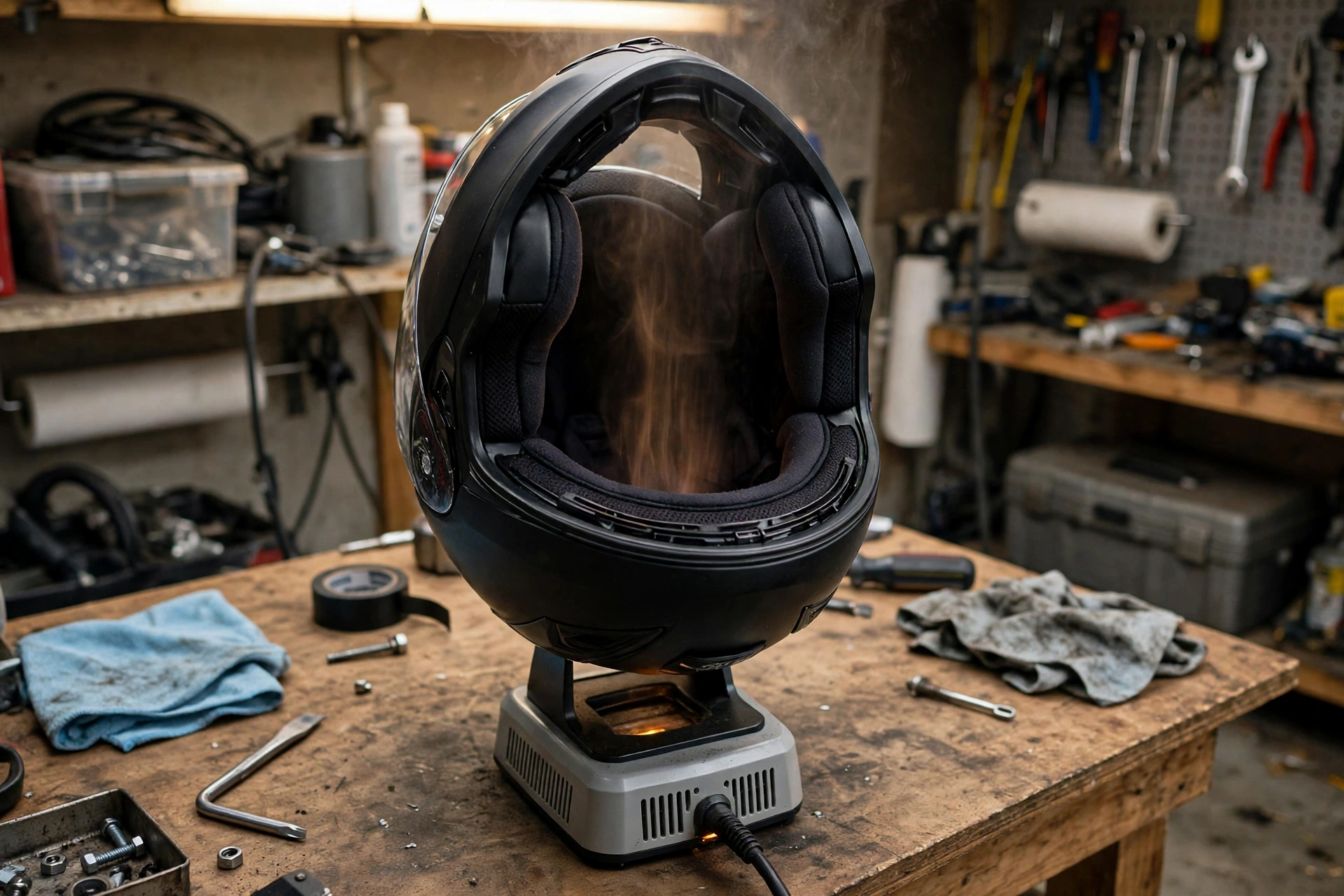
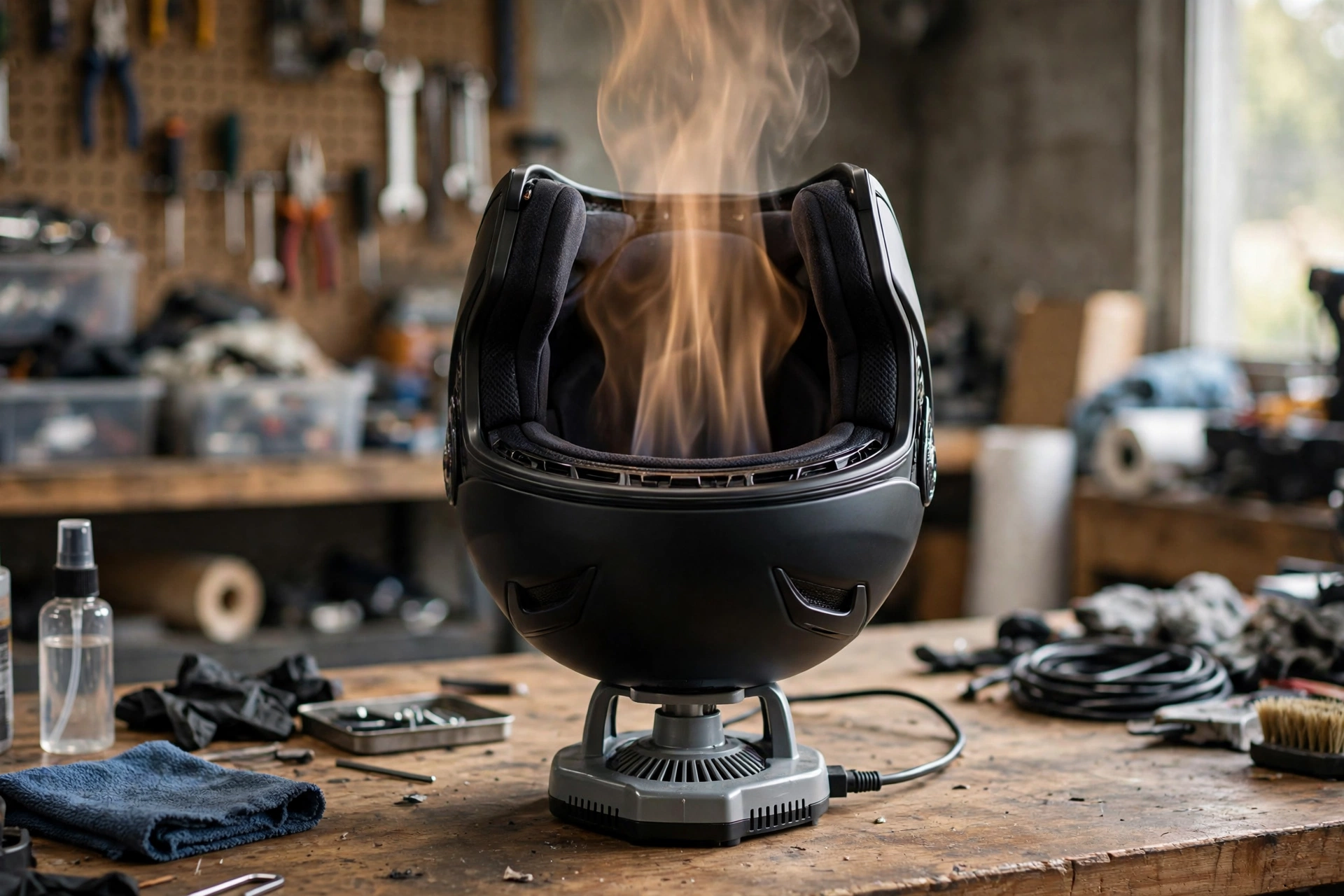
A helmet dryer works by moving air through the helmet, usually with a small fan and sometimes a gentle heater. You place the helmet upside down over the dryer, or hang it on a stand, and the air flows up into the shell, around the padding, and out through the vents. Some dryers use only room-temperature air, while others add mild warmth to speed things up. Either way, the aim is steady airflow, not strong heat.
The moving air carries moisture away from the liner and padding, drying them from the inside out. This matters because the inside of a helmet is where sweat gathers, and it is also the hardest part to dry by leaving the helmet on a shelf. In general terms, a dryer does in an hour or two what air drying might take overnight, and it reaches the deep padding that stays damp longest.
What Are the Types of Helmet Dryer?
The main types are stand dryers, portable dryers, and boot-style dryers that also work for helmets. A stand dryer is a base with one or two posts that hold the helmet upside down while a fan blows air up into it. These are sturdy, quiet, and good for home use, and some have a timer so they switch off on their own. Portable dryers are smaller, often with a folding design, and are handy for travel or for use at a track day.
Some dryers add gentle heat, while others use only cool air, and a few include a scent or ioniser feature that claims to freshen the helmet. In general terms, a simple fan dryer is enough for most riders: the key feature is steady airflow, not extra gadgets. Choose one that fits your helmet size, is stable when loaded, and is easy to clean, since dust can build up in the fan over time.
Do You Really Need a Helmet Dryer?
You do not need a helmet dryer if you ride now and then and your helmet dries fully between rides in a ventilated place. Air drying works well when you have time: leave the helmet visor open, padding side up, in a room with good airflow, and it will dry on its own. But if you ride every day, commute in all weather, or sweat a lot, a dryer makes a real difference, because the helmet may not dry fully overnight without help.
A dryer is also useful if you ride in winter or in a damp home, where air drying is slow. In general terms, the question is not whether a dryer works, but whether your helmet gets dry enough without one. If it smells, feels damp in the morning, or shows mould, it is not drying well enough, and a dryer is worth considering. For occasional riders, it is a nice extra rather than a must-have.
Can a Helmet Dryer Damage Your Helmet?
A helmet dryer should not damage your helmet if it uses gentle heat or cool air, because it is made for this job. The risk comes from too much heat: strong heat can shrink padding, weaken glue, and damage the foam liner, which is why you should never dry a helmet on a radiator, with a hair dryer on high, or in a tumble dryer. A good helmet dryer stays well below those temperatures and relies on airflow rather than heat.
Check the maker’s instructions for both the dryer and the helmet before you use one, and avoid leaving a heated dryer running far longer than needed. In general terms, a dryer that uses room-temperature air is the safest option of all, and a heated one is fine as long as the heat is mild and the time is limited. If the helmet feels hot to the touch, the dryer is too hot.
How Do You Use a Helmet Dryer Properly?
To use a helmet dryer properly, first wipe out any standing water or heavy sweat with a clean cloth, then place the helmet on the dryer as the maker directs, usually upside down so the air flows into the shell. Switch it on and let it run until the inside feels dry to the touch, which may take an hour or two depending on how wet the helmet is. Do not put the helmet away until it is fully dry.
Clean the dryer now and then, wiping dust from the fan and the stand, so it keeps working well. In general terms, a dryer works best as part of a routine: air the helmet after every ride, dry it properly when it is wet, and store it somewhere ventilated. To understand more about how modern helmets protect your head, it helps to read about what MIPS is for helmets. A dry helmet lasts longer, smells better, and feels more comfortable on your next ride.
What Are the Alternatives to a Helmet Dryer?
The simplest alternative is air drying: leave the helmet in a ventilated room, visor open, with a small fan nearby to move air through it. Stuffing the inside loosely with clean, dry newspaper or a towel can help soak up moisture, but change it once it gets damp. Some riders use a small room fan or a boot dryer on a cool setting, which works in much the same way as a helmet dryer.
What matters is airflow and time: the inside needs moving air and enough hours to dry fully. In general terms, a dryer is a convenience, not a necessity, and the same result can be reached with patience and a well-ventilated room. But if you ride daily and need the helmet ready by morning, a dryer is the quickest and most reliable way to get there.
What is a helmet dryer?
A helmet dryer is a small device that blows warm or room-temperature air through a helmet to dry the liner and padding after a sweaty or wet ride.
Do I need a helmet dryer?
Not always. If your helmet dries fully between rides, air drying is enough, but a dryer helps if you ride daily, sweat a lot, or live somewhere damp.
Can a helmet dryer damage my helmet?
No, in general terms, a dryer made for helmets uses gentle heat or cool air and should not damage it, but strong heat from a radiator or hair dryer can harm the foam and padding.

Olivia
Writer at Helmet Today, covering helmet reviews, fit and riding safety.