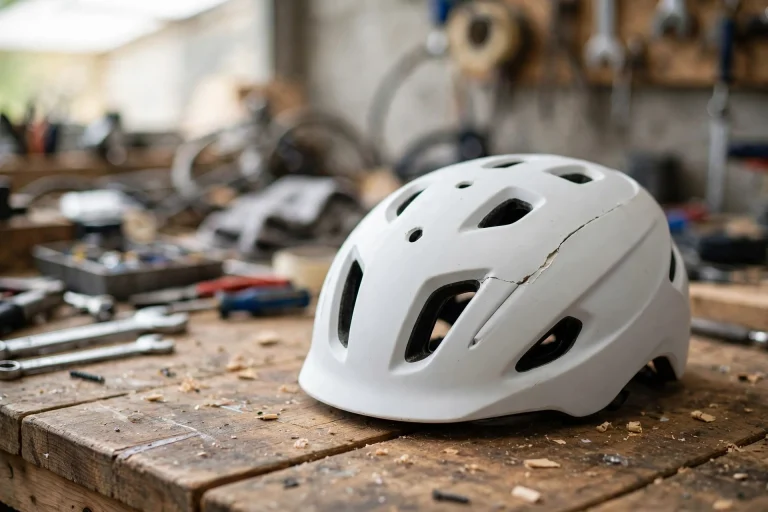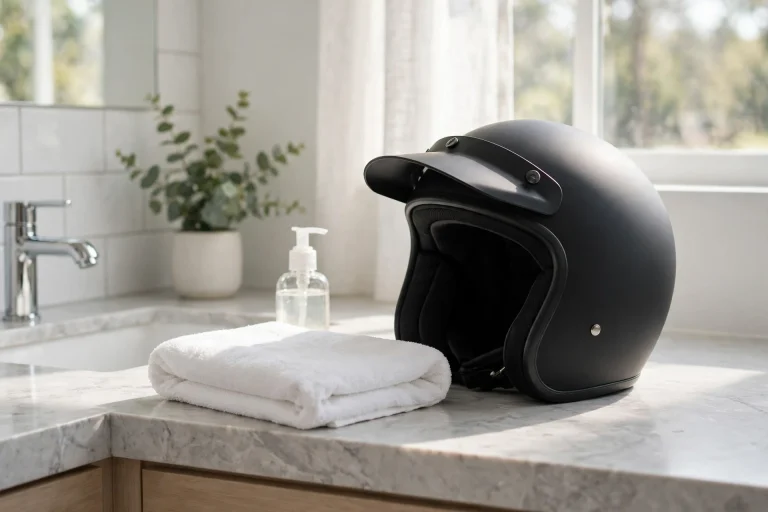
Helmets do not directly cause acne in general terms, but wearing a helmet can contribute to spots on the forehead and hairline by trapping sweat, oil, and dirt against the skin. The helmet itself is not the cause, but the warm, damp conditions it creates can make breakouts more likely, especially if the helmet is dirty, the pads are worn, or the skin is not cleaned after a ride. The good news is that a few simple habits, such as keeping the helmet clean and washing your face after wearing it, can reduce the problem a lot. If spots are severe or do not clear up, a clinician can give advice for your skin.
Can a helmet cause spots on your forehead?
A helmet can contribute to spots on the forehead, but it does not cause acne on its own. Acne happens when pores in the skin become blocked with oil and dead skin, and bacteria grow in the blocked pore. A helmet can make that more likely by pressing against the forehead, trapping sweat and oil, and rubbing against the skin. The pressure and friction can irritate the skin, and the warm, damp air inside the helmet gives bacteria a good place to grow. This kind of breakout is sometimes called acne mechanica, which means acne caused by pressure, friction, and heat against the skin.
The spots usually appear where the helmet touches the skin: across the forehead, at the hairline, and sometimes on the temples. They may be small red bumps, whiteheads, or larger sore spots. They tend to be worse in hot weather, after long rides, or when the helmet is worn for many hours without a break. They also tend to be worse if the helmet is dirty, because the pads can hold sweat, oil, and dirt from previous rides and press them against the skin again.
Why does skin break out under a helmet?
Skin breaks out under a helmet because the helmet creates a warm, damp, and enclosed space. When you ride, you sweat, and the sweat collects on your forehead and under the helmet pads. The helmet traps that sweat against the skin, along with the oil your skin naturally produces. The pads press against the skin, and the friction from the helmet moving slightly as you ride can irritate the skin further. Together, heat, sweat, oil, and friction can block pores and lead to spots.
The pads inside the helmet play a large part in this. Over time, the pads absorb sweat and oil, and they can become a home for bacteria if they are not cleaned. A pad that has been used for months without washing will hold dirt from every ride, and each time you put the helmet on, that dirt is pressed against your skin again. The straps can also cause problems, because they run across the cheeks and chin and can trap sweat there too. A helmet that fits very tightly can make the problem worse, because it presses harder and traps more heat.
Does helmet fit affect your skin?
Helmet fit does affect your skin, because a helmet that is too tight presses harder and traps more heat, while a helmet that is too loose moves around and rubs. A helmet that fits well should sit level on your head, snug all the way around, without pressing hard in one spot. It should not leave deep red marks on your forehead when you take it off, and it should not slide forward over your eyes. If it does either of those things, the fit needs adjusting.
A tight helmet can cause a line of spots where the edge of the helmet presses against the forehead. The pressure can irritate the skin and block pores, and the lack of airflow can make the skin sweat more. A loose helmet, on the other hand, can rub against the skin as it moves, and that friction can also cause irritation. The best fit is snug but not tight, with the helmet staying in place without pressing hard. Adjust the dial and the straps so that the helmet feels secure without squeezing. A helmet with MIPS may feel slightly different on the head, but it should still fit snugly without pressing harder on your forehead.
How can you keep your helmet and skin clean?
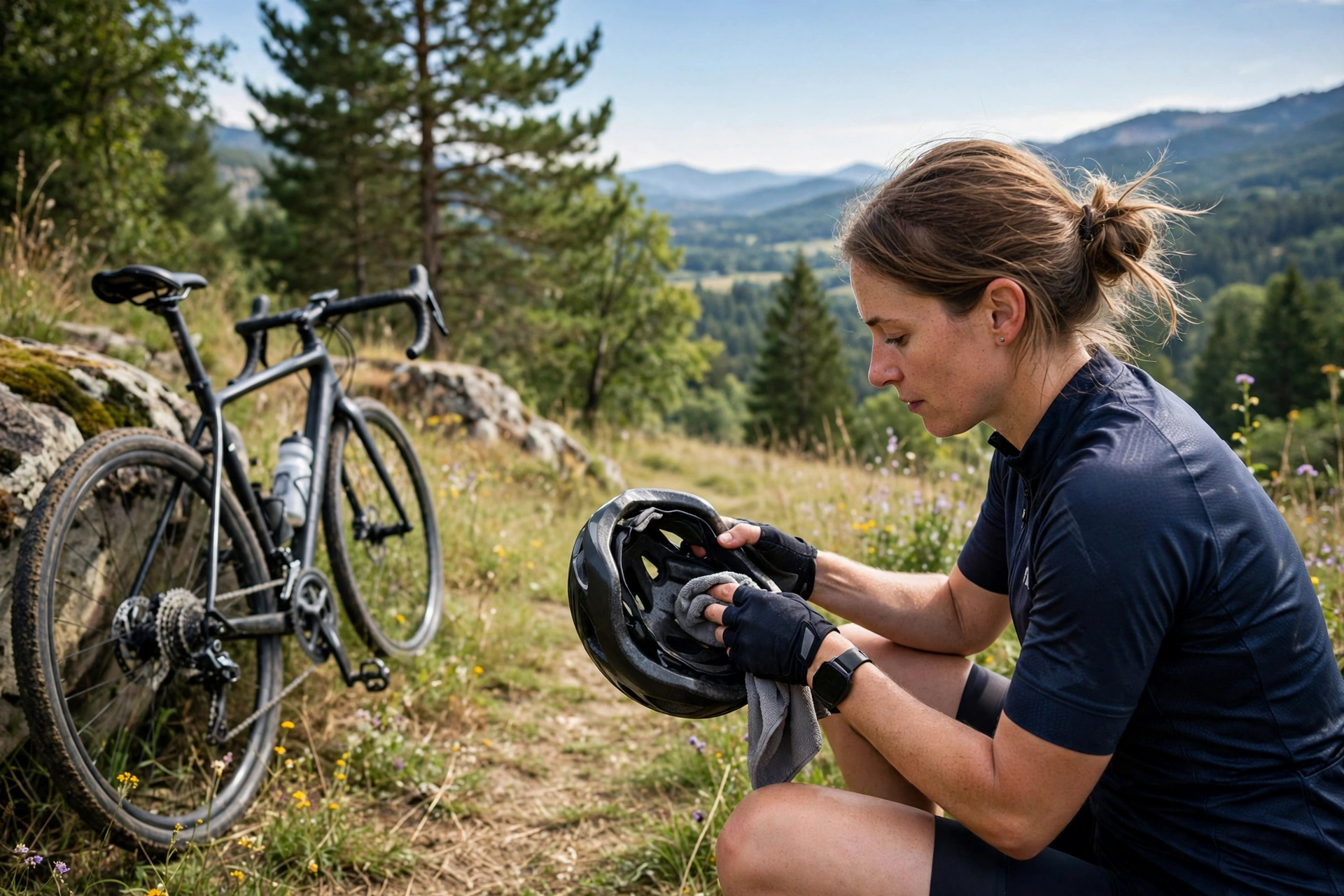
Keeping your helmet clean is the simplest way to reduce spots. Remove the pads regularly and wash them in warm water with a mild soap, then let them dry fully before you put them back. Wipe the inside of the shell with a damp cloth, and clean the straps with soapy water. Do not use harsh chemicals or solvents, because they can damage the foam and the shell. Let the helmet dry in a well-ventilated place, away from direct heat, and do not store it in a damp bag.
Keeping your skin clean matters too. Wash your face with a gentle cleanser after a ride, and rinse away sweat and dirt before it dries on your skin. Do not scrub hard, because that can irritate the skin and make spots worse. Pat your face dry with a clean towel, and avoid touching your forehead with dirty hands after a ride. If you wear a skull cap or a headband under your helmet, wash it regularly too, because it collects sweat just like the helmet pads do.
What habits help if you wear a helmet every day?
If you wear a helmet every day, a few small habits can help your skin stay clear. First, give your skin a break when you can. Take the helmet off as soon as you finish riding, rather than wearing it while you stand around chatting or waiting. Let your skin breathe and dry out, and wipe your forehead with a clean cloth if you are sweaty. The longer the helmet stays on, the more sweat and oil build up against the skin.
Second, keep a spare set of pads or a clean skull cap, so that you can swap them when one set is dirty. A skull cap worn under the helmet absorbs sweat and keeps it off the pads, and it can be washed easily after each ride. This is a simple way to keep the helmet cleaner for longer, and it also protects the pads from wear. Change the cap every day if you ride daily, and wash it with your normal laundry.
When should you see a clinician about skin problems?
You should see a clinician if spots are severe, painful, or do not clear up with basic hygiene. This is general guidance only, not medical advice, and a clinician can look at your skin, ask about your routine, and suggest a treatment that suits you. Signs that it is time to seek advice include large, painful spots, spots that leave scars, spots that spread to other parts of the face or body, or spots that do not improve after several weeks of keeping the helmet and skin clean.
Does wearing a helmet cause acne?
No, in general terms, a helmet does not directly cause acne, but it can contribute to breakouts by trapping sweat, oil, and dirt against the skin. Keeping the helmet clean and washing your face after riding can help.
How often should I clean my helmet pads?
Remove and wash the pads every week or two if you ride regularly, and more often in hot weather. Let them dry fully before you put them back in the helmet.
When should I see a doctor about spots from my helmet?
See a clinician if spots are severe, painful, scarring, or do not clear up after several weeks of good hygiene. This article is general guidance only, not medical advice.

Olivia
Writer at Helmet Today, covering helmet reviews, fit and riding safety.