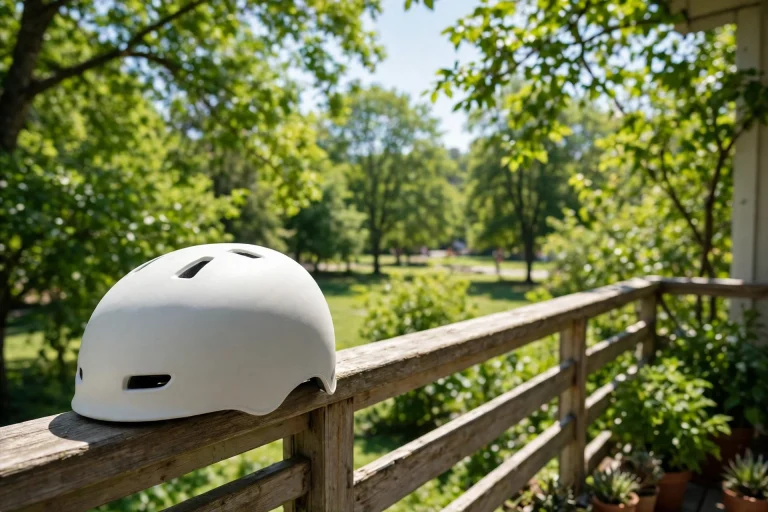
To remove odour from a helmet, wash the removable liner, wipe the shell and straps, and let the helmet air-dry fully, because most helmet smells come from trapped sweat and damp. A smelly helmet is a common problem, especially in summer or after a multi-day ride, and it is usually easy to fix. The smell is not in the shell itself: it lives in the liner, the pads, and the straps, where sweat has soaked in and never properly dried.
Helmet odour builds up slowly. Each ride adds a little more sweat, and if the helmet is put away damp, the moisture stays in the foam and bacteria grow, which is what makes the smell. Sunscreen, hair products, and skin oils add to the mix. The result is a helmet that smells stale as soon as you pick it up, and worse once it warms up on your head. A proper clean, followed by good drying, will usually solve it.
Why do helmets start to smell?
The main cause is sweat. When you ride, you sweat into the liner and the pads, and the foam absorbs that moisture. If the helmet dries out fully between rides, the smell stays mild. But if the helmet is worn every day, or stored damp, the sweat never fully dries, and bacteria grow in the warm, moist foam. Those bacteria are what produce the smell.
Heat makes it worse. In summer, you sweat more, and a helmet left in a warm car or a hot room will smell stronger. Damp storage is another cause: a helmet put away wet in a bag or a closed locker has no airflow, so the moisture and the smell stay trapped inside.
Old liners smell more than new ones. Foam breaks down over time, and a liner that has been washed many times or used for years can hold a smell even after washing. If a helmet is several years old and the smell will not go away, the liner may simply be worn out.
How do you wash the liner?
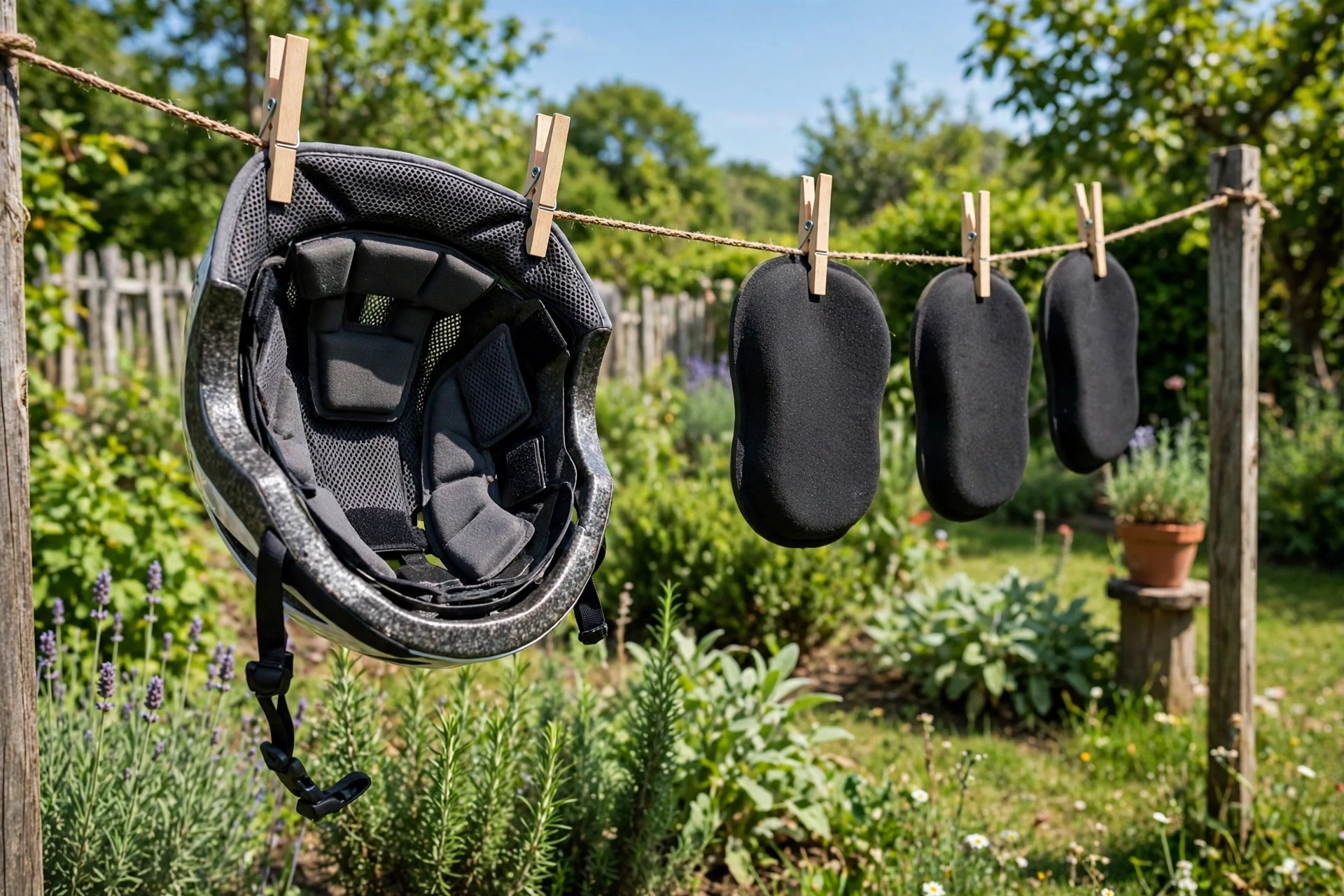
Remove the liner and pads if they come out, and wash them by hand in lukewarm water with a mild soap or a gentle detergent. Squeeze the foam gently so the soapy water works through it, and let the pieces soak for twenty or thirty minutes if the smell is strong. Do not twist or wring the foam hard, because that can tear it.
Rinse the liner and pads in clean lukewarm water until the water runs clear and no soap remains. Soap left in the foam can irritate your skin, so rinse well. Press the water out gently with a towel, and then leave the pieces to air-dry.
Check your helmet manual first, because some liners can be machine-washed on a gentle cycle while others must be hand-washed. Hand-washing is the safest method for most liners. If the smell stays after a full wash and dry, wash the liner a second time, or consider a replacement liner.
How do you clean the straps and shell?
The straps hold sweat too, and they are often the part people forget. Wipe the straps along their full length with a damp cloth and mild soap, and rinse the buckles with clean water. Work the buckles open and closed a few times to clear out dried sweat and grime.
Wipe the inside of the shell with a damp cloth and mild soap, paying attention to the area around the liner mounts, where sweat collects. Wipe the outside of the shell as well, because sunscreen and skin oils can leave a film on it. Let the shell dry with the vents open.
If your helmet has a MIPS slip liner, wipe it gently with a damp cloth and let it dry before you put the comfort liner back in. Smells can hide on any surface inside the helmet, so a thorough wipe of every part is worth the effort.
What can you do between washes?
Between full washes, a few small habits help. After each ride, leave the helmet out in a ventilated spot with the vents open so it can dry. Wipe the inside with a clean, dry cloth to remove some of the moisture before it soaks in.
Air the helmet outside on a dry day if you can. Fresh air and a light breeze help a lot, and a short spell in daylight can freshen the liner, although you should not leave the helmet in strong direct sunlight for a long time. A helmet that dries out between rides smells much better than one that is always damp.
Some riders use a helmet deodoriser spray between washes. In general terms, a spray made for helmets or sports gear can help, but it is not a substitute for washing. Avoid strong air fresheners and perfumes, because they can irritate your skin and only cover the smell for a short time.
How do you dry a helmet so the smell does not return?
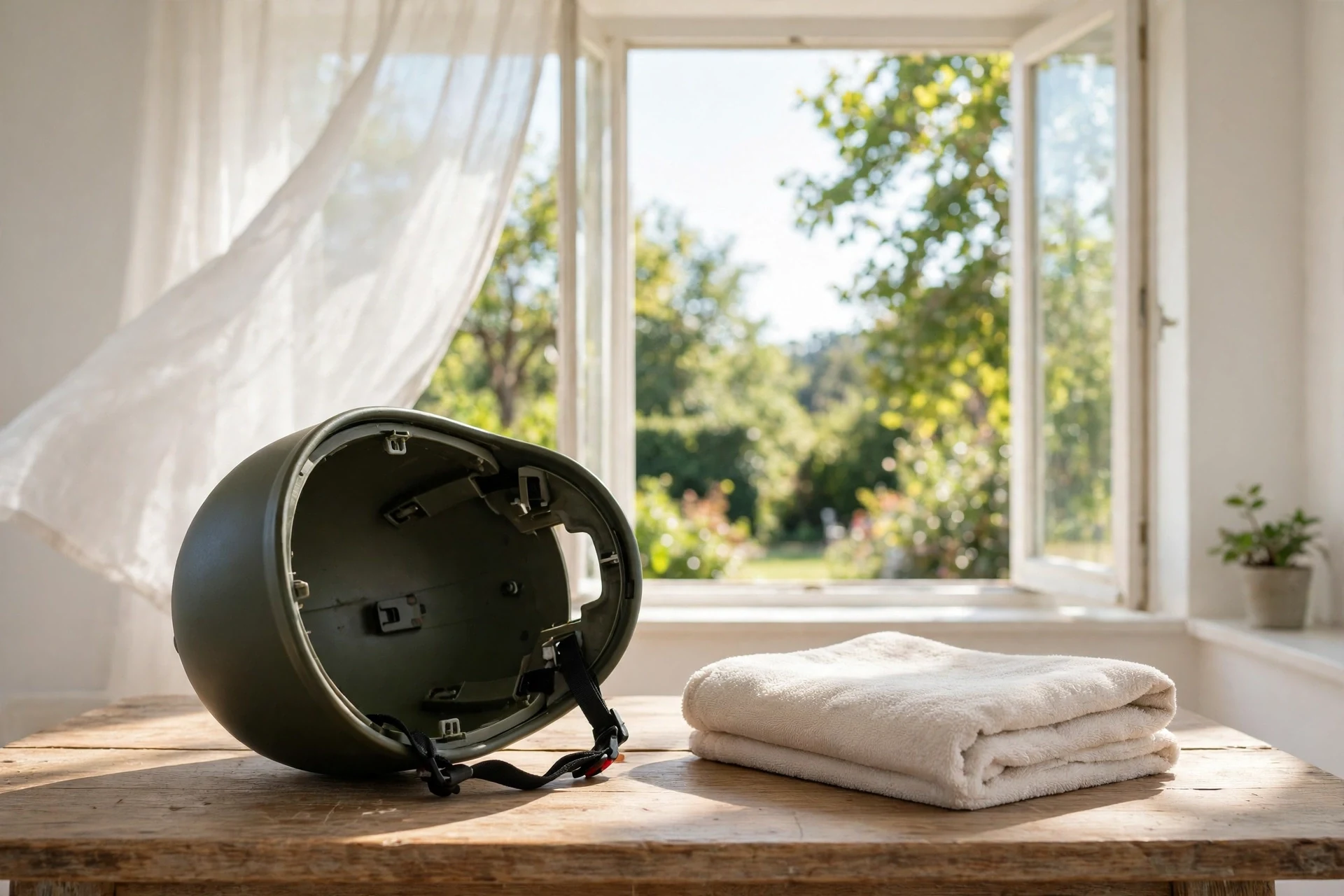
Drying is the key step. A helmet that is put away damp will smell again within days, even after a good wash. Leave the helmet in a ventilated room with the vents open, and keep the liner out of the shell until both are fully dry. Turn the liner over once or twice as it dries.
Do not rush drying with heat. Radiators, heaters, and hair dryers on a hot setting can warp the foam and weaken the shell. Room-temperature air is slower but safe, and a gentle airflow from a fan on a low setting can help.
A helmet usually takes a full day to dry after a wash, and the liner can take longer. Plan your cleaning for a day when you do not need the helmet, and do not wear it again until it feels completely dry. A dry helmet is a fresh helmet.
When is a smell a sign to replace parts?
If the smell stays after two thorough washes and a full dry, the liner may be worn out. Foam breaks down with age and use, and old foam can hold a smell that no amount of washing will remove. A replacement liner is often available from the helmet maker, and it is cheaper than a new helmet.
Check the rest of the helmet too. If the straps smell even after cleaning, or if the inside of the shell is stained or damaged, those parts may need replacing as well. If the helmet is several years old, or if it has been in a crash, a new helmet may be the better choice.
Use the smell as a reminder to check the age of your helmet. Most makers suggest replacing a helmet after a few years of regular use, even if it looks fine. A fresh liner in an old helmet is a good fix, but it does not make the shell new again.
Can I spray air freshener inside my helmet?
It is best not to. Strong air fresheners can irritate your skin and only cover the smell briefly. Wash the liner and let the helmet dry fully instead, and use a spray made for sports gear if you need one.
How often should I wash my helmet liner to stop smells?
In general terms, wash the liner every few weeks if you ride regularly, and more often in hot weather or after sweaty rides. Air the helmet out after every ride to slow the build-up.
Will a smelly helmet make me ill?
A smelly helmet is usually just unpleasant, but a dirty, damp liner can irritate the skin and scalp. If irritation persists, or if you have breathing problems after wearing the helmet, see a clinician.

Olivia
Writer at Helmet Today, covering helmet reviews, fit and riding safety.