A motorcycle helmet for riding on icy roads is a full-face helmet that keeps you warm, keeps your visor clear, and protects your head on slippery surfaces, and in general terms it is about winter preparation rather than a special kind of helmet. There is no helmet made only for ice, but cold weather riding brings problems that a summer helmet does not handle well, and the right setup can make a winter ride much safer and more comfortable.
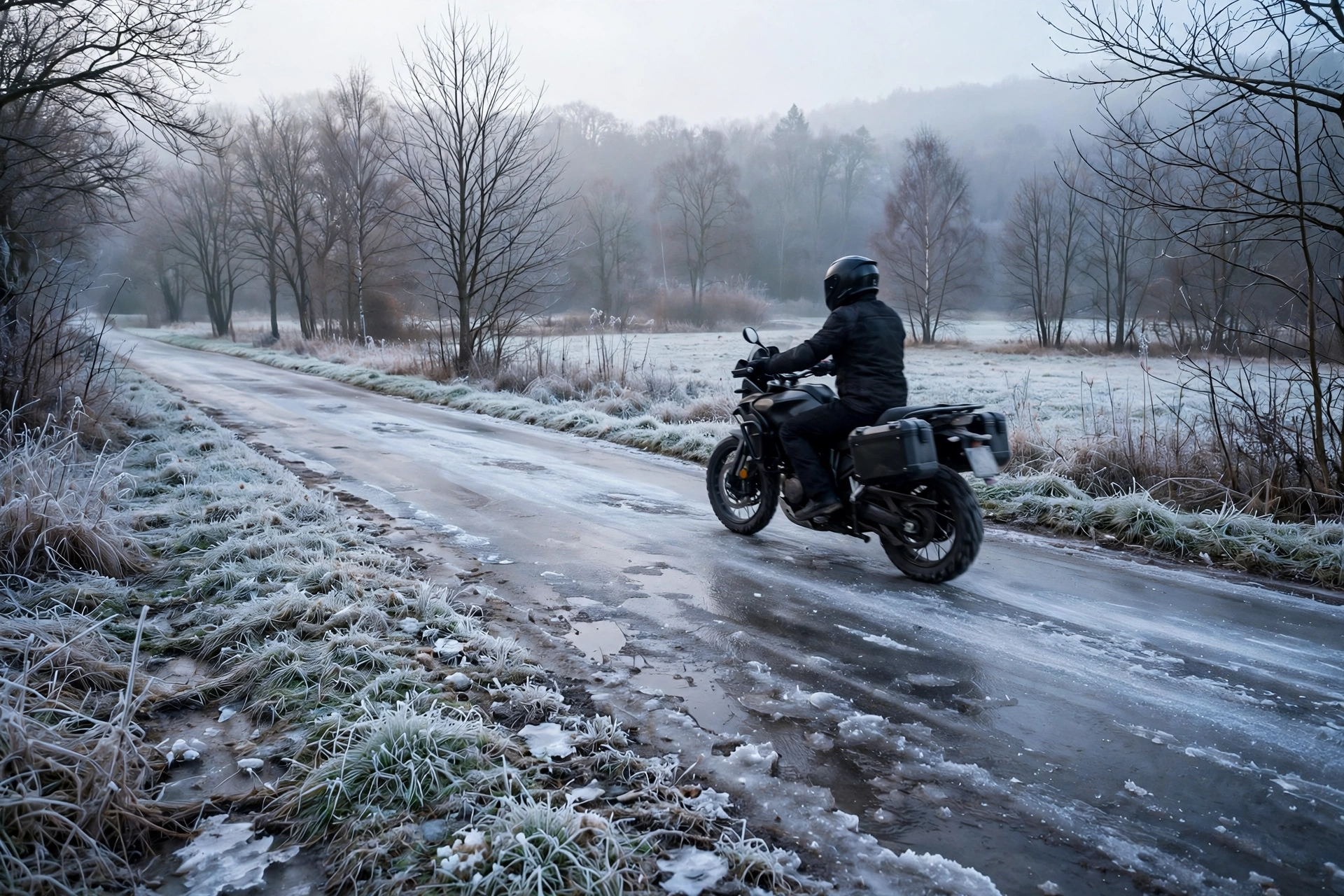
Icy roads reduce grip, increase stopping distances, and make even a slow slide more likely, so a fall is a real risk even for a careful rider. A helmet will not stop you from slipping, but it can reduce the force of a knock to the head if you do come off, and in freezing weather it also shields your face from the wind, the cold, and the spray thrown up by other traffic.
Why is riding on icy roads different for a helmet?
Riding on icy roads is different for a helmet because the cold changes both the rider and the helmet. Your body loses heat quickly at speed, and a cold rider is a slower, stiffer rider, with slower reactions and less feel for the bike. A helmet that lets in a draught around the neck or chin can leave you shivering within minutes, which makes it harder to concentrate on the road.
Cold air also fogs a visor from the inside, because your warm breath meets the cold plastic and condenses on it. In general terms, a fogged visor is one of the biggest hazards of winter riding, because you cannot see a patch of ice, a pothole, or a car pulling out if your view is misted over. The helmet has to deal with fog and cold at the same time, which is why winter riding needs a little more thought than a summer ride.
What type of helmet is best for icy roads?
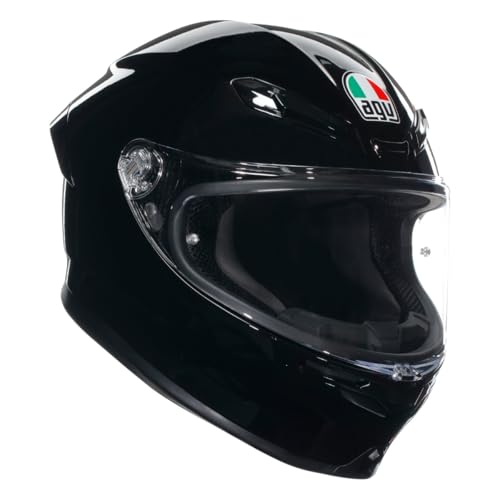
In general terms, a full-face helmet is the best choice for riding on icy roads, because it covers your whole head and face, blocks the wind, and keeps the cold off your chin and cheeks. An open-face helmet leaves your face exposed to freezing air and to spray, and a half helmet leaves even more of your head uncovered, so neither is a good choice when the temperature is near or below freezing.
A full-face helmet also gives more protection if you do slide, because your chin and jaw are covered. Look for one with a good seal around the visor and the chin area, and a chin curtain or neck roll that cuts down the draught. Some riders add a balaclava or a neck tube underneath for extra warmth, and that works well as long as it does not push the helmet out of position or make the fit too tight.
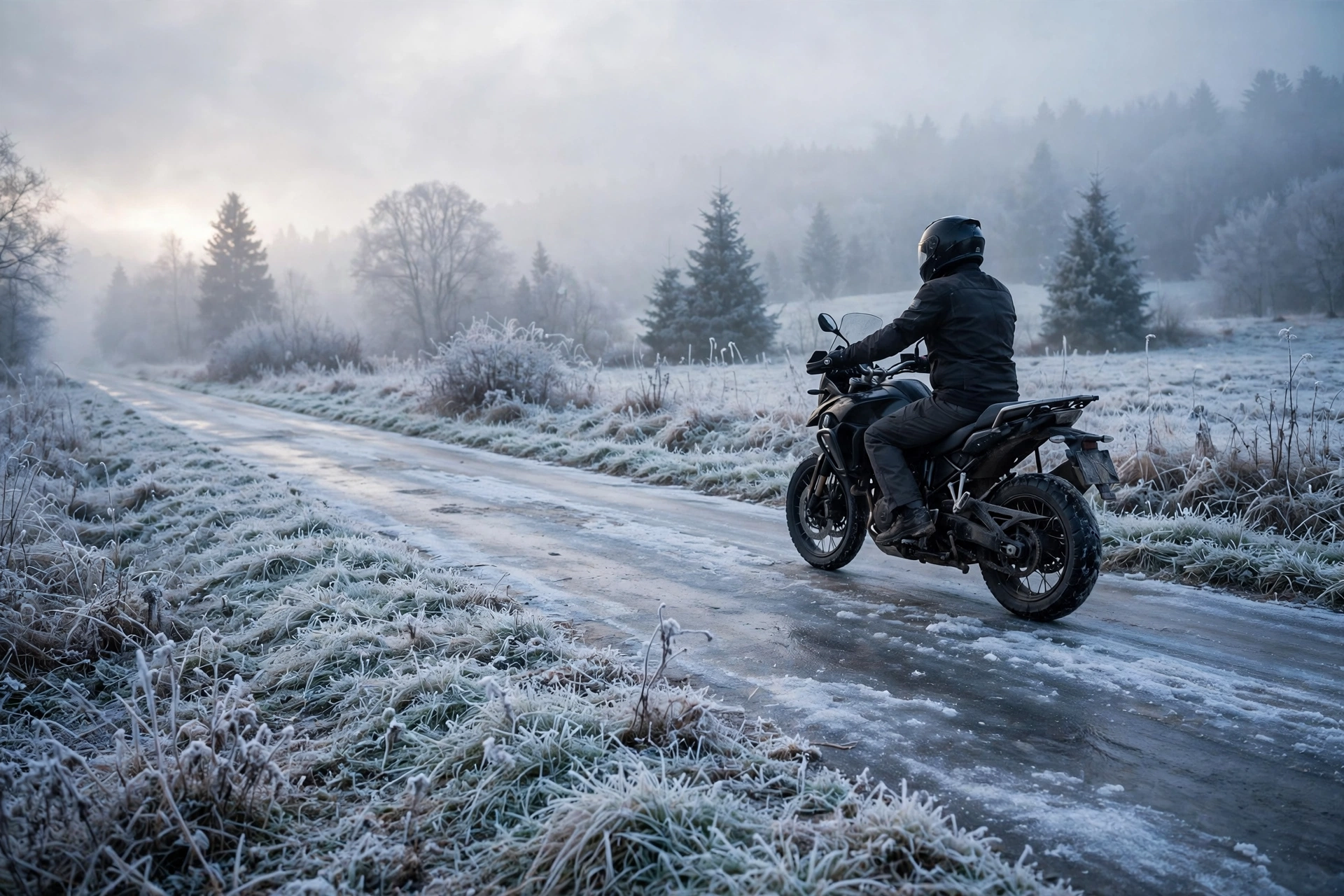
How do you stop a helmet visor fogging on icy roads?
A visor fogs when warm, moist breath hits cold plastic, so the usual answer is a double-layer insert that fits inside the visor and keeps its inner surface closer to the temperature of your breath. These inserts are widely sold for full-face helmets, they fit most major brands, and in general terms they are the single most useful winter accessory you can buy for a helmet.
You can also help by keeping the visor vents open a crack, which lets a little fresh air in and carries the moisture away, and by breathing through your nose rather than your mouth where you can. Anti-fog sprays and wipes exist too, but they tend to need reapplying and they do not work as well as an insert in deep cold. Whatever you use, test it on a short ride before a long one, because a visor that fogs at speed on a dark road is a serious problem.
What should you wear with a helmet in icy conditions?
With a helmet in icy conditions, wear a thin balaclava or a neck tube that seals the gap between the helmet and your jacket, because that gap is where most of the cold gets in. The balaclava should be thin enough not to change the fit of the helmet, and it should not cover your mouth so thickly that your breath is forced straight up onto the visor.
Warm gloves, a windproof jacket, and layers underneath matter too, because a warm body keeps a clear head. Some helmets include a system designed to reduce rotational forces in a fall, such as MIPS, which is worth asking about when you choose, but no helmet feature replaces warm clothing and a sensible speed on ice. In general terms, if you are too cold to feel your hands properly, it is time to stop and warm up.
How should you ride differently on icy roads?
On icy roads you should ride more slowly, brake gently and early, and keep the bike as upright as you can, because sudden braking or leaning can break what little grip you have. Leave a much bigger gap to the vehicle in front, use the rear brake gently rather than grabbing the front brake, and avoid painted lines, manhole covers, and shaded patches, which freeze first and thaw last.
Look well ahead and plan your stops early, because a bike takes far longer to stop on ice than on a dry road. If you do feel the bike start to slide, in general terms the best thing is to stay calm, ease off the throttle gently, and avoid sudden steering or braking. Some riders choose not to ride at all when ice is forecast, and that is a sensible choice too, because no helmet makes an icy road safe.
How do you look after a helmet used in winter?
After a winter ride, wipe the outside of the helmet clean and let it dry naturally at room temperature, away from direct heat such as a radiator. Road salt and grit can mark the shell and the visor, so a gentle wipe with a soft cloth and clean water is worth doing before the salt dries on.
Take the lining out if it is removable and wash it following the maker’s instructions, because sweat and damp build up quickly in winter. Check the visor and its insert for scratches, check the chin strap and buckle for wear, and store the helmet somewhere dry. In general terms, a helmet that has taken a hard knock in a fall should be replaced, even if it looks fine on the outside, because the inner lining may have been compressed.
What helmet is best for riding on icy roads?
In general terms, a full-face helmet is best for icy roads, because it covers your face, blocks the wind, and protects your chin and jaw if you slide.
How do I stop my visor fogging in cold weather?
Fit a double-layer anti-fog insert inside the visor, keep a vent open a crack, and breathe through your nose where you can, so moist breath does not condense on the cold visor.
Should I ride a motorcycle on icy roads at all?
It is safer not to ride when ice is forecast. If you do ride, go slowly, brake gently and early, leave a big gap, and avoid shaded patches and painted lines where ice forms first.

Olivia
Writer at Helmet Today, covering helmet reviews, fit and riding safety.