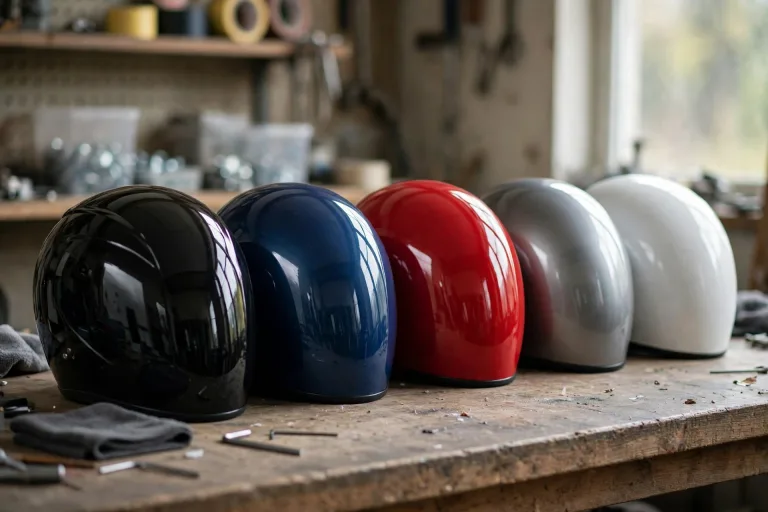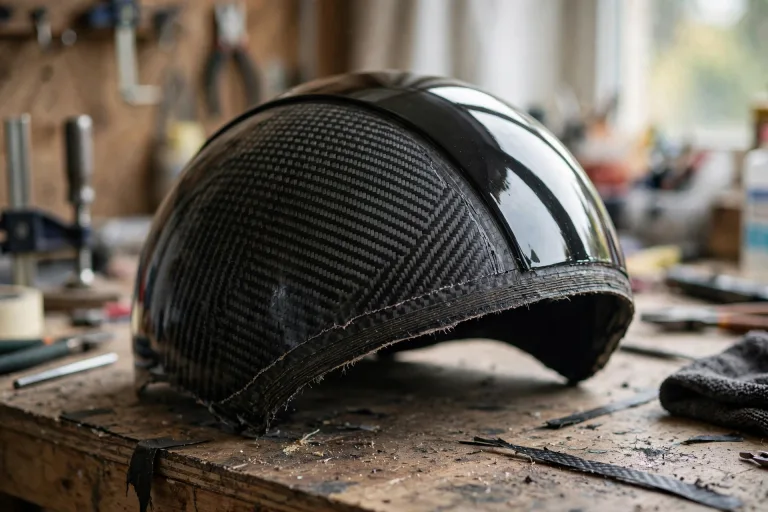
A recycled plastic helmet shell is a helmet outer shell made partly or wholly from plastic that has been recovered and reprocessed, and in general terms it is designed to offer the same protection as a shell made from new plastic. As more brands look for ways to cut waste, recycled plastics are appearing in helmets for cycling, skating, and other sports, so it is worth knowing what the material is and how it is used.
The idea is simple: plastic that would otherwise be thrown away is collected, cleaned, melted down, and shaped into a new product. For a helmet shell, that means the tough outer layer that takes the first impact in a fall. The question most buyers ask is whether a recycled shell is as strong and as safe as one made from new material, and the answer depends on how the plastic is processed and tested.
What is a recycled plastic helmet shell?
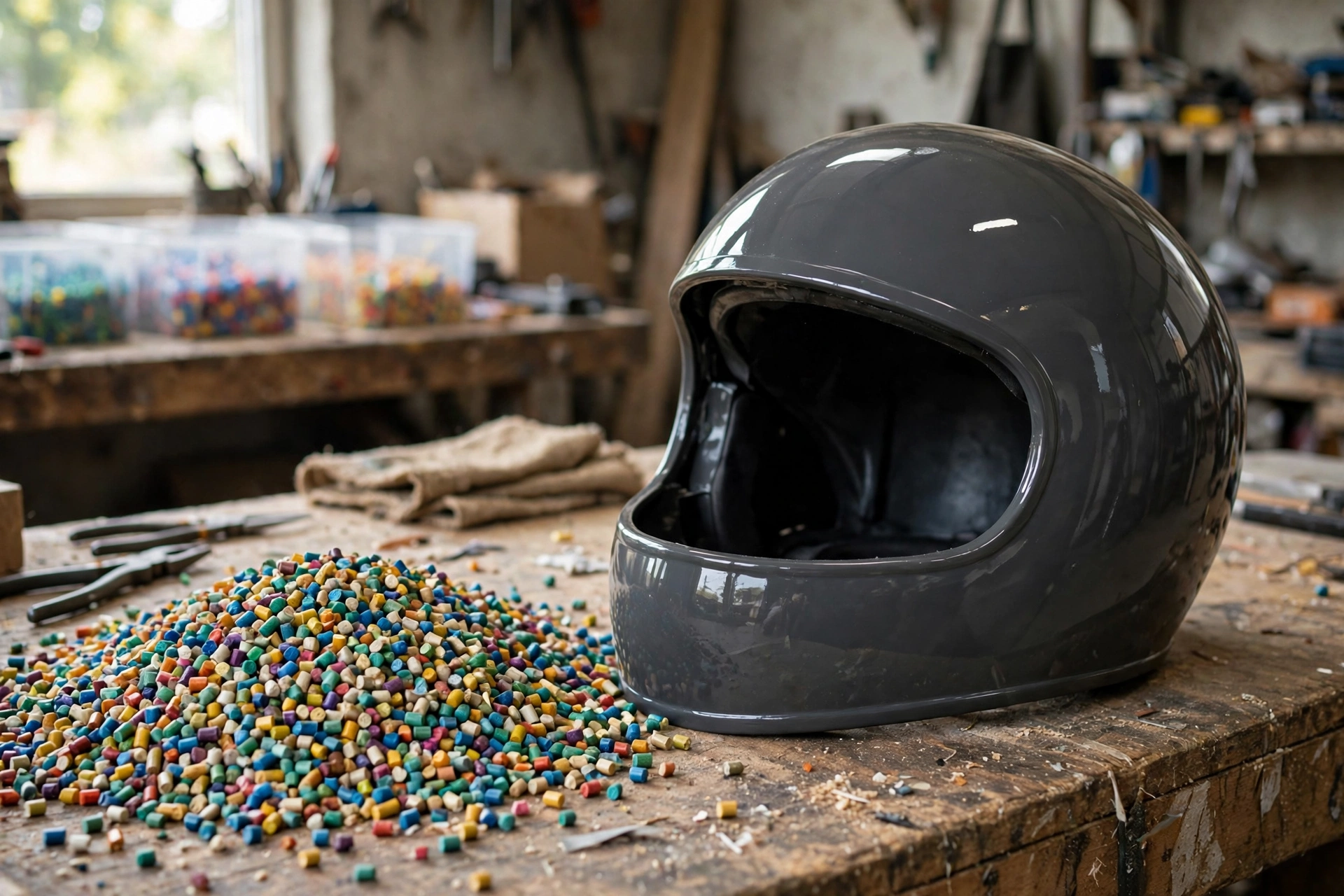
A recycled plastic helmet shell is the hard outer layer of a helmet that is made from reprocessed plastic rather than virgin plastic. The plastic usually comes from used consumer products or industrial waste, and it is sorted, washed, and melted into pellets before being moulded into the shell shape. The most common recycled plastics used in helmet shells are types that are already used for new shells, such as polycarbonate and ABS.
The shell is only one part of the helmet. Inside it sits a liner, usually made from expanded foam, which absorbs energy in a fall, along with straps, padding, and a retention system. A recycled shell does not change how the liner works, and the helmet still has to pass the same safety tests as any other helmet before it can be sold.
How is recycled plastic made into a helmet shell?
The process starts with collecting used plastic and sorting it by type, because different plastics cannot be mixed together. The sorted plastic is cleaned to remove labels, dirt, and other material, then shredded and melted into small pellets. Those pellets are the raw material for the helmet shell, and they are moulded in the same way as pellets made from new plastic.
Quality control matters at every step. The recycled plastic is tested for strength, consistency, and purity before it is moulded, because a shell made from mixed or dirty plastic could be weaker than it should be. Reputable brands test the finished helmet to the same safety standards as their other models, and the recycled content is usually stated on the packaging or in the product description.
Is a recycled plastic helmet shell as safe as a new one?
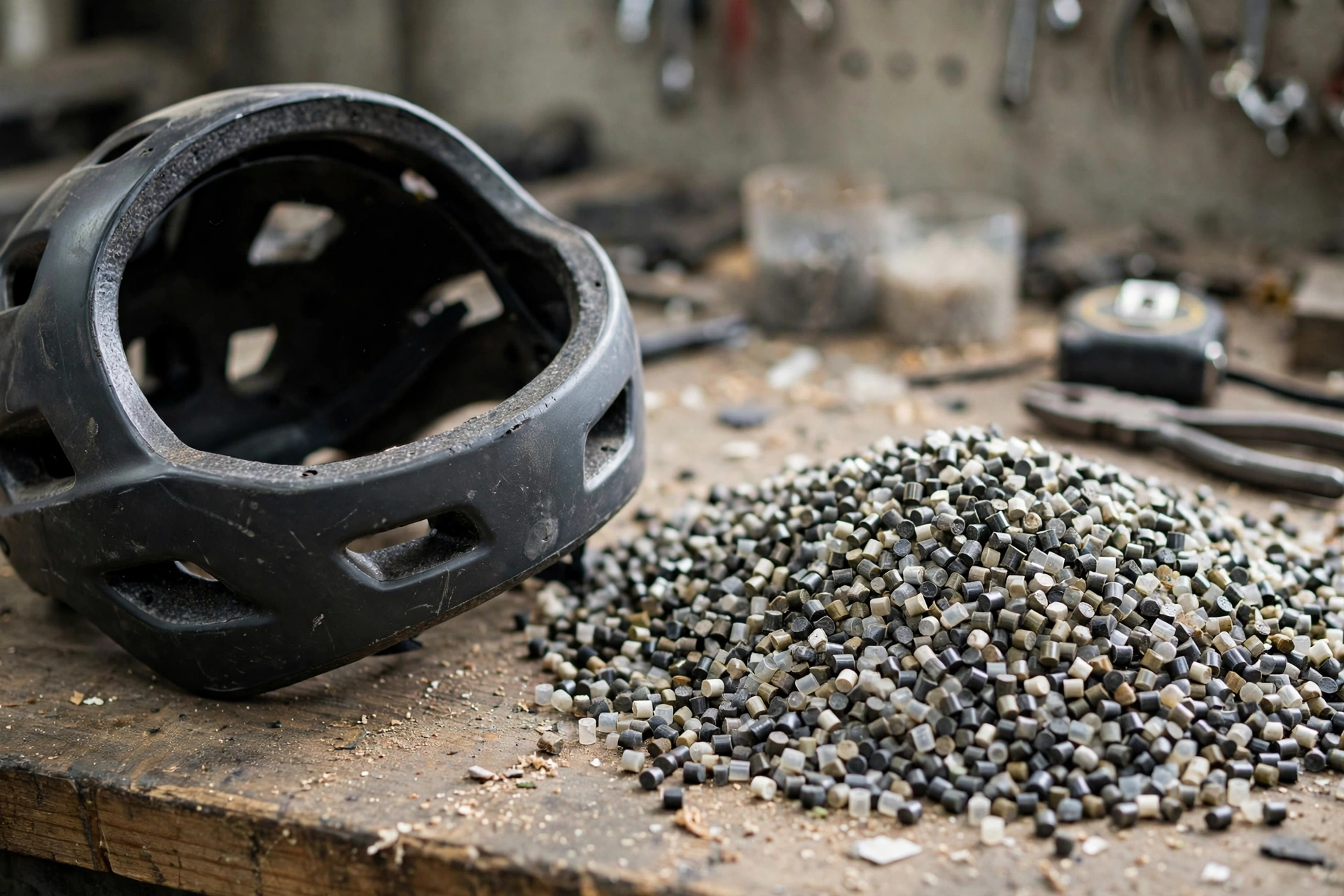
In general terms, a recycled plastic helmet shell that has passed the same safety tests as a new shell should offer the same level of protection. Safety standards test the finished helmet, not the source of the plastic, so a helmet that carries a recognised certification mark has been tested as a complete product, regardless of whether its shell is recycled.
That said, not all recycled plastic is equal. The quality depends on how well the material was sorted and processed, and on whether the manufacturer has tested the finished helmet properly. The safest approach is to buy from a brand you trust and to check that the helmet carries a recognised safety certification for the activity you use it for. A cheap helmet with no certification is a poor choice, whether its shell is recycled or not.
What are the benefits of a recycled plastic helmet shell?
The main benefit is environmental. Using recycled plastic means less new plastic has to be made, which saves raw materials and energy, and it keeps plastic out of landfill. For riders who care about the footprint of their gear, a recycled shell is a practical way to make a greener choice without giving up protection.
There can be a practical benefit too. Some recycled plastics are just as tough as new ones, and the moulding process is the same, so the shell can look and feel identical to a conventional one. The helmet may also cost the same or only slightly more than a comparable model, so the greener option does not always carry a big price premium.
What should you check before buying one?
First, check the safety certification. Look for a recognised mark for your activity, such as a cycling or skating standard, and make sure the helmet is the right type for how you ride. A shell made from recycled plastic is no substitute for a helmet that fits well and is designed for your sport.
Next, check the fit and the features. The helmet should sit level on your head, cover your forehead, and feel snug without pressing painfully. Look at the ventilation, the weight, and the lining, and ask whether the shell includes a system designed to reduce rotational forces in a fall, such as MIPS. Finally, read the product description to see how much of the shell is recycled, because some helmets use a mix of recycled and new plastic rather than being fully recycled.
How do you look after a recycled plastic helmet shell?
Care for a recycled plastic shell in the same way as any other helmet shell. Wipe it clean with a damp cloth and mild soap, and let it dry naturally away from direct heat. Do not leave it in a hot car or next to a radiator, as heat can damage the materials inside over time. Check the shell regularly for cracks, dents, or fading, and check the straps and buckle for wear.
In general terms, a helmet that has taken a hard knock in a fall should be replaced, even if the shell looks fine on the outside, because the liner inside may have been compressed. The same applies to a helmet that has been dropped hard onto a hard surface. When in doubt, replace it, and recycle the old helmet if your local scheme accepts it.
What is a recycled plastic helmet shell?
It is a helmet outer shell made partly or wholly from plastic that has been recovered, cleaned, and reprocessed into new material, then moulded into the shell shape in the usual way.
Is a recycled plastic helmet shell safe?
In general terms, yes, if the finished helmet has passed the same safety tests as a conventional helmet and carries a recognised certification mark for your activity.
How much of a helmet shell is usually recycled?
It varies by brand and model, so check the product description: some shells are fully recycled, while others use a mix of recycled and new plastic.

Olivia
Writer at Helmet Today, covering helmet reviews, fit and riding safety.