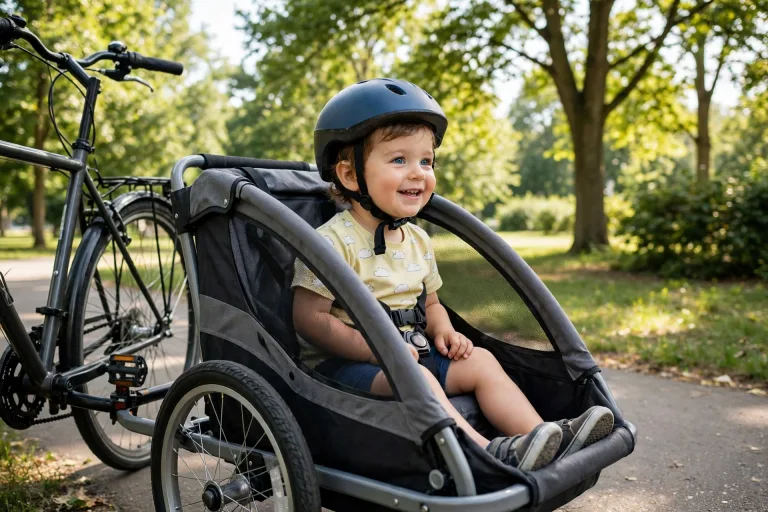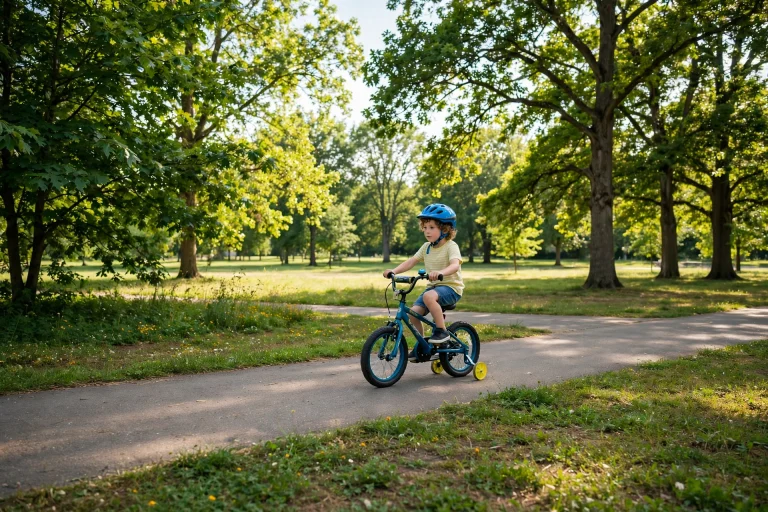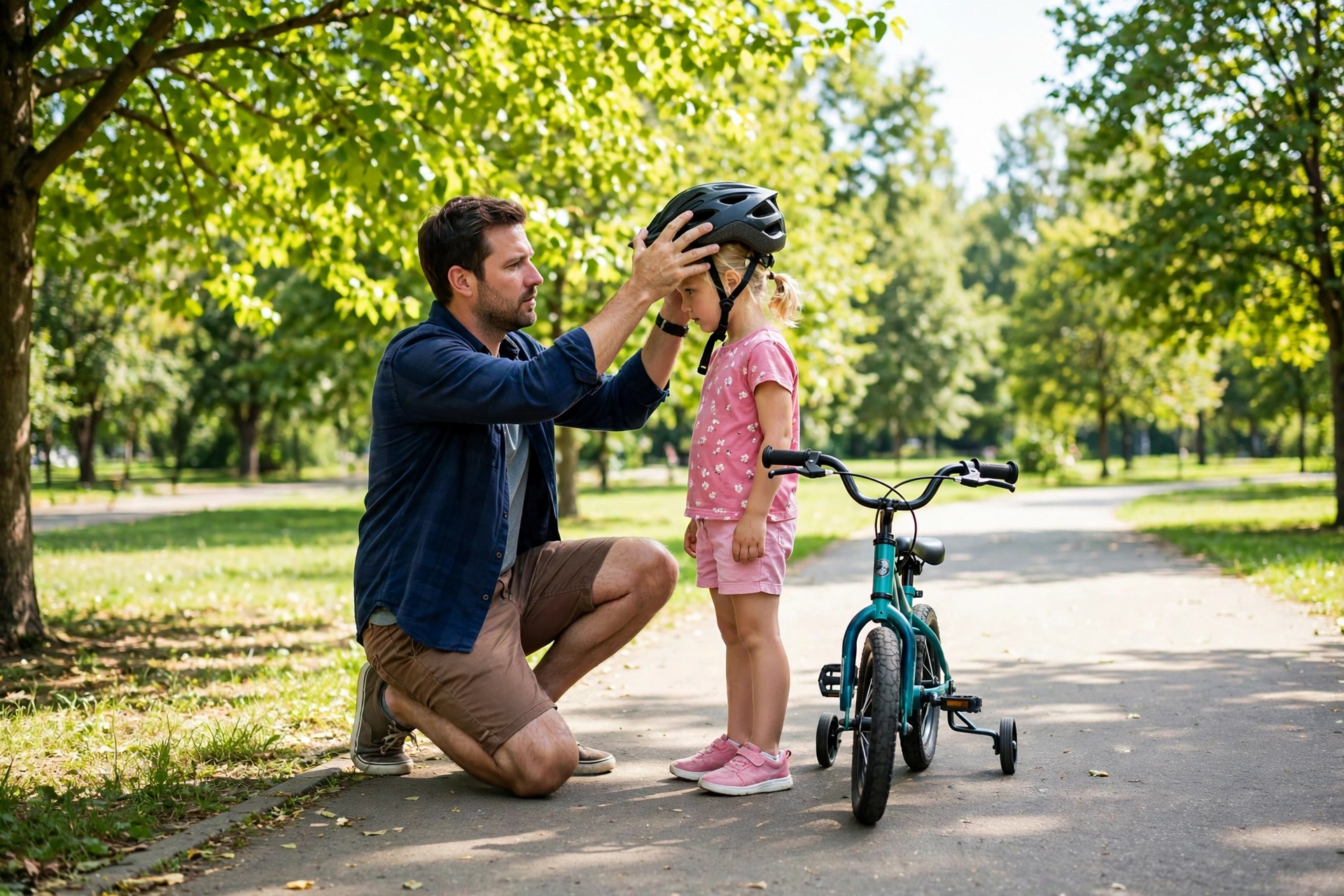
Teaching a child to wear a helmet means making it a normal, non-negotiable part of riding from the very first ride, and in general terms the best approach is a mix of a good fit, a fun routine, and your own example. Children learn habits by copying what they see and by repeating what feels normal, so the goal is to make the helmet part of the ride, not a battle before it. If the helmet goes on every time the bike comes out, most children accept it without much fuss.
The trick is to start before riding becomes a habit without a helmet. A child who has always worn a helmet on a balance bike or a scooter rarely questions it when they move on to a pedal bike. If your child is older and already rides without one, you will need a little more patience, but the same ideas still work: a helmet that fits well, a choice they helped make, and a calm, consistent rule.
When should a child start wearing a helmet?
A child should start wearing a helmet as soon as they start riding anything with wheels, including a balance bike, a scooter, or a tricycle. Falls at low speed can still cause a knock to the head, and starting early means the helmet is simply part of riding from day one. In general terms, there is no age that is too young to begin, as long as the helmet fits the child properly.
For very young children, look for a helmet made for toddlers, with a light weight and a simple buckle you can fasten easily. The helmet should sit low on the forehead and stay level, not tip back or slide forward. If the smallest size is still too big, wait until your child has grown a little rather than using a helmet that wobbles around on their head.
How do you fit a child’s helmet properly?
A child’s helmet should sit level on the head, low enough at the front to cover the forehead, and snug all round without squeezing. It should not rock from side to side or slip down over the eyes when your child nods. Most children’s helmets have a dial or pads at the back that let you adjust the fit as your child grows, so check the fit every few months.
The chin strap should be snug enough that you can fit only one or two fingers between the strap and the chin, and the side straps should meet just below the ear in a V shape. Some children’s helmets include a system designed to reduce rotational forces in a fall, such as MIPS, which is worth asking about when you are choosing. Let your child try the helmet on in the shop and walk around in it before you buy, because a helmet that feels comfortable is one they will actually wear.
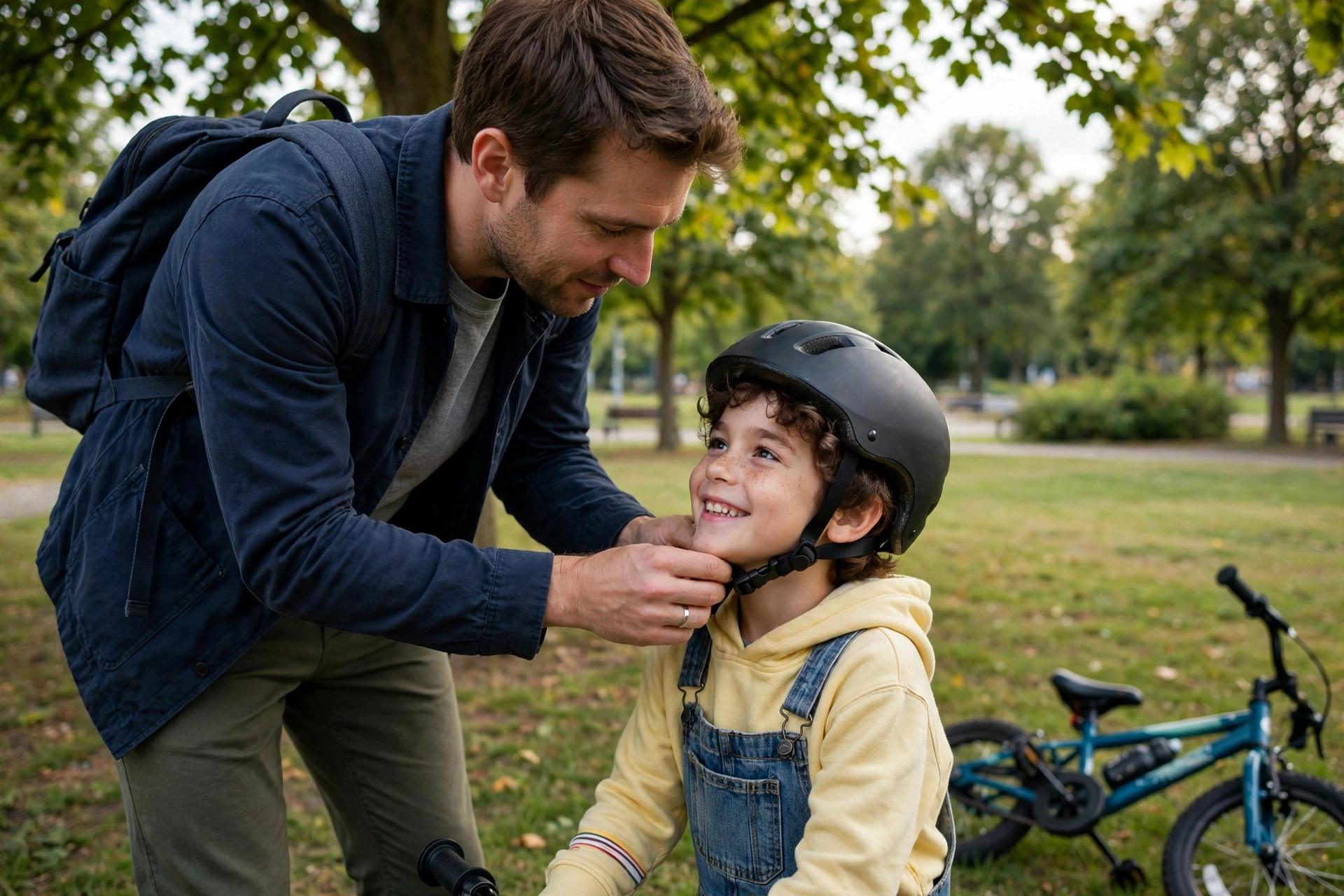
How can you make wearing a helmet fun?
Let your child choose their own helmet, within reason. A helmet in their favourite colour, or with a pattern they picked themselves, feels like theirs rather than something imposed on them. Some helmets come with stickers, fun designs, or a character theme, and that small bit of ownership can make a big difference to a reluctant rider.
Turn the helmet into part of a routine or a game. You might have a little rhyme for putting it on, or a rule that the bike does not move until the helmet clicks. Praise your child when they put it on without being asked, and keep the tone light. In general terms, children respond far better to encouragement and fun than to lectures about what might happen in a fall.
What should you do if your child refuses to wear a helmet?
Stay calm and hold the line. If the rule is that the bike stays put until the helmet is on, say so once and mean it. Avoid turning it into a long argument, and avoid giving in just this once, because that teaches your child that refusing works. Most children test the rule a few times and then accept it when they see it does not change.
Ask why they do not want to wear it, because the reason is often simple and fixable. The helmet might pinch, it might be too hot, or it might feel embarrassing in front of friends. A different fit, better vents, or a plainer design can solve most of these problems. If friends are the issue, it can help to point out that plenty of older riders and sports stars wear helmets too.
Should parents wear a helmet too?
Yes, parents should wear a helmet when they ride with their child. Children copy what adults do far more than what adults say, so a parent riding bare-headed while insisting the child wears a helmet sends a mixed message. Wearing your own helmet shows that helmets are simply what riders wear, whatever their age.
Riding together also gives you a chance to model good habits in general, such as checking the fit before you set off and stopping to adjust a strap that has come loose. If your child sees you treat your helmet as normal kit, they are far more likely to do the same. In general terms, the family rule works best when it applies to everyone.
How do you look after a child’s helmet?
Check your child’s helmet regularly for cracks, dents, or loose parts, and check the strap and buckle for wear. Children drop helmets, throw them in the car, and leave them in the sun, so a quick check before a ride is worth the few seconds it takes. Clean the shell with mild soap and water, and let the helmet dry naturally away from direct heat.
Replace the helmet after a hard fall, even if it looks fine on the outside, because the lining inside may have been compressed. Also replace it when your child outgrows it: a helmet that is too small no longer covers the head properly. In general terms, a helmet that fits, is in good condition, and is worn every time is the whole point of teaching the habit in the first place.
At what age should a child start wearing a helmet?
As soon as they start riding a balance bike, scooter, or tricycle. Starting early makes the helmet a normal part of riding from the very beginning.
Can a child wear an adult helmet?
In general terms, no. Adult helmets are usually too big and too heavy for a child, and a loose helmet will not stay in place in a fall. Choose a helmet made for your child’s head size.
How often should a child’s helmet be replaced?
Replace it after a hard fall, if it is cracked or damaged, or when your child outgrows it. Check the fit every few months, because children grow fast.

Olivia
Writer at Helmet Today, covering helmet reviews, fit and riding safety.