To wash a helmet liner by hand, remove the liner if you can, soak it in a basin of lukewarm water with a small amount of mild soap, gently squeeze and rinse it, and let it air dry fully before you put it back. Hand washing is the safest way to clean a liner, because a washing machine can stretch the pads, damage the stitching, or warp the shape.
A helmet liner soaks up sweat, skin oils, and dust every time you ride, and over time it starts to smell and feel grimy. A dirty liner can also irritate your skin and make the helmet less comfortable, which means you may wear it less often. Washing it by hand is a simple job that takes little time and keeps the helmet fresh and comfortable.
Why should you wash a helmet liner?
You should wash a helmet liner because it collects sweat and dirt with every ride. A liner that is never washed becomes a home for odour and bacteria, and it can leave your hair and skin feeling dirty after a ride. It can also make the helmet feel damp and heavy, especially in warm weather.
A clean liner also helps the helmet fit and work as it should. Pads that are clogged with sweat and grime can lose their softness and their grip on your head, so the helmet may move around more than it should. Washing the liner restores its softness and helps it sit comfortably against your head.
Regular washing also keeps the helmet smelling fresh, which matters if the helmet is ever shared with another rider. A liner that smells clean is a small sign that the helmet is being looked after, which makes it more likely that other checks, such as the strap and the shell, get done too.
What do you need to wash a helmet liner by hand?
You need very little: a basin or sink, lukewarm water, and a small amount of mild soap or a gentle laundry liquid. Avoid harsh detergents, bleach, and fabric softener, because these can damage the foam and the fabric, and can leave a residue that irritates your skin.
It also helps to have a clean towel for pressing out water, and a dry, well-ventilated place to leave the liner while it dries. If your liner is removable, you will need to know how it comes out, so check the maker’s instructions first. Some liners are held in with press studs, some with hook-and-loop fastenings, and some are stitched in and cannot be removed at all.
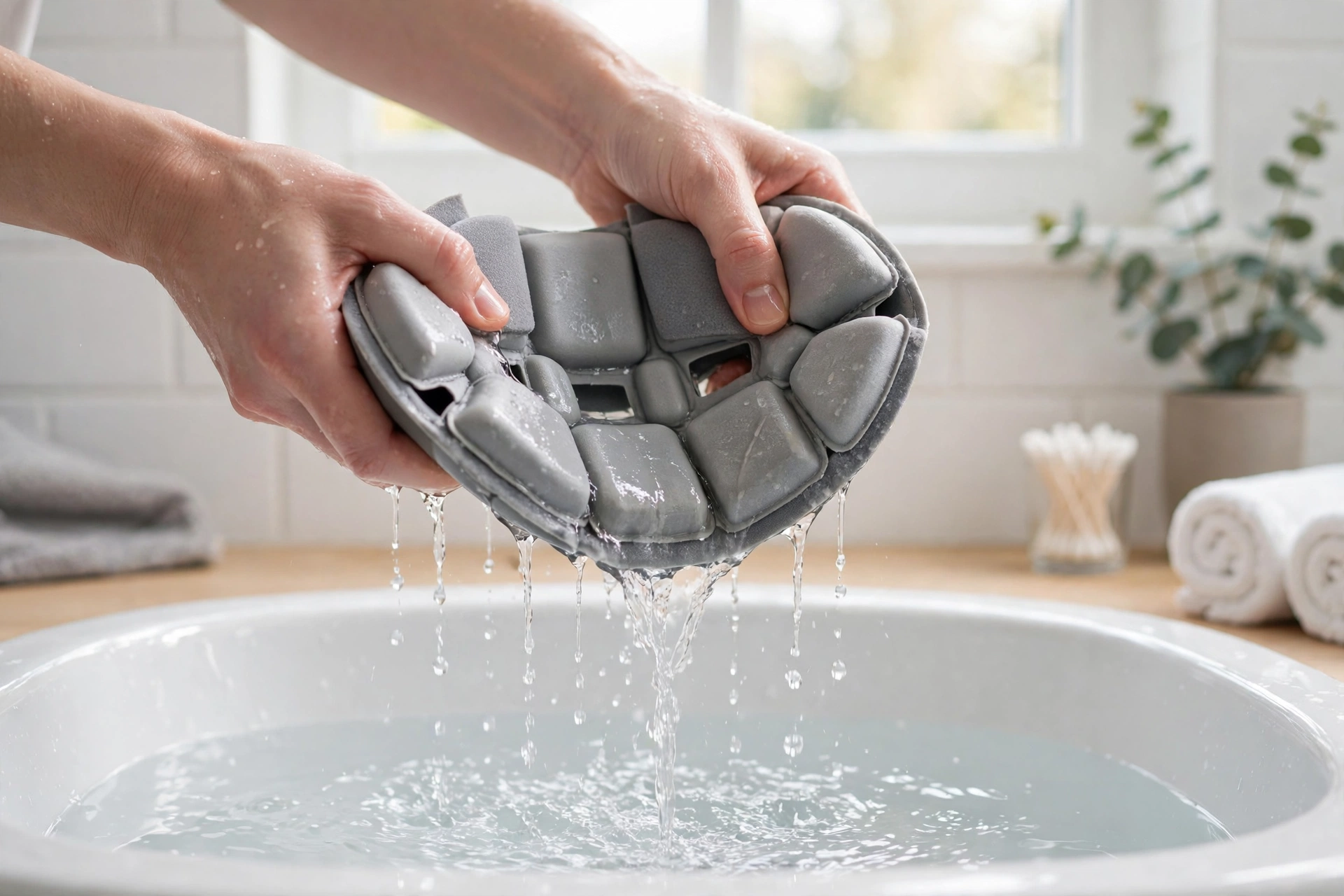
How do you wash a helmet liner step by step?
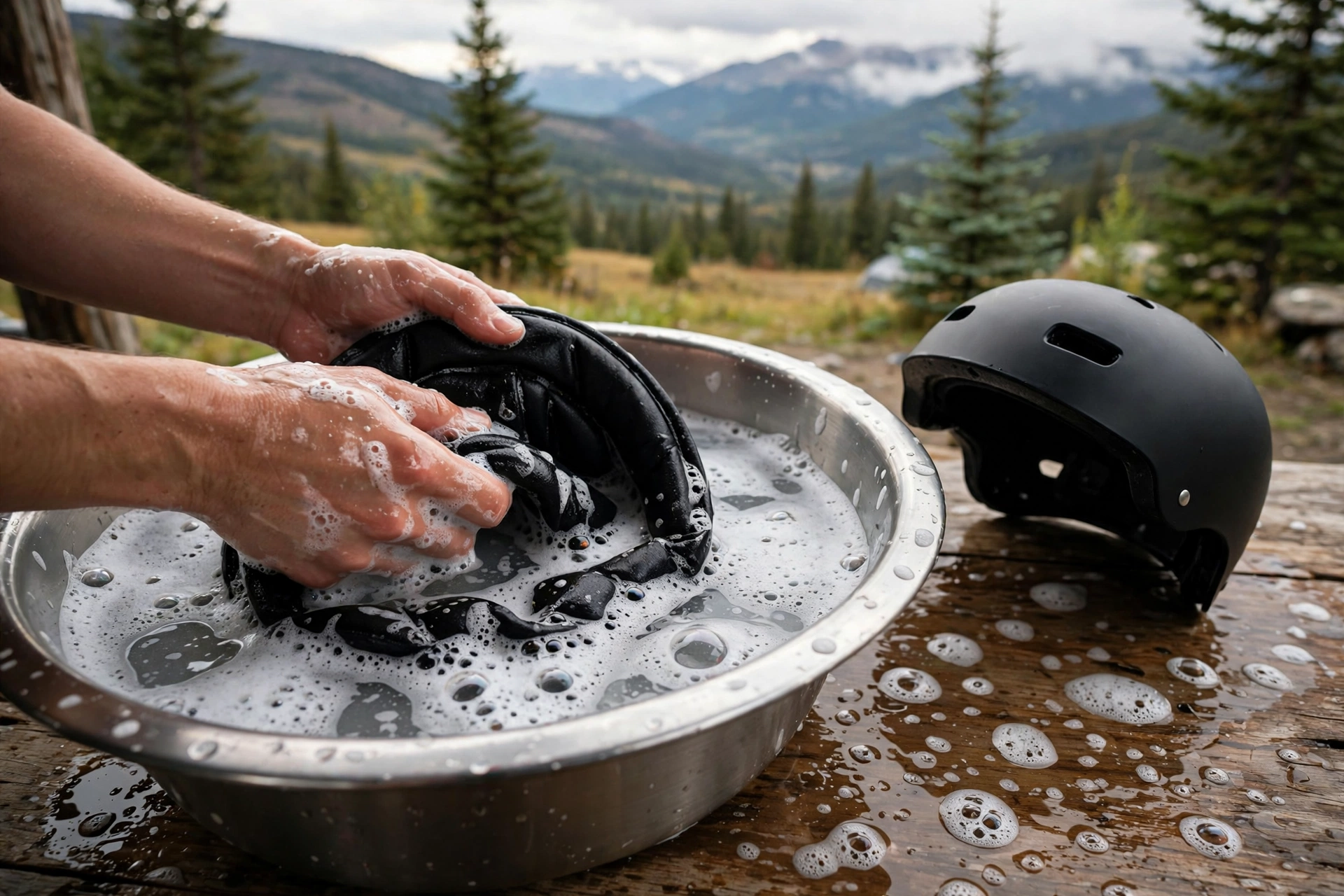
Start by removing the liner if it comes out, and check for any labels or instructions from the maker. Fill a basin with lukewarm water and add a small amount of mild soap, then put the liner in and let it soak for a few minutes so the soap can loosen the dirt and sweat.
Then wash it gently, following these steps:
- Press and squeeze the pads softly in the soapy water, working the soap through the fabric. Do not wring or twist the pads hard, because that can tear the foam inside.
- Pay extra attention to the areas that touch your forehead and the back of your neck, since these collect the most sweat.
- Drain the dirty water and refill the basin with clean lukewarm water.
- Rinse the liner by pressing it gently in the clean water, then change the water and rinse again until no soap bubbles remain.
- Press the liner between clean towels to remove as much water as you can, without wringing it.
If your liner cannot be removed, you can still wash it in place. Dampen a cloth with soapy water and wipe the pads gently, then wipe again with a cloth dampened in clean water to remove the soap. Be careful not to soak the foam shell of the helmet, since it can take a long time to dry.
How do you dry a helmet liner?
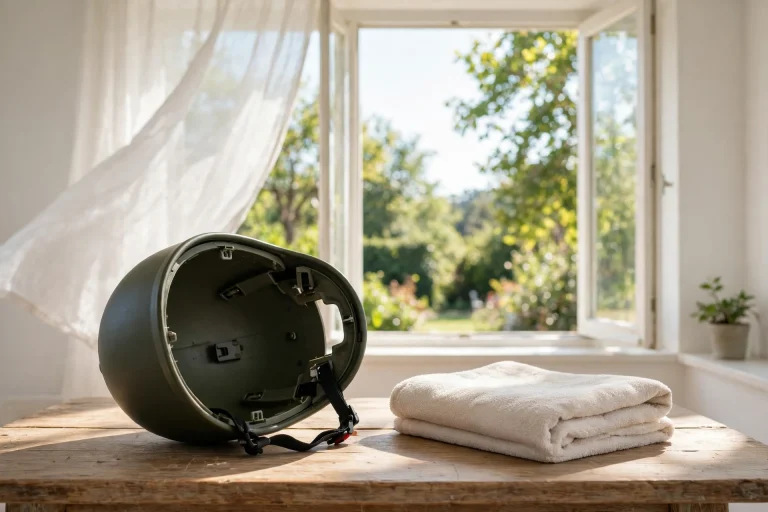
Let the liner air dry in a well-ventilated place, away from direct heat and direct sunlight. Lay it flat or hang it where air can move around it, and give it plenty of time. Depending on the thickness of the pads, drying can take several hours or a full day.
Do not use a hairdryer, a radiator, or a tumble dryer, because heat can shrink the fabric, warp the foam, or damage the fastenings. Do not put the liner back into the helmet until it is fully dry, since a damp liner can develop a musty smell and can damage the helmet’s inner foam over time. Some helmets include a system designed to reduce rotational forces in a fall, such as MIPS, and a dry, well-kept lining helps the whole helmet sit and work as it should.
How often should you wash a helmet liner?
How often you wash the liner depends on how often and how hard you ride. In general terms, a rider who uses the helmet most days in warm weather may want to wash the liner every few weeks, while a rider who uses it occasionally in cool weather may only need to wash it a few times a year.
A good rule is to wash it when it starts to smell, feels stiff or sticky, or leaves your hair damp after a ride. If you ride in the rain or sweat heavily, wash it sooner. Regular gentle washing is better than one harsh wash after months of neglect, because it keeps the liner soft and comfortable and avoids the need for strong cleaners.
Can you put a helmet liner in the washing machine?
In general terms, it is safer to wash a liner by hand. A machine can stretch the pads, damage the stitching, or warp the shape. If the maker says machine washing is safe, use a gentle cycle and a laundry bag.
What soap should you use to wash a helmet liner?
Use a small amount of mild soap or gentle laundry liquid. Avoid bleach, harsh detergents, and fabric softener, which can damage the foam and fabric and irritate your skin.
Can you wear a helmet while the liner is drying?
It is best not to. A helmet without its liner will not fit properly, and the liner should be fully dry before it goes back in, so plan the wash for a day when you do not need the helmet.

Olivia
Writer at Helmet Today, covering helmet reviews, fit and riding safety.