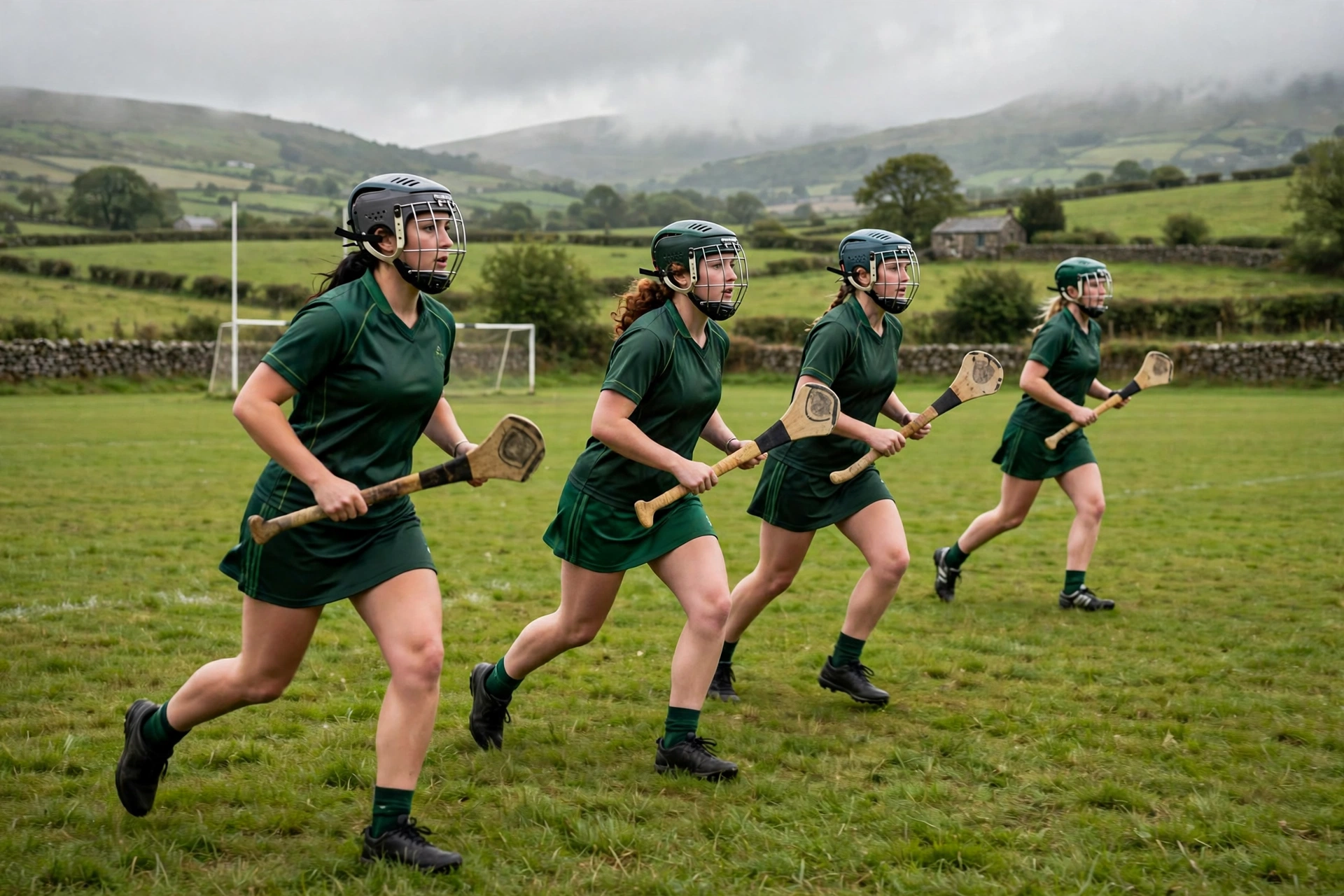
A helmet for camogie players is a protective helmet with a faceguard worn to guard the head and face during camogie, and in general terms it is a light, close-fitting helmet that covers the skull, ears and jaw. Camogie is a fast field sport played with a hurley and a small hard ball called a sliotar, and players run, jump and strike at close quarters, so knocks to the head and face can happen even in a friendly game.
The helmet is a familiar part of the camogie kit, worn by players of all ages and levels, from school games to senior matches. It does not stop every injury, but it can reduce the force of a blow from the ball, a hurley, or a clash with another player. In general terms, that is the main reason it is worn, and why most players would not step onto the pitch without one.
What is camogie?
Camogie is the women’s version of hurling, a traditional Irish field sport played with a wooden stick called a hurley and a small leather ball called a sliotar. Two teams of fifteen players try to score goals and points by striking the sliotar between the posts or over the crossbar, and the ball can travel very fast through the air.
The game is played on a large grass pitch, and players catch, carry, strike and block the sliotar at speed. Because the ball is hard and the hurleys are swung close to other players, head protection matters. Camogie has its own governing body and its own rules, but the helmet is one of the clearest shared features of the modern game.
What kind of helmet do camogie players wear?
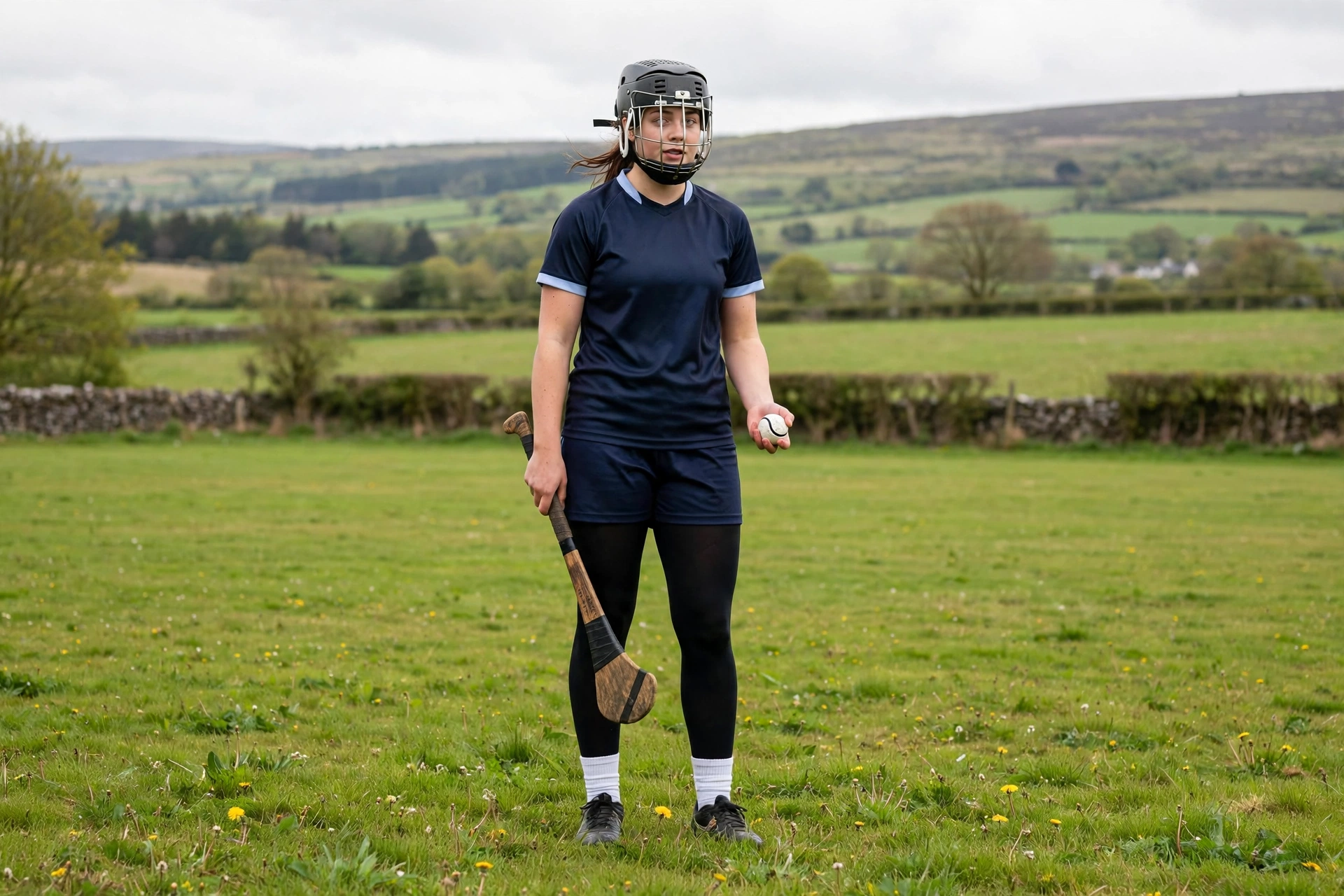
In general terms, camogie players wear a hurling-style helmet, which is a hard outer shell with padding inside and a metal faceguard across the front. The shell covers the top, back and sides of the head, while the faceguard guards the eyes, nose, mouth and jaw without blocking the player’s view of the ball.
The helmet is held in place with a chin strap, and most models are made to be light so they do not weigh the player down during a fast game. Some players choose a helmet with extra padding around the ears and jaw, which can feel more comfortable in a physical match. Whatever style you choose, the helmet should be in good condition, with no cracks in the shell and a faceguard that is firmly fixed.
Why do camogie helmets have a faceguard?
The faceguard is there because the face is exposed to the sliotar and to hurleys in normal play. A sliotar struck at full power can travel fast enough to cause a serious injury if it hits an unprotected face, and a hurley swung in a tackle can catch a player across the cheek or jaw. The faceguard spreads the force of such a blow and keeps the ball and the hurley away from the eyes and teeth.
The bars of the faceguard are spaced so the player can still see the ball clearly and breathe freely, while blocking anything large enough to cause harm. It is worth checking the faceguard regularly for bent or loose bars, because a damaged guard may not protect as it should. In general terms, a helmet without a sound faceguard is not doing its full job.
How should a camogie helmet fit?
A camogie helmet should sit level on your head, low enough at the front to cover your forehead, and snug all round without pressing painfully on your temples. It should not tip forward over your eyes or slide back when you nod, and it should stay in place when you shake your head gently from side to side or jump.
The chin strap should be snug enough that you can fit only a finger or two between the strap and your chin, and the faceguard should sit clear of your nose and chin without pressing on them. Try the helmet on before a match, and if you wear glasses or a gumshield, check that everything fits together comfortably. In general terms, a helmet that fits well is also one you will keep wearing for the whole game.
What should you look for when buying a camogie helmet?
Look for a helmet that meets the safety standard used for hurling and camogie, with a strong shell, firm padding and a solid faceguard. Check that the padding is comfortable against your head and that the lining can cope with sweat during a match. Some helmets include a system designed to reduce rotational forces in a fall or a blow, such as MIPS, and it is worth asking about when you choose.
Weight matters too, because a heavy helmet can become tiring over a full match, and ventilation matters on a warm day. Try on more than one size if you are between sizes, and ask a coach or an experienced player for advice if you are buying your first helmet. In general terms, the best helmet is one that fits your head, suits your level of play, and feels comfortable enough to wear without thinking about it.
How do you look after a camogie helmet?
After a game, wipe the shell clean and let the helmet dry naturally, away from direct heat. Do not leave it in a hot car or next to a radiator, as heat can damage the materials inside over time. If the lining is removable, take it out and wash it following the maker’s instructions, and let it dry fully before you put it back.
Check the helmet regularly for cracks, dents, or loose parts, and check the faceguard, chin strap and buckle for wear. In general terms, a helmet that has taken a hard knock should be replaced, even if it looks fine on the outside, because the inner padding may have been compressed. The same applies to a helmet with a bent or loose faceguard. When in doubt, replace it.
Do camogie players have to wear a helmet?
In general terms, yes, helmets with faceguards are part of the standard kit for camogie players, and most teams expect every player to wear one. Check with your club or your competition’s rules if you are unsure.
Can you wear glasses under a camogie helmet?
Many players do, but the fit needs care. Try the helmet on with your glasses before a match and check that the faceguard does not press them into your face and that your view of the ball is clear.
When should a camogie helmet be replaced?
Replace it after a hard knock, if the shell or padding is damaged, if the faceguard is bent or loose, or if the strap and buckle are worn. A helmet that has protected you in a game has done its job and should not be relied on again.

Olivia
Writer at Helmet Today, covering helmet reviews, fit and riding safety.