The history of the firefighter helmet is the story of a piece of headgear that grew from a simple leather cap into a specialist helmet, and in general terms its famous shape was shaped by the need to keep water, heat and falling debris away from the firefighter. Firefighters have worn some form of head protection for centuries, and the helmet has changed with the materials, the tools and the dangers of each era. The result is one of the most recognisable helmets in the world.
Early firefighters faced burning buildings with little more than a thick coat and a leather cap, and the helmet they wore was as much about keeping water off as about protection from falling objects. Over time, makers added height, a wide brim and stronger materials, and the helmet became a symbol of the fire service as well as a practical tool. In general terms, the story of the firefighter helmet is the story of firefighting itself.
When did firefighters first wear helmets?
Firefighters in Europe began wearing protective headgear in the 1600s and 1700s, when organised fire brigades first appeared in cities. Early helmets were often made of leather, and some were little more than a stiffened cap with a brim. They were meant to keep water and falling embers off the head, and to give some protection from falling debris inside a burning building.
By the 1800s, fire brigades in Europe and America were using helmets with a taller crown and a wider brim. Leather was the main material, because it was tough, widely available, and could be shaped and hardened. These early helmets were heavy by modern standards, but they were a clear step up from an ordinary hat, and they set the pattern for the firefighter helmet we still recognise today.
Why did the classic firefighter helmet get its long rear brim?
The long rear brim of the classic firefighter helmet, often called the duckbill or the rear brim, was designed to channel water away from the firefighter’s neck and back. When a hose was played on a fire from above, water ran down over the helmet, and the long brim directed it away from the collar and down the back of the coat instead of inside it.
The brim also gave some protection from falling embers and debris, and it shielded the neck from heat rising from below. The high front of the helmet, meanwhile, carried a badge or a number plate that showed the firefighter’s company or station. In general terms, every part of the classic shape had a practical purpose, which is why the shape lasted so long.
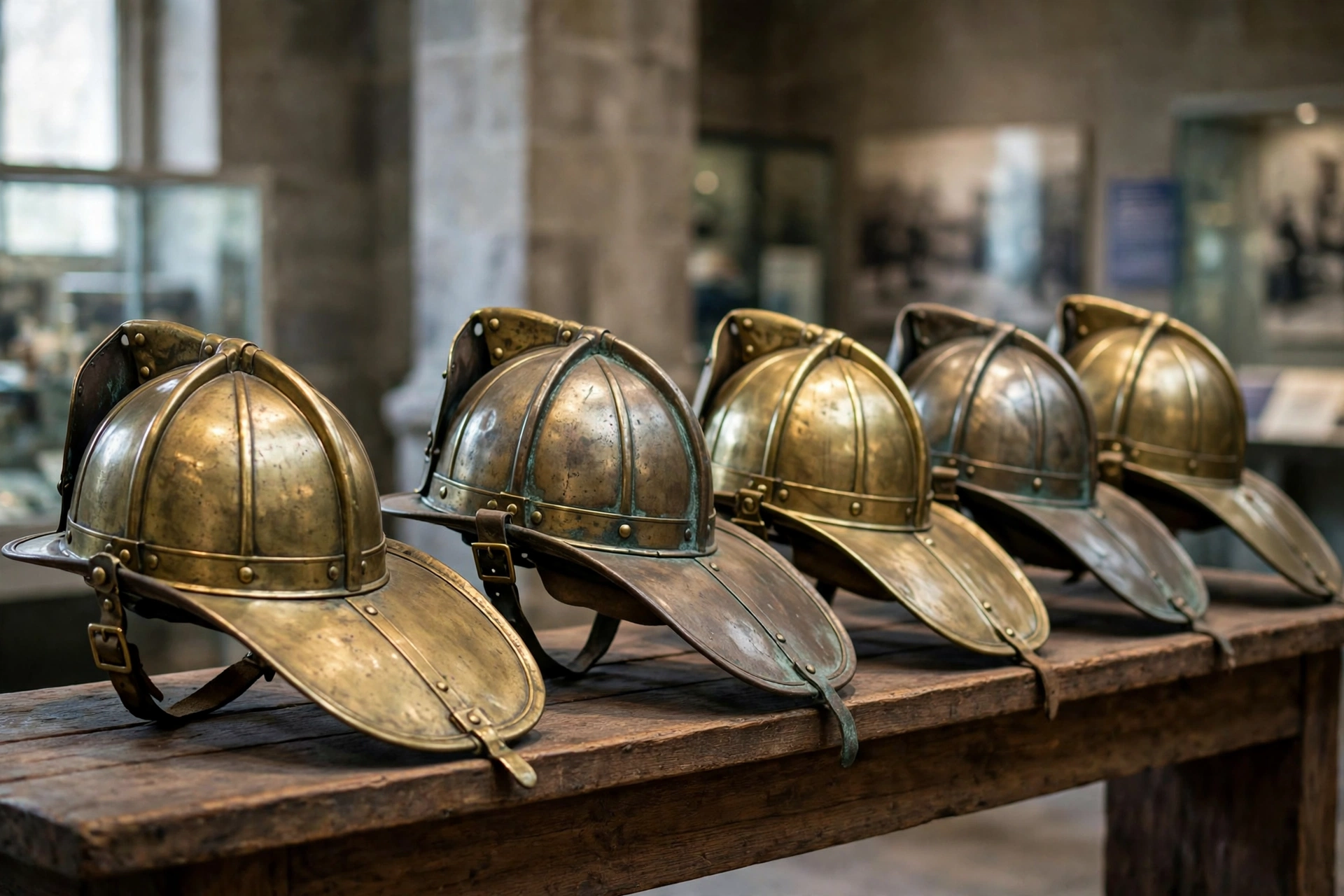
How did firefighter helmets change over time?
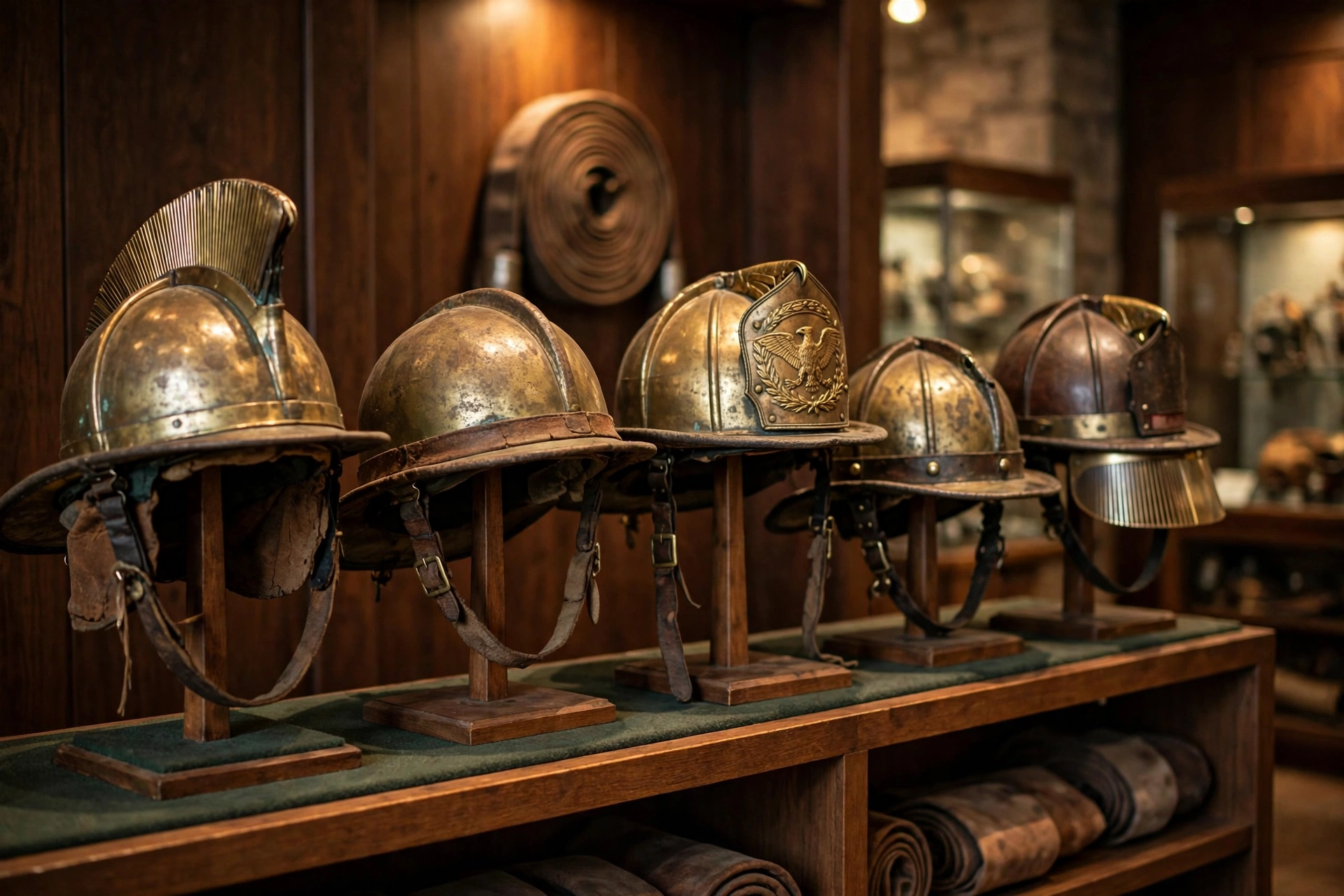
As the 1800s turned into the 1900s, makers began to use new materials and new methods. Brass and other metals were used for parade and ceremonial helmets, and for some working helmets too, because metal could be polished to a bright finish and held its shape well. Leather remained the main working material for many years, because it was tough and could be repaired.
In the middle of the twentieth century, helmets began to appear in moulded plastics and fibreglass, which were lighter than leather and easier to make in large numbers. These helmets kept the classic shape, with the high front and the long rear brim, but they were easier to keep clean and did not need the same care as leather. The shape stayed familiar even as the materials changed.
What are modern firefighter helmets made from?
Modern firefighter helmets are usually made from heat-resistant composite materials, such as fibreglass, Kevlar, or a mix of modern plastics, with a padded lining inside. These materials are light, strong, and able to stand up to heat far better than the leather of the past. The shell is often finished in a bright colour, such as yellow, red or black, so the firefighter is easy to see in smoke and darkness.
Modern helmets also carry extra kit, such as a visor or goggles to protect the eyes, a torch, and sometimes a radio earpiece. Some helmets include a system designed to reduce rotational forces in a fall or a blow, such as MIPS, and it is worth noting that modern fire helmets are tested to strict standards before they are issued. In general terms, the modern helmet is far lighter and far more protective than its leather ancestor, even though the outline is still familiar.
Why do firefighter helmets still look traditional today?
The traditional shape has lasted because it still works. The long rear brim still keeps water off the neck, the high front still gives room for a badge, and the wide shell still covers the ears and the back of the head. Fire services also value the shape as a symbol: the classic helmet is instantly recognised by the public, and it carries a sense of history and pride that a plain modern shell would not.
Some fire services have moved to a more rounded, European-style helmet, which is lighter and gives a wider field of view, but many still use the traditional shape. In general terms, the choice between the two comes down to the service’s history, its working conditions, and what its firefighters prefer to wear. The traditional helmet is a working tool that happens to look the part as well.
How are old firefighter helmets preserved?
Old firefighter helmets are kept in fire service museums, in station collections, and by private collectors who value their history. Leather helmets need care: they should be kept dry, away from direct heat and sunlight, and cleaned gently so the leather does not dry out and crack. Brass helmets are polished carefully, and any badge or number plate is kept with the helmet it belongs to.
Museums often display helmets alongside coats, hoses and photographs, so visitors can see how the kit changed over time. If you own an old helmet, it is worth finding out where and when it was used before you clean or restore it, because the marks of use are part of its story. In general terms, an old helmet is best treated as a piece of history, not as a working helmet, and it should not be worn for firefighting.
What was the first firefighter helmet made from?
In general terms, the earliest firefighter helmets were made from leather, shaped and hardened to keep water and embers off the head. Metal and later composite materials came into use as the helmet developed.
Why is the firefighter helmet shaped the way it is?
The high front carries a badge and gives room above the head, while the long rear brim channels water away from the neck and back. The shape was built around the practical needs of fighting fires with hoses.
Are old firefighter helmets still safe to wear?
No, old helmets should be treated as historical objects, not as protective kit. Their materials may have weakened with age, and they were not made to modern standards, so they should not be relied on for protection.

Olivia
Writer at Helmet Today, covering helmet reviews, fit and riding safety.