A good helmet for a scooter rider is a certified helmet that fits well, suits the speed of your scooter, and is comfortable enough to wear on every ride. In general terms, most scooter riders choose between an open-face helmet and a full-face helmet, and the right choice depends on how fast you ride, how far you travel, and how much weather protection you want. The helmet is the most important piece of gear a scooter rider owns, so it is worth choosing carefully rather than buying the cheapest option.
Scooters are popular for short trips around town, commuting, and running errands, and that everyday use can make it tempting to treat a helmet as an afterthought. But scooter riders share the road with cars, buses, and lorries, and a fall at town speeds can still cause a serious head injury. A helmet that fits well and meets the right standard is a simple, practical way to reduce that risk, and a comfortable helmet is one you will actually wear every time.
What type of helmet should a scooter rider choose?
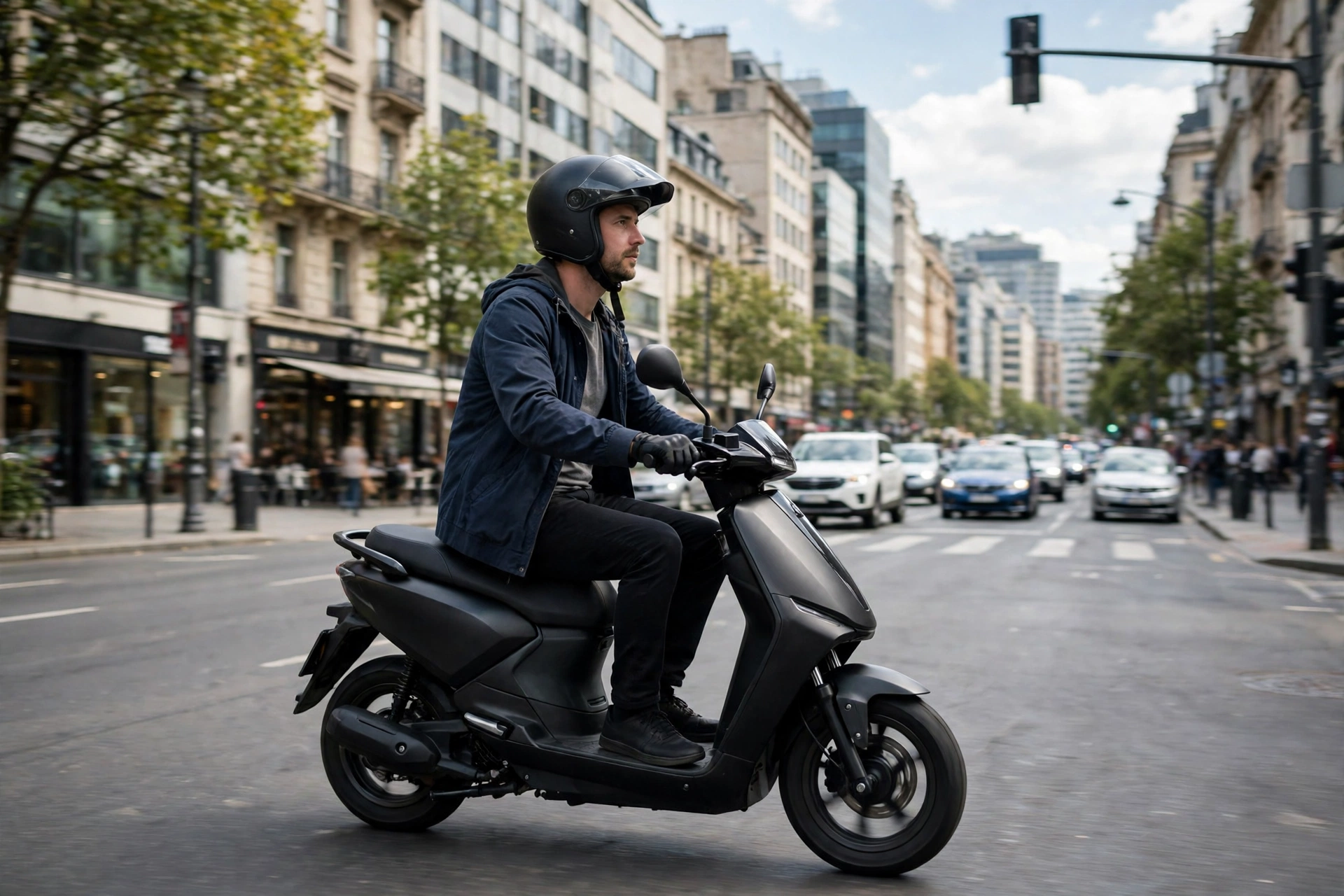
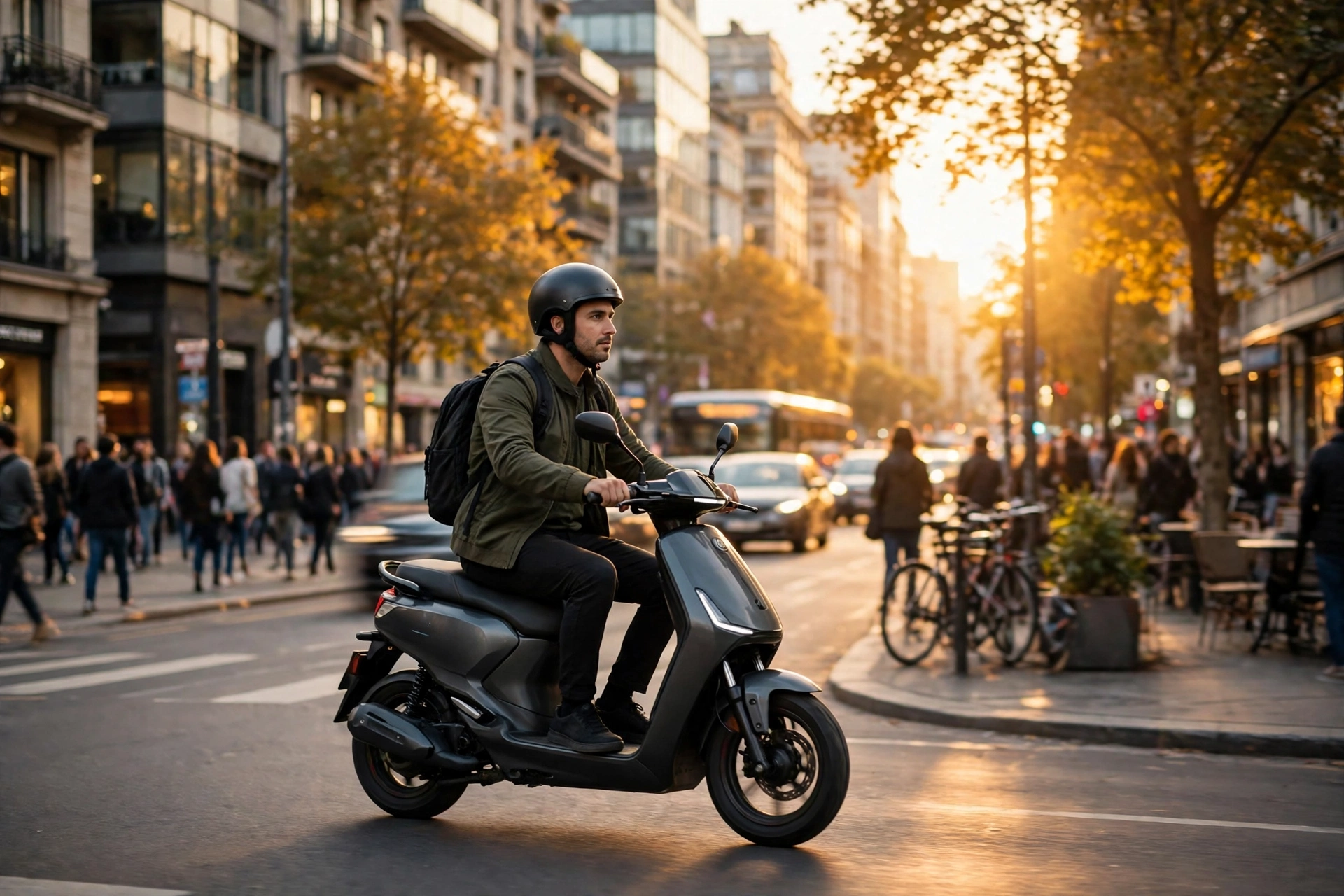
In general terms, an open-face helmet is the classic choice for scooter riders, because it is light, easy to put on, and gives a wide view of the road. It covers the top, back, and sides of the head, and it usually comes with a visor or a peak to shield your eyes from wind and rain. Many city riders like it because it feels less closed in than a full-face helmet, and it is easier to talk and hear while wearing it.
A full-face helmet covers the chin and jaw as well, and it gives more protection in a forward fall. It also keeps out more wind, rain, and cold, which makes it a good choice for faster scooters, longer rides, and winter commuting. Some riders choose a modular helmet, which has a chin bar that flips up, giving the open feel of an open-face helmet with the coverage of a full-face helmet when the bar is down. The best type is the one that matches your speed and your riding, and that you will wear without fail.
How should a scooter helmet fit?
A scooter helmet should sit level on your head, low enough at the front to cover your forehead, and snug all round without pressing painfully on your temples. It should not tip forward over your eyes or slide back when you nod, and it should stay in place when you shake your head gently from side to side. If the helmet moves easily on its own, it is too big, and if it hurts within a few minutes, it is too small or the wrong shape.
To check the size, measure around your head just above your eyebrows and compare the result with the maker’s size chart, then try the helmet on before you buy it if you can. Wear it for several minutes in the shop, fasten the chin strap so that you can fit only a finger or two between the strap and your chin, and check the fit with any glasses or sunglasses you plan to wear. A helmet that feels snug at first may settle a little as the lining beds in, but it should never feel loose from the start.
What safety standard should a scooter helmet meet?
A scooter helmet should meet the safety standard that applies where you ride, because that standard is a sign that the helmet has been tested for impact protection. In general terms, motorcycle helmets are tested to a different standard from bicycle helmets, and a scooter rider should choose a helmet made for motorised riding rather than a bicycle helmet, even for a low-powered scooter. Check the label or sticker inside the helmet to see which standard it meets, and be wary of a helmet with no clear certification marking.
It is also worth checking whether the helmet includes a system designed to reduce rotational forces in a fall, such as MIPS, and whether the visor is clear, scratch-free, and easy to open and close with gloves on. A helmet that has been dropped hard or involved in a crash should be replaced, even if it looks fine on the outside, because the inner lining may have been compressed. The same applies to a helmet with a cracked shell, a worn strap, or a buckle that no longer fastens firmly.
What features matter most for scooter riders?
For scooter riders, the features that matter most are the ones that make the helmet easy to live with every day. A clear visor that can be opened and closed easily is high on the list, because it shields your eyes from wind, rain, and insects, and it should be easy to operate with gloves on. Ventilation matters too, especially in warm weather or in slow traffic, when a helmet without airflow can quickly become hot and stuffy.
Weight is another factor, because a heavy helmet can feel tiring on a long ride, and a light helmet is easier to wear for hours at a time. A removable, washable lining is useful for a helmet that is worn daily, and a secure storage solution matters as well: many scooters have an under-seat compartment, so check that your helmet fits inside it, or plan for a lock or a top box. In general terms, the best helmet for a scooter rider is one that is safe, comfortable, and simple to use every day, rather than one with features you will never use.
How much should you spend on a scooter helmet?
How much you spend on a scooter helmet depends on your budget, but in general terms it is worth spending enough to get a certified helmet that fits well and feels comfortable. A very cheap helmet may meet a basic standard, but it may also be heavy, poorly ventilated, or made with a lining that wears out quickly. A mid-priced helmet often gives a better balance of comfort, weight, and build quality, and a higher-priced helmet may add features such as a better visor, quieter aerodynamics, or a more refined fit system.
Price alone is not a guide to safety, and a well-fitting helmet at a fair price can serve you better than an expensive helmet in the wrong size. Try on helmets across a few price points, compare how they feel, and choose the one that fits best and meets the standard for your riding. Remember to budget for a replacement after a hard knock, and to check the helmet regularly for wear.
Can scooter riders wear a bicycle helmet?
In general terms, no, a scooter rider should wear a helmet made for motorised riding, because bicycle helmets are tested for different speeds and impacts. Choose a motorcycle or scooter helmet that meets the standard for where you ride.
Is an open-face or a full-face helmet better for a scooter?
It depends on your riding. An open-face helmet is light and gives a wide view, which suits slow city riding, while a full-face helmet gives more coverage and weather protection, which suits faster or longer rides.
How often should a scooter helmet be replaced?
Replace it after a hard fall or a heavy knock, if the shell or lining is damaged, or if the strap and buckle are worn. Also replace it if the fit has become loose over time, because a loose helmet will not protect you as well.

Olivia
Writer at Helmet Today, covering helmet reviews, fit and riding safety.