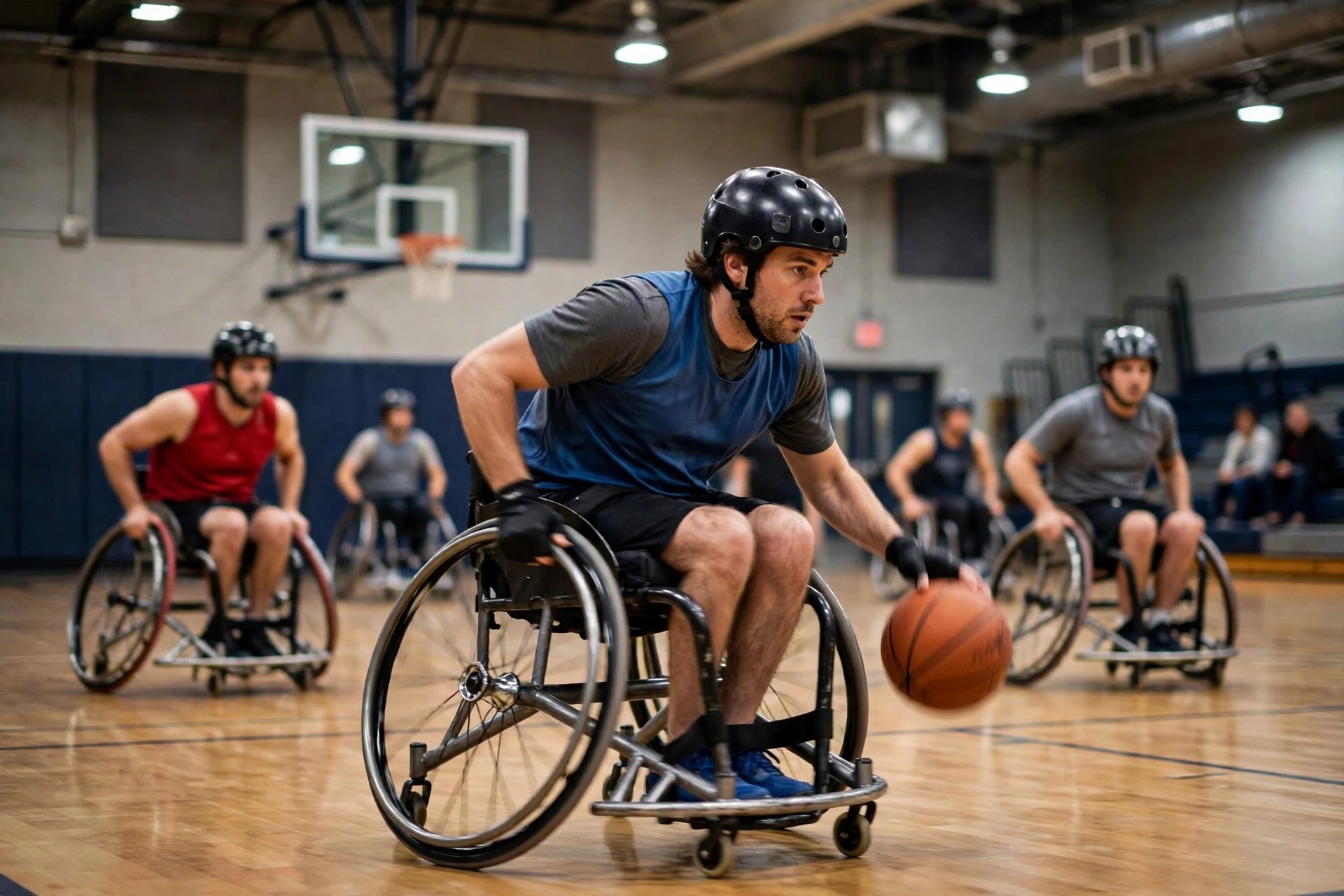
A helmet for wheelchair basketball players is a protective helmet worn on court to guard the head from knocks, falls, and contact during a game. In general terms, it is a light, well-fitting helmet that stays secure during fast turns, stops, and collisions, without getting in the way of play. It is not part of the standard kit for every wheelchair basketball player, but some players choose to wear one for extra protection, especially after a head injury or when the risk of contact is higher.
Wheelchair basketball is a fast, physical sport. Players move quickly, turn sharply, and compete for the ball in close contact, and wheelchairs can tip or collide. A fall from a wheelchair, or a knock from another chair or an elbow, can lead to a head injury, so a helmet can be a sensible precaution for players who want it. The key is to find a helmet that protects without limiting vision, hearing, or the freedom to play.
Why would a wheelchair basketball player wear a helmet?
A wheelchair basketball player might wear a helmet because the sport involves speed, contact, and the risk of falling from a chair. A chair can tip during a sharp turn or a collision, and a player can be knocked sideways or backwards with little warning. In general terms, a helmet spreads and absorbs some of the force of a knock to the head, which is the main reason players choose to wear one.
Some players wear a helmet after a previous head injury, on medical advice, while others wear one because they feel more confident with it on. Confidence matters in sport, and a player who feels safer may play more freely. That said, a helmet is a personal choice for most players, and it should be discussed with a coach or a medical professional if there is a history of head injury, so that the right type of protection is chosen for the individual.
What kind of helmet suits wheelchair basketball?
In general terms, a light, close-fitting helmet with good coverage of the top, sides, and back of the head suits wheelchair basketball best. A soft-shell or lightly padded helmet is a common choice, because it can absorb knocks without being heavy or bulky. Some players use a helmet designed for another sport, such as a skate-style helmet, while others use a helmet made for medical or protective use, and the right choice depends on the level of protection needed and the player’s own comfort.
Whatever type is chosen, the helmet should not block the player’s view of the court, the ball, or other players, and it should not muffle hearing, because players need to hear calls from teammates and the referee. It should also work with any headrest, straps, or seating support on the wheelchair, and it should stay in place during play. A helmet that slips, tips, or needs constant adjusting is a distraction, and a distracted player is less safe, not more.
How should a wheelchair basketball helmet fit?
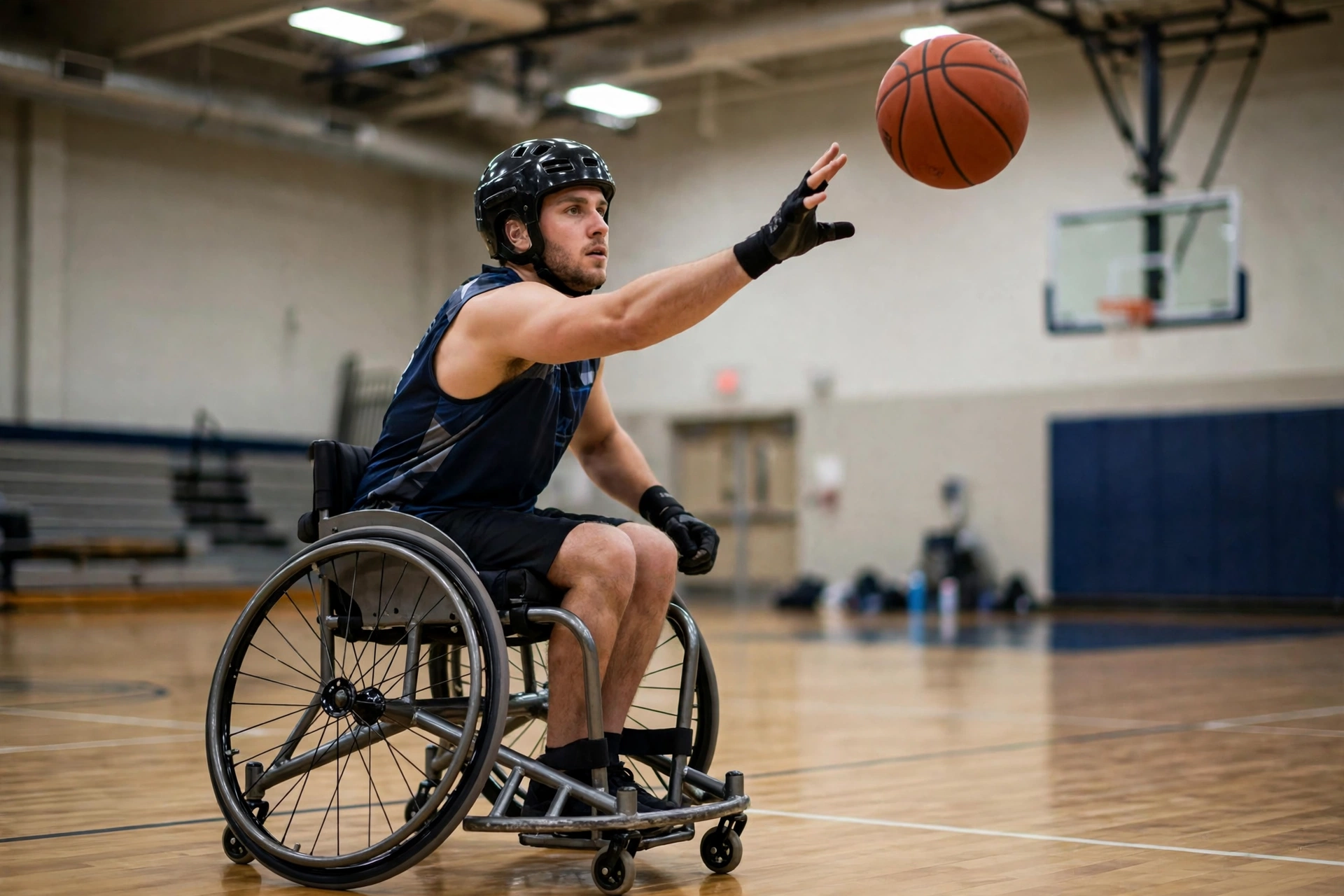
A wheelchair basketball helmet should sit level on the head, low enough at the front to cover the forehead, and snug all round without pressing painfully on the temples. It should not tip forward over the eyes or slide back when the player nods, and it should stay in place during a quick turn or a sudden stop. The best way to check this is to try the helmet on while seated in the wheelchair and to move as you would in a game, turning, reaching, and stopping sharply.
The chin strap should fasten snugly under the chin, so that only a finger or two fits between the strap and the chin, and it should not rub or chafe during play. Check the fit with any glasses, hearing aids, or other equipment the player wears, and make sure nothing pushes the helmet out of position. If the helmet feels tight in one place and loose in another, try a different size or shape, because a helmet that fits well is far more likely to be worn every game.
What features matter on court?
On court, the features that matter most are weight, ventilation, and stability. A light helmet is easier to wear for a full game, and it is less likely to cause neck strain or fatigue, especially during a long match or a tournament day. Ventilation matters too, because wheelchair basketball is physical work and players get warm, so a helmet with vents or a breathable lining helps the player stay comfortable.
Stability is just as important. The helmet should stay put during fast movements, and the strap system should hold it securely without needing to be tightened mid-game. A removable, washable lining is useful, because a helmet worn for sport will need regular cleaning. Some helmets include a system designed to reduce rotational forces in a fall, such as MIPS, and it is worth asking about when choosing, although the fit and the coverage matter more than any single feature on its own.
How do you look after a wheelchair basketball helmet?
Looking after a wheelchair basketball helmet starts with cleaning it after each game. Wipe the shell clean, take out the lining if it is removable, and wash it following the maker’s instructions, then let it dry fully before the next game. Do not leave the helmet in a hot car or next to a radiator, as heat can damage the materials inside over time, and do not store heavy kit on top of it.
Check the helmet regularly for cracks, dents, loose parts, and worn straps or buckles, and check that the fit is still snug after the lining has been washed a few times. In general terms, a helmet that has taken a hard knock in a fall should be replaced, even if it looks fine on the outside, because the inner lining may have been compressed. The same applies to a helmet that has been dropped hard onto a hard floor. When in doubt, replace it, and keep a spare strap or lining if the maker supplies one.
Do all wheelchair basketball players need a helmet?
In general terms, no, not every player wears one, and it is often a personal choice. Players who want extra protection, or who have had a head injury, may choose to wear a helmet, and it is worth discussing the choice with a coach or a medical professional.
Can you hear and see properly in a wheelchair basketball helmet?
Yes, if the helmet fits well. A good helmet should leave your view of the court clear and should not muffle hearing, so try it on and move as you would in a game before you decide.
When should a wheelchair basketball helmet be replaced?
Replace it after a hard fall or a heavy knock, if the shell or lining is damaged, or if the strap and buckle are worn. A helmet that has protected you in a fall has done its job and should not be relied on again.

Olivia
Writer at Helmet Today, covering helmet reviews, fit and riding safety.