The history of the police helmet is the story of how a tall, formal headpiece worn by officers on the beat changed over time into the lighter, more practical helmets worn by modern police. In general terms, the police helmet began as a symbol of authority as much as a piece of protection, and its shape, material, and purpose have changed with the work that police officers do. Today, the classic helmet is still worn in some places, while other forces use different headgear for different duties.
Police helmets are easy to recognise, and that is part of their point. A helmet that stands out helps the public spot an officer in a crowd, and it gives the officer a visible presence on the street. But the helmet has also had to keep up with changing streets, changing vehicles, and changing ideas about what police work involves, and its history reflects those changes in a very direct way.
Where did the police helmet come from?
The police helmet grew out of the military helmets and tall hats worn in earlier times, and it took on its familiar tall, domed shape when organised police forces were formed in towns and cities. In general terms, the shape was chosen because it looked smart and formal, it made the officer easy to see, and it gave some protection from blows and from objects thrown from above. The helmet was part of a uniform that was meant to look orderly and trustworthy, and the headgear was one of its most visible features.
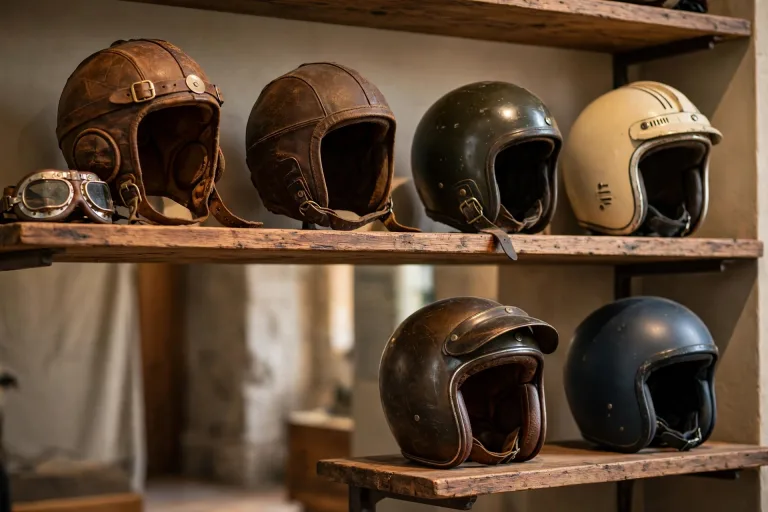
Early police helmets were made from stiffened felt, leather, or cork, with a hard outer shell and a simple lining inside. They were not designed for high-speed work or for the kind of impacts that modern helmets are tested for, but they gave the officer a degree of protection on foot patrol. The design varied from place to place, with different forces choosing different heights, brims, and badges, and those differences became part of each force’s identity.
Why was the police helmet so tall?
The police helmet was tall partly for practical reasons and partly for show. A tall helmet made the officer look taller and more imposing, which was useful when an officer needed to be seen and heard in a busy street. It also gave a little extra protection to the top of the head, and the brim helped to keep rain off the face and neck on a long patrol. In general terms, the height was a trade-off: it looked impressive, but it could also be heavy and awkward, especially in wind or in a doorway.
Over time, the height of the helmet was reduced in many forces, as officers spent more time in vehicles and less time walking a fixed beat. A very tall helmet is hard to wear in a car, and it can catch on things in a confined space. The shape also changed to suit different duties, with some forces keeping a taller helmet for ceremonial use and choosing a lower, lighter helmet for everyday patrol. The tall shape survives today mainly as a symbol, and it is still one of the most recognisable pieces of police uniform.
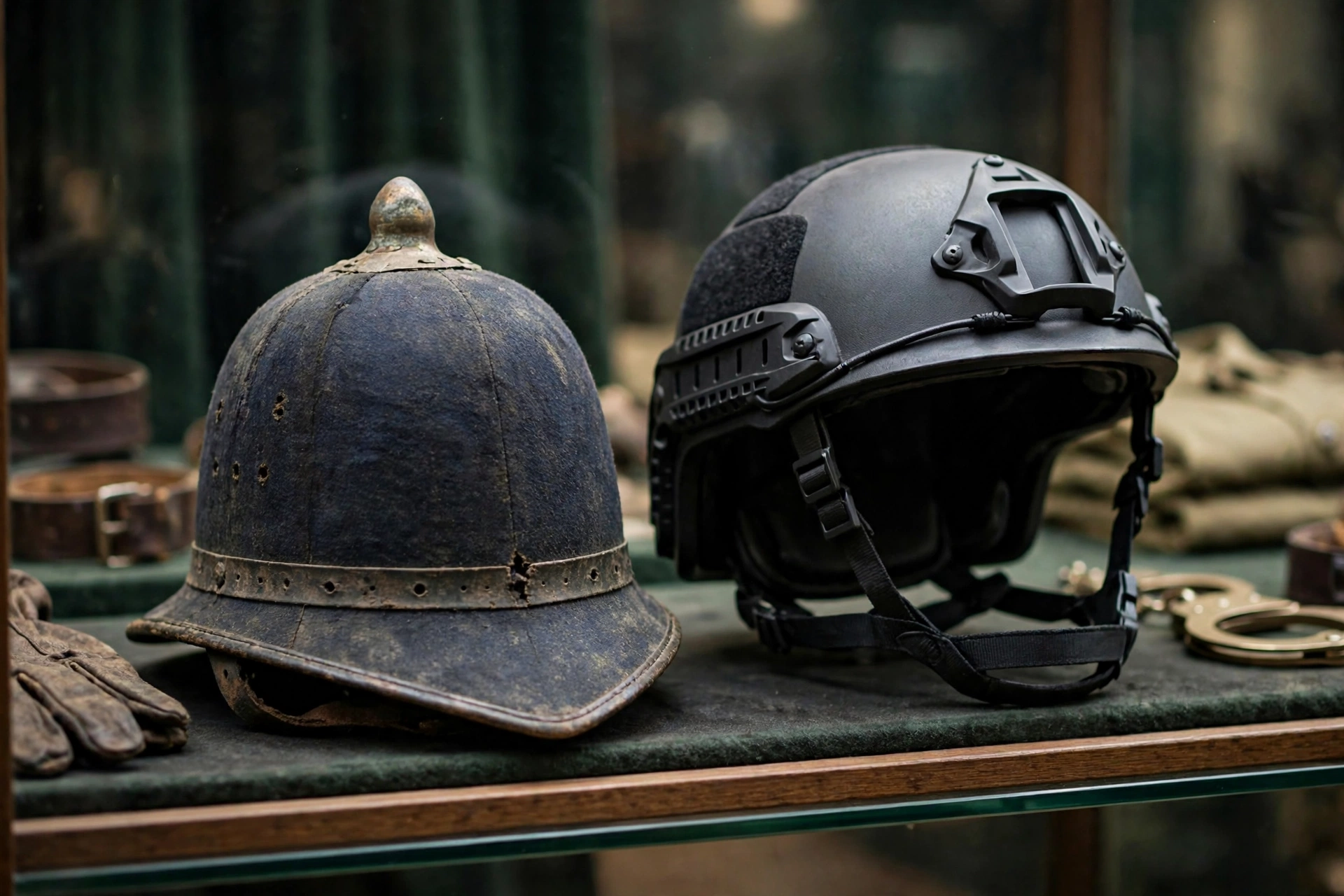
How did the police helmet change over time?
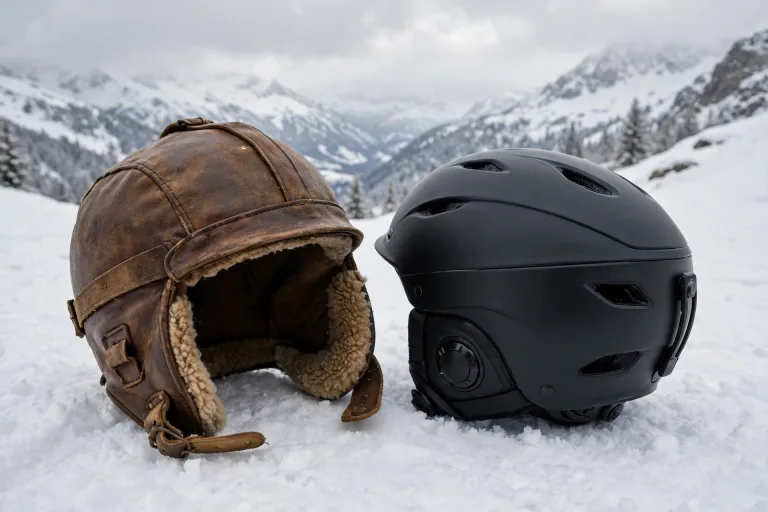
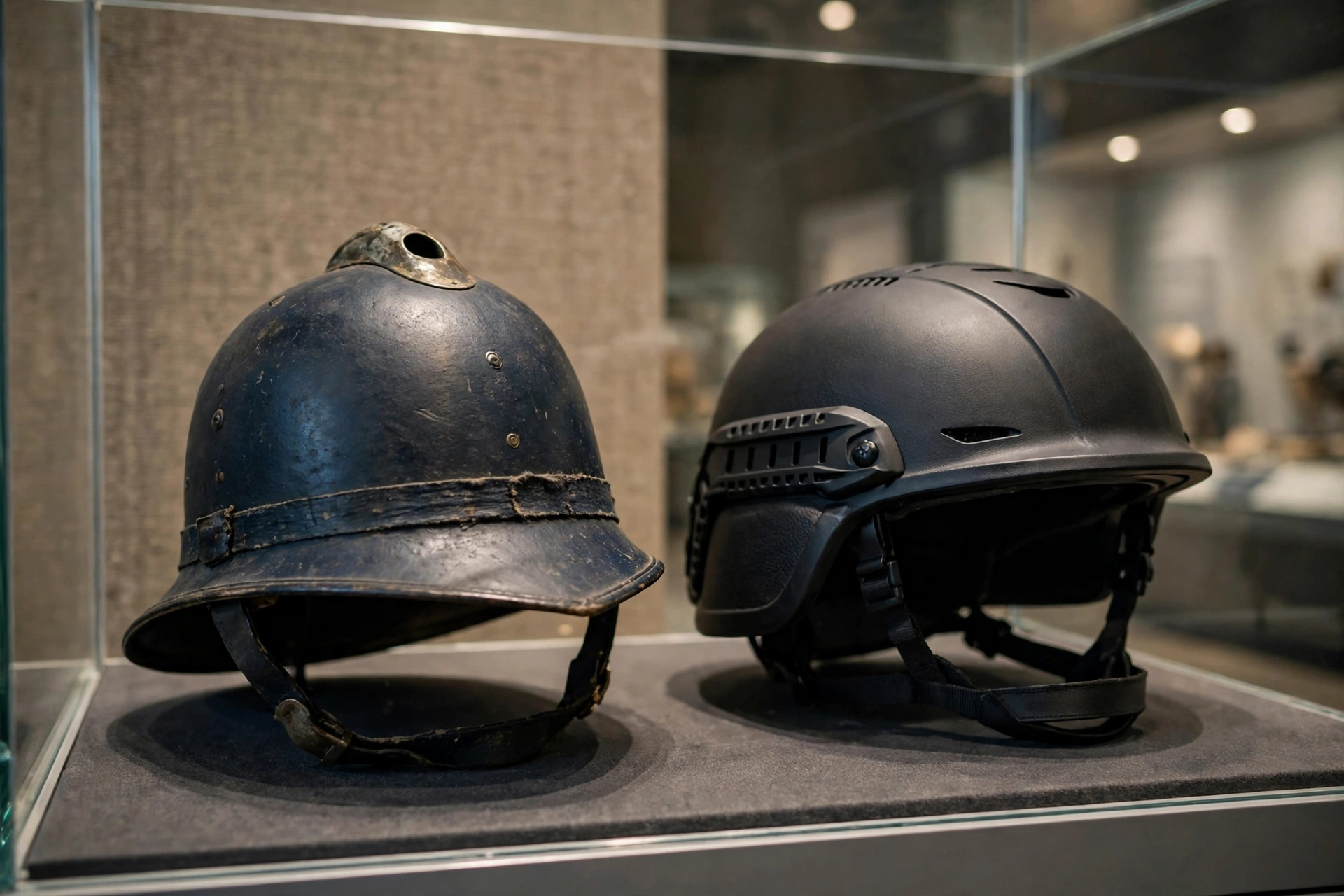
The police helmet changed as materials improved and as police work changed. Felt and cork gave way to harder plastics and composite materials, which could be made lighter and stronger, and linings became more comfortable and adjustable. In general terms, the helmet moved from being mainly a formal uniform item towards being a practical piece of protective equipment, with more attention paid to fit, weight, and ventilation.
The change was also driven by the different jobs that police officers do. Officers on foot patrol, officers on motorcycles, officers at public events, and officers in riot or crowd-control roles all need different head protection, and a single helmet cannot serve all of them well. Modern forces therefore use a range of helmets for different duties, from the classic helmet for patrol to specialised helmets for motorcycle and public-order work. The classic shape remains, but it is now one option among several, rather than the only helmet an officer wears.
What is the police helmet used for today?
Today, the police helmet is still worn by officers on foot patrol in some places, and it is still used for ceremonial duties, where its traditional shape is part of the occasion. For everyday work, many officers wear a cap, a peaked hat, or a different type of helmet, depending on the duty and the force. The choice depends on comfort, practicality, and the need to be recognised, and different forces have made different choices.
The helmet’s role as a symbol has lasted longer than its role as everyday protection. Even where it is no longer worn on every shift, the shape is still used on badges, signs, and logos, and it is still the image that many people picture when they think of a police officer. Modern helmets for police motorcycle and public-order work are tested to the standards for their own use, and some include a system designed to reduce rotational forces in a fall, such as MIPS, although that feature belongs to the specialist helmet rather than to the classic patrol helmet.
Why does the police helmet still matter?
The police helmet still matters because it is a visible link between the police and the public. A uniform that people recognise helps to build trust, and the helmet is one of the most recognisable parts of that uniform. In general terms, a helmet that looks familiar can make an officer easier to approach, and it can also remind people that the officer is on duty and available to help.
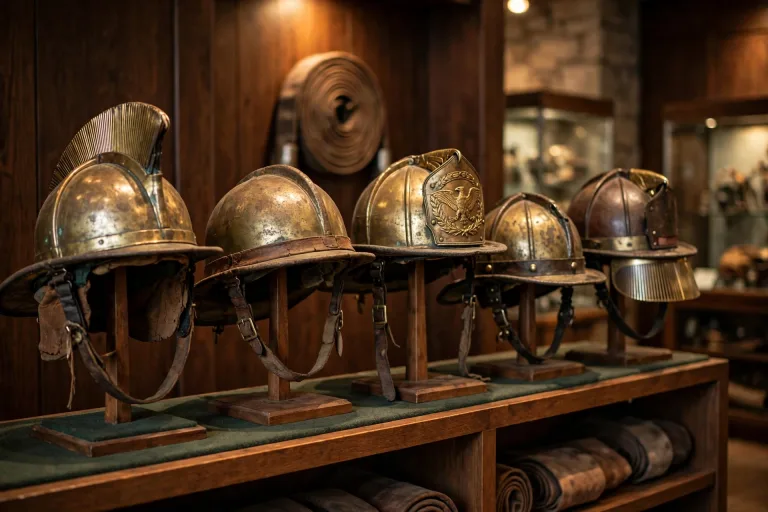
It also matters as a piece of history. The police helmet tells a story about how towns and cities were policed, how uniforms were designed, and how the work of a police officer has changed. Museums and collections keep examples of old helmets for that reason, and they show how the shape, the material, and the badge have changed over time. The helmet may no longer be worn in the same way, but its history is still part of the story of policing.
When was the police helmet first worn?
In general terms, the familiar police helmet took shape when organised police forces were formed in towns and cities, and it developed from the military helmets and tall hats worn before that time. Its exact form varied from force to force.
Do police officers still wear the classic helmet?
Yes, in some places officers still wear it on foot patrol and for ceremonial duties, while in other places it has been replaced by a cap or a different helmet for everyday work. It depends on the force and the duty.
What was the police helmet made from?
Early helmets were often made from stiffened felt, leather, or cork, with a hard outer shell. Later helmets used harder plastics and composite materials, which could be made lighter and stronger.

Olivia
Writer at Helmet Today, covering helmet reviews, fit and riding safety.